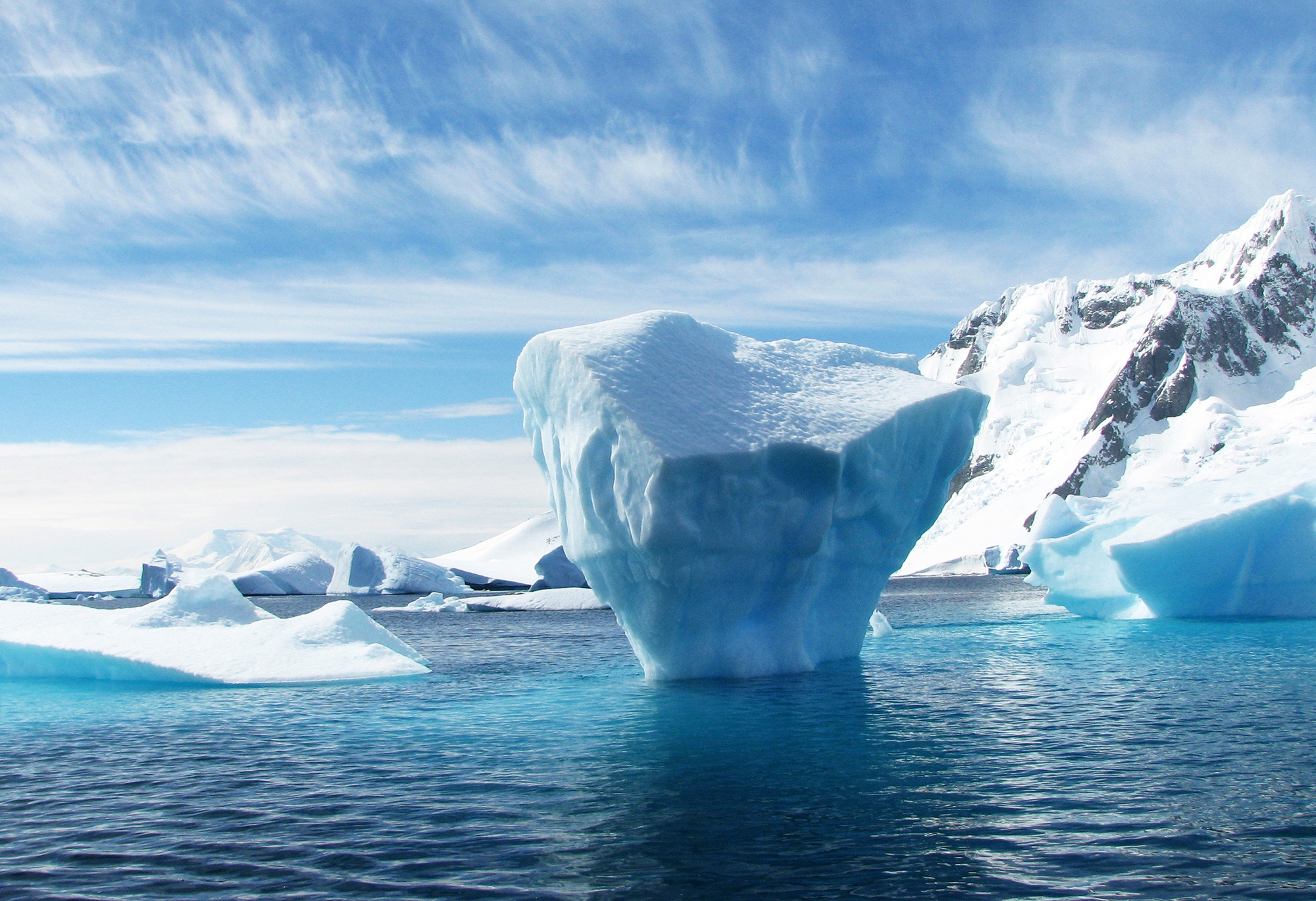
At the very top of our planet lies a region that, for most of human history, felt almost mythic. The Arctic is a world of vast white silence, where the ocean hardens into an immense shield of floating ice and winter darkness can last for months. Explorers once described it as a frozen kingdom at the edge of the map, a place so cold and remote that it seemed eternal.
Yet the Arctic is not just a distant wilderness. It is one of the most important regulators of Earth’s climate system. The ice that spreads across the Arctic Ocean acts like a reflective mirror, bouncing sunlight back into space and helping to keep the planet cool. It influences ocean currents, stabilizes global weather patterns, and supports unique ecosystems that exist nowhere else on Earth.
Today, that frozen crown is shrinking. Over the past several decades, Arctic sea ice has declined dramatically in both thickness and extent. Scientists have observed that the region is warming roughly four times faster than the global average. Summers that once left the Arctic sealed in ice are now revealing more and more open water.
The question that increasingly occupies scientists, policymakers, and concerned citizens is not just whether the ice will continue to decline, but what would happen if it disappeared completely during the summer months. What would Earth look like if the Arctic Ocean became largely ice-free?
The answer is not simple. The melting of Arctic ice would ripple through the climate system, ecosystems, human societies, and even global geopolitics. It would transform weather patterns thousands of kilometers away. It would reshape coastlines and challenge entire species. And it would signal a profound shift in the balance of Earth’s climate.
Understanding that future requires first understanding the nature of Arctic ice itself.
The Nature of Arctic Sea Ice
Arctic sea ice is not a static slab frozen permanently in place. It is a dynamic system, constantly forming, drifting, fracturing, and melting in response to seasonal changes. Each winter, as temperatures plunge far below freezing, seawater begins to solidify, forming new ice across the Arctic Ocean. By late winter, this frozen cover can extend across millions of square kilometers.
When summer arrives, sunlight returns to the polar region and temperatures rise. The ice begins to melt and break apart, exposing patches of dark ocean water. Some of the ice disappears entirely, while thicker pieces survive and drift into the following winter.
Historically, a large portion of Arctic sea ice consisted of thick multiyear ice, ice that survived multiple summers and grew several meters thick. This ancient ice was resilient, capable of resisting melting and maintaining the stability of the Arctic ice pack.
In recent decades, however, this multiyear ice has declined sharply. Much of the Arctic is now dominated by thinner seasonal ice that forms during winter and melts more easily during summer. This change has made the entire system more vulnerable.
When scientists speak about the possibility of the Arctic “completely melting,” they usually mean a scenario in which the Arctic Ocean becomes nearly ice-free during the summer months. Winter ice would likely still form for some time, but the long-standing summer shield of ice could vanish.
Such a transformation would represent one of the most dramatic environmental changes on Earth.
The Arctic as Earth’s Reflective Shield
One of the most important roles of Arctic ice lies in its ability to reflect sunlight. Ice and snow are bright surfaces that bounce much of the Sun’s energy back into space. Scientists refer to this reflectivity as albedo.
When sunlight strikes the white surface of sea ice, a large portion of that energy never enters the Earth system. Instead, it reflects outward, helping to regulate global temperatures.
Open ocean water behaves very differently. Dark water absorbs far more solar energy. When sea ice melts and exposes the ocean below, the Arctic begins to soak up heat rather than reflecting it.
This process creates what scientists call the ice-albedo feedback. As ice melts, more sunlight is absorbed by the ocean, which warms the water and melts even more ice. The cycle reinforces itself, accelerating warming in the region.
If the Arctic Ocean were to lose most of its summer ice cover, this feedback would intensify. Vast areas of dark water would absorb solar radiation throughout the long polar day. The ocean would store that heat and release it slowly during autumn and winter, keeping the Arctic warmer than it would otherwise be.
This is one reason the Arctic is warming so rapidly today. The loss of reflective ice is amplifying the effects of global climate change.
A Warmer Arctic Ocean
When sea ice melts, it does not directly raise global sea levels, because floating ice already displaces its weight in water. However, its disappearance has profound consequences for the Arctic Ocean itself.
Without the insulating blanket of ice, the ocean becomes more exposed to sunlight and atmospheric heat. During summer months, surface waters can warm significantly. This warmer water then delays the formation of new ice in autumn.
The loss of ice also changes how the ocean interacts with the atmosphere. Sea ice normally acts as a barrier between air and water. When it disappears, the ocean releases more heat and moisture into the atmosphere.
This increased exchange can influence weather systems, cloud formation, and storm intensity in the Arctic region. It can also contribute to further warming.
The Arctic Ocean would begin to resemble a more typical ocean basin during summer months, with waves, currents, and open water stretching across areas that once remained frozen.
This transformation would ripple outward through the entire climate system.
Shifting Weather Patterns Across the Northern Hemisphere
The Arctic plays a subtle but powerful role in shaping weather patterns across the Northern Hemisphere. One of the key mechanisms involved is the jet stream, a fast-moving river of air high in the atmosphere that guides weather systems across continents.
The temperature difference between the cold Arctic and the warmer mid-latitudes helps drive the strength and stability of the jet stream. As the Arctic warms faster than lower latitudes, this temperature contrast weakens.
Some scientists have suggested that a warmer Arctic could cause the jet stream to become more wavy and unstable. Instead of flowing in a relatively straight path, it might meander dramatically north and south.
These large atmospheric waves can lock weather patterns in place for longer periods. A heat wave might persist over one region while another experiences prolonged cold or heavy rainfall.
Although the exact relationship between Arctic warming and mid-latitude weather is still being studied, many researchers believe that the loss of Arctic sea ice could influence extreme weather events across North America, Europe, and Asia.
Changes in the Arctic could therefore affect agriculture, water resources, and infrastructure far beyond the polar circle.
The Fate of Arctic Ecosystems
The Arctic is home to a remarkable array of life uniquely adapted to cold and ice. From microscopic algae living beneath the ice to massive marine mammals navigating frozen seas, these ecosystems depend on the presence of sea ice.
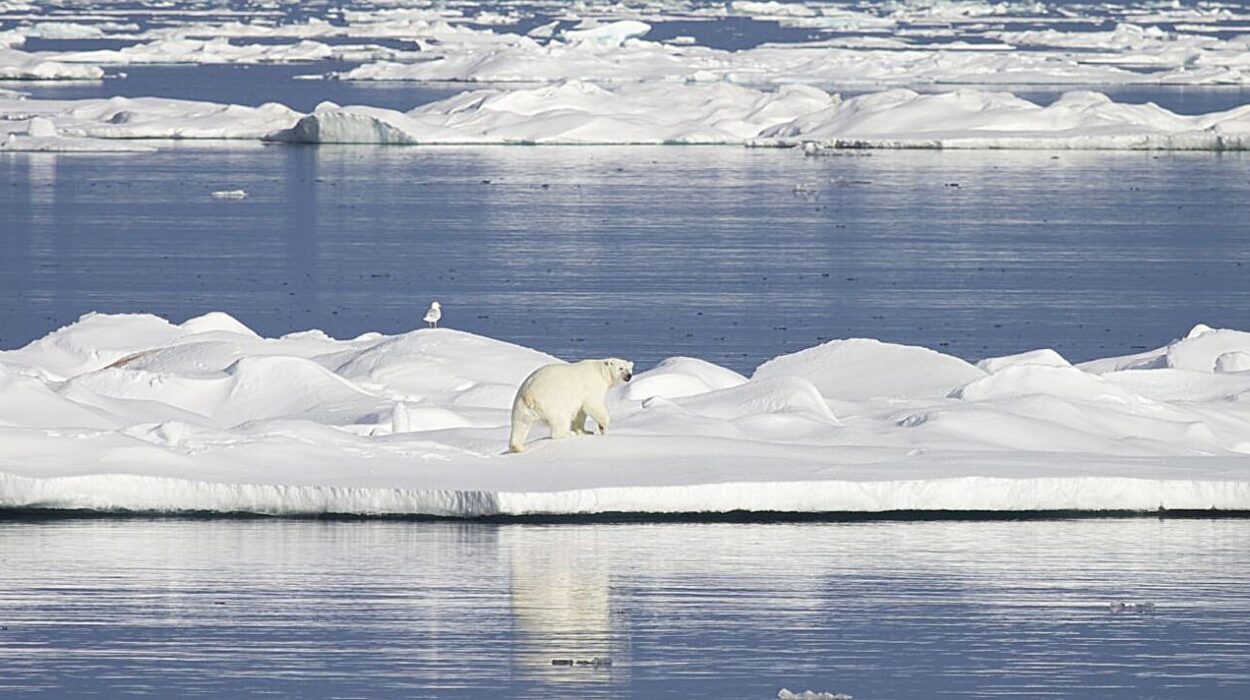
Polar bears are perhaps the most iconic inhabitants of the Arctic. They rely on sea ice as a platform from which to hunt seals, their primary prey. When the ice retreats, polar bears must swim longer distances or remain on land, where food is scarce.
If summer sea ice were to disappear completely, polar bears would face enormous challenges. Some populations might survive by adapting their behavior, but others could decline significantly.
Seals that depend on ice for resting and breeding would also be affected. Walruses use sea ice as a place to haul out between feeding dives. Without stable ice platforms, large numbers of walruses have already been observed crowding onto shorelines.
Beneath the ice, algae grow on the underside of frozen surfaces, forming the base of an Arctic food web that supports fish, seabirds, and marine mammals. The loss of ice would alter this ecological foundation.
At the same time, warmer waters might allow species from lower latitudes to move northward. New fish populations could enter the Arctic Ocean, potentially transforming marine ecosystems in unpredictable ways.
The Arctic would not become lifeless, but it would become a very different biological world.
Indigenous Communities and Cultural Transformation
For thousands of years, Indigenous peoples have lived in the Arctic and sub-Arctic regions, developing cultures deeply connected to the rhythms of ice and sea.
Communities across Alaska, northern Canada, Greenland, and Siberia rely on sea ice for transportation, hunting, and cultural traditions. Frozen ocean surfaces function as seasonal highways, allowing travel between settlements and access to marine hunting grounds.
As sea ice becomes thinner and less predictable, these ways of life are increasingly challenged. Travel routes that once remained safe for months now become dangerous. Hunters must adapt to changing patterns of wildlife.
If the Arctic Ocean were to lose its summer ice entirely, the transformation of Indigenous livelihoods could accelerate dramatically. Some traditional practices might become impossible. Others would need to evolve rapidly.
Beyond practical impacts, the disappearance of ice carries deep cultural and emotional significance. The Arctic landscape is not merely a physical environment; it is a homeland woven into stories, languages, and identities.
The Global Ocean and Rising Seas
Although melting sea ice does not directly raise sea levels, its disappearance can indirectly contribute to sea level rise through several mechanisms.
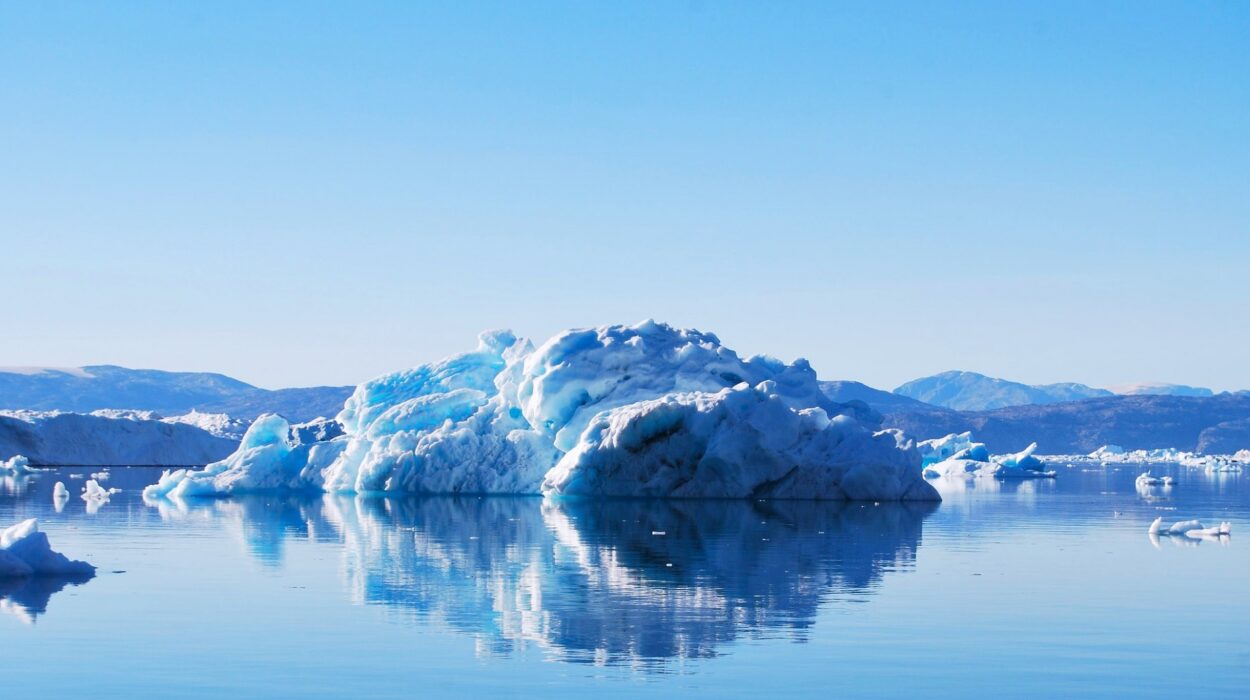
One of the most important involves Greenland. The Greenland Ice Sheet contains enough frozen water to raise global sea levels by several meters if it were to melt entirely. While this process would take centuries, the loss of nearby sea ice can accelerate melting at the edges of Greenland’s glaciers.
Sea ice acts as a buffer that dampens ocean waves and protects coastal glaciers from warm waters. Without it, glaciers can break apart more easily and release ice into the ocean.
Warmer Arctic waters can also erode the floating ice shelves that extend from some glaciers, removing another stabilizing force.
Over time, these processes could contribute to faster ice loss from Greenland, adding more water to the global ocean.
For coastal cities and low-lying nations, even modest increases in sea level can have serious consequences.
The Opening of the Arctic Ocean
An ice-free Arctic Ocean during summer would fundamentally change global navigation and trade routes. For centuries, explorers searched for a northern passage connecting the Atlantic and Pacific Oceans. Thick sea ice made such routes extremely difficult or impossible.
As the Arctic warms and ice retreats, new shipping lanes are gradually becoming more accessible. The Northern Sea Route along Russia’s Arctic coast and the Northwest Passage through Canada’s Arctic archipelago are attracting increasing attention.
If the Arctic Ocean were largely ice-free in summer, these routes could become far more viable for commercial shipping. The distance between major ports in Europe and Asia could be shortened significantly compared to traditional routes through the Suez Canal.
This prospect has major geopolitical implications. Nations bordering the Arctic are already investing in infrastructure, ice-capable vessels, and strategic planning for future shipping opportunities.
However, increased traffic in fragile polar environments raises environmental concerns, including the risk of oil spills, pollution, and disturbance to wildlife.
The opening of the Arctic could create both economic opportunities and new challenges.
A Changing Climate Feedback Loop
Perhaps the most important consequence of losing Arctic sea ice lies in how it influences the broader climate system.
The Arctic functions as one of Earth’s cooling mechanisms. By reflecting sunlight and maintaining cold conditions, it helps regulate global temperatures.
When that cooling system weakens, warming accelerates. The ice-albedo feedback amplifies global climate change, making it more difficult to stabilize temperatures.
Additionally, warming in the Arctic can affect permafrost, the permanently frozen ground that covers vast areas of northern land. Permafrost contains enormous quantities of organic carbon accumulated over thousands of years.
When permafrost thaws, microbes break down this material and release greenhouse gases such as carbon dioxide and methane into the atmosphere. These gases further intensify global warming.
Thus, the loss of Arctic ice can set off cascading feedbacks that extend far beyond the polar region.
The Emotional Meaning of a Melting Arctic
For many people, the Arctic represents more than a geographical location. It symbolizes the idea of a stable, enduring Earth system. The image of a frozen polar ocean has existed in human imagination for centuries.
The possibility of its disappearance within a human lifetime carries a powerful emotional weight. It forces humanity to confront the scale of its influence on the planet.
The Arctic is remote, yet its transformation is intimately connected to everyday activities around the world—energy use, industrial emissions, and patterns of consumption.
The melting of Arctic ice is therefore not merely a scientific phenomenon. It is also a story about responsibility, adaptation, and the future of human civilization.
A Planet in Transition
Even if the Arctic were to become ice-free in summer, winter ice would likely continue forming for some time. The polar night still brings extreme cold that can refreeze the ocean surface.
Yet the character of the Arctic would be profoundly different. Instead of an ancient landscape dominated by thick, resilient ice, it would become a more seasonal environment, with thin winter ice that melts each year.
Scientists continue to monitor these changes using satellites, research vessels, and autonomous instruments drifting across the Arctic Ocean. Each year provides new data about how rapidly the system is evolving.
The story of Arctic ice is still being written.
The Question That Remains
What happens if the Arctic ice completely melts during summer? The answer is not a single event but a cascade of changes—environmental, climatic, ecological, and cultural.
The reflective shield of the Arctic would weaken, accelerating global warming. Ocean and atmospheric systems would shift. Ecosystems would transform. Human societies would adapt to new realities.
Yet the Arctic would remain a place of wonder and complexity. Even in a warmer world, the polar ocean would continue to shape the climate of the entire planet.
Physics, chemistry, biology, and human experience all converge in this frozen frontier. The fate of Arctic ice reminds us that Earth’s systems are deeply interconnected, and that changes in one remote corner of the globe can echo across continents.
The story of the Arctic is ultimately the story of our planet in transition—and of humanity learning, perhaps slowly but urgently, how deeply our future is tied to the fragile balance of the natural world.