Deep in the silent expanse of the cosmos, the universe recently whispered a secret that has left the global scientific community both baffled and exhilarated. For years, the prevailing wisdom in astrophysics held a simple, almost poetic rule: when two black holes collide, they do so in total darkness. Because their gravity is so intense that not even light can escape, their union was thought to be a purely gravitational affair—a ripple in the fabric of spacetime that could be heard by our instruments but never seen by our eyes. However, in November 2024, a cosmic event designated S241125n shattered that silence, suggesting that under the right circumstances, even the darkest monsters in the universe can create a brilliant flash of light.
A Ghostly Ripple and a Flash in the Dark
The story began when the LIGO-Virgo-KAGRA observatories, a network of ultra-sensitive laser interferometers, “heard” the unmistakable signature of gravitational waves. These are tiny tremors in the geometry of space itself, caused by the violent acceleration of massive objects. Just 11 seconds after this gravitational wave signal reached Earth, the narrative took an unexpected turn. NASA’s Swift observatory, patrolling the skies for high-energy radiation, detected a short gamma-ray burst (GRB) coming from the exact same region of the sky.
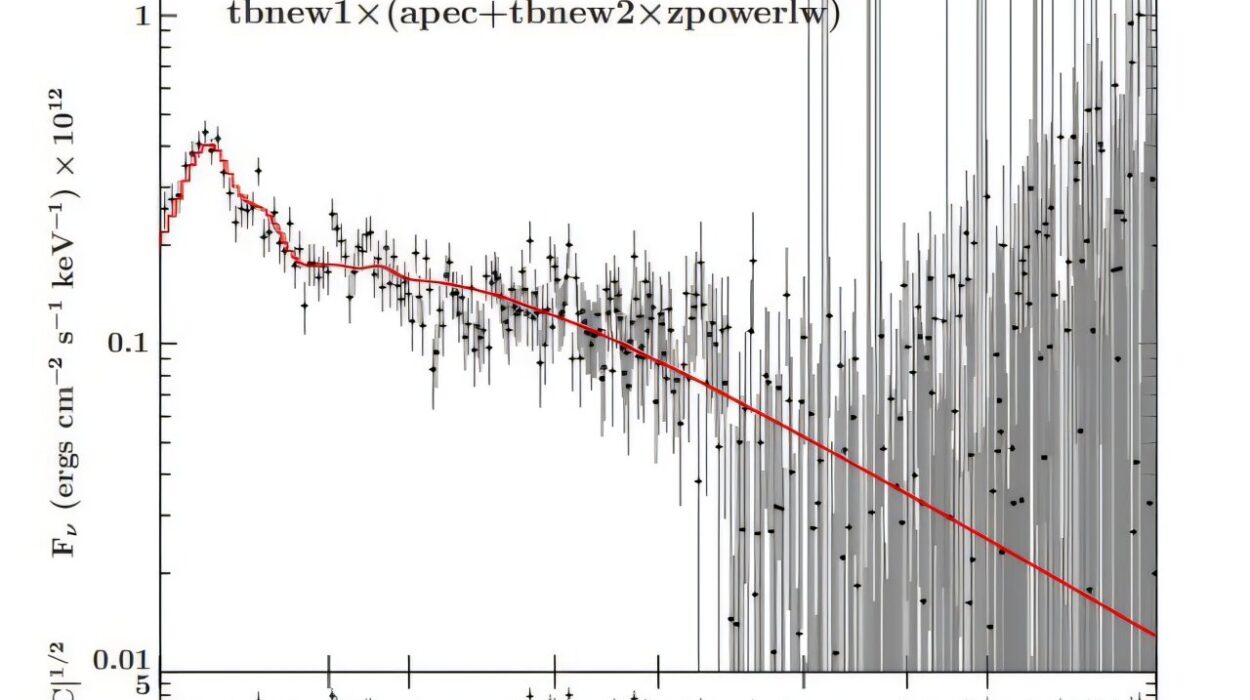
Shortly thereafter, China’s Einstein Probe satellite joined the hunt, identifying an X-ray afterglow in the vicinity. This was a “multi-messenger” discovery—an event where scientists use different types of signals, like sound and light, to study the same phenomenon. While the 2017 detection of merging neutron stars proved that light and gravity can travel together, seeing light from a binary black hole merger was widely considered impossible. The statistical analysis of this coincidence is striking; researchers estimate a false-alarm rate of only one such accidental alignment every 30 years. This suggests that the connection between the ripples and the light is likely real, marking a potential “cosmic encore” to the greatest discoveries in modern astronomy.
Giants Colliding in the Ancient Past
As researchers peeled back the layers of data, the sheer scale of S241125n became clear. This was no ordinary collision. The gravitational waves had been traveling through the void for approximately 4.2 billion light-years before reaching our detectors. This means the merger occurred when the universe was significantly younger, at a redshift of approximately 0.73.
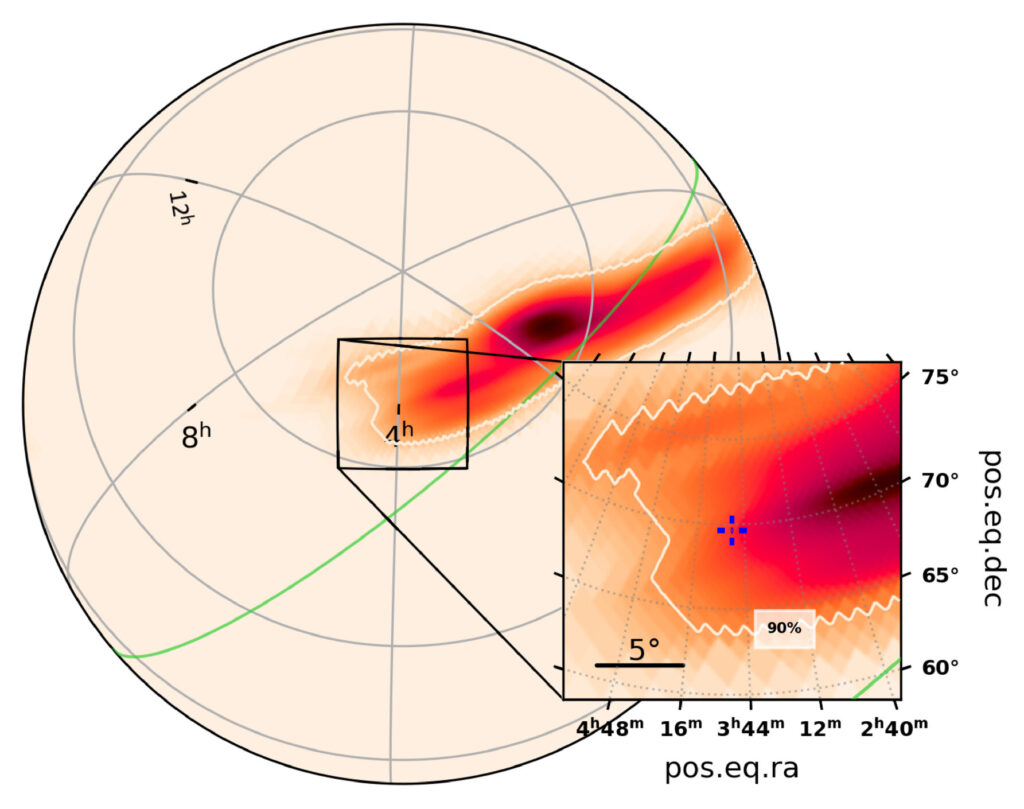
The participants in this celestial dance were also unusually massive. While most black hole mergers observed to date involve objects a few dozen times the mass of our Sun, this pair had a combined mass well over 100 times the solar mass. These are some of the heftiest stellar-mass black holes ever recorded. Their massive size hints at a complex history, suggesting that these individual black holes might have grown through earlier mergers or other exotic processes before finding one another for this final, explosive encounter. The fact that we could detect such a massive event from such a staggering distance highlights the incredible reach of our modern “cosmic ears.”
A Violent Feast in a Crowded Neighborhood
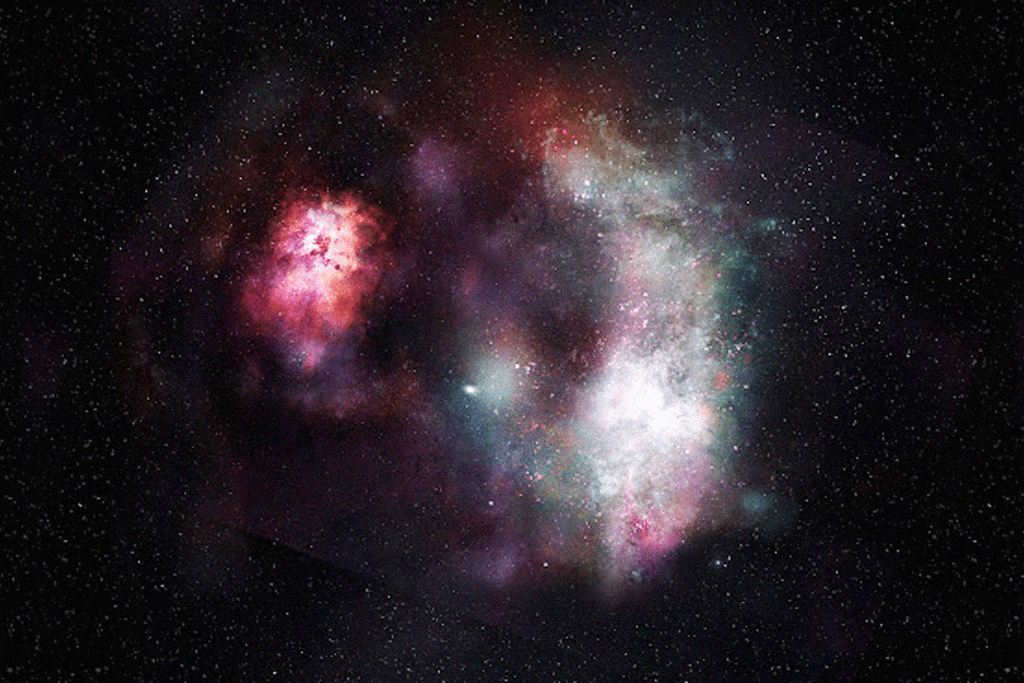
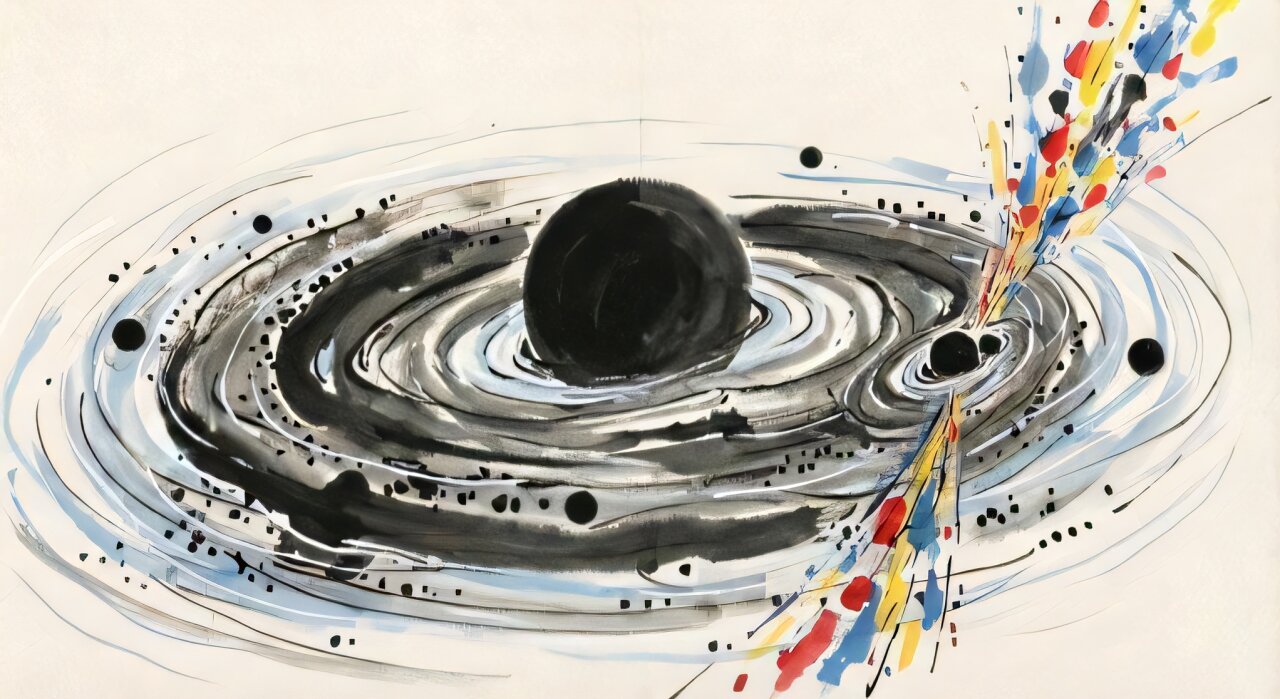
The central mystery remained: how could two black holes, which are essentially invisible, produce a gamma-ray burst? An international team of scientists from China and Italy has proposed a bold theory that moves the action from the empty vacuum of space into the chaotic heart of a galaxy. They suggest the merger took place within an active galactic nucleus (AGN) disk.
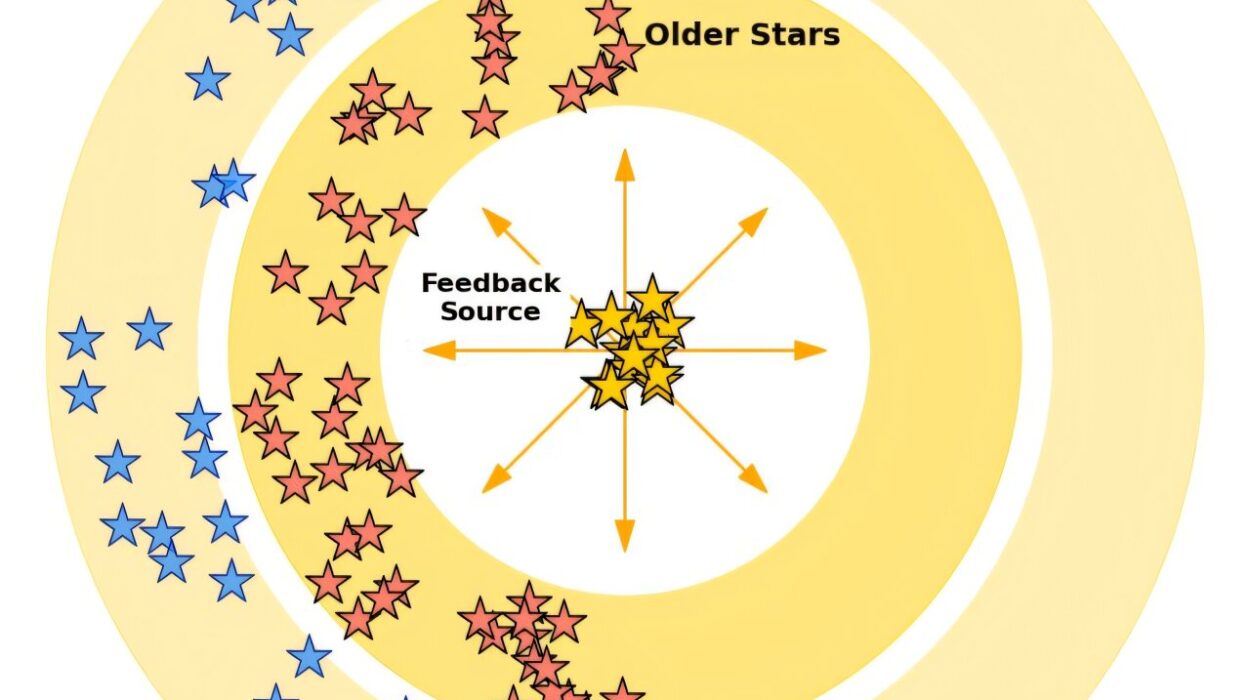
In these regions, a supermassive black hole sits at the center of a galaxy, surrounded by a swirling, dense disk of gas and dust. If our pair of black holes merged inside this “thick soup” of matter, the environment would provide the fuel for a light show. When the two black holes finally became one, the resulting “kick” from the asymmetric emission of gravitational waves would have sent the new, larger black hole careening through the gas at incredible speeds.
This moving black hole would have begun to feast, consuming the surrounding material at a hyper-Eddington rate—a level of consumption that far exceeds normal physical limits. This frantic feeding, combined with the intense magnetic fields of the environment, likely triggered relativistic jets—beams of particles and radiation launched at nearly the speed of light. As these jets plowed through the dense gas of the AGN disk, they created a “pressure cooker” of trapped light.
Breaking Through the Gas
The final act of this cosmic drama occurred when the jet finally punched through the surface of the gas disk. This “shock breakout” allowed the trapped energy to escape into space as a burst of high-energy radiation. This model perfectly explains the strange characteristics of the light detected by our satellites. The short gamma-ray burst observed by Swift had a photon index that was “softer” (lower in energy) than typical bursts, while the afterglow was “harder.”
This suggests a unique radiation mechanism where the light was thermalized, or bounced around, within the disk before escaping. Unlike standard gamma-ray bursts that come from colliding neutron stars, this burst was the result of a black hole merger using its environment as a stage. It proves that even the “darkest” events in the universe can be illuminated if they happen in a crowded enough neighborhood.
Why This Discovery Changes Everything
This research represents a massive leap forward because it transforms binary black hole mergers from invisible phantoms into visible laboratories. By seeing the light associated with these mergers, scientists can now study the “neighborhoods” where black holes live, specifically the dense, gas-rich environments of active galactic nuclei.
Furthermore, these events act as “standard sirens.” Because we can measure the distance using gravitational waves and the speed of the galaxy’s retreat using the light’s redshift, we can more accurately measure how fast the universe is expanding. It turns a single data point into a multi-dimensional story of cosmic evolution. While the association of S241125n is still being scrutinized, it opens a new window into the universe, showing us that if we look and listen closely enough, the cosmos will always find a way to surprise us.
Study Details
Shu-Rui Zhang et al, LVK S241125n: Massive Binary Black Hole Merger Produces Gamma Ray Burst in Active Galactic Nucleus Disk, The Astrophysical Journal (2026). DOI: 10.3847/1538-4357/ae3319