For decades, it sat quietly among other ancient finds, a pale fragment of bone pulled from the earth of southern England in the early 1990s. It did not announce itself as extraordinary. It did not glitter like flint or carry the immediate drama of a sharpened edge. And yet, nearly half a million years after it was first shaped by human hands, this piece of elephant bone has finally told its story.
Archaeologists from UCL and the Natural History Museum, London, have revealed that this unassuming fragment is in fact a carefully crafted prehistoric hammer, dating to around 500,000 years ago. It is now recognized as the oldest elephant bone tool ever discovered in Europe, a find that opens a vivid window into the minds and methods of early human ancestors.
The research, published in Science Advances, transforms this object from a silent fossil into evidence of ingenuity, patience, and technological insight. It invites us to imagine a time when survival depended not only on strength, but on understanding materials, anticipating future needs, and shaping tools with intention.
Hands That Knew What They Were Doing
The tool itself is modest in size but powerful in meaning. Roughly triangular in shape, it measures about 11 centimeters long, 6 centimeters in length, and around 3 centimeters thick. Its surface carries the unmistakable marks of deliberate shaping, scars left behind by purposeful blows rather than chance breakage.
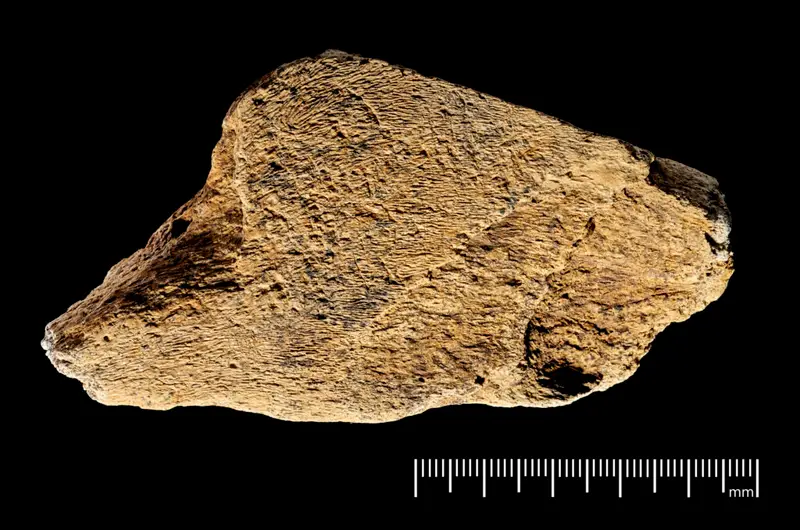
Most of the fragment is made from cortical bone, the dense outer layer of bone tissue. This thickness and density point to a large animal, either an elephant or a mammoth, though the fragment is too incomplete to identify the exact species or even which part of the skeleton it came from. What matters more is that someone recognized the value of this material and transformed it into a tool meant to be held, used, and reused.
According to lead author Simon Parfitt, this discovery highlights just how thoughtful these early humans were. They understood the materials in their environment and knew how to turn something rare into something useful. Elephant bone, he explains, would not have been common. That rarity likely made this tool especially valuable, something worth keeping and maintaining rather than discarding.
Seeing the Invisible Marks of Time
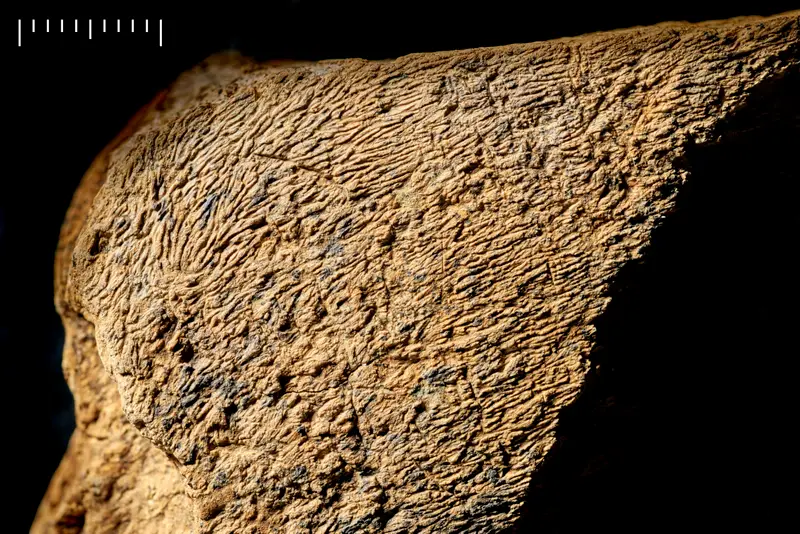
The true nature of the bone remained hidden until modern technology gave researchers a way to look closer. Using 3D scanning methods and electron microscopes, the team examined the surface in extraordinary detail. What they found were subtle but unmistakable signs of use.
Small notches and impact marks dotted the bone, patterns that could only have formed through repeated striking. Even more telling were the tiny fragments of flint lodged inside those notches. These microscopic clues revealed that the bone had been used to strike stone, again and again, over an extended period.
This was no casual object. It was a working tool, handled often, trusted enough to be used repeatedly in tasks that required precision.
A Softer Touch for Sharper Tools
Stone tools were essential to prehistoric life, but stone has its limits. Repeated use dulls even the sharpest edges, and reshaping them requires control. Bone, being softer than stone, offered exactly that.
The researchers believe this elephant bone tool functioned as a retoucher, a specialized implement used during knapping, the process of striking stone tools to detach small flakes and restore their sharpness. With careful blows, the bone could refine the edges of handaxes and other cutting tools without shattering them.
Elephant bone, with its thick outer layer of hard tissue, would have been particularly resilient. Compared to the bones of smaller animals, it could withstand repeated impacts, making it an ideal choice for such delicate yet demanding work.
This kind of tool reflects a sophisticated understanding of how different materials behave. It shows that early humans were not just making tools, but designing toolkits, selecting specific materials for specific purposes.
A Rare Resource, Chosen on Purpose
In prehistoric southern England, mammoths and elephants were uncommon. Their bones were not everyday materials lying scattered across the landscape. This makes the choice to use elephant bone even more striking.
The people who made this tool recognized that this rare material was worth seeking out and preserving. Whether the animal was hunted or the bone was scavenged from an already dead carcass remains unknown. However, signs of deformation suggest the bone was shaped and used while it was still relatively fresh.
This decision reveals more than practicality. It speaks to resourcefulness, to the ability to plan ahead, and to an understanding of value that goes beyond immediate needs. This bone was not just used once and abandoned. It was shaped carefully and returned to repeatedly, a companion in the ongoing task of maintaining other tools.
Minds at Work Half a Million Years Ago
The craftsmanship of the bone tool points to its makers, likely early Neanderthals or another species known as Homo heidelbergensis. Whoever they were, they possessed more than basic survival skills.
According to co-author Dr. Silvia Bello, collecting and shaping an elephant bone fragment and then using it multiple times shows complex thinking and abstract thought. These early humans were not only reacting to their environment but actively shaping it, making choices based on experience and foresight.
The use of a retoucher allowed them to produce stone tools that were more refined and complex than those made by some other prehistoric populations of the same period. This suggests a relatively advanced level of technological development, one that depended on knowledge passed down and refined over generations.
The Ground That Gave Up Its Secret
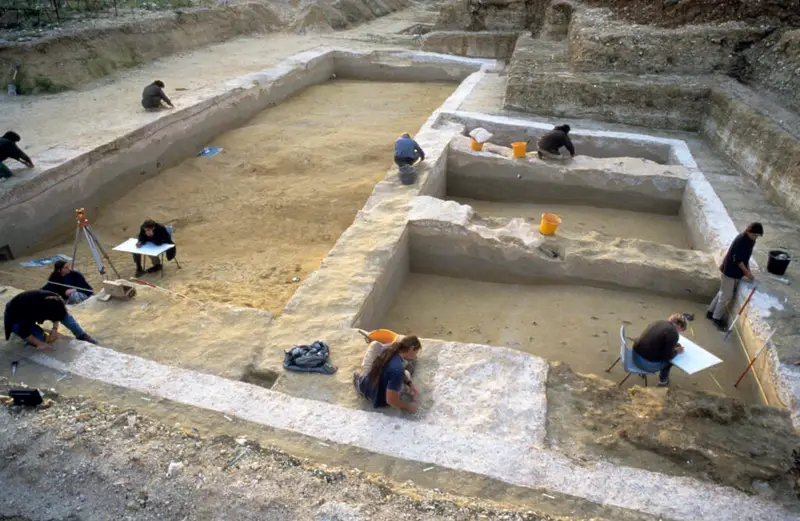
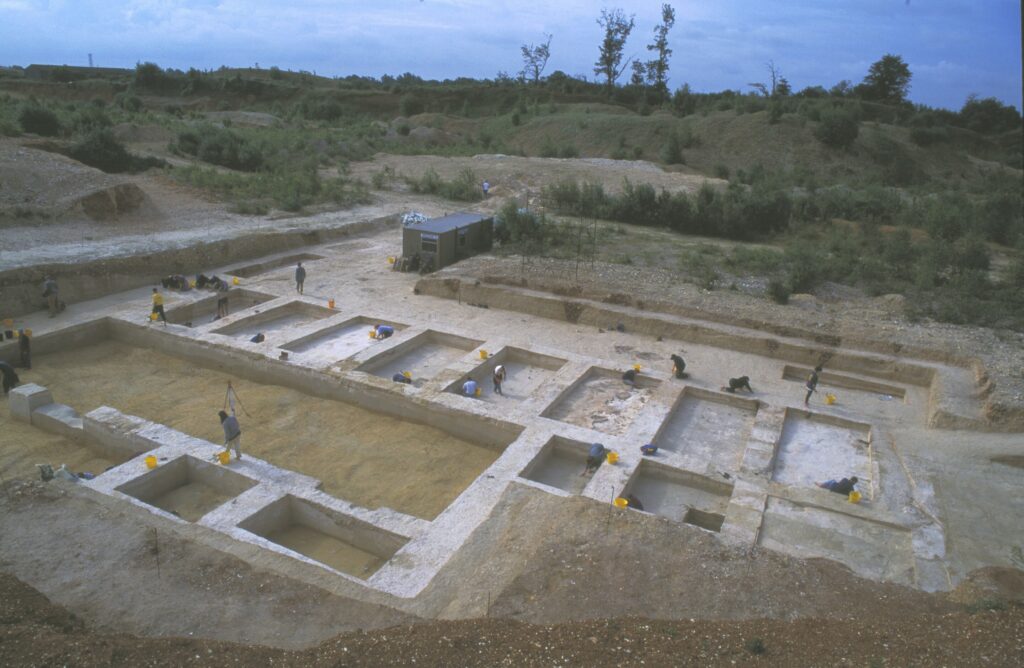
The tool was found at Boxgrove, near Chichester in West Sussex, one of the most extensively excavated archaeological sites in England. Over the years, Boxgrove has yielded numerous tools made from flint, bone, and antler. Yet among all these discoveries, this is the first tool identified as being made from elephant bone.
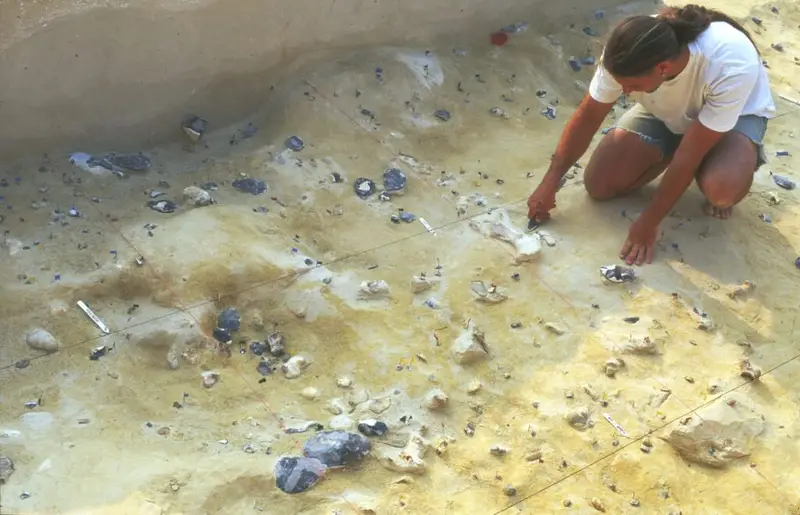

Its long delay in recognition underscores how much remains hidden in museum collections and excavation archives. Sometimes, it is not the ground that needs to be searched again, but the objects already recovered that need a second look.
A Wider Human Story Written in Bone
Elephant bone tools are not unknown in the prehistoric record. Examples from Olduvai Gorge in Tanzania date back as far as 1.5 million years ago. In Europe, however, such tools are exceedingly rare.
Only a small number of elephant bone tools older than 43,000 years have been found on the continent. That date marks the arrival of modern humans, Homo sapiens, who later left behind many ivory and elephant bone objects, including tools, art, and structures. In Europe, no elephant bone tools are known to be older than about 450,000 years, and most were discovered much farther south, in warmer climates.
This makes the Boxgrove tool an outlier, both in age and location. It challenges assumptions about where and when such sophisticated use of materials took place.
Why This Discovery Matters
This single piece of elephant bone changes how we see early humans in prehistoric Britain. It shows that nearly half a million years ago, human ancestors were not simply reacting to their environment with crude tools. They were observing, choosing, and refining. They understood the properties of rare materials and invested effort into turning them into durable, specialized tools.
The discovery matters because it adds depth to the story of human technological evolution. It reveals that complex thinking, careful planning, and material knowledge were already present long before modern humans appeared in Europe. This bone hammer is not just an artifact. It is evidence of minds at work, hands skilled through practice, and a quiet but profound intelligence shaping the human journey.
In the end, this ancient tool reminds us that even the smallest fragments of the past can carry enormous meaning, waiting patiently for the moment when someone finally learns how to listen.
Study Details
The earliest elephant-bone tool from Europe: An unexpected raw material for precision knapping of Acheulean handaxes, Science Advances (2026). DOI: 10.1126/sciadv.ady1390