The story of the South American rainforest is one of constant reinvention, a green world that has spent millions of years shifting its shape, its rivers, and its residents. Deep within the fossil-rich soils of the Tatacoa Desert in Colombia, researchers have unearthed a biological turning point that changed the trajectory of primate evolution forever. It is a tale that begins thirteen million years ago, in a landscape that looked nothing like the arid terrain of today. Back then, this region was a lush expanse of swampy grass, dense forests, and winding riverbanks. In this prehistoric proto-Amazonian world, giant sloths and armored armadillos shared the shade with a group of medium-sized monkeys who were about to make a radical life choice: they were going to stop competing for dessert and start eating their greens.
A Discovery Hidden in the Dust
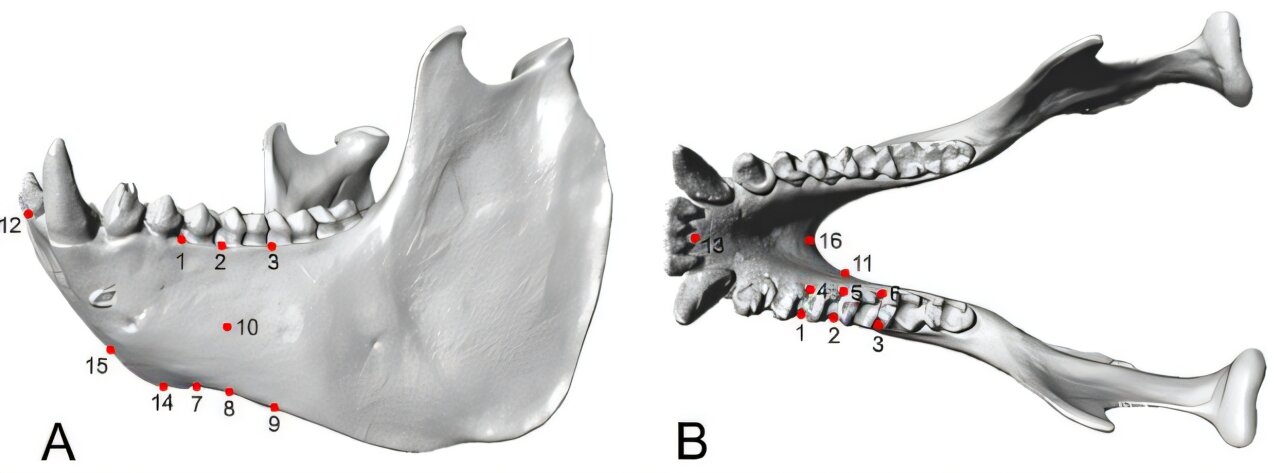
For years, the history of the howler monkey—the loudest land mammal on Earth—was shrouded in mystery. Scientists knew these primates were unique, but the fossil record was frustratingly sparse, consisting only of fragmented pieces of bone from the face and head. The breakthrough came in 2016 when brothers Andrés and Rubén Vanegas, who lead a local paleontological museum, discovered two crucial mandible fossils at a site known as La Venta. These jawbones belonged to an ancient ancestor known as Stirtonia victoriae, a species that lived during a pivotal era of South American biodiversity.
Before these heavy, petrified jaws were pulled from the earth, there was a significant gap in our understanding of how ancient monkeys lived. According to Siobhán Cooke, an associate professor at the Johns Hopkins University School of Medicine, these fossils represent the first concrete evidence of leaf consumption in South American primates. By analyzing these two lower jaws, Cooke and her team have been able to reconstruct the daily lives of these “proto-howlers,” peering back through the mists of time to see how a simple change in diet allowed a species to reinvent itself.
The Engineering of a New Appetite
To understand what a monkey ate thirteen million years ago, you have to look at the mechanics of its mouth. The research team used high-tech scans to create 3D models of the fossils, allowing them to examine the architecture of the teeth with microscopic precision. They compared these ancient remains against a vast dataset of platyrrhines—the broad group of monkeys found in South and Central America—including the smaller Stirtonia tatacoensis and modern relatives like spider monkeys and woolly monkeys.
What they found was a specialized toolkit for survival. The lower molars of Stirtonia victoriae featured distinct protrusions designed to act as shears. When the monkey chewed, these bony ridges ground against one another, perfectly evolved to break down the tough cellulose and complex carbohydrates found in foliage. While other primates of the era were likely scurrying through the canopy in search of sugary fruits, Stirtonia victoriae had unlocked a new, abundant food source. They were no longer hunters of the rare and seasonal; they were masters of the ubiquitous green leaf.
Growing Large in a Land of Giants
This shift in diet was not just a matter of preference; it was an evolutionary engine. Because leaves are a plentiful and consistent food source, the ancestors of the howler monkey were able to escape the boom-and-bust cycle of fruit-bearing trees. This reliable energy allowed them to grow to unprecedented sizes. By reconstructing the body mass of the species, the researchers determined that these monkeys weighed between 17 and 22 pounds.
This was a massive leap forward. Prior to this discovery, the South American monkeys found in the fossil record were significantly smaller. The ability to process leaves allowed Stirtonia victoriae to occupy a brand-new ecological niche, easing the fierce competition for food among different primate families. As they grew larger, they carved out a unique space in the burgeoning Amazon basin, marking the very beginning of a large and diverse lineage that would eventually dominate the canopy.
The Echoes of an Ancient Howl
The discovery of these deep, wide jawbones hints at more than just a change in diet; it may provide a clue to the origin of the howler monkey’s most famous trait. Modern howlers are known for a specialized hyoid neck bone that balloons out, acting as a resonator for their “howls”—territorial calls that can be heard for miles.
While the researchers cannot be certain of the ancient monkeys’ vocalizations, the wide, deep mandibular body of the Stirtonia victoriae fossils suggests there was physical space for a similar biological setup. It is possible that as these monkeys moved into their new role as the heavyweights of the treetops, they also began to develop the physical hardware required for their iconic, ear-splitting call. They weren’t just the new leaf-eaters on the block; they were potentially the first to guard their leafy territories with a roar.
Why the Ancient Leaf-Eaters Matter Today
This research is about far more than the dietary habits of a long-extinct monkey; it is a vital window into the birth of one of the most biodiverse regions on the planet. By pinpointing the moment when Stirtonia victoriae began to diverge from its relatives, scientists can better understand the development of the Amazonian rainforest itself.
This study helps map the timeline of evolution for modern primate lineages, showing how environmental opportunities—like a plentiful supply of leaves—can drive physical and behavioral transformation. Understanding how these ancient ancestors adapted to the shifting landscapes of the past provides essential context for the incredible variety of life we see in South America today. It reminds us that every specialized trait in the natural world, from a “shearing” tooth to a thunderous howl, is a solution to a challenge that was met millions of years ago in the deep, swampy heart of a world in transition.
Study Details
Siobhán B. Cooke et al, Mandibular Specimens of Stirtonia victoriae from the La Victoria Formation, La Venta, Colombia, PaleoAnthropology (2026). DOI: 10.48738/2026.iss1.3992