Imagine a high-security vault in a hidden laboratory, guarded by biometric scanners and reinforced steel. Inside sits a tiny vial of engineered cells, a biological treasure more valuable than gold. These microscopic assets are the backbone of an industry projected to reach $8.0 trillion USD by 2035, powering breakthroughs in medicine, aging, and biotechnology. Yet, until now, if a thief simply walked away with that vial, the secrets inside were theirs for the taking. The only things standing in the way were physical locks and watchful guards. Once those were bypassed, the genetic blueprints were exposed. But a team of U.S. researchers has just changed the rules of the game, moving the security from the vault door directly into the DNA itself.
When the code becomes the cage
The problem is urgent. The Centers for Disease Control and Prevention (CDC) and the Department of Homeland Security have tracked a rise in the theft and smuggling of high-value biological materials. From industrial espionage to unauthorized shipments, the risk is not just financial. In the wrong hands, these engineered cells could be repurposed as bioweapons or used to cause deliberate environmental harm. To combat this, the research team took a page from the world of cybersecurity, reimagining the cell not as a passive asset to be guarded, but as its own genetic combination lock.
In this new paradigm, the “locking” process is a form of biological encryption. Instead of just hiding the cell, the scientists decided to scramble its very instructions. They took a functional genetic unit, which typically includes a promoter—the biological ON switch—and a gene of interest. In a healthy, functioning cell, these components sit in a perfect line, allowing the cell to read and execute the instructions. The researchers, acting as the “blue team” or the architects, shattered this order. They broke the genetic unit into separate parts, shuffled them into the wrong sequence, and even flipped some segments backward. To any observer, or even the cell itself, the DNA became a nonsensical jumble, rendered completely non-functional.
The chemical keypad and the art of the unscramble
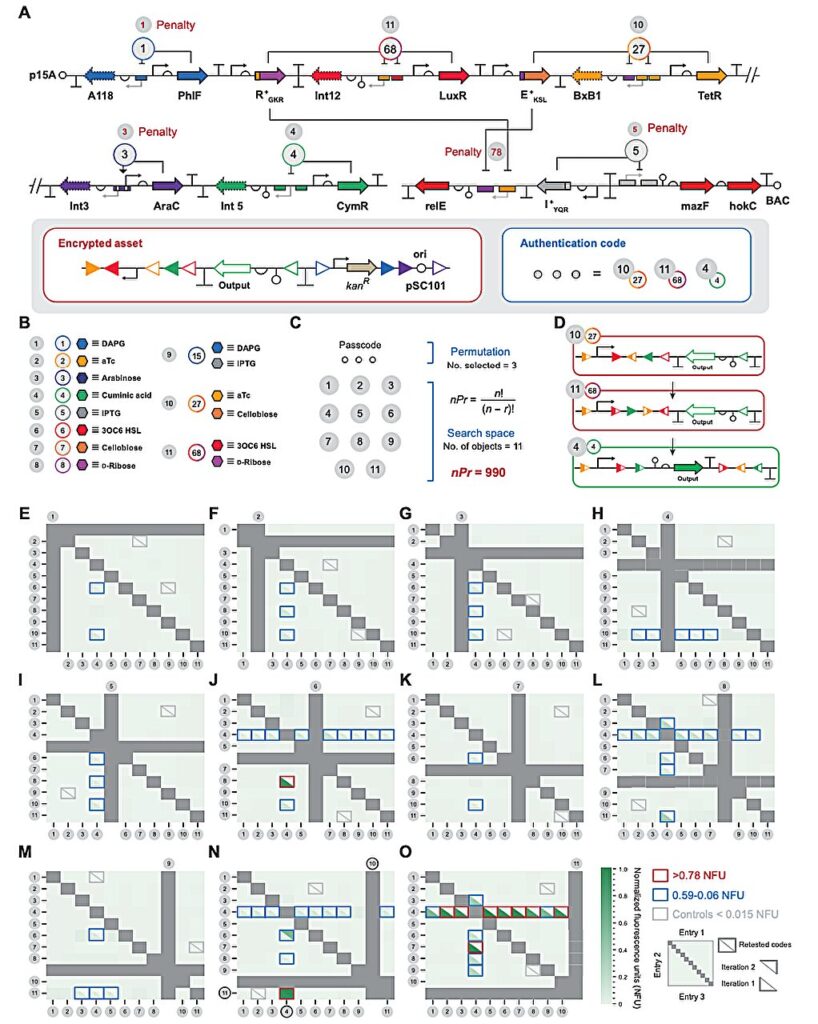
To ensure this mess could eventually be cleaned up by the rightful owner, the team installed a series of recombinase attachment sites around the scrambled segments. These act like the internal gears of a lock, waiting for the right key to turn them. The “key” in this biological world is not a piece of metal, but a specific sequence of chemicals added over time. This process, known as decryption, requires the user to enter a “password” by introducing certain substances in a precise order to activate recombinases. These specialized enzymes then act as microscopic robotic arms, physically flipping and moving the DNA segments back into their original, functional form.
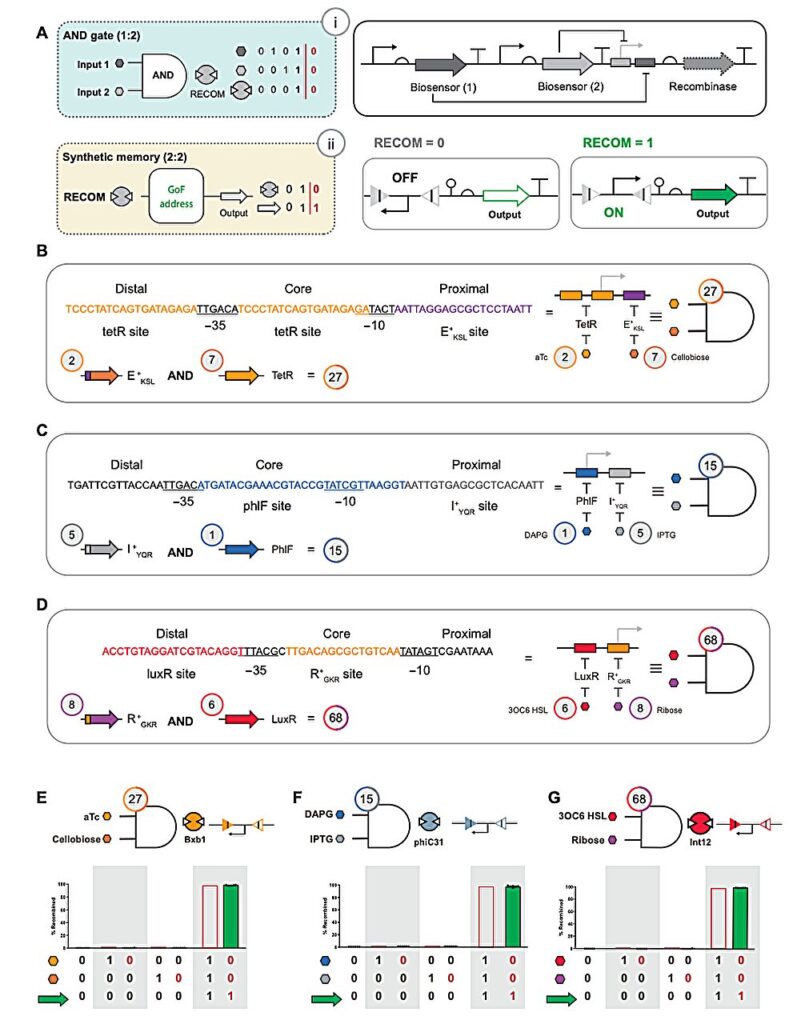
To make the lock sufficiently complex, the researchers designed a sophisticated biological keypad. They started with nine distinct chemicals, each representing a single-digit input. To expand the possibilities without needing hundreds of different substances, they utilized pairs of chemicals. By requiring two chemicals to be present simultaneously to trigger a specific sensor, they transformed those nine ingredients into 45 possible chemical inputs. This creates a “password” that is not just about what you add, but when you add it.
Testing the defenses against an ethical heist
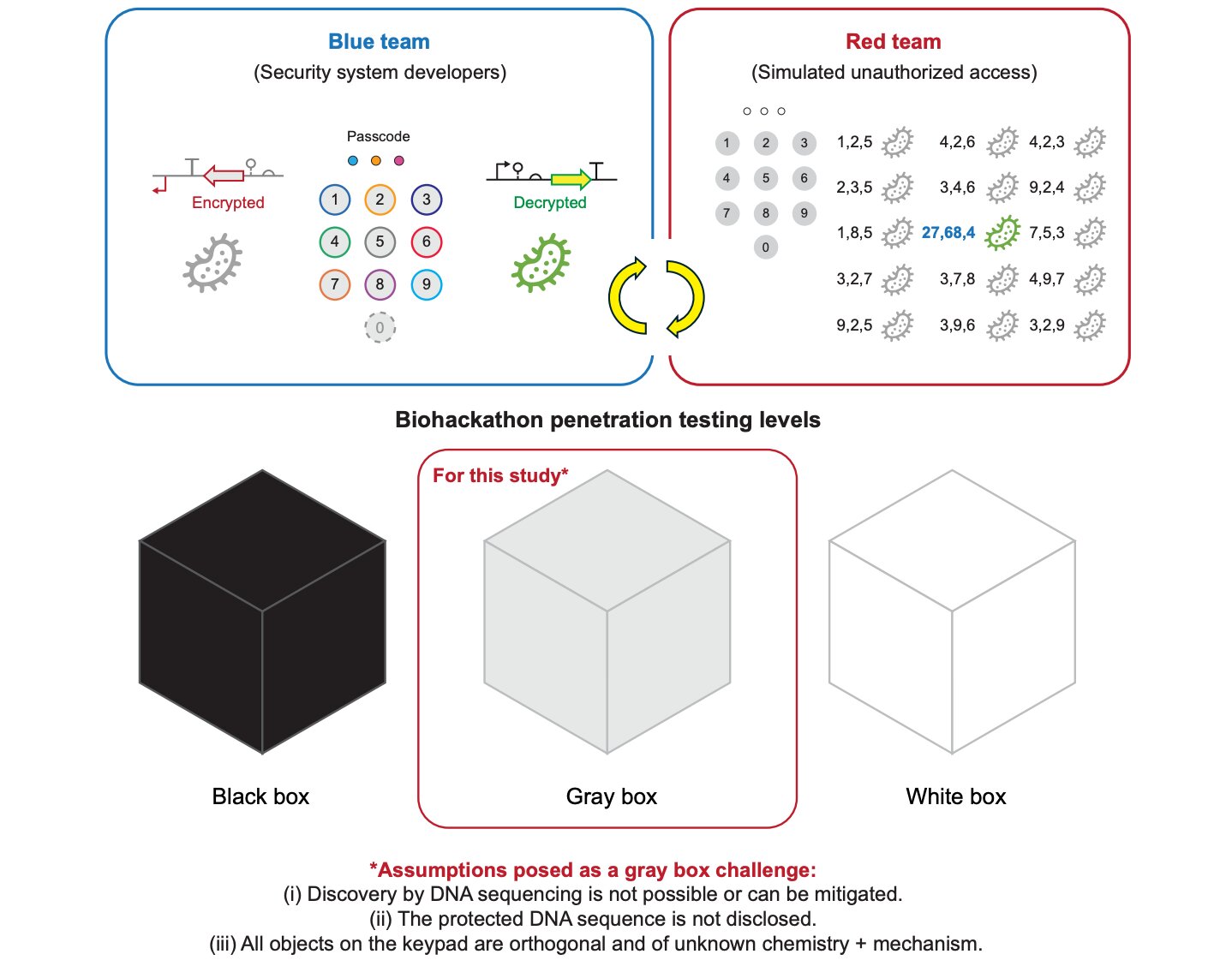
No security system is truly proven until it is attacked. The researchers organized an ethical hacking exercise, pitting their “blue team” creators against a “red team” of hackers who had been kept entirely in the dark during the development phase. The hackers’ mission was simple: break the code and access the hidden genetic information. In the first round of this high-stakes game, the hackers managed to find a flaw. They discovered 10 different chemical combinations that partially unlocked the cells, revealing “weak spots” where the DNA wasn’t quite scrambled enough or the sensors were too sensitive.
The developers went back to the drawing board, “patching” the genetic code much like a software engineer fixes a bug in a computer program. They even added a “safety penalty” for those who tried to tamper with the system. If an unauthorized user entered the wrong sequence or tried to brute-force the lock, the cell was programmed to release toxins, effectively destroying the asset before it could be compromised. When the hackers returned for a second attempt at this reinforced lock, the results were staggering. Random guessing resulted in a success rate of only 0.2%, nearly identical to the theoretical target of 0.1%. Out of 990 possible attempts, only the exact, precise passcode worked.
A new era of biological self-protection
The success of this study, which was performed using engineered E. coli cells, signals a fundamental shift in how we think about biological security. We are moving away from a world where we rely solely on external barriers and toward a future where genetic material is protected by safety algorithms built into the DNA itself. While more research is needed to see if this “lock” can be scaled to protect multiple genes at once or if it can work in more complex organisms, the foundation has been laid.
This research matters because it addresses a terrifying gap in our modern scientific infrastructure. As we become more adept at writing the code of life, that code becomes a target. By turning engineered cells into their own protectors, we ensure that the tools meant to cure diseases or solve the climate crisis cannot be easily stolen and turned into instruments of harm. It provides a way to share and transport high-value biological assets with the peace of mind that, without the secret chemical handshake, the life inside remains a locked and silent mystery.
Study Details
Dowan Kim et al, Protecting cells at the genetic level and simulating unauthorized access via a biohackathon, Science Advances (2026). DOI: 10.1126/sciadv.aeb8556