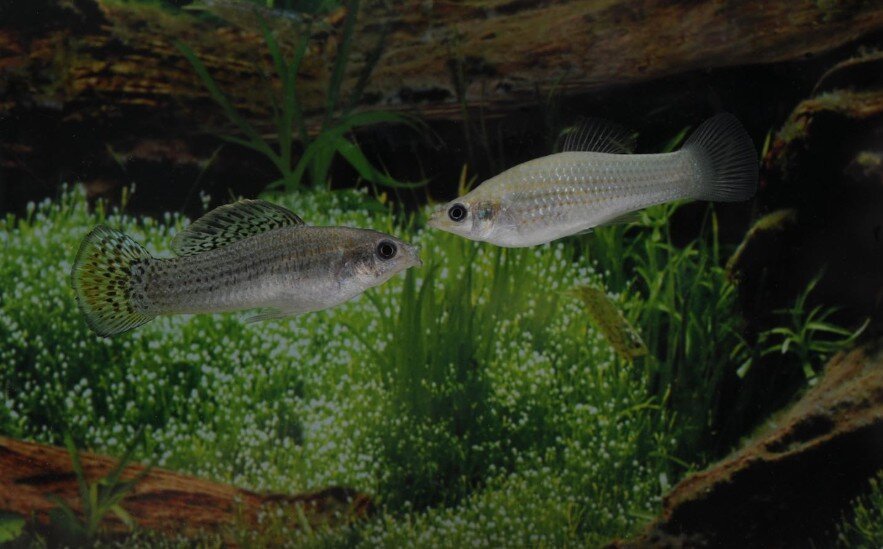
In the sun-drenched waters near Tampico, Mexico, a small, unassuming fish is quietly breaking every rule in the book of life. The Amazon molly, known scientifically as Poecilia formosa, is a species that, by all traditional accounts of biology, should have vanished from the Earth millennia ago. Yet, for over 100,000 years, this tiny creature has not only survived but thrived, challenging our deepest understandings of how species evolve, adapt, and resist the slow decay of time.
A biological miracle born of a chance encounter
The story of the Amazon molly begins not with a slow crawl through the eras, but with a sudden, accidental spark. Roughly 100,000 years ago, a female Poecilia mexicana crossed paths with a male Poecilia latipinna. In the world of biology, such hybridizations usually lead to a dead end—think of the mule or the liger, creatures that are born sterile, unable to pass on their legacy. But this specific union produced a miracle. The resulting hybrid was not a dead end; she was the beginning of an entire lineage. Every single Amazon molly swimming in the wild today is a direct descendant of that one original mother, carrying her specific genetic signature through the centuries.
Named after the legendary all-female warriors of Greek mythology rather than the river basin where they do not live, these fish are a species of clones. They are entirely female, giving live birth to young that are genetically identical to themselves. In their world, there are no fathers, no shuffling of paternal and maternal genes, and no traditional mating. While they do interact with males of related species to trigger the reproductive process, the male contributes no DNA to the offspring. The mother’s ovaries contain specialized cells that perform a modified version of meiosis. In standard sexual reproduction, this process involves pairing up chromosomes and swapping information to create diversity. The Amazon molly skips the swap, producing eggs that already contain a full, double set of DNA. This unique form of cloning, known as apomixis, allows them to march through history as a self-sustaining army of sisters.
The ticking clock of genetic decay
For decades, the survival of the Amazon molly has been a thorn in the side of evolutionary theory. Scientists have long pointed to a concept known as Muller’s ratchet to explain why asexual reproduction is usually a recipe for extinction. Imagine a photocopier making a copy of a copy of a copy. Eventually, a small smudge appears. Without an original master document to refer back to, that smudge is copied onto the next page, and new smudges are added. Over time, the image becomes unreadable.
In genetics, these “smudges” are harmful mutations. Sexual reproduction is thought to be the “master document” fix; by shuffling genes between two parents, nature can filter out the bad and keep the good. Clonal organisms, however, are supposed to be trapped by the ratchet, accumulating genetic errors until the species collapses under the weight of its own flawed code. According to this rule, the Amazon molly should have succumbed to genetic decay long ago. Yet, when researchers looked at the data, they found a species that was remarkably resilient, showing no signs of the expected evolutionary exhaustion.
Unlocking the vault of the ancient sisters
To solve this mystery, a team of researchers turned to the most advanced tools of modern science, publishing their findings in the journal Nature. They sought to map the fish’s entire genetic blueprint with a level of detail never before achieved. Using long-read sequencing technology, they were able to read the massive strings of DNA without losing the context of how they were arranged.
The researchers utilized a combination of Hi-C technology, which reveals how DNA folds and organizes itself into chromosomes, and trio-binning. This latter technique was essential because it allowed the scientists to separate the two ancestral halves of the fish’s genome. Since the Amazon molly is a hybrid, its DNA is a mix of its two founding parents. By “binning” the DNA, researchers could study the P. mexicana side and the P. latipinna side independently, tracing how each lineage has changed over the last 100,000 years.
What they discovered was a paradox: the Amazon molly actually picks up mutations faster than its relatives that reproduce sexually. On paper, this should make them even more vulnerable to extinction. However, hidden within their code was a sophisticated defense mechanism that allowed them to cheat the system.
The cosmic copy and paste
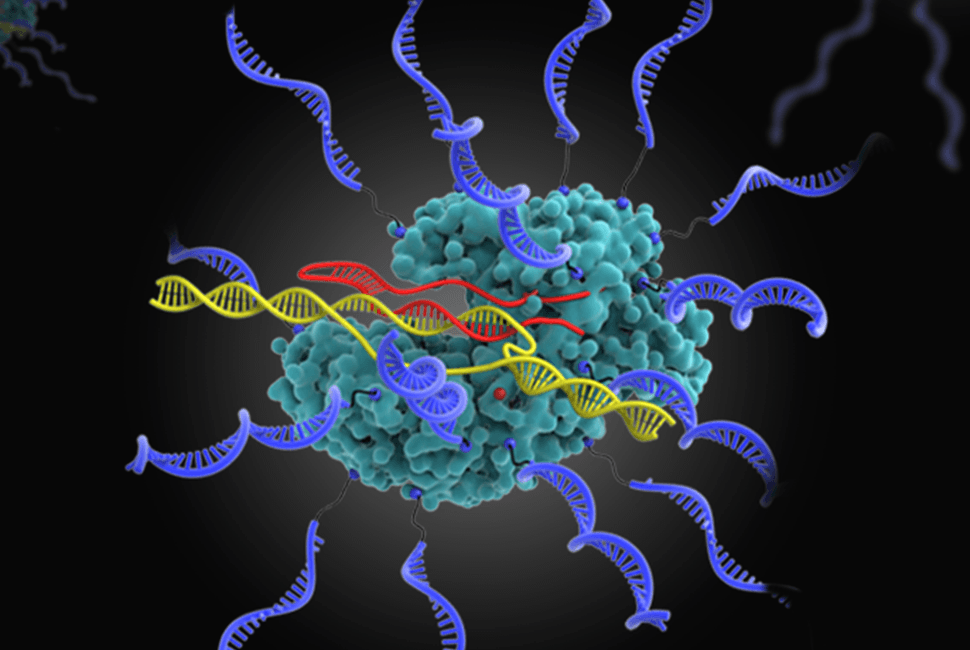
The secret to the molly’s immortality lies in a process called gene conversion. While the fish cannot trade DNA with a mate, it has learned to trade DNA with itself. When the fish’s internal systems spot a harmful mutation or a damaged section of code, it doesn’t simply let the error stand. Instead, it searches its own genome for a healthy version of that same gene located in another area. It then “copies” the healthy sequence and “pastes” it directly over the faulty region, overwriting the mistake.
This internal repair shop allows the Amazon molly to achieve the benefits of sexual reproduction—purging bad genes and keeping good ones—without the need for a partner. The study found that this process supports two vital evolutionary pathways. First is purifying selection, or negative selection, which acts like a biological filter to reduce the presence of harmful variations. Second is adaptive selection, or positive selection, which actively promotes beneficial mutations that help the fish stay fit and healthy.
The genome map revealed that these repairs aren’t distributed randomly. The highest rates of genetic “patching” occur near DNA sequences that carry crucial instructions for survival, such as those governing immunity and cell signaling. Most interestingly, the two halves of the molly’s DNA are not aging at the same rate. The P. mexicana half of the genome is mutating and shifting much faster than the P. latipinna half, remarkably mirroring the genetic changes happening to the original ancestor species still living in the wild today.
Why the rebel of the Rio Grande matters
This research is about far more than just a tiny fish in a Mexican stream; it challenges the fundamental “cost” of asexual reproduction. For over a century, biology has assumed that the lack of genetic shuffling was an inherent weakness that doomed a species to a short existence. The Amazon molly proves that nature has more than one way to maintain a healthy genome.
By identifying gene conversion as a powerful tool for offsetting genetic decay, this study opens a new door in evolutionary biology. It forces scientists to ask if other long-lived asexual species—creatures that have seemingly defied the odds for millions of years—are using the same “copy and paste” trick or if they have discovered entirely different ways to stay forever young in an evolutionary sense. The Amazon molly stands as a living testament to the creativity of life, proving that even an “accidental” species can find a way to thrive against the weight of the rules.
Study Details
Edward Ricemeyer, Gene conversion empowers natural selection in a clonal fish species, Nature (2026). DOI: 10.1038/s41586-026-10180-9. www.nature.com/articles/s41586-026-10180-9