For two centuries, the dinosaur group known as Iguanodontia has felt familiar to science, studied, cataloged, and seemingly well understood. Then a single fossil, pulled from the rocks of China, quietly rewrote that sense of certainty. Preserved not just as bone but as skin, this young dinosaur carried a secret no one had ever seen before, a feature so unexpected it forced scientists to rethink what dinosaur bodies could do.
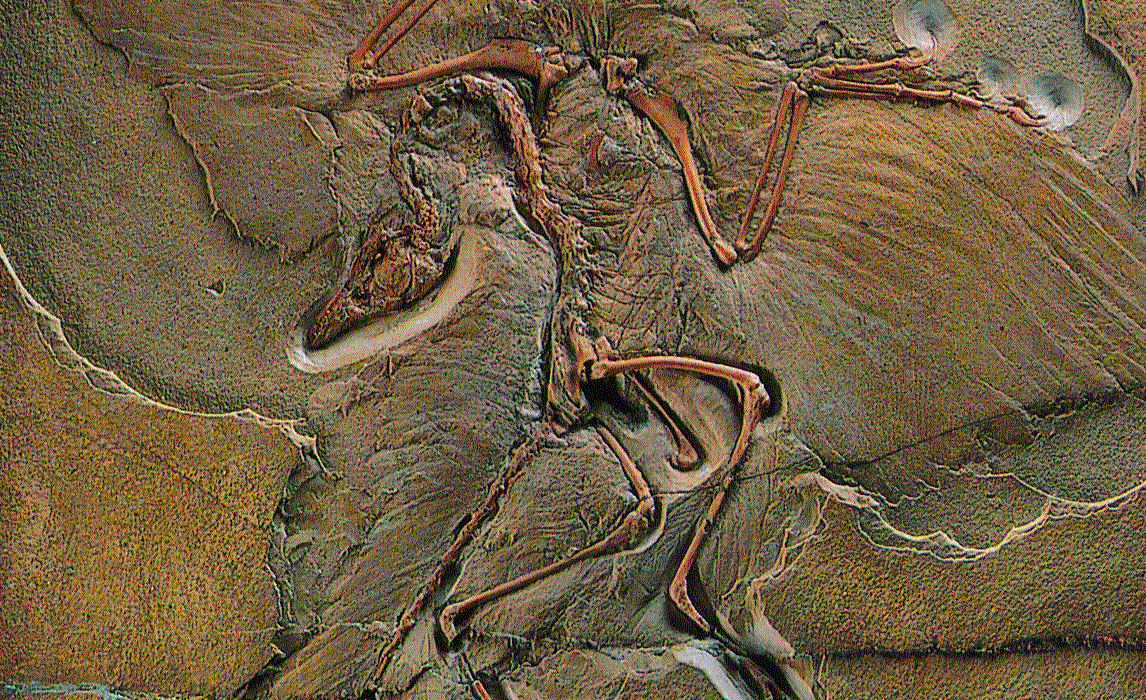
The discovery came from an international team led by researchers from the CNRS, who found the fossilized skin of an exceptionally well-preserved juvenile iguanodon. This was not a fragment or an impression. It was a direct window into an animal that lived 125 million years ago, its skin cells still holding stories no one had known how to read until now.
When Ancient Skin Comes Back to Life
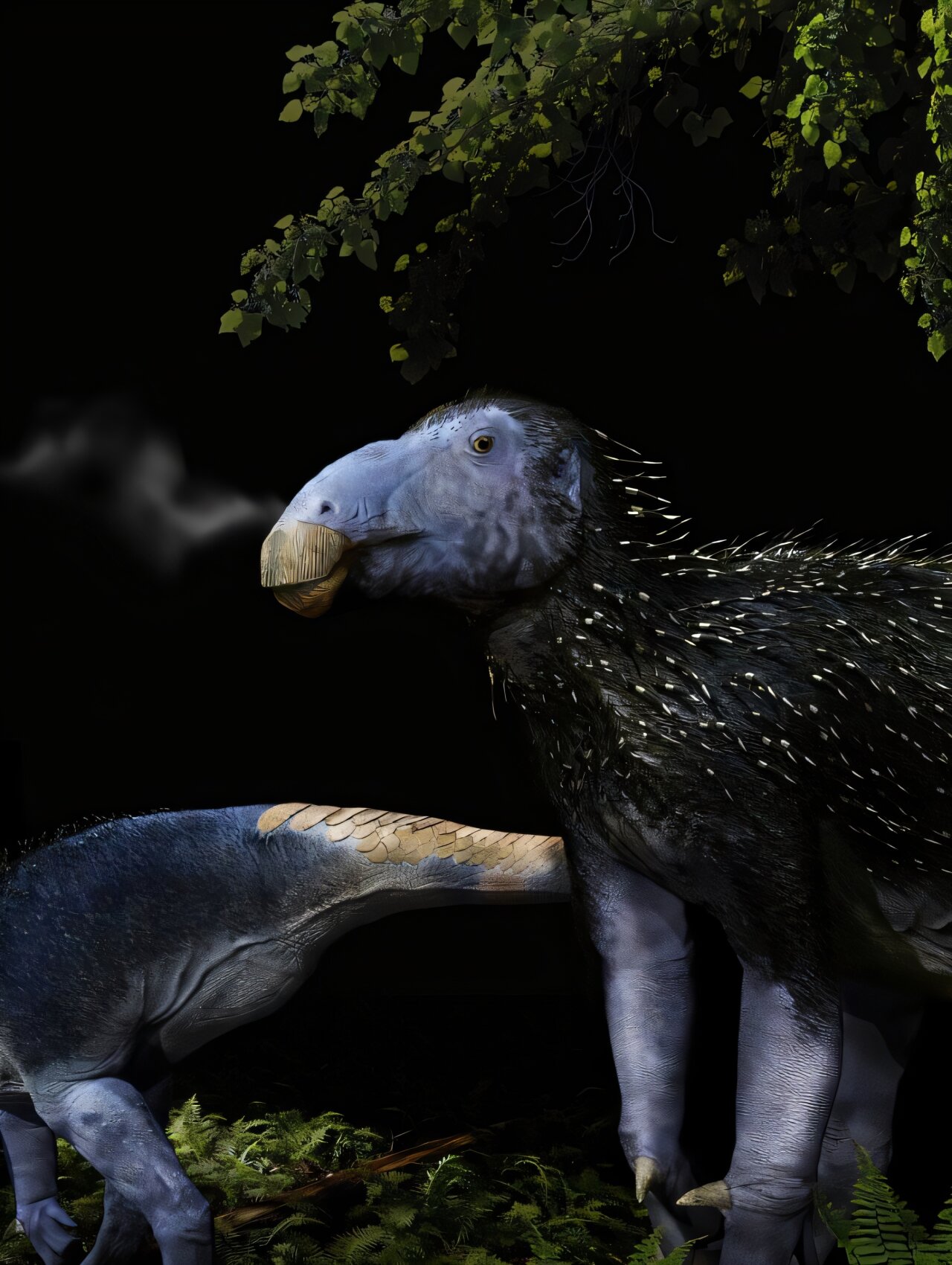
To unlock those stories, the researchers turned to X-ray scans and high-resolution histological sections, carefully examining the fossil at microscopic scales. What emerged was astonishing. Preserved within the skin were cells arranged into structures never before documented in any dinosaur. These were hollow, cutaneous spikes, rising from the skin and covering a large portion of the animal’s body.
This was not decoration or damage from fossilization. The spikes had a clear biological structure, one that suggested purpose and function. Their discovery marked the first known evidence of such spines in dinosaurs, an entirely new category of skin appendage preserved across deep time.
The scientists named the new species Haolong dongi, honoring Dong Zhiming, a pioneer of Chinese paleontology whose work helped shape the field that made this find possible.
A Gentle Eater with a Dangerous Look
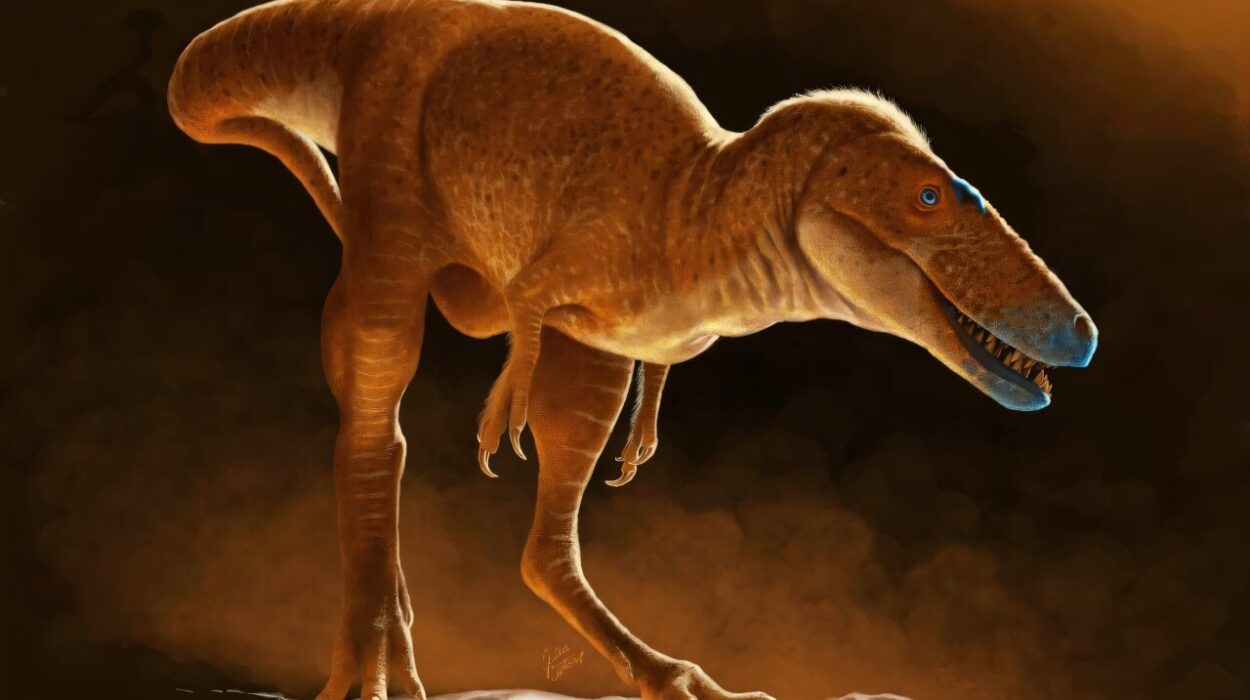
Despite its formidable appearance, Haolong dongi was a herbivore. It lived under constant threat from small carnivorous dinosaurs, and the spikes may have been its answer to that danger. Comparable in deterrent function to the spines of porcupines, these appendages could have made attacks painful or risky for predators.
Yet defense may not have been their only role. The researchers suggest the spikes might also have contributed to thermoregulation or even sensory perception, hinting at a multi-purpose adaptation unlike anything previously observed in dinosaurs. Each possibility adds depth to the image of this animal as more than prey, but as an active participant in its environment.
A Mystery Written in Youth
One question lingers, unanswered for now. The fossil belongs to a juvenile, leaving scientists unsure whether adult Haolong dongi carried the same spines. Did these structures disappear with age, grow larger, or change function entirely? The discovery opens a door, but beyond it lies a hallway of new questions waiting for future fossils to answer.
The research was published in Nature Ecology & Evolution on February 6, 2026, formally introducing this spiny newcomer to the scientific world.
Why This Discovery Changes the Dinosaur Story
This finding matters because it reveals how much remains hidden in the fossil record, even among dinosaur groups studied for hundreds of years. The preserved skin of Haolong dongi shows that dinosaur evolution included innovations still unknown to science, waiting in stone for the right tools and the right moment. By uncovering entirely new types of anatomy, this research reminds us that Earth’s deep past is not finished surprising us, and that every fossil still has the potential to change the story we thought we knew.
Study Details
Jiandong Huang, Cellular-level preservation of cutaneous spikes in an Early Cretaceous iguanodontian dinosaur, Nature Ecology & Evolution (2026). DOI: 10.1038/s41559-025-02960-9. www.nature.com/articles/s41559-025-02960-9