For years, the red, wind-swept plains of Mars have guarded their secrets behind a mask of frozen dust and ancient rock. We have long looked at the scarred surface of the fourth planet from the sun and wondered if the dry channels we see today were once rushing with the life-giving force of liquid water. In the heart of a massive impact site known as Jezero Crater, a robotic explorer named Perseverance has been wandering since February 2021, acting as our eyes and ears on this distant world. While the rover’s mission was always to find signs of ancient life, a recent discovery has pulled back the curtain on a chapter of Martian history that was previously invisible to the human eye.
Deep beneath the floor of the crater, hidden under layers of grit and time, scientists have found the remains of an ancient river delta. This isn’t the delta we can see from space, but a much older, “ghost” delta buried more than 35 meters underground. The discovery suggests that the story of water on Mars is much longer and more complex than we ever imagined, pushing the timeline of potential habitability back by millions of years.
A Vision Through the Dust
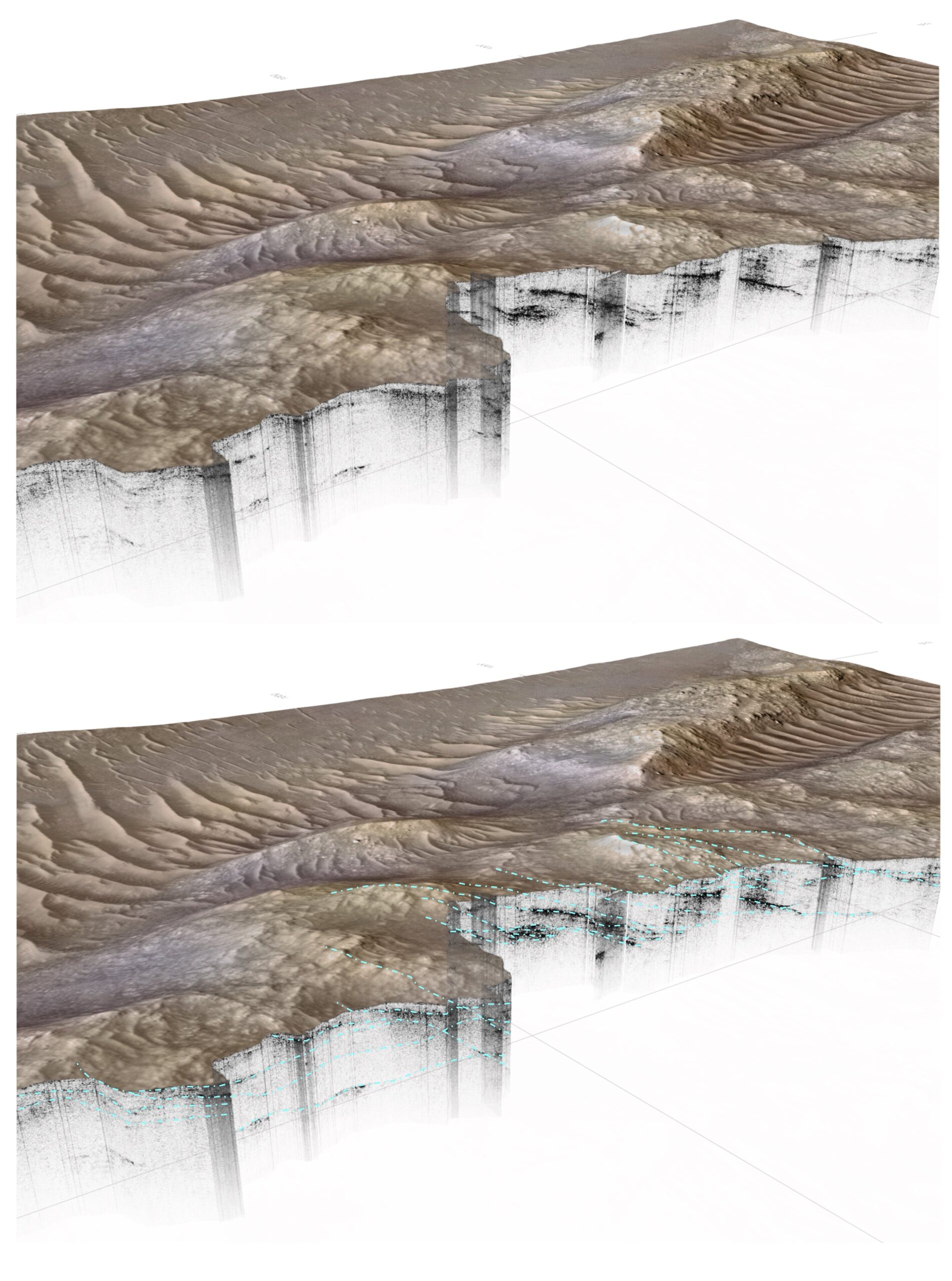
To see what lies beneath the Martian soil, Perseverance uses a specialized piece of technology called RIMFAX, or the Radar Imager for Mars’ Subsurface Experiment. While high-resolution cameras can only capture the surface, this ground-penetrating radar allows researchers to peer into the planet’s basement. During a series of 78 traverses conducted between September 2023 and February 2024, the rover sent radar pulses deep into the ground, reflecting off the hidden structures below.
Led by Emily Cardarelli at the University of California, Los Angeles, a team of researchers combined this radar data with satellite images and the rover’s GPS coordinates. Together, they constructed a 3D map of the subterranean world. What they found was a series of sloping layers of sediment known as clinoforms. To a geologist, these are the unmistakable fingerprints of a delta—a place where a river once emptied into a standing body of water, such as a lake, and dropped its heavy load of sand and mud.
This buried environment is nearly twice as deep as anything captured in previous radar studies of the crater. It tells us that before the dusty surface we see today was formed, there was a vibrant, aqueous world operating in the shadows of the crater walls.
The First Breath of a Watery World
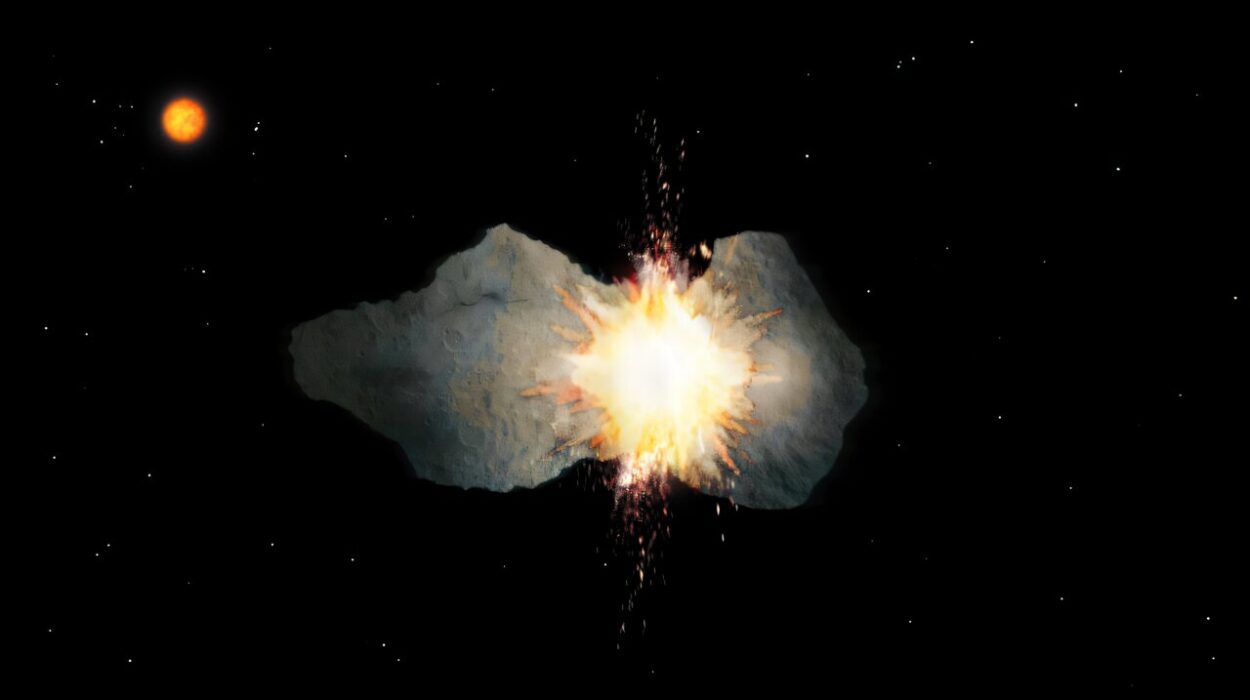
The Jezero Crater itself is a massive basin, measuring approximately 45 kilometers in diameter. Formed by a violent asteroid impact nearly 4 billion years ago, it has long been a primary target for NASA. The reason for this interest lies in the crater’s chemistry, specifically a region called the Margin Unit. This area is thick with carbonates, minerals that, on Earth, are almost always created in stable, wet environments like shallow seas or lakebeds.
Until now, scientists focused on the Western Delta, a fan-shaped expanse of sediment visible on the crater floor. However, the radar data from RIMFAX has revealed that the buried delta is much older. Researchers estimate this hidden system formed between 3.7 billion and 4.2 billion years ago. This means that before the Western Delta ever existed, a completely different river system was already carving its way through the landscape.
The presence of this older delta proves that water didn’t just flicker across the surface of Mars in a brief moment of geological time. Instead, it suggests a sustained presence of liquid water that predates the visible landmarks. By finding a delta under a delta, scientists have effectively extended the “biography” of water in Jezero Crater, showing that the planet was wet and potentially hospitable much earlier than the history books previously recorded.
Why the Depths Call to Us
This discovery is more than just a win for Martian geology; it is a beacon for the search for ancient Martian life. If water flowed in the same spot across two different eras, separated by millions of years, the window of time for life to emerge and thrive becomes significantly wider. Every layer of sand and mud deposited by these ancient rivers acts as a time capsule, potentially trapping organic signatures or microbial fossils within the sediment.
The fact that these layers are buried 35 meters deep is actually a stroke of luck for science. These deep sediments have been shielded from the harsh surface radiation and modern Martian weathering for billions of years. By proving that a subsurface deltaic environment exists, the Perseverance mission has confirmed that the “prime real estate” for finding life is even more vast than we suspected.
Understanding this hidden history matters because it transforms our view of Mars from a planet that was “briefly wet” to a world that had a long-standing relationship with liquid water. As Perseverance continues to collect rock samples and move across the crater, every meter it travels is a step further into a past where the Red Planet might have been a Blue one. This research reminds us that to truly understand a world, we cannot simply look at its face; we must be willing to look deep beneath the surface to find the stories buried in the dust.
Study Details
Emily L. Cardarelli et al, Ground penetrating radar observations of ancient large-scale deltaic structures in Jezero crater, Mars, Science Advances (2026). DOI: 10.1126/sciadv.adz6095