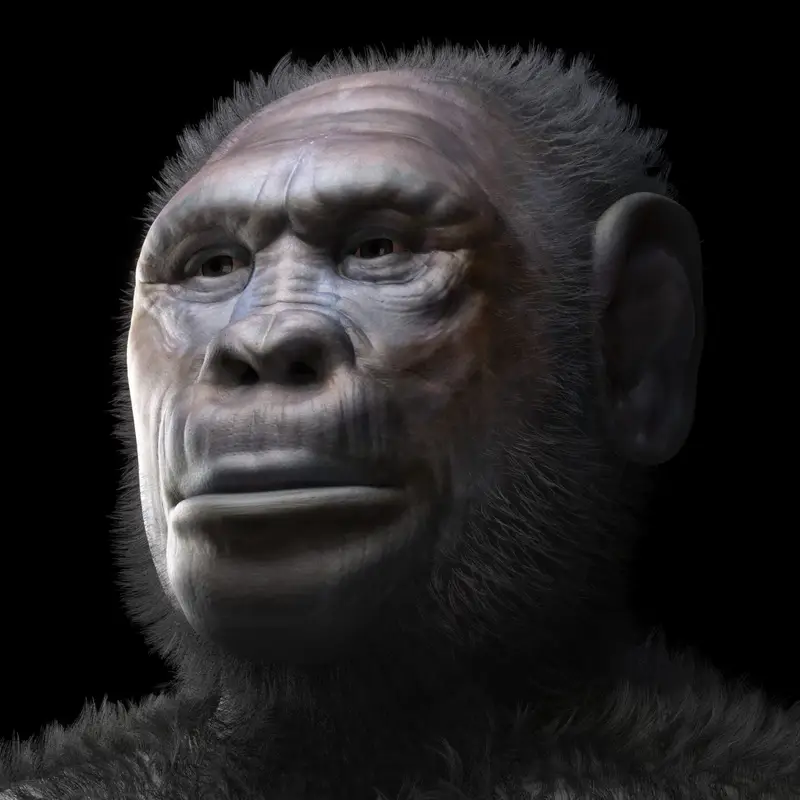
For decades, the story seemed simple. Around 1.8 million years ago, a single human species gathered its courage, crossed familiar landscapes, and stepped out of Africa for the first time. That species, according to the textbook version of human evolution, was Homo erectus. It was a clean narrative, easy to teach and easy to remember. One species. One great journey.
But science rarely stays simple for long.
In recent years, that tidy picture has begun to crack. Fossils unearthed far from Africa have whispered a more complicated tale, one that suggests the first human migration may not have been a solo act at all. Now, new research published in the journal PLOS One adds fresh fuel to the debate, drawing its evidence not from dramatic skull shapes or bold reconstructions, but from something far more enduring: ancient teeth.
Five Skulls That Refused to Agree
The heart of the controversy lies in the Republic of Georgia, at a site called Dmanisi. Between 1999 and 2005, researchers uncovered five remarkably well-preserved skulls there. These fossils are among the oldest human remains ever found outside Africa, and they quickly became famous for what they seemed to say about our past.
The problem was that they didn’t seem to say the same thing.
At first glance, the skulls looked strikingly different from one another. Some were larger, others smaller. Some appeared more robust, others more delicate. One specimen in particular, known as Skull 5, stood out. It had a tiny braincase paired with a massive, protruding face and jaw. Compared to the others, it almost looked like it belonged to a different kind of being.
This diversity sparked a debate that has only grown louder over time. Some researchers argued that all five skulls belonged to the same species, with differences explained by natural variation between males and females. Others believed the differences were too great, suggesting that two distinct species might have been living side by side at Dmanisi.
If the latter were true, it would mean the first exodus from Africa involved more than one branch of the human family tree.
Listening to the Hardest Evidence Left Behind
To bring clarity to this question, a research team led by Victor Nery at the University of São Paulo turned their attention away from skull shapes and toward a more reliable witness: teeth.
Skulls, as informative as they are, come with problems. Bone is fragile. Over hundreds of thousands of years, it can be crushed, warped, and distorted by geological forces. Teeth, by contrast, are extraordinarily resilient. Dental enamel is the hardest biological substance produced by humans. It survives when much else is lost.
Because of this durability, teeth often preserve subtle biological signals that bones cannot. The shape and size of individual teeth, especially those at the back of the mouth, can carry clear markers of species identity.
The team focused on the surface area of the dental crowns of premolars and molars from three Dmanisi specimens that had sufficient dental remains for detailed study. These measurements might sound modest, but they hold a wealth of information about evolutionary relationships.
Building a Map from 583 Teeth
The researchers didn’t stop at Dmanisi. To understand what those teeth truly meant, they needed context. They compared the Dmanisi dental data with a large database of 122 other fossil specimens, spanning Australopithecus and several other Homo species.
In total, the analysis included measurements from 583 teeth.
Using a statistical sorting tool, the team created what they described as a biological map. This map wasn’t geographical, but evolutionary. It showed how closely related different specimens were based on the dimensions of their teeth, revealing clusters that suggested shared ancestry and separation.
The question was simple but profound: did the Dmanisi teeth all fall into one cluster, representing a single species, or did they separate into distinct groups?
A Split in the Family Tree
The results were striking.
The map revealed that the Dmanisi specimens did not belong to a single group. Skull 5, with its large jaw and distinctive dental characteristics, clustered with Australopiths, a more primitive, ape-like group of ancestors. The other two specimens grouped together elsewhere, showing more human-like dental traits.
This separation suggested that the differences seen in the skulls were not superficial or misleading. They reflected deeper biological distinctions.
Based on these findings, the study’s authors support recognizing two species at Dmanisi. They propose using the name Homo georgicus for Skull 5, and Homo caucasi for the more human-like group.
If correct, this interpretation means that two different human species were present at the same site, at the same time, outside Africa.
Beyond Male and Female Differences
One of the strongest counterarguments to the idea of multiple species has always been sexual dimorphism. In many animals, males and females can look dramatically different in size and shape while still belonging to the same species.
To test this possibility, the researchers compared the Dmanisi fossils with those of great apes. In species like gorillas, males are much larger than females, but their basic dental patterns remain consistent. The teeth may scale up or down, but they don’t reorganize into entirely different forms.
The Dmanisi teeth told a different story.
The differences between the specimens were so pronounced that male-female variation within a single species could not reasonably explain them. The dental distinctions ran deeper than size alone, pointing instead to separate evolutionary lineages.
As the researchers wrote in their paper, “The postcanine dental crown area analysis of the Dmanisi hominin fossils… supports the hypothesis of distinct species coexisting temporally at the site (Homo caucasi and Homo georgicus). This possibility challenges the prevailing model of Homo erectus migration out of Africa…”
A Migration More Crowded Than We Thought
This conclusion carries significant implications. If two species were present at Dmanisi, then the first journey out of Africa may not have been led by Homo erectus alone. Instead, multiple human species may have ventured beyond the continent around the same time, adapting to new environments in parallel.
Such a scenario reshapes our understanding of early human evolution. Rather than a single, linear march led by one successful species, the story becomes richer and more complex. Different human forms may have explored the world together, overlapping in time and space, each carrying its own evolutionary experiments.
At the same time, the researchers are cautious. Fossil evidence is precious but limited, and the authors acknowledge that more specimens may be needed before the scientific community reaches a full consensus.
Still, the teeth have spoken with unusual clarity.
Why This Discovery Matters
This research matters because it reminds us that human evolution is not a straight line but a branching tree, full of unexpected turns and forgotten companions. By focusing on the smallest and hardest remnants of ancient lives, scientists are uncovering evidence that challenges long-held assumptions about who we are and where we came from.
Understanding whether one species or several left Africa first shapes how we think about adaptability, survival, and the roots of human diversity. It influences how we interpret other fossils, how we name ancient species, and how we imagine the world our ancestors encountered.
Most of all, this study shows that even after more than a century of fossil discoveries, the human story is still being rewritten. Sometimes, the clues that change everything are not the grand skulls that capture our imagination, but the quiet, enduring teeth that waited patiently for someone to ask the right questions.
In listening closely to those ancient enamel surfaces, scientists are hearing echoes of a past far more complex than we once believed, and in doing so, they are bringing us closer to understanding the true depth of our shared origins.
More information: Victor Nery et al, Testing the taxonomy of Dmanisi hominin fossils through dental crown area, PLOS One (2025). DOI: 10.1371/journal.pone.0336484