The universe has a story, and like all stories, it raises the question of how it might end. Among the many possible endings imagined by cosmologists, the Big Crunch stands as one of the most dramatic and emotionally charged. It envisions a universe that does not expand forever but instead reverses its course, slows, stops, and collapses back in on itself under the relentless pull of gravity. In this scenario, space itself contracts, galaxies rush toward one another, temperatures rise, and the cosmos ends not in cold emptiness but in a fiery, catastrophic convergence.
The Big Crunch is not merely a speculative fantasy. It arises naturally from the equations of general relativity and from humanity’s attempt to understand how matter, energy, and spacetime interact on the largest scales. To explore the Big Crunch is to confront fundamental ideas about time, destiny, and the balance of forces that shape the universe. It is a story that blends precise mathematics with profound existential implications, reminding us that cosmology is as much about meaning as it is about measurement.
Expansion, Gravity, and the Cosmic Tug-of-War
To understand the Big Crunch, one must begin with the expansion of the universe. Observations show that space itself has been expanding since the universe emerged from an extremely hot, dense state commonly described as the Big Bang. Galaxies are not flying through space away from a central point; rather, space between galaxies is stretching, carrying them apart. This expansion was first observed through the redshift of distant galaxies, whose light is stretched to longer wavelengths as space expands.
Yet expansion is only one side of the cosmic story. Gravity works in the opposite direction. Every particle of matter attracts every other, and on cosmic scales this attraction acts collectively. The ultimate fate of the universe depends on which of these influences dominates. If expansion is strong enough, it can overcome gravity forever. If gravity is strong enough, it can eventually halt expansion and reverse it.
The Big Crunch emerges from this cosmic tug-of-war. In its simplest form, it is the outcome when the total gravitational pull of matter and energy in the universe is sufficient to overcome the expansion driven by the initial conditions of the Big Bang. In such a universe, expansion slows over time, eventually reaches a maximum size, and then turns around. From that moment, the universe begins to contract.
Einstein’s Equations and Cosmic Destiny
The theoretical foundation for the Big Crunch lies in Albert Einstein’s general theory of relativity, which describes gravity as the curvature of spacetime caused by mass and energy. When applied to the universe as a whole, Einstein’s equations yield solutions that describe different possible cosmic evolutions. These solutions depend on parameters such as the density of matter and energy and the geometry of space.
In cosmology, a key concept is critical density. This is the precise average density of matter and energy that separates different cosmic fates. If the density is greater than the critical value, gravity is strong enough to eventually stop expansion and cause collapse. If it is less, expansion continues forever. In early cosmological models, before the discovery of dark energy, the Big Crunch was considered a natural and even likely possibility if the universe were sufficiently dense.
What makes these ideas emotionally powerful is their inevitability within the equations. Given certain conditions, a collapsing universe is not a choice or an accident but a mathematical consequence. The universe would be following the same laws that govern a falling apple or an orbiting planet, scaled up to the entire cosmos.
A Universe That Turns Back on Itself
In a Big Crunch scenario, the far future of the universe looks very different from the present. As expansion slows, distant galaxies would appear to drift more slowly away from one another. Over immense timescales, this outward motion would halt. Then the direction would reverse.
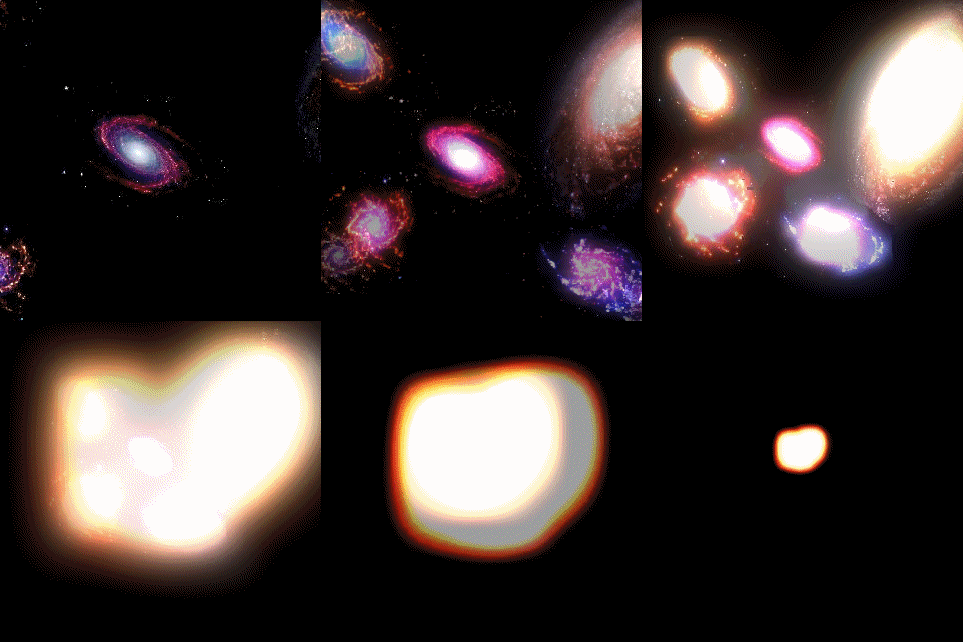
Once contraction begins, the universe becomes a place of increasing interaction. Galaxies that were once isolated by vast distances begin to move closer together. Collisions between galaxies become more frequent, triggering bursts of star formation and reshaping cosmic structures. The night sky of any surviving observers would grow brighter as once-distant galaxies loom larger.
As contraction continues, temperatures rise. Radiation becomes more energetic, and matter is compressed into smaller volumes. The universe begins to resemble, in reverse, its early hot and dense state. In the final stages, densities and temperatures would become extreme, possibly approaching conditions similar to those at the beginning of cosmic history.
The emotional resonance of this picture is striking. The Big Crunch suggests a universe that is not only finite in age but finite in size, a cosmos that breathes in after breathing out. It raises the haunting possibility that the end of the universe mirrors its beginning, closing a cosmic loop.
Time, Irreversibility, and the Arrow of the Crunch
One of the most intriguing aspects of the Big Crunch concerns time itself. In everyday experience, time has a direction. Glasses shatter but do not spontaneously reassemble; heat flows from hot to cold, not the reverse. This directionality is known as the arrow of time and is closely related to the concept of entropy, a measure of disorder.
In a contracting universe, the behavior of entropy becomes a profound question. Classical thermodynamics suggests that entropy should continue to increase even as the universe contracts. If so, the final state of the Big Crunch would be one of extremely high entropy, a chaotic and disordered collapse.
Some speculative ideas have explored whether the arrow of time might reverse during contraction, but there is no strong scientific evidence to support such a reversal. Instead, current understanding suggests that contraction would not be a simple replay of the expansion in reverse. The universe would approach its end in a highly complex, energetic, and disordered state.
This realization adds emotional depth to the Big Crunch. It is not a gentle return to simplicity but a violent and irreversible finale. Time would continue to move forward, even as space shrinks, carrying all processes toward an ultimate limit.
Matter, Radiation, and the Final Collapse
As the universe contracts, the balance between matter and radiation changes. In the present universe, matter dominates the energy budget on many scales, but radiation becomes increasingly important at high temperatures and densities. During contraction, radiation energy density rises faster than matter density, eventually becoming dominant.
This shift has significant consequences. High-energy radiation interacts strongly with matter, breaking apart atoms and nuclei. Structures that define the current universe, from stars to galaxies to atoms themselves, would not survive the final stages of contraction. The universe would become an opaque, seething plasma of particles and radiation.
At extremely high densities, known physics may no longer provide reliable descriptions. Quantum effects of gravity, which are not yet fully understood, would likely become important. The ultimate fate of matter and spacetime in the final moments of a Big Crunch remains an open question, highlighting the limits of current scientific knowledge.
The Big Crunch and the Big Bang: A Cosmic Symmetry
One of the most compelling aspects of the Big Crunch is its apparent symmetry with the Big Bang. Both involve extreme density, temperature, and curvature of spacetime. This symmetry has inspired ideas that the universe might be cyclic, undergoing repeated expansions and contractions.
In some cyclic models, the Big Crunch is not the end but a transition, leading to a new Big Bang and a new cosmic cycle. These ideas are speculative and face significant theoretical challenges, but they illustrate how the Big Crunch can serve as a bridge between cosmology and deeper questions about the origin of the universe.
The emotional appeal of a cyclic universe is clear. It suggests renewal rather than finality, a cosmos that endlessly reinvents itself. However, such models must grapple with the accumulation of entropy and other physical constraints. Whether the universe can truly cycle indefinitely remains uncertain.
Dark Energy and the Changing View of Cosmic Fate
For much of the twentieth century, the Big Crunch was considered a serious contender for the universe’s ultimate fate. This view changed dramatically with the discovery that the expansion of the universe is accelerating. Observations of distant supernovae revealed that galaxies are not merely moving apart but doing so at an increasing rate.
This acceleration is attributed to dark energy, a mysterious form of energy that permeates space and exerts a repulsive gravitational effect. If dark energy remains dominant and constant, it makes a Big Crunch unlikely. Instead, the universe would continue expanding forever, possibly ending in a very different scenario.
Yet the nature of dark energy is not fully understood. Some theoretical models allow for dark energy to change over time. In such cases, acceleration could slow or reverse, reopening the possibility of a future collapse. Thus, while current evidence favors eternal expansion, the Big Crunch cannot be ruled out with absolute certainty.
This uncertainty keeps the Big Crunch alive as a scientific and emotional possibility. It reminds us that cosmology is an evolving field and that our understanding of the universe’s fate is provisional, shaped by ongoing observation and theory.
Observational Clues and Cosmic Measurements
Determining whether a Big Crunch is possible requires precise measurements of cosmic parameters. Astronomers measure the expansion rate of the universe, the density of matter, and the properties of dark energy through a variety of observational techniques.
The cosmic microwave background, the faint afterglow of the early universe, provides a snapshot of conditions shortly after the Big Bang. Its detailed structure reveals information about the universe’s geometry and composition. Large-scale surveys of galaxies map the distribution of matter across vast distances, offering insights into gravitational dynamics.
So far, these observations suggest a universe that is very close to spatially flat and dominated by dark energy. In such a universe, the conditions required for a Big Crunch do not appear to be met. Nevertheless, future observations may reveal new physics that alters this conclusion.
The Emotional Weight of a Collapsing Universe
The idea of the Big Crunch carries a heavy emotional charge. Unlike scenarios in which the universe fades into cold darkness, the Big Crunch is violent and immediate. It suggests an ending marked by intense activity rather than gradual dissipation.
For humanity, contemplating such an end raises existential questions. What does it mean to exist in a universe with a predetermined collapse? Does the knowledge of an ultimate end diminish or deepen the significance of life? These questions do not have scientific answers, but they arise naturally when scientific ideas intersect with human values.
Physics does not tell us how to feel about the Big Crunch, but it provides a framework for imagining it. In doing so, it expands the emotional landscape of human thought, encouraging reflection on impermanence and continuity.
The Big Crunch in Scientific Imagination
Beyond equations and observations, the Big Crunch has played a role in scientific imagination. It has inspired theoretical exploration, philosophical debate, and even cultural expression. By envisioning a universe that collapses, physicists test the limits of their theories and confront fundamental assumptions.
In this sense, the Big Crunch is valuable regardless of whether it ultimately describes reality. It serves as a conceptual laboratory, a way of probing how gravity, energy, and spacetime behave under extreme conditions. Such explorations often lead to deeper insights, even if the specific scenario proves incorrect.
The history of physics shows that discarded ideas can still leave lasting contributions. The Big Crunch, as a carefully reasoned possibility, has shaped how cosmologists think about cosmic evolution and the role of fundamental forces.
Gravity as the Architect of Endings
At the heart of the Big Crunch lies gravity, the weakest of the fundamental forces on small scales but the dominant force on cosmic scales. Gravity shapes galaxies, governs stellar evolution, and determines the large-scale structure of the universe. In the Big Crunch, gravity becomes the ultimate architect of the universe’s fate.
This perspective highlights gravity’s dual nature. It is the force that brings matter together, enabling the formation of stars and planets, but it is also the force that could one day undo the universe itself. Gravity creates structure and, potentially, destroys it.
The emotional resonance of this duality is profound. The same force that allows life to exist might also be responsible for its ultimate extinction. Physics thus reveals nature as neither benevolent nor malicious, but governed by consistent principles indifferent to human concerns.
Limits of Knowledge and the Final Singularity
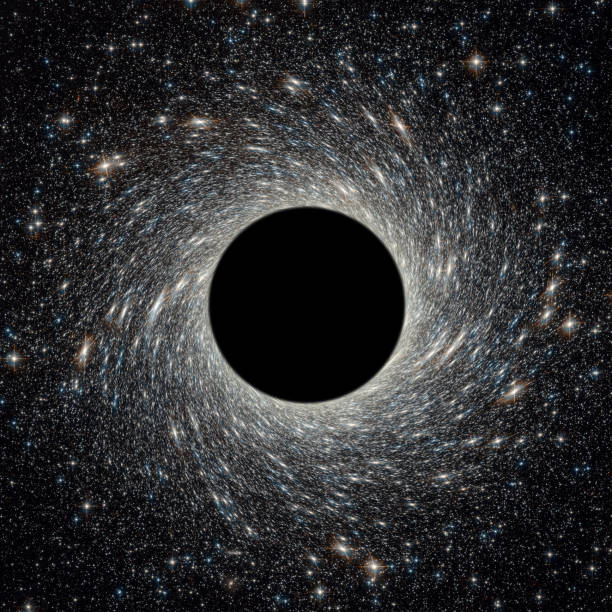
If the universe were to end in a Big Crunch, it would likely culminate in a singularity, a point where density and curvature become infinite in classical theory. Singularities represent breakdowns in our physical descriptions, signaling the need for new theories.
Understanding such extremes requires a theory of quantum gravity, which would unify general relativity with quantum mechanics. Despite decades of effort, such a theory remains incomplete. As a result, the true nature of the final moments of a collapsing universe remains unknown.
This ignorance is not a failure but an invitation. It highlights the frontiers of physics and the questions that drive ongoing research. The Big Crunch, by pushing theories to their limits, helps define what remains to be discovered.
The Big Crunch and Human Perspective
From a human perspective, the timescales involved in cosmic collapse are almost incomprehensible. Even if a Big Crunch were to occur, it would likely be tens of billions of years in the future. On such timescales, the rise and fall of civilizations, species, and even stars are fleeting episodes.
Yet thinking about the Big Crunch can reshape how we view our own moment in cosmic history. It emphasizes the transience of structures we take for granted and the vastness of the processes that surround us. At the same time, it underscores the remarkable fact that the universe has evolved to a state where it can reflect on its own fate through conscious beings.
This realization adds a quiet dignity to human inquiry. In studying the Big Crunch, humanity participates in the universe’s self-understanding, even if only briefly.
Alternative Fates and the Place of the Big Crunch
The Big Crunch is one among several possible cosmic endings. Others include eternal expansion leading to extreme dilution or more exotic scenarios involving the tearing apart of structures. Comparing these possibilities helps clarify what makes the Big Crunch unique.
Unlike endings driven by expansion, the Big Crunch emphasizes collapse and convergence. It is a future shaped by gravity’s triumph rather than its defeat. This contrast highlights the delicate balance of forces that define cosmic evolution and the sensitivity of fate to fundamental parameters.
By considering multiple endings, cosmology gains perspective. The Big Crunch stands as a reminder that the universe’s future is not predetermined by intuition but by measurable properties that science strives to uncover.
The Big Crunch as a Scientific Story
Science is often portrayed as detached and impersonal, yet cosmology shows how deeply narrative and emotional scientific ideas can be. The Big Crunch is a story grounded in equations and observations, but it resonates because it mirrors human experiences of growth, reversal, and closure.
This narrative quality does not diminish scientific rigor. Instead, it reflects the human need to frame understanding in meaningful ways. The Big Crunch, like all cosmological models, is a bridge between abstract theory and human imagination.
By telling this story carefully and accurately, physics communicates not only facts but a sense of wonder. It invites us to imagine the universe on scales far beyond our own and to contemplate endings that transcend individual lives.
Conclusion: The Big Crunch and the Meaning of Cosmic Endings
The Big Crunch represents one of the most dramatic possible destinies of the universe, a future in which gravity reverses expansion and draws all things together in a final collapse. Rooted in general relativity and shaped by the balance of cosmic forces, it is a scientifically grounded scenario, even if current evidence suggests it may not occur.
Exploring the Big Crunch deepens our understanding of cosmology, gravity, and time. It challenges intuition, tests theories, and opens philosophical questions about beginnings and endings. Whether or not the universe ultimately collapses, the Big Crunch remains a powerful idea, reminding us that the cosmos is dynamic, finite, and governed by laws that invite both understanding and humility.
In contemplating the Big Crunch, humanity looks not only toward a possible end but toward the limits of knowledge and the enduring drive to comprehend the universe. It is this drive, as much as any specific outcome, that defines our place in the cosmic story.