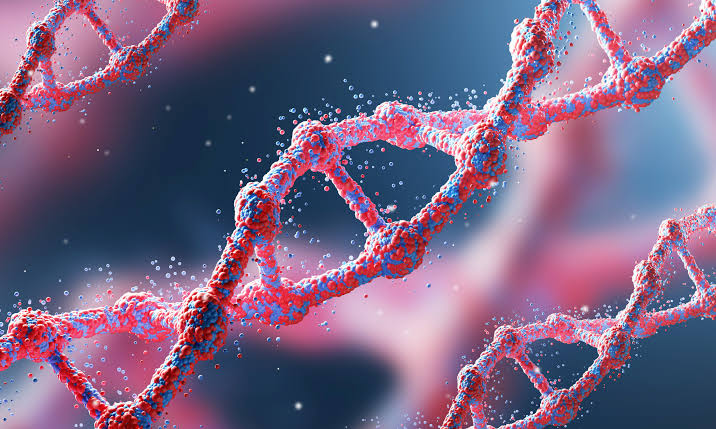
Inside nearly every cell of your body lies a molecular library so vast and intricate that it holds the complete instructions for building and maintaining a human being. This library is written in a language of four chemical letters, arranged in long sequences that stretch across twenty-three pairs of chromosomes. If the DNA from a single human cell were unwound and laid end to end, it would extend about two meters in length. Yet it fits inside a microscopic nucleus thousands of times smaller than a grain of sand.
For decades, scientists believed that only a small fraction of this enormous genetic instruction manual actually mattered. Roughly two percent of human DNA appeared to contain genes—segments that provide instructions for building proteins, the molecular machines that carry out most biological tasks. The remaining ninety-eight percent seemed to do… nothing.
It was labeled “junk DNA.”
The phrase spread rapidly through textbooks, classrooms, and public imagination. It suggested that most of our genetic material was evolutionary clutter, leftover fragments from ancient mutations and viral invasions—biological debris that simply accumulated over time.
But biology rarely stays simple for long. As research advanced and technology improved, scientists began to realize that the supposed “junk” might not be junk at all. Hidden within those vast stretches of DNA were signals, switches, regulators, and mysteries that challenged one of the most persistent ideas in genetics.
The story of junk DNA is not just about molecules and genes. It is about how science evolves, how assumptions are questioned, and how the genome—once thought to be mostly silent—turned out to be whispering far more than anyone expected.
The Discovery of DNA and the Birth of Modern Genetics
To understand why scientists once believed most DNA was useless, we must return to the early days of molecular biology. The structure of DNA was famously revealed in 1953 by James Watson and Francis Crick, building on crucial experimental data produced by Rosalind Franklin. Their discovery showed that DNA forms a double helix composed of two strands twisted together like a spiral staircase.
Each strand consists of repeating chemical units called nucleotides. These nucleotides contain four possible bases: adenine, thymine, cytosine, and guanine. The order of these bases encodes genetic information, much like letters forming words and sentences.
Soon after the structure of DNA was discovered, scientists began to unravel how this code functions. Genes were identified as segments of DNA that contain instructions for building proteins. Through processes called transcription and translation, the genetic information stored in DNA is converted into RNA and then used to assemble proteins from amino acids.
Proteins perform a vast range of tasks in the body. They form structural components like collagen, catalyze chemical reactions as enzymes, transport molecules, and regulate cellular processes. Because proteins seemed to be the primary functional products of genes, researchers initially focused almost entirely on DNA sequences that coded for proteins.
When scientists began analyzing genomes more closely, they made a surprising discovery. The number of protein-coding genes in humans appeared to be far smaller than expected. Even more puzzling, these genes occupied only a tiny portion of the genome.
This meant that most DNA did not code for proteins at all.
The Birth of the “Junk DNA” Hypothesis
By the 1970s, geneticists had begun referring to the vast non-coding portions of the genome as “junk DNA.” The term was popularized by scientists such as Susumu Ohno, who proposed that large portions of the genome consisted of evolutionary leftovers.
The idea made sense within the framework of evolutionary biology at the time. Mutations occur constantly in DNA. Some mutations affect genes and can be harmful or beneficial. But many occur in regions that do not appear to influence the organism. These neutral changes accumulate over generations.
If natural selection only acts strongly on functional genes, then nonfunctional DNA might simply build up over millions of years.
Researchers discovered many sequences in the genome that seemed repetitive or fragmented. Some resembled the genetic material of viruses that had inserted themselves into ancestral genomes. Others appeared to be duplicated segments of DNA that no longer served any clear purpose.
These observations strengthened the belief that much of the genome was evolutionary baggage. The metaphor of junk DNA captured the idea vividly: the genome was like a house filled with old furniture, broken tools, and forgotten relics from the past.
For decades, this concept shaped the way scientists viewed the genome. The real action, it seemed, was concentrated in the small percentage of DNA that encoded proteins.
But the genome had secrets yet to reveal.
The Human Genome Project and a New Perspective
In the late twentieth century, a massive international effort began to map and sequence the entire human genome. This initiative, known as the Human Genome Project, aimed to identify every gene and determine the sequence of all human DNA.
The project officially began in 1990 and was completed in 2003. When the results were published, they confirmed that humans possess roughly 20,000 protein-coding genes—far fewer than many scientists had predicted.
But the most startling revelation was how little of the genome these genes occupied. Protein-coding sequences accounted for only about two percent of the total DNA.
This meant that ninety-eight percent of the genome was non-coding.
At first glance, the results seemed to support the junk DNA hypothesis. Yet the more researchers examined the genome, the more complicated the picture became.
Hidden within non-coding regions were regulatory sequences, structural elements, and RNA molecules that played important roles in controlling gene activity.
The genome, it turned out, was not merely a list of protein recipes. It was an intricate regulatory system.
Genes Are Not the Whole Story
One of the biggest revelations of modern genetics is that genes alone cannot explain how organisms function. The activity of genes must be carefully controlled. Cells must know when to turn genes on, when to silence them, and how strongly to express them.
This regulation is essential because different cells in the body perform different tasks. A neuron in the brain, a muscle cell in the heart, and a skin cell all contain the same DNA, yet they behave very differently. The difference arises from patterns of gene expression.
Non-coding DNA plays a crucial role in controlling these patterns.
Certain segments of DNA act as regulatory elements that influence when genes are activated. Promoters, enhancers, silencers, and insulators help orchestrate the complex choreography of gene expression. These sequences serve as docking sites for proteins that control transcription.
Without these regulatory instructions, genes would operate chaotically. Cells would lose their identity, and development would collapse into disorder.
Far from being useless, many non-coding sequences act as genetic switches that guide the functioning of life.
The Rise of Non-Coding RNA
Another discovery further challenged the junk DNA concept: the existence of functional RNA molecules that do not code for proteins.
For many years, RNA was viewed primarily as a messenger that carries information from DNA to the protein-making machinery of the cell. This type of RNA is known as messenger RNA.
But scientists eventually discovered that the genome produces many other types of RNA with entirely different roles.
Some RNA molecules help regulate gene expression by interacting with DNA or other RNA molecules. Others influence chromatin structure, cellular signaling, or developmental processes.
In the early 2000s, research revealed that vast portions of the genome are transcribed into non-coding RNA. These molecules can be small, such as microRNAs, or extremely long, known as long non-coding RNAs.
These RNAs participate in complex regulatory networks that influence cell growth, differentiation, and disease.
The realization that non-coding regions produce functional RNA dramatically expanded our understanding of genome activity.
Repetitive DNA and Ancient Genetic Echoes
One of the most striking features of the human genome is the abundance of repetitive sequences. These segments appear multiple times throughout the DNA, sometimes thousands of times.
Some repetitive elements are known as transposable elements, often described as “jumping genes.” These DNA sequences can move from one location to another within the genome.
The concept of mobile genetic elements was first discovered by Barbara McClintock in the 1940s while studying maize. Her work revealed that certain DNA segments could change position, influencing gene expression and causing mutations.
Initially, her findings were controversial. Many scientists found the idea difficult to accept. But decades later, her discovery was recognized as groundbreaking, and she received the Nobel Prize in 1983.
Transposable elements make up a large portion of the human genome. Some originated from ancient viruses that inserted themselves into the DNA of our ancestors. Over time, these viral sequences accumulated mutations and lost their ability to replicate.
For years, these elements were considered prime examples of junk DNA. Yet research has shown that some of them have been repurposed by evolution. They can influence gene regulation, contribute to genetic diversity, and shape genome architecture.
The genome, it seems, is not a static document but a dynamic landscape shaped by millions of years of evolutionary experimentation.
The ENCODE Project and the Debate Over Function
In the early twenty-first century, scientists launched another ambitious initiative to explore genome activity: the ENCODE Project.
The goal of ENCODE was to identify all functional elements in the human genome. Instead of simply sequencing DNA, researchers studied how different regions interacted with proteins, produced RNA, and influenced gene expression.
When the project released major results in 2012, it sparked intense debate. Researchers reported that a large fraction of the genome showed biochemical activity, suggesting potential functionality far beyond the traditional two percent of protein-coding genes.
Some scientists interpreted these findings as evidence that much of the genome is functional. Others argued that biochemical activity does not necessarily imply biological importance. DNA might be transcribed or bound by proteins without playing a meaningful role.
The debate continues today. What counts as “function” in the genome remains a complex question.
Yet even critics of the ENCODE conclusions agree on one thing: the genome is far more active and intricate than the original junk DNA hypothesis suggested.
Evolution’s Playground
Non-coding DNA may also serve as raw material for evolution. Mutations in protein-coding genes can be harmful because they directly affect essential proteins. Changes in regulatory DNA, however, may alter gene expression without destroying the gene itself.
This allows organisms to evolve new traits gradually.
For example, differences in gene regulation are believed to play a major role in the diversity of species. Humans and chimpanzees share a large portion of their protein-coding genes, yet the timing and level of gene expression differ in ways that influence development and behavior.
Non-coding DNA provides a flexible canvas where evolutionary changes can occur.
Over millions of years, regulatory mutations may accumulate, leading to new structures, adaptations, and biological innovations.
DNA, Disease, and Hidden Mutations
The importance of non-coding DNA becomes particularly evident in medical research. Many genetic diseases were once thought to result mainly from mutations in protein-coding genes. While this is true for some conditions, scientists have discovered that many disease-associated mutations occur in non-coding regions.
These mutations may disrupt regulatory sequences, altering when and where genes are expressed.
For instance, certain cancers involve mutations in DNA segments that control gene activation rather than in the genes themselves. Changes in regulatory DNA can lead to abnormal cell growth by switching genes on or off at the wrong time.
Understanding these hidden mutations has become a major focus of modern genetics.
As genome sequencing becomes more common in medicine, researchers are learning that the so-called “junk” regions may contain crucial clues about disease risk and biological function.
The Genome as a Living System
The deeper scientists explore DNA, the more they realize that the genome behaves less like a static blueprint and more like a living ecosystem.
Genes interact with regulatory sequences, RNA molecules, and structural proteins in complex networks. DNA folds and loops inside the nucleus, bringing distant regions into contact. Chemical modifications can alter gene activity without changing the DNA sequence itself, a field known as epigenetics.
These layers of regulation allow cells to respond to environmental signals, adapt to stress, and coordinate development.
In this context, non-coding DNA often acts as a control system rather than a set of instructions.
It is less like the words in a recipe and more like the punctuation, formatting, and timing that make the recipe usable.
Why the Term “Junk DNA” Persists
Despite growing evidence that many non-coding regions have functions, the phrase “junk DNA” has never fully disappeared.
Part of the reason is historical momentum. Scientific terminology sometimes persists long after the original ideas have been revised.
Another reason is that not every piece of DNA is necessarily functional. Some sequences may indeed be evolutionary remnants with little current purpose.
The genome likely contains a mixture of elements: essential genes, regulatory regions, functional RNAs, structural sequences, and true evolutionary leftovers.
Determining which regions matter and which do not remains a major challenge in genomics.
The story is still unfolding.
The Future of Genome Exploration
Advances in technology are rapidly transforming our ability to study DNA. Modern sequencing methods allow scientists to read entire genomes quickly and affordably. Tools such as CRISPR gene editing enable precise manipulation of DNA sequences to test their function.
These technologies are helping researchers investigate the roles of previously mysterious genomic regions.
Scientists are mapping interactions between DNA, RNA, and proteins with increasing resolution. They are studying how genome organization changes during development and disease. They are uncovering layers of regulation that were invisible just decades ago.
As research progresses, our understanding of the genome continues to evolve.
What once appeared to be silent stretches of genetic material may hold keys to biological complexity, evolution, and health.
A New View of the Genome
The idea that ninety-eight percent of human DNA is useless junk is no longer widely accepted in its original form. While some portions of the genome may indeed be evolutionary relics, many others play subtle but important roles in regulating life’s processes.
The genome is not merely a collection of genes. It is a dynamic system of instructions, signals, and interactions that guide the development and function of every cell in the body.
Within its three billion base pairs lies the story of our species, written through millions of years of evolution.
The term “junk DNA” once suggested emptiness and irrelevance. Today, scientists see something very different: a vast landscape of genetic information still waiting to be explored.
And as we continue to study it, the genome reminds us of a recurring lesson in science.
What appears meaningless at first may simply be a mystery we have not yet learned how to read.