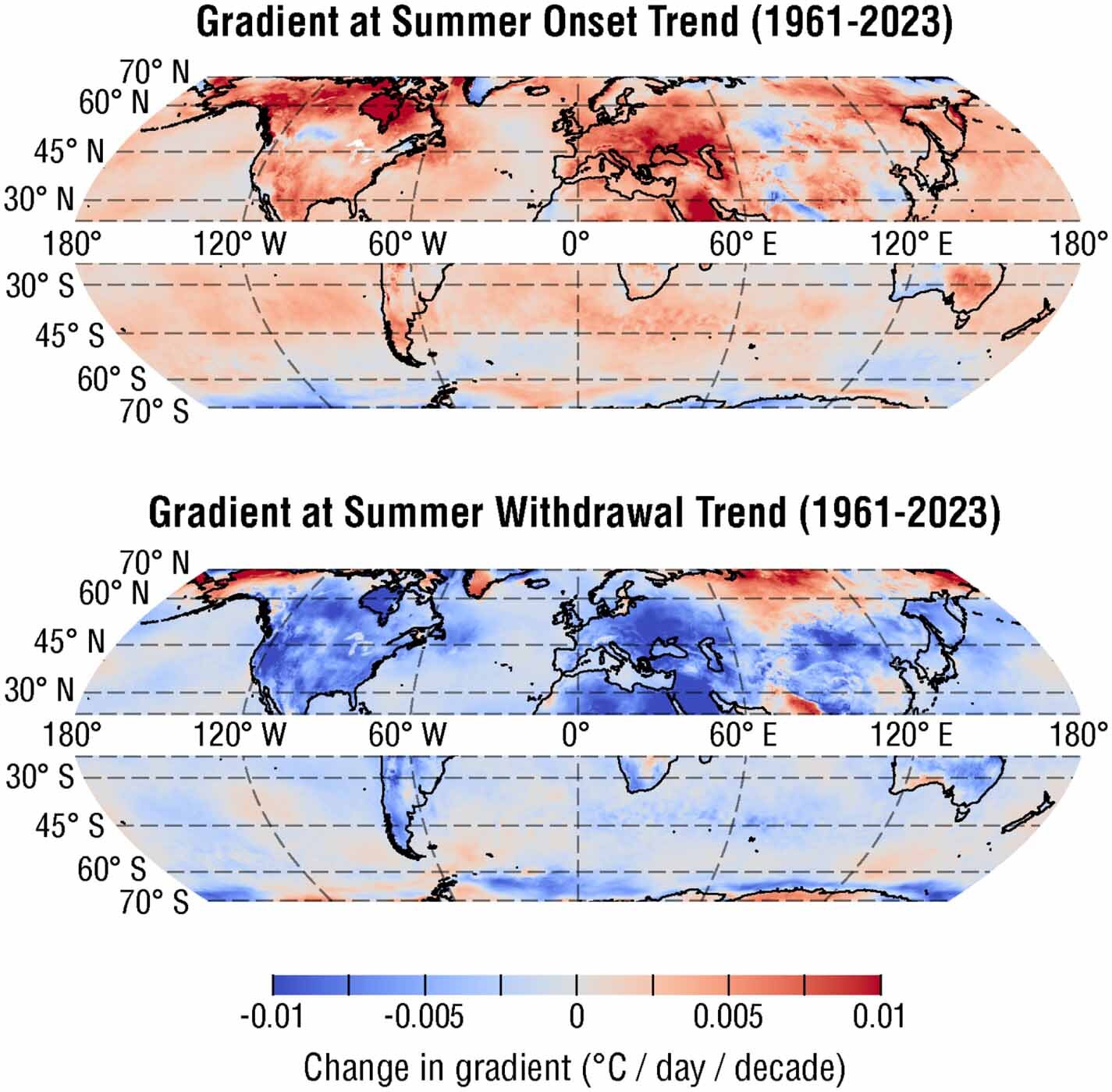
Imagine standing in a garden where the rhythm of the seasons used to feel like a slow, predictable waltz. For generations, we have relied on the steady transition of time—the gentle thaw of spring, the long-simmering heat of summer, and the crisp retreat into autumn. But recently, that familiar music has sped up. The sun hangs heavy in the sky for longer stretches, and the boundaries that once separated the seasons are blurring into a new, hotter reality.
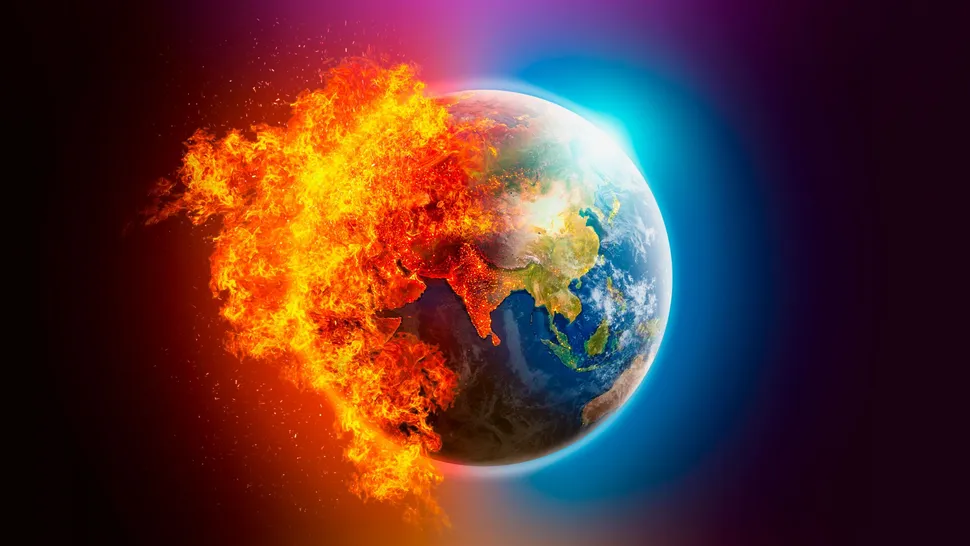
Researchers at the University of British Columbia have been listening closely to this changing rhythm, and their latest findings reveal that the world is heating up in a way that is both faster and more intense than we previously realized. Between 1990 and 2023, the average summer in the regions between the tropics and the polar circles grew by approximately six days per decade. This is a significant leap from earlier studies conducted up until the early 2010s, which had estimated the expansion at roughly four days per decade. Summer is no longer just a season; it is becoming a dominant force that is consuming more of the calendar each year.
The Vanishing Boundaries of the Year
To understand this shift, the researchers didn’t look at the traditional calendar dates we see on a wall map. They ignored the standard definition of June through August in the Northern Hemisphere or December through February in the Southern Hemisphere. Instead, they defined summer by the feeling of the air itself. They looked at the stretch of days when temperatures climb above what was historically typical for a specific location. By using climate data from 1961 to 1990 as a baseline, they established a threshold for what constitutes true “summer” weather.
When viewed through this lens, the data reveals a startling transformation in cities across the globe. In Sydney, Australia, for instance, the heat of summer now stretches across roughly 130 days—a massive jump from the 80 days recorded in 1990. This means the city is adding 15 days of summer every single decade. Closer to the north, Toronto is seeing its warm season expand by eight days per decade. These aren’t just incremental shifts; they are fundamental rewritings of the local climate that affect how millions of people live, work, and breathe.
A Sudden Arrival Without Warning
Perhaps more jarring than the length of the heat is the way it now arrives. The study, published in the journal Environmental Research Letters, found that the transitions between seasons are losing their gradual grace. The shift from spring to summer and from summer to autumn is becoming increasingly abrupt. Rather than a slow, lingering warm-up that allows the natural world to adjust, summer-like temperatures are crashing onto the scene with sudden intensity.
This “changing of gears” creates a dangerous “mismatch” in the natural world. Many biological systems rely on seasonal cues to function. When the heat arrives too early and too fast, flowers may begin to bloom before their pollinators are even active. Farmers may find themselves needing to plant crops much earlier than the traditional calendar dictates. Even the landscape itself reacts violently; rapid spring warming can trigger a sudden snowmelt, leading to a much higher risk of spring flooding.
The human world is equally vulnerable. Lead author Ted Scott points out that our society is built on the expectation that summer starts in June. This assumption is baked into our planning and policy, from how we manage water to how we prepare for emergencies. If the heat arrives weeks early, we find ourselves ill-prepared for the consequences.
The Growing Weight of Accumulated Heat
It isn’t just that the summers are longer; they are also packing a more powerful punch. The UBC team, including Dr. Rachel White and Dr. Simon Donner, introduced a new way to measure the cumulative heat that builds up over the course of a season. This metric combines both temperature and time to show the total “heat load” the land experiences.
The results show that since 1990, the accumulated summer heat over Northern Hemisphere land has been rising more than three times faster than it did during the 30-year period between 1961 and 1990. This build-up of energy is particularly intense in coastal areas. These regions have historically been seen as having moderate climates, drawing millions of people to move to the seaside for relief. However, these very areas are now witnessing some of the most rapid growth in both summer length and accumulated heat, challenging the very reason people chose to live there.
Why the Shifting Rhythm Matters
This research is a wake-up call because it proves that the environment is moving faster than our current systems were designed to handle. Our agriculture, water supply, public health, and energy systems were all constructed under the assumption that the warm season had a fixed start and end point. As those goalposts move, the foundations of our society are put under strain.
Understanding this acceleration is vital for our future survival for several reasons:
- Food Security: While the heat is arriving earlier, the amount of daylight—which is dictated by the Earth’s tilt—remains the same. Scientists now need to investigate how plants will cope with a shifting growing season when one of their primary drivers, the sun’s light, hasn’t changed its schedule.
- Infrastructure and Safety: We must determine if our current climate models actually capture how fast these transitions are happening. If our policies are based on outdated data, we won’t be ready for the extreme weather events that a longer, hotter summer brings.
- Health and Adaptation: By making the “feeling” of climate change tangible, this study confirms what many have sensed: the rhythm of the year is broken. Recognizing that summers are expanding by nearly a week every ten years allows us to begin the urgent work of updating our planning and policy to match the new speed of the seasons.
The study serves as a reminder that we can no longer rely on the calendars of the past. As the heat lingers and the transitions sharpen, we must adapt our behaviors and our systems to a world where summer is no longer a guest that arrives on time, but an increasingly permanent resident.
Study Details
Ted J Scott et al, Summers over land and ocean are becoming longer, transitioning faster, and accumulating more heat, Environmental Research Letters (2026). DOI: 10.1088/1748-9326/ae5724