In a small but powerful laboratory hidden deep inside a quantum computer, a groundbreaking experiment was unfolding. It was not a laboratory in the traditional sense, with microscopes and beakers of chemicals, but rather a virtual laboratory created inside the quantum processor of a computer. Here, the world’s top scientists were studying a strange and elusive form of matter—one that has never been seen before in nature, and one that might hold the key to the future of quantum computers. The material in question? A higher-order nonequilibrium topological phase of matter.
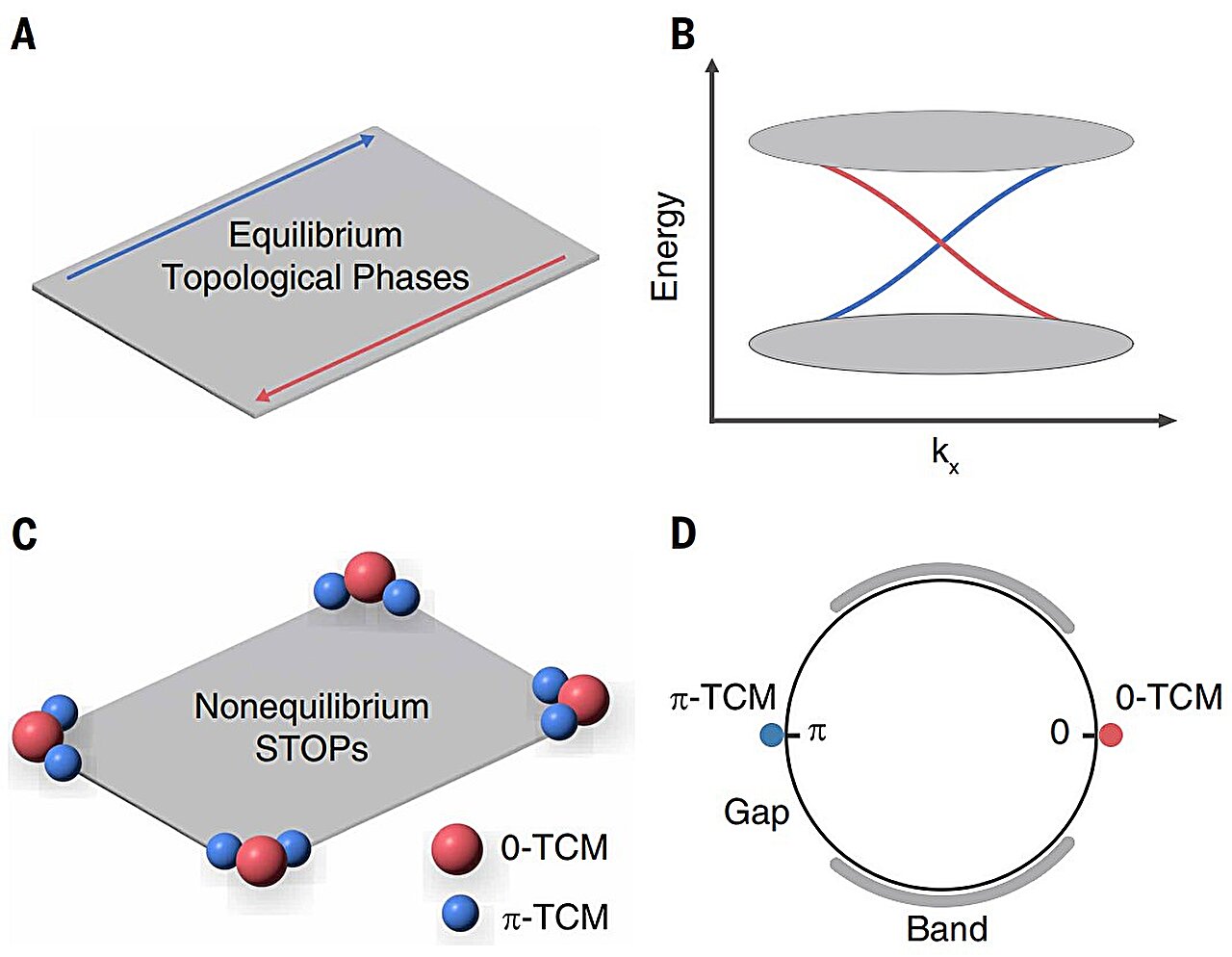
This new form of matter is like nothing we’ve encountered in the physical world. Unlike conventional materials, which remain stable across their entire structure, this material’s stability is confined to its corners. And what’s more fascinating—these stable corners can only maintain their integrity when the material is bombarded with energy pulses. It’s a delicate dance of forces, where the matter needs constant external energy to stay stable and resistant to disturbance.
And in a major leap forward, this strange and powerful material has been created and studied in a controlled experiment using a quantum chip, a critical component of quantum computers. The team of scientists led by Pan Jianwei at the University of Science and Technology of China took a huge step toward making quantum computers more reliable by successfully simulating this rare and complex form of matter.
Entering the Quantum World
This breakthrough is a big deal because it opens the door to a new era in quantum computing. For years, one of the biggest hurdles has been the instability of quantum systems. Quantum computers, unlike classical ones, are incredibly fragile. They rely on qubits, the quantum equivalent of bits, which can exist in multiple states at once, making them exceptionally powerful for complex calculations. But this power comes at a cost. Qubits are notoriously unstable, easily disturbed by the slightest environmental interference, which can lead to errors and system breakdowns.
The team of scientists, using the Zuchongzhi 2.0 superconducting quantum processor, a Chinese quantum computer, took a step toward solving this problem. By creating and testing this exotic, higher-order nonequilibrium topological material, they showed that quantum computers can be reliable simulators for discovering and testing new stable forms of matter. These super-stable corner behaviors are exactly the kind of properties scientists need to develop quantum hardware that is far less prone to errors.
“Quantum computers may not only be used to solve traditional computational problems but also to explore new forms of matter that were once beyond our reach,” says the research team. This work represents a shift from the conventional use of quantum computers as mere problem solvers to tools for exploring the very fabric of reality itself.
Simulating Exotic Matter with a Quantum Chip
Creating this exotic material was no simple task. The team had to use their quantum chip to simulate the material’s structure, essentially designing a grid of qubits—tiny quantum bits of information—to represent the material’s intricate characteristics. But unlike traditional materials that can be studied in static states, this material exists in a constantly evolving, dynamic state. To make this dynamic material come to life, the team had to generate an energy pulse powerful enough to simulate the necessary conditions. They ran a complex series of instructions more than 50 times to create the required pulse that would stabilize the material.
In classical physics, measuring and analyzing stable, steady states of matter is a well-understood process. But quantum matter is different. It doesn’t sit still. It’s constantly in flux, changing states as it interacts with energy. Traditional measuring tools can’t capture the movement and rapid changes of quantum matter. So the team had to develop a new technique, one that could track the fluctuations in the properties of qubits over time.
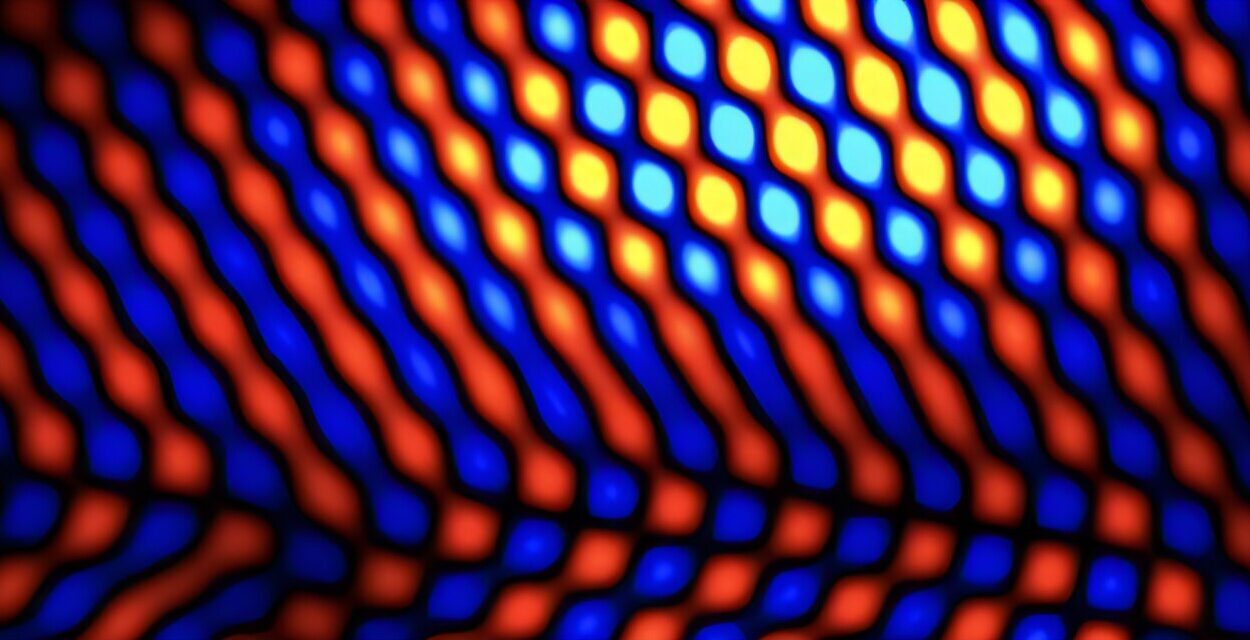
With this new tool, the scientists could not only track how the qubits’ properties evolved but also confirm that the material they had created was indeed stable. They could create a map that showed exactly where the super-stable corners of the material were located. This was a key moment in the experiment: it proved that these exotic corner states, which had only been predicted in theory, really existed. The material was stable, but only as long as it was being bombarded with energy pulses.
Stability at the Corners
What makes this discovery so exciting is the unique nature of the material’s stability. In most materials, stability is spread evenly throughout, like the solid structure of a block of metal or the glass of a window. But in this quantum material, stability is confined to specific regions—the corners. These super-stable corner states are resistant to external disturbances, making them ideal for future quantum computers that need to be reliable and error-resistant.
What’s even more fascinating is that the material’s stability doesn’t remain static. Instead, it is a dynamic property that only exists when the material is actively driven by external energy pulses. The research team’s ability to demonstrate that these corner states could exist in a constantly evolving, nonequilibrium system marks a significant step forward in understanding how quantum matter behaves under stress.
By using a quantum computer to simulate and study these higher-order nonequilibrium topological phases, the scientists have not only explored a new frontier in the study of quantum matter but have also demonstrated a practical way to design quantum systems that are more stable and reliable.
What This Means for Quantum Computing
So, why does this matter? At the heart of this research is the promise of a more stable and reliable quantum computer. Quantum computers are capable of solving problems that classical computers can’t even begin to approach, but their fragile nature has long been a roadblock. In the past, the unpredictable behavior of qubits made it nearly impossible to maintain a stable system. If quantum computers are ever to become mainstream tools for computation, their reliability must be vastly improved.
By demonstrating that quantum computers can be used as simulators to discover new forms of stable matter, this research offers a path toward more durable quantum systems. The ability to create quantum systems with super-stable corner states could lead to quantum computers that are far more resistant to errors, making them practical for everything from artificial intelligence to complex scientific simulations.
In a way, this research proves that quantum computers are more than just tools for solving problems—they are also laboratories in themselves, capable of revealing new properties of the universe and, in turn, helping us build more reliable quantum technologies. As the team notes, “Our work may enable the use of programmable quantum processors to explore exotic higher-order nonequilibrium topological phases of matter.”
The potential applications of this discovery are immense, and while we’re just beginning to scratch the surface, it marks an exciting milestone on the path toward the quantum computing revolution. For now, the question remains: How far can we push the boundaries of quantum physics, and how soon will we see these exotic, stable materials at the core of the next generation of quantum computers?
More information: Haoran Qian et al, Programmable higher-order nonequilibrium topological phases on a superconducting quantum processor, Science (2025). DOI: 10.1126/science.adp6802