Nearly 90% of tested bee species possess magnetic properties, according to a groundbreaking six-year study led by the University of Tennessee, Knoxville. This discovery dramatically expands what scientists know about insect magnetoreception and suggests this mysterious sensory ability may date back at least 150 million years in evolution.
For decades, scientists believed magnetic sensing in bees was rare and mostly tied to the famous dance communication of honeybees. A new study is now challenging that assumption in a major way.
What began as a casual conversation between two married researchers at the University of Tennessee, Knoxville evolved into an international scientific collaboration that may reshape how scientists think about insect navigation and behavior. Their findings, published in Science Advances, suggest that magnetism is not an unusual trait in bees at all — it may be widespread across the insect world.
A Question About Honeybees Sparked the Research
The project started when Anne Murray, a research assistant professor in ecology and evolutionary biology, posed a simple question to her husband, Dustin Gilbert, an associate professor specializing in magnetism and nanotechnology.
Murray asked whether he knew that honeybees could sense Earth’s geomagnetic field.
Gilbert did not. But the idea immediately connected with his research expertise in magnetic materials. Together, the two researchers decided to investigate the phenomenon further by combining their very different scientific backgrounds.
At the time, scientific literature offered only limited evidence. Honeybee magnetism had first been identified in 1977, and only four additional bee species had since been reported to sense magnetic fields.
The researchers suspected there might be far more to uncover.
Testing Bees From Around the World
To investigate, Gilbert, Murray, and Laura Russo, an assistant professor who studies native bee species, launched a broad survey of bee magnetism.
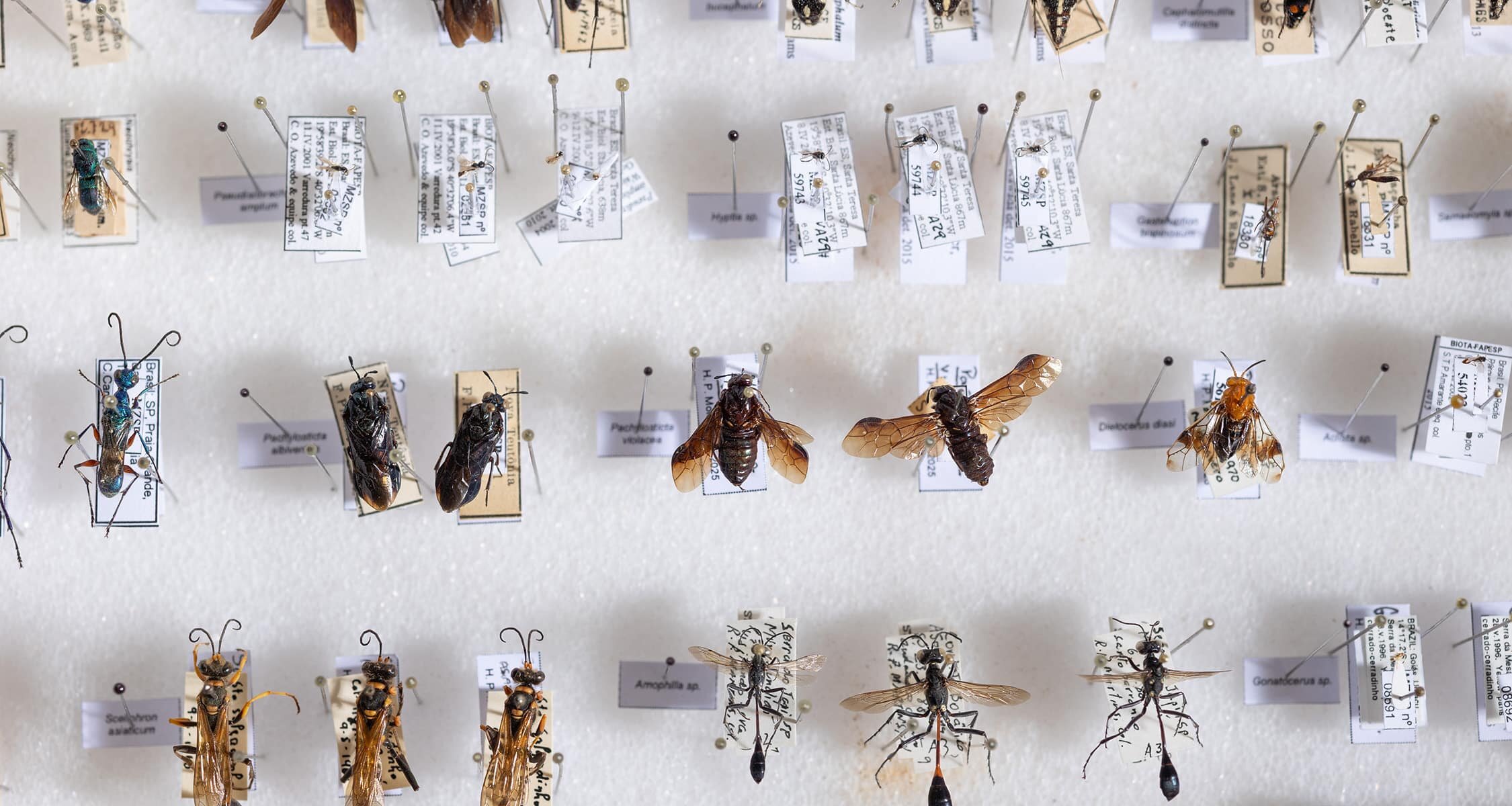
Over the next six years, the team tested more than 120 bee species collected from around the world. Specimens came from research collections including York University in Canada and the Smithsonian Institution. Some arrived in carefully preserved cases, while others were shipped in ordinary pizza boxes.
The results surprised the researchers.
Nearly 90% of the bee species examined showed magnetic properties.
Murray said the scale and diversity of the findings were completely unexpected. The team initially believed magnetism might be limited to a small group of social bees, especially because honeybees use a complex dance to communicate food locations to their nestmates.
Instead, the researchers found magnetism across a much wider range of species, including solitary bees.
The Mystery of the Honeybee Dance
The study centers on a biological ability known as magnetoreception, which allows animals to detect Earth’s magnetic field.
Many animals use magnetoreception for navigation. In honeybees, scientists historically linked it to the insects’ famous “waggle dance,” a movement pattern female bees perform after returning from collecting pollen.
The idea was that bees aligned their dance with Earth’s magnetic field, helping other bees navigate toward food sources. Earlier experiments found that placing a magnet near a hive could alter the direction of the dance.
But more recent research has raised questions about whether the dance explanation fully accounts for the magnetic behavior.
Gilbert explained that the theory became harder to reconcile once researchers realized other magnetic bee species do not perform dances at all.
That contradiction pushed the team to ask a larger question: if so many bees can sense magnetic fields, what are they actually using the ability for?
Social Bees Were Not the Only Magnetic Species
The researchers first focused on members of the bee family Apidae, which included all previously known magnetic bee species.
Russo said the team originally expected social species to show stronger evidence of magnetism. Instead, solitary species also frequently displayed magnetic properties.
That forced the researchers to rethink their assumptions.
As the project expanded, the team analyzed whether factors such as habitat, nesting behavior, geography, sex, or social structure could explain the presence of magnetism. Russo conducted extensive statistical analyses while Gilbert examined the magnetic characteristics themselves.
No single factor provided a clear explanation.
The researchers did observe that larger bees and more social bees tended to produce stronger magnetic signals, but the pattern was not enough to explain why magnetoreception appeared so widespread.
The Search Expanded Beyond Bees
Unable to identify a clear behavioral explanation, the researchers broadened the project further by examining wasps.
The goal was to determine whether magnetism might predate the evolution of bees themselves.
Collaborators from institutions including the University of Alaska, the University of Hawaii, the Australian National University, the University of Oldenburg in Germany, and the University of São Paulo in Brazil contributed specimens.
The team tested nearly 300 wasp species.
Again, the results were striking: roughly 90% of the wasps examined also showed magnetic properties.
According to Gilbert, the findings suggest that magnetoreception may be an ancient sensory ability that has persisted deep within the insect evolutionary tree.
An Ancient Sense With an Unknown Purpose
Despite the scale of the findings, the central mystery remains unresolved.
Scientists still do not know exactly how bees and wasps use magnetic sensing in everyday life.
Gilbert said the prevailing scientific view has long emphasized vision as the primary navigation system for insects. However, the new data suggests magnetic sensing may also play an important role, potentially in short-range navigation.
Even so, the researchers caution that the precise function remains unknown.
What is clear is that the trait appears to have survived for roughly 150 million years, implying that it continues to provide some evolutionary advantage.
That persistence is one reason the team plans to continue the research.
Why This Matters
The study significantly broadens scientific understanding of insect sensory systems and raises new questions about how bees and wasps interact with their environment.
Rather than being a rare trait confined to honeybees, magnetoreception may be deeply embedded across major insect groups. That realization could influence future research into insect behavior, navigation, communication, and evolution.
The findings also highlight the value of interdisciplinary collaboration. By combining expertise in ecology, behavior, and magnetism, the researchers uncovered patterns that had remained largely unexplored for decades.
For now, scientists still do not know exactly why so many insects can sense magnetic fields. But after testing hundreds of species across the evolutionary tree, researchers are increasingly convinced that this hidden sensory ability plays a far larger role in insect life than previously understood.
Study Details
Laura Russo et al, Broad presence of ferromagnetism in bees and relationship to phylogeny, natural history, and sociality, Science Advances (2026). DOI: 10.1126/sciadv.aed7391