The universe has a way of hiding its most powerful engines behind curtains of fire. For decades, astronomers watched as certain stars ended their lives not with a typical flash, but with a brilliance so intense it defied the known laws of stellar death. These superluminous supernovae were the heavyweights of the cosmic stage, shining ten times brighter than their cousins and refusing to fade into the dark according to the standard schedule. They were beautiful, they were violent, and for a long time, they were a complete mystery.
In the early 2000s, when these explosions were first identified, the math simply didn’t add up. When a massive star—perhaps 25 times the mass of our sun—runs out of fuel, its iron core collapses, and its outer layers are flung into the void. This creates a glow, but these specific, “super” explosions stayed bright for far too long. It was as if something hidden deep inside the wreckage was continuing to stoke the flames, keeping the debris glowing long after the initial blast should have cooled.
The Ghost in the Machine
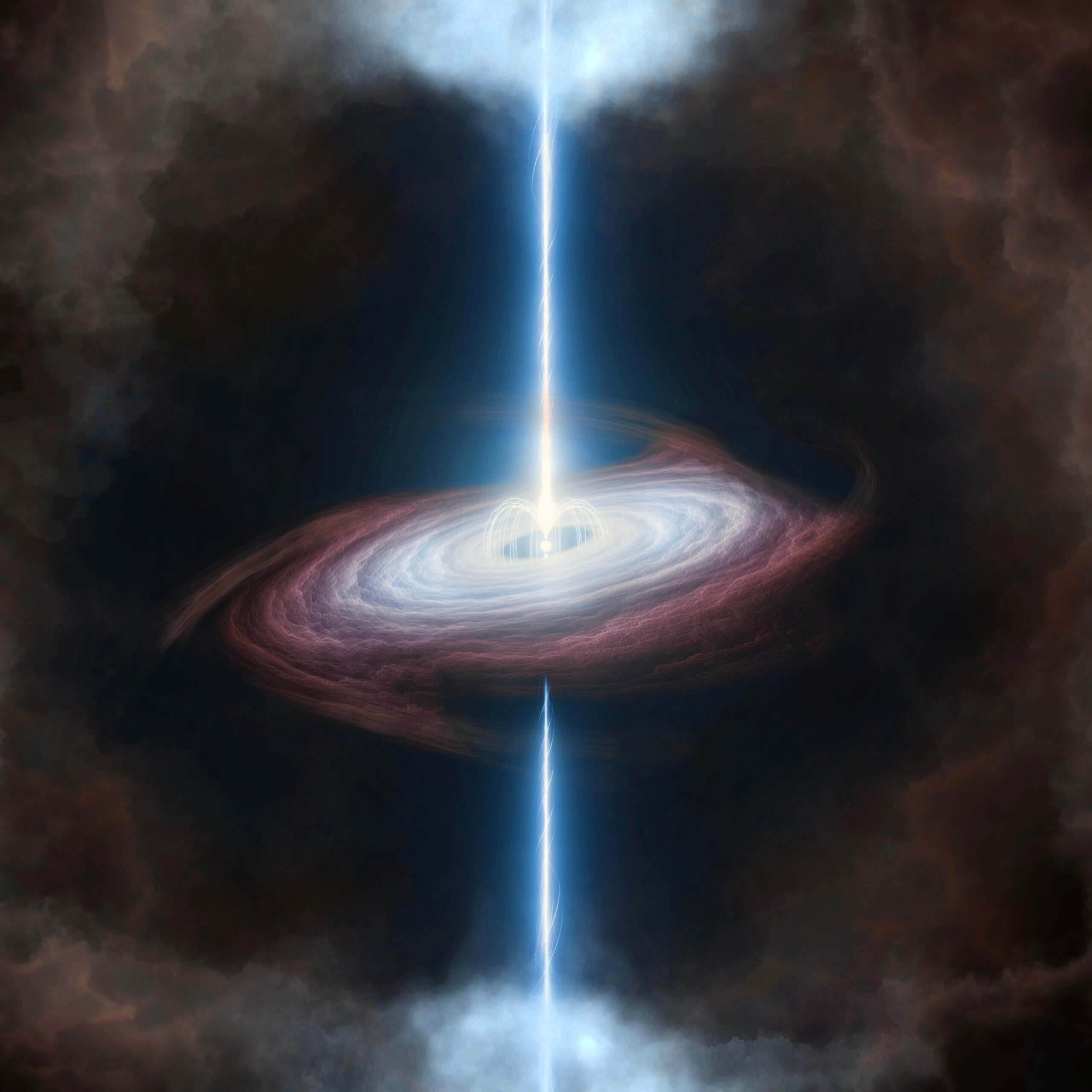
In 2010, a theoretical physicist named Dan Kasen proposed a solution that felt like a magician’s trick. He suggested that at the heart of these explosions sat a magnetar. When a giant star collapses, it crushes its core into a neutron star, a ball of matter only 10 miles in diameter but so dense it sits on the precipice of becoming a black hole. If that star had a strong magnetic field to begin with, the collapse would amplify it to a terrifying degree—creating a field 100 to 1,000 times stronger than a typical pulsar.
These newborn magnetars are the ultimate cosmic dynamos. In their youth, they can spin more than 1,000 times per second. Kasen argued that this spinning magnetic field would act like a particle accelerator, slamming charged particles into the expanding supernova debris and pumping it full of extra energy. This “engine” would explain the extraordinary brightness, but because it was buried under layers of stellar guts, no one could actually see it. It remained a beautiful theory, a “magic trick” waiting for a reveal.
A Song from a Billion Light-Years Away
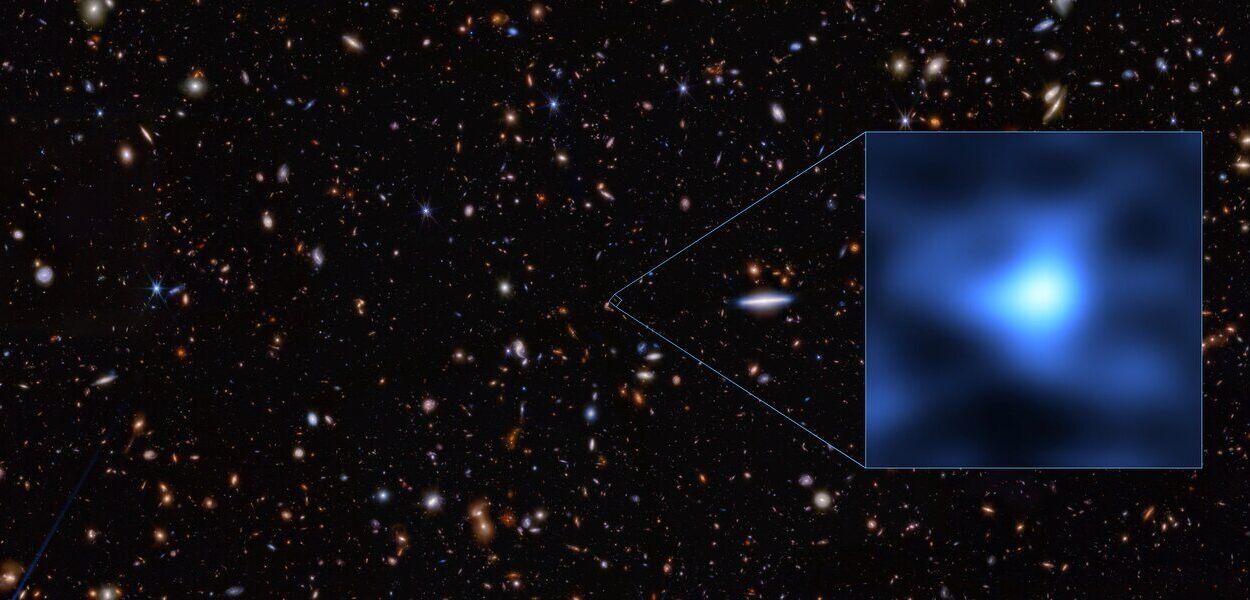
The breakthrough finally arrived from a distant corner of the sky, roughly one billion light-years from Earth. In December 2024, a network of 27 telescopes known as the Las Cumbres Observatory picked up a new explosion dubbed SN 2024afav. For 200 days, the telescopes tracked the light, watching it reach its peak brightness at the 50-day mark.
Usually, after the peak, a supernova’s light curve—the graph of its brightness over time—slopes downward in a smooth, predictable fade. But Joseph Farah, a graduate student at UC Santa Barbara, noticed something strange. The light from SN 2024afav didn’t just fade; it began to wobble. The brightness oscillated up and down, and as time went on, these pulses happened faster and faster.
It was a chirp. Much like a bird’s song increases in frequency, the light from this dying star was “singing” in a series of four distinct bumps. While other supernovae had shown one or two bumps before, which were often attributed to the explosion hitting nearby clouds of gas, four bumps in a tightening sequence suggested something much more mechanical and precise. It was the sound of the engine finally pulling back the curtain.
Dancing in the Grip of Gravity
To explain this rhythmic chirping, Farah turned to the most famous toolkit in physics: Einstein’s General Theory of Relativity. He realized that as the star exploded, some of the debris didn’t escape; instead, it fell back toward the newborn magnetar, forming a lopsided ring of matter called an accretion disk.
Because this disk wasn’t perfectly aligned with the magnetar’s spinning axis, a strange relativistic effect took hold. According to General Relativity, a massive spinning object actually drags the fabric of space-time along with it. This phenomenon, known as Lense-Thirring precession, forced the misaligned disk to wobble like a dying top.
As the disk wobbled, it periodically blocked and reflected the light from the internal engine, acting like a cosmic lighthouse that strobed across the universe. As the disk moved closer to the magnetar, it wobbled faster, causing the “chirp” that Farah caught in the data. After testing various models, only this relativistic dance matched the timing perfectly. For the first time, General Relativity was needed to explain how a supernova moves.
The Smoking Gun in the Rubble
By analyzing the timing of these wobbles, the team was able to calculate the exact specifications of the hidden beast. They determined the neutron star was spinning once every 4.2 milliseconds and possessed a magnetic field 300 trillion times stronger than Earth’s. These were the unmistakable fingerprints of a magnetar.
This discovery doesn’t just solve a 16-year-old puzzle; it confirms that the universe has multiple ways to die. While some superluminous supernovae might still be caused by shockwaves hitting surrounding gas, or even by the birth of black holes, we now have “smoking gun” evidence that magnetars are a primary driver of these cosmic spectacles. It turns out that some of the brightest lights in the sky are powered by tiny, spinning magnets dancing to the tune of Einstein’s gravity.
Why This Matters
This research represents a milestone in our understanding of the high-energy universe because it bridges the gap between abstract theory and physical reality. By proving that magnetars power these massive explosions, scientists have confirmed a major lifecycle stage for the most massive stars in existence. It also demonstrates that General Relativity isn’t just for black holes or distant galaxies; it is an active, mechanical force that dictates the rhythm of stellar explosions. Understanding these “chirping” stars allows us to use them as laboratories for extreme physics, helping us decode the laws of nature in environments far more intense than anything we could ever create on Earth.
Study Details
Joseph Farah, Lense–Thirring precessing magnetar engine drives a superluminous supernova, Nature (2026). DOI: 10.1038/s41586-026-10151-0. www.nature.com/articles/s41586-026-10151-0