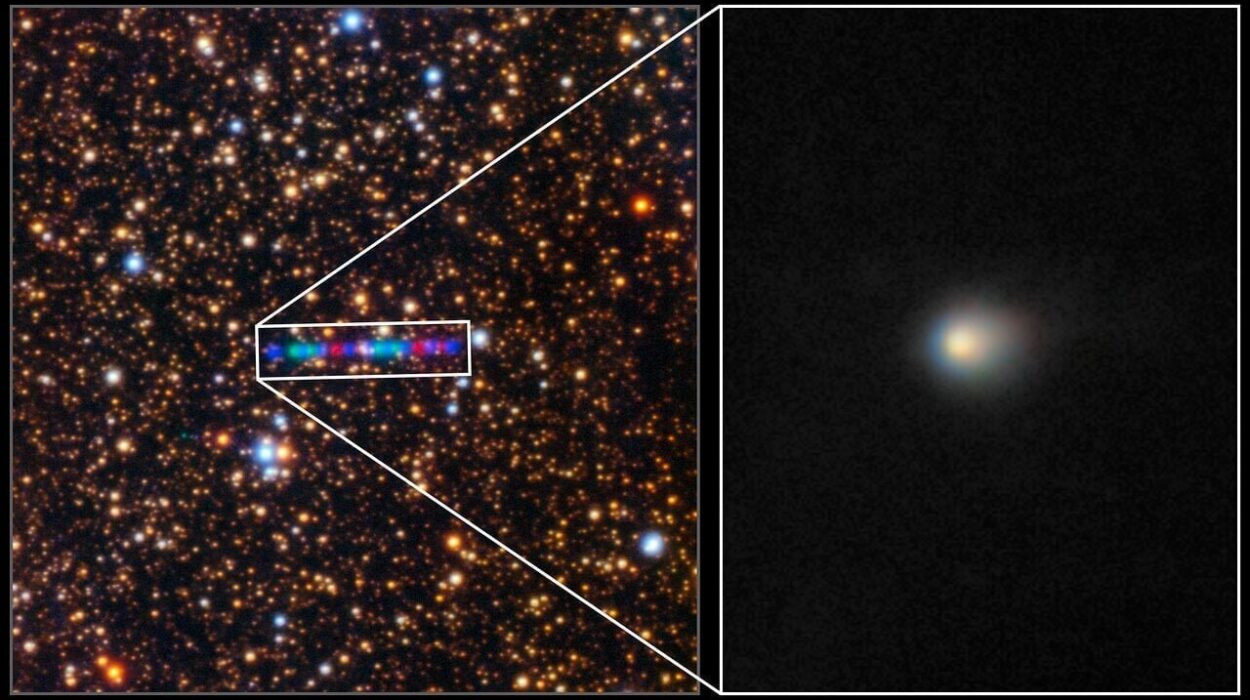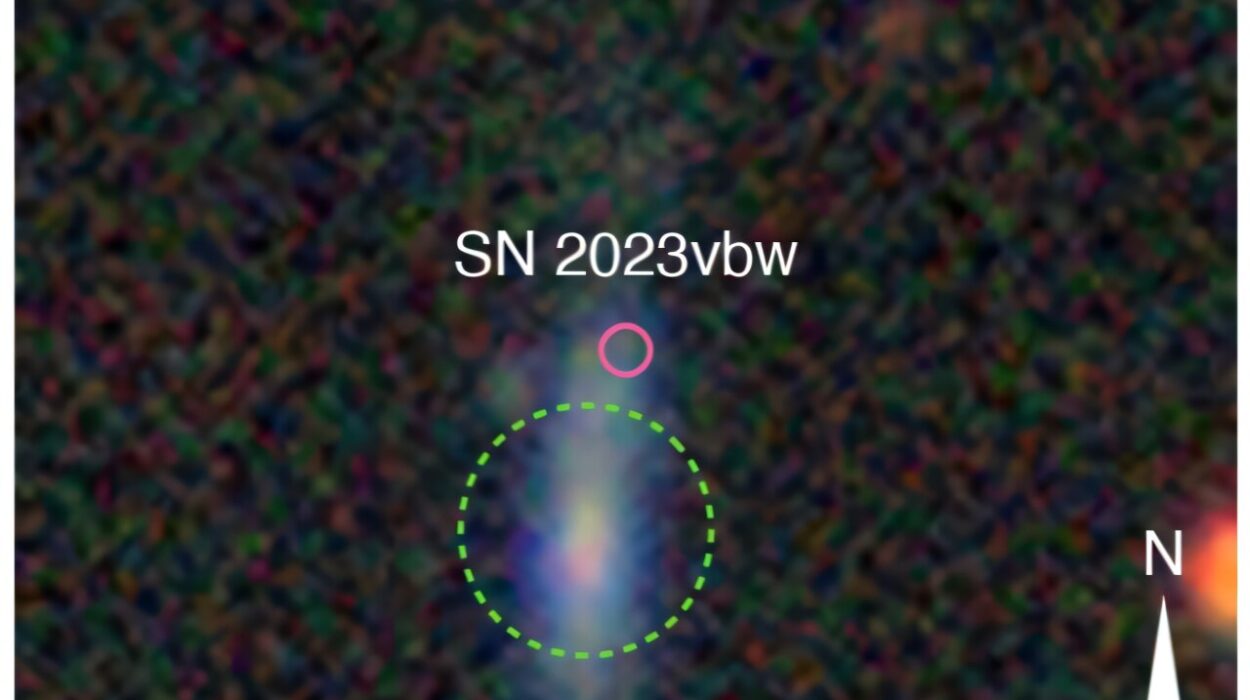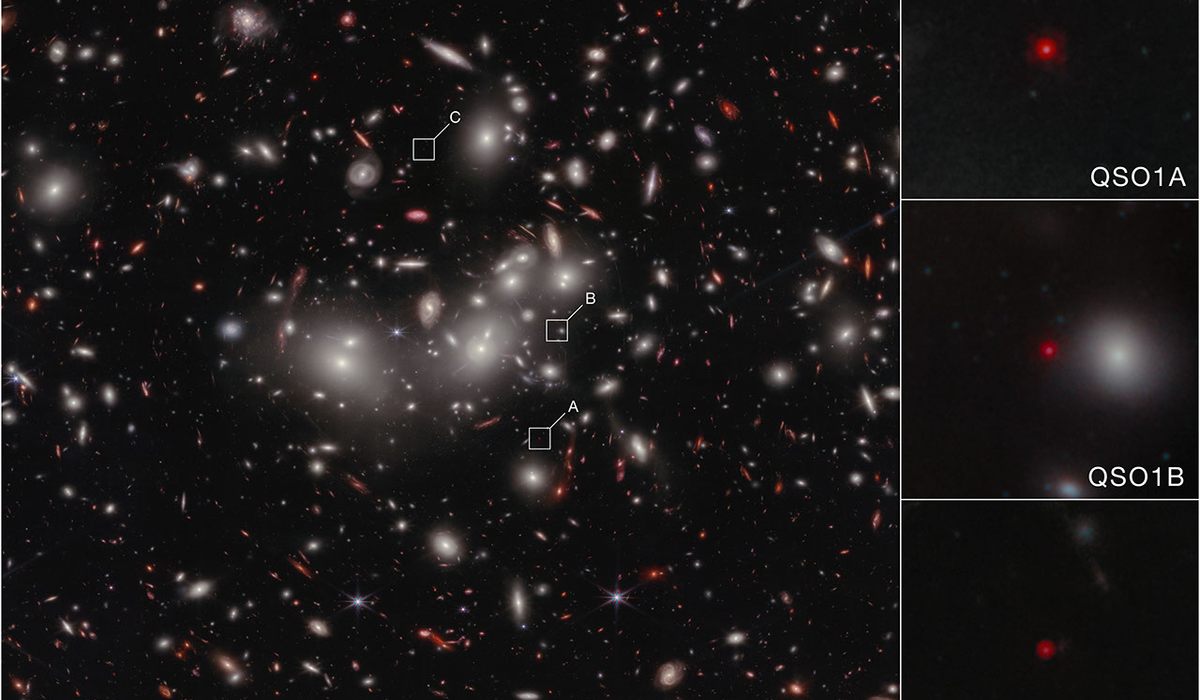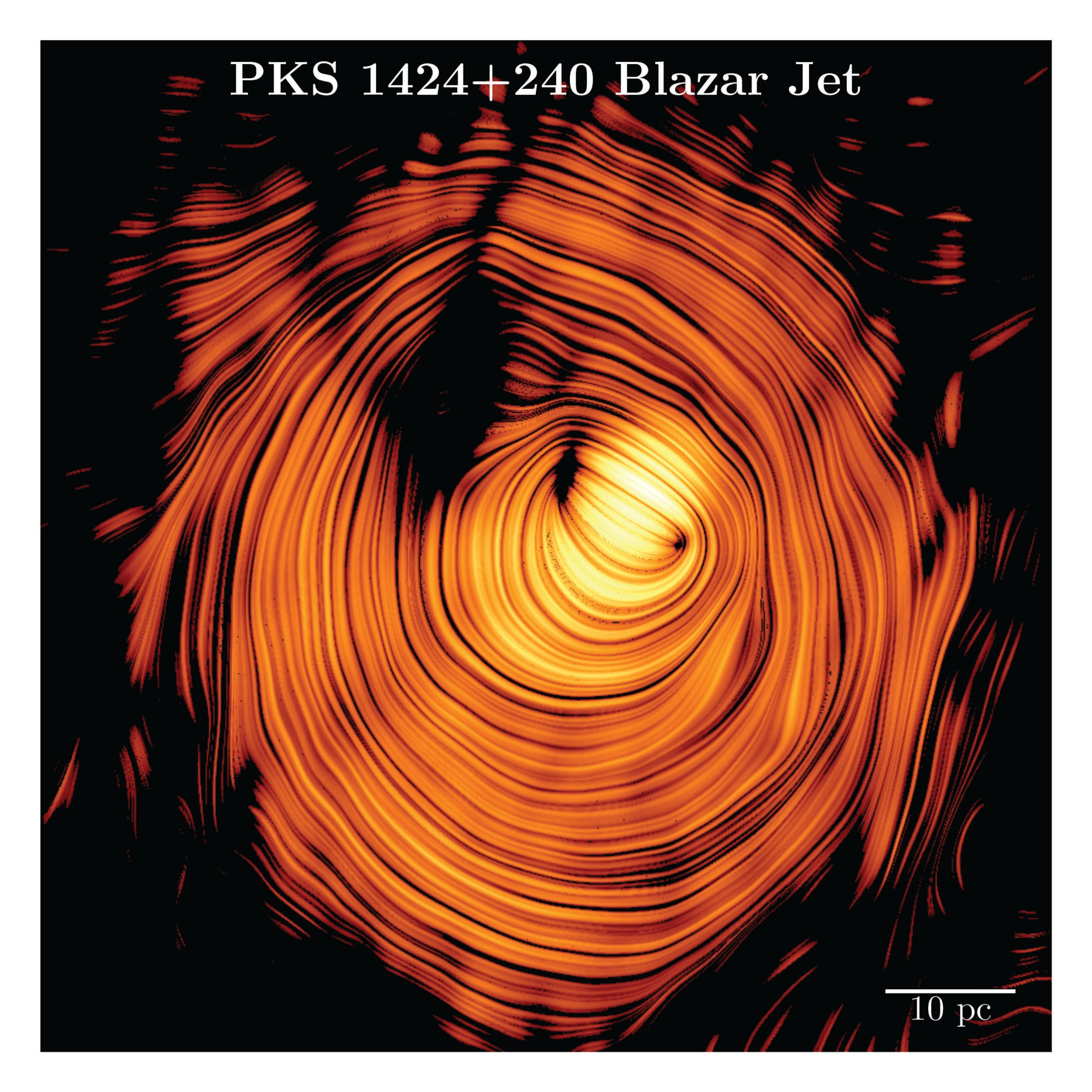
For centuries, the night sky was seen as a tapestry of constants—stars that burned with steady resolve and planets that followed predictable paths. But as our eyes on the universe have improved, we have begun to realize that the cosmos is far more restless than we ever imagined. It flickers, pulses, and screams in radio waves, often hiding its most profound secrets in the quiet gaps between the light. Recently, a team of astronomers peering through the vast Australian outback stumbled upon a rhythm that shouldn’t exist: a heartbeat from the void that takes over half an hour to complete a single cycle.
A Sentinel in the Silent Desert
The story of this discovery begins not in the stars, but on the red earth of Western Australia. Here, the Australian SKA Pathfinder, known to the scientific community as ASKAP, stands as a high-tech sentinel. This telescope is uniquely designed to hunt for the “ghosts” of the universe—phenomena known as transients. These are sources of light or radio energy that appear suddenly, vanish, or pulse with a regular beat. Because ASKAP possesses a massive instantaneous field of view, it can stare at huge swaths of the sky for a long time, catching the subtle “blinks” that other telescopes might miss.
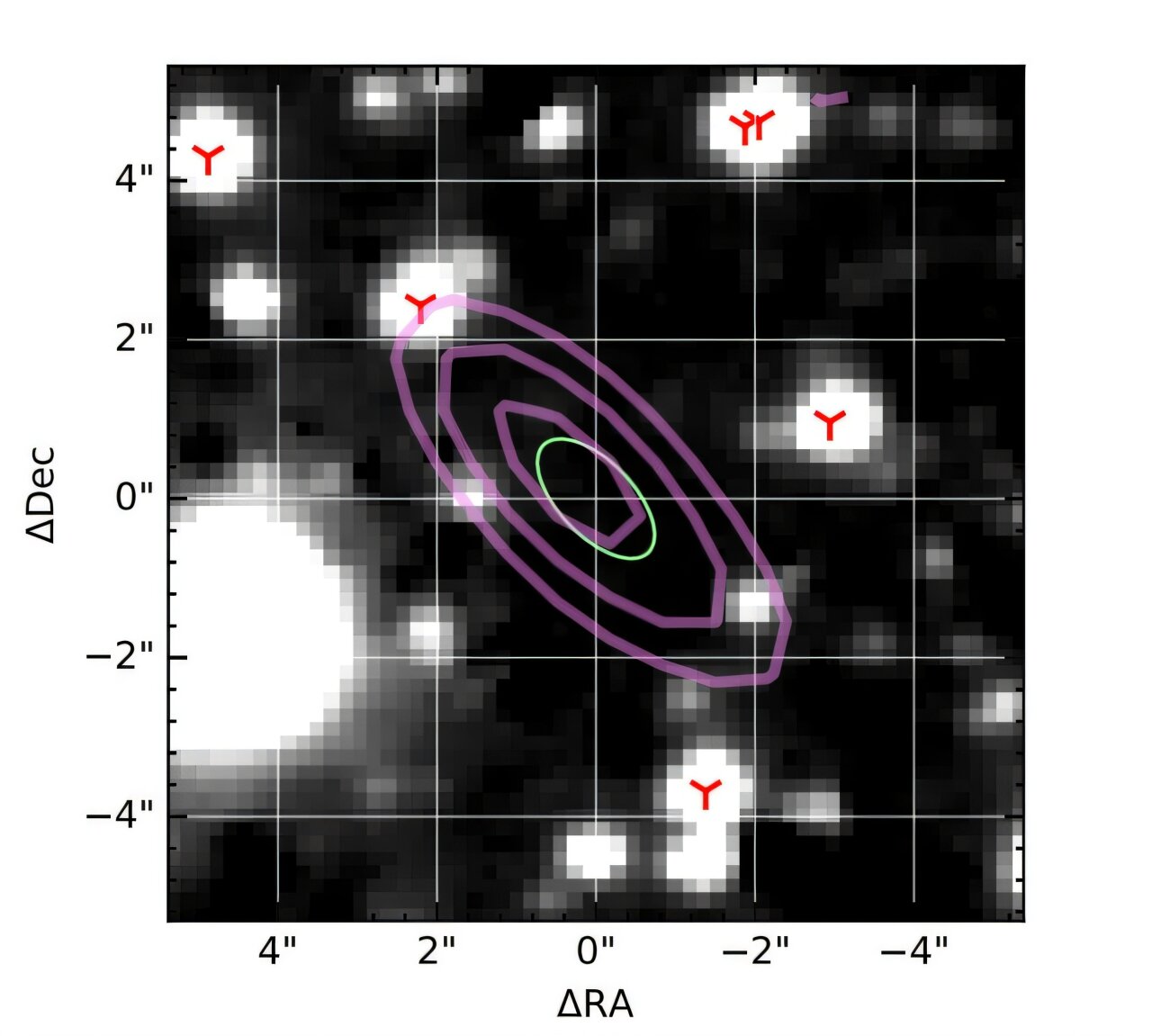
In early January 2025, during a routine ten-hour observation for a project called the Evolutionary Map of the Universe (EMU), the telescope picked up something peculiar. Hidden within the data of a search for circular polarization—a specific way radio waves twist as they travel through space—was a signal that refused to be ignored. It was a new source, now officially designated as ASKAP J142431.2–612611, or ASKAP J1424 for short. It wasn’t just a random flash; it was a rhythmic broadcast coming from a low Galactic latitude, a region of the sky heavily shrouded by cosmic dust and extinction.
The Slow Rhythm of a Mystery
Most pulsars and rotating stars we know of spin incredibly fast, flashing like strobe lights dozens or even hundreds of times per second. However, ASKAP J1424 is different. It belongs to an emerging, enigmatic class of objects called long-period radio transients (LPTs). When the research team, led by Joshua Pritchard of CSIRO, analyzed the timing of the pulses, they found a period of 2,147.27 seconds. In human terms, that is a heartbeat lasting approximately 35.79 minutes.
For a celestial object to take over half an hour to complete a single “beat” is a mechanical puzzle. If it is a star spinning, it is doing so at a leisurely crawl compared to its cousins, yet it is somehow generating immense energy. The researchers observed this strange source over an eight-day activity window. During this time, the pulse profile remained remarkably stable, hitting its mark with mechanical precision. And then, as if a switch had been flipped, the source appeared to turn off, disappearing back into the silence of the Milky Way.
A Masterpiece of Polarized Light
What makes ASKAP J1424 even more fascinating to the team is the “texture” of its radio waves. The emission from this source is 100% polarized across the entire pulse. This means the radio waves aren’t vibrating in random directions; they are highly organized. Even more startling is that the signal seems to transform as it travels, transitioning from an elliptical state to a fully linearly polarized state.
In the world of physics, such high levels of organization in light usually point to incredibly strong magnetic fields. These fields act like cosmic accelerators, forcing particles to move in specific patterns that create these distinct radio signatures. While the nature of the object remains elusive, these clues suggest we are looking at a powerhouse of magnetic energy, perhaps a magnetar—a neutron star with a magnetic field billions of times stronger than Earth’s—or something even more exotic.
The Ghost in the Binary Machine
When astronomers find a radio signal, their first instinct is to look for the “engine”—the actual star or object creating the noise. But when they looked at archival data for optical or infrared light at the coordinates of ASKAP J1424, they found nothing. The source is a ghost, invisible to the telescopes that see the light humans can see.
This lack of a visible counterpart, combined with the incredibly long 36-minute cycle, has led the team to propose a compelling theory. They suspect ASKAP J1424 might be part of a white dwarf (WD) binary system. In this scenario, a white dwarf—the dense, burnt-out core of a dead star—is locked in a gravitational dance with a companion star.
The “beat” we hear on Earth might be caused by a magnetic interaction. As the white dwarf rotates, its magnetic axis sweeps through space like a lighthouse beam. When this beam intersects with the magnetized wind flowing off its companion star, it creates a burst of radio energy. The 35.79-minute rhythm would then be the “beat period” between the rotation of the white dwarf and the time it takes for the two stars to orbit one another.
Why the Silent Beat Matters
The discovery of ASKAP J1424 is more than just the addition of a new coordinate to a star map; it is a challenge to our understanding of how stars live and die. We are discovering a “middle ground” in the universe—objects that aren’t quite traditional pulsars and aren’t quite standard stars. By studying these long-period radio transients, scientists are uncovering the hidden mechanics of magnetic fields and how they interact with the vacuum of space.
The researchers are already planning the next steps, looking toward the second phase of the VAST (Variables And Slow Transients) Galactic survey. Further monitoring will tell us if ASKAP J1424 is a steady, intermittent clock or if its recent broadcast was a stochastic event, perhaps fueled by a one-off accretion of plasma from its companion. Every pulse we record brings us closer to understanding whether these long-period signals are common throughout the galaxy or if we have caught a rare, dying gasp of a unique stellar system. In the silence of the outback, the hunt for the next heartbeat continues.
Study Details
Joshua Pritchard et al, Discovery of a 36-minute long-period transient ASKAP J142431.2-612611, arXiv (2026). DOI: 10.48550/arxiv.2603.07857