Researchers have identified a new 75-million-year-old mammal species, Cimolodon desosai, from a rare skeleton found in Baja California. This discovery provides a critical look at the ancestors of the small, versatile survivors that endured the mass extinction event 66 million years ago.
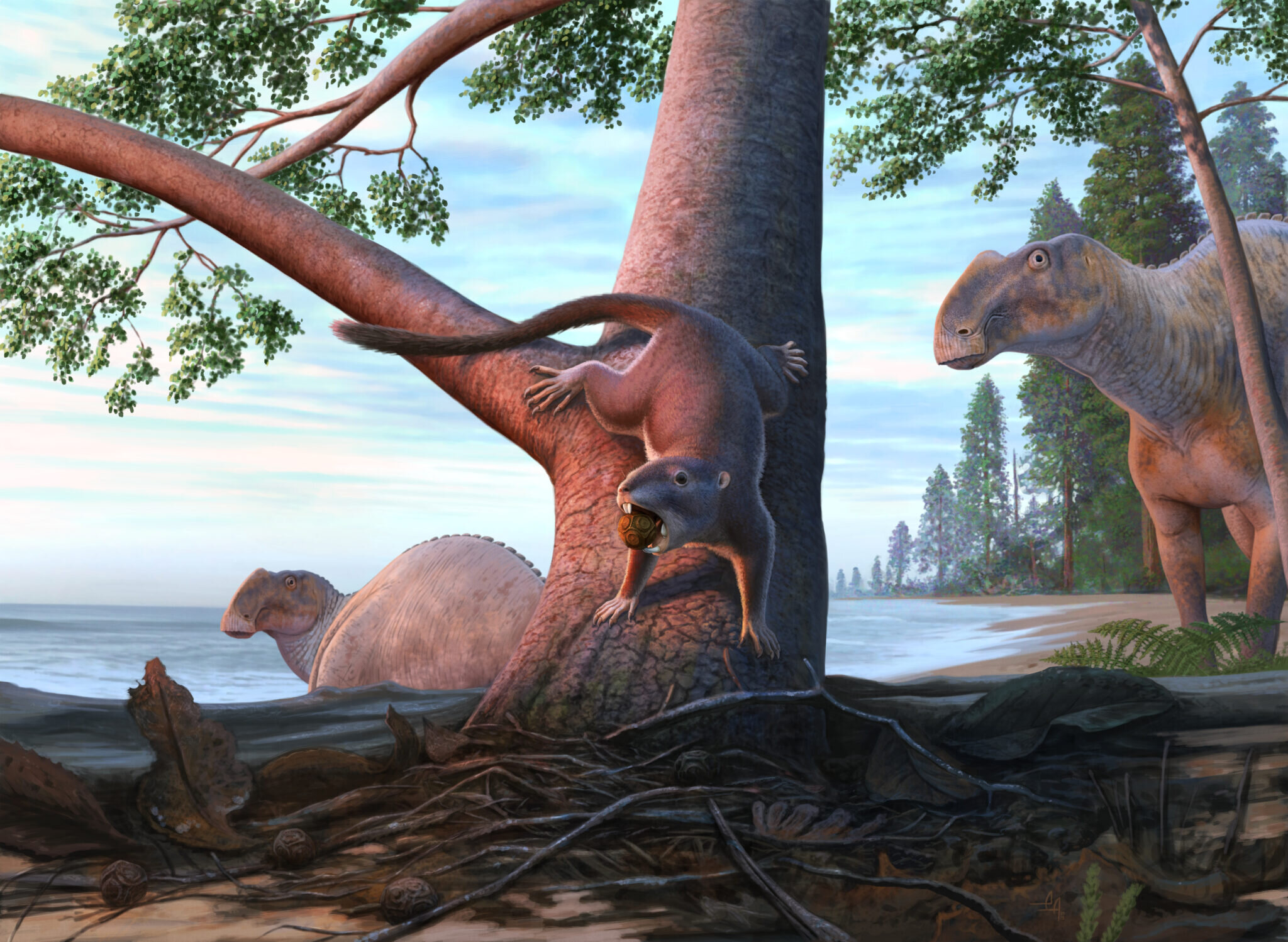
The era of the dinosaurs is often remembered for its towering titans and fearsome predators, but beneath the feet of those giants, a much smaller story of survival was unfolding. Roughly 75 million years ago, during the Late Cretaceous, a tiny, nimble creature scampered through the undergrowth and climbed the trees of what is now Mexico. While its larger neighbors would eventually vanish from the Earth, this small mammal belonged to a lineage built to endure one of the most catastrophic events in planetary history.
This ancient animal is a newly discovered species within the Cimolodon genus, a member of an extinct group of mammals known as multituberculates. These rodent-like creatures first appeared during the Jurassic Period and proved to be remarkably resilient, surviving for more than 100 million years. By studying these fossils, scientists are gaining a clearer picture of the biological toolkit that allowed mammals to not only survive the end of the dinosaurs but eventually rise to dominate the globe.
A Rare Find in the Rocks of Baja California
The discovery was led by a research team from the University of Washington, working at a challenging research site in Baja California. Finding fossils in this specific region is notoriously difficult compared to other prolific fossil beds in North America. The breakthrough occurred in 2009, when a field assistant noticed a tiny fragment of a tooth protruding from a crack in a rock. Upon closer inspection, the team realized they had stumbled upon something far more significant than a stray tooth.
Encased within the rock was a substantial portion of a skeleton, including the skull, jaws, a femur, and an ulna. Finding post-cranial bones—parts of the skeleton other than the head—is a rare occurrence for mammals of this era. Most of what we know about ancient mammals comes from their teeth, which are the hardest parts of the body and most likely to fossilize. The presence of limb bones and a skull provides a much more holistic view of the animal’s physical capabilities and lifestyle.
The researchers named the new species Cimolodon desosai. The name serves as a tribute to Michael de Sosa VI, the field assistant who first spotted the fossil and who passed away while the team was still conducting their analysis. Senior author Gregory Wilson Mantilla, a biology professor at the University of Washington and curator at the Burke Museum, noted that the specimen is a fitting legacy for an assistant he considered a close friend.
Anatomy of a Prehistoric Scrambler
To confirm that the find represented a unique species, the research team utilized micro-computed tomography, or micro-CT scanning. This advanced digital imaging technology allowed the scientists to generate high-resolution images of the fossil without damaging the delicate bone structure. By examining the intricate details of the teeth and comparing them to other known members of the Cimolodon genus found across western North America, the team was able to officially classify C. desosai as a distinct species.
Based on the dimensions of the femur and skull, the researchers estimate that Cimolodon desosai was roughly the size of a modern golden hamster. Its skeletal structure suggests a highly mobile lifestyle; it was likely capable of both scampering along the forest floor and navigating the vertical environment of trees. This physical versatility was matched by its diet. Analysis of the fossil suggests that the creature was omnivorous, feeding on a variety of fruits and insects.
While the Cimolodon genus was relatively common during the Late Cretaceous, with fossils found from western Canada down to Mexico, this specific discovery in Baja California fills a significant gap in the fossil record. It provides a southern perspective on a genus that was a staple of the North American landscape just before the great transition of the mass extinction.
The Evolutionary Advantage of Being Small
The significance of Cimolodon desosai lies in its position on the evolutionary timeline. It lived approximately 9 million years before the asteroid impact that wiped out 75% of life on Earth. As an ancestor to the species that actually lived through the extinction event, C. desosai represents the biological “blueprint” for survival.
During the mass extinction, the world’s ecosystems collapsed, favoring organisms that could adapt to a rapidly changing environment with limited resources. The traits identified in C. desosai—a small body size and an omnivorous diet—were the ultimate survival tools. Small animals require less food and can find refuge in burrows or crevices, while a generalist diet allows them to eat whatever remains available when specialized food chains disappear.
By the time the Cretaceous ended, the multituberculates were already seasoned veterans of the planet. Their ability to coexist with dinosaurs for millions of years prepared them for the harsh realities of the post-impact world. Cimolodon desosai and its descendants were the bridge between the age of reptiles and the age of mammals, proving that in the face of global catastrophe, being small and adaptable is often better than being large and specialized.
Why This Matters
The discovery of Cimolodon desosai is more than just the addition of a name to a fossil catalog; it is a vital piece of the puzzle regarding our own deep history. Because this species is ancestral to the mammals that survived the mass extinction, it offers a direct look at the lineage that eventually diversified into the vast array of mammals inhabiting the world today.
By understanding the size, shape, and movement of creatures like C. desosai, paleontologists can reconstruct the ancient habitats of the Late Cretaceous and trace the specific physical traits that allowed life to persist through a global “reset.” This hamster-sized mammal reminds us that the history of life is not just written by the giants, but by the resilient, versatile creatures that knew how to find a way forward when the world changed.
Study Details
Gregory P. Wilson Mantilla et al, Cranial and postcranial remains of a new species of Cimolodon (Mammalia, Multituberculata, Cimolodontidae) from the Upper Cretaceous (Campanian) El Gallo Formation of Baja California, México, Journal of Vertebrate Paleontology (2026). DOI: 10.1080/02724634.2026.2641109