A new genetic study of 52 Indigenous individuals reveals that the Southern Cone of South America was shaped by large-scale human migrations and the coexistence of distinct genetic lineages for over 6,000 years. These findings, spanning from the mid-Holocene to the colonial period, prove that cultural shifts in the region were driven by the movement and mixing of populations rather than isolated social changes.
For decades, archaeologists exploring the vast, triangular tip of South America known as the Southern Cone have puzzled over a dramatic series of shifts in the region’s ancient tools, burial rites, and social structures. While the dirt and stone left behind by these early inhabitants suggested a vibrant, changing culture, a fundamental question remained unanswered: Were these people simply sharing new ideas, or were the people themselves moving across the landscape? By looking directly into the genomes of those who lived there thousands of years ago, an international research team has finally provided a definitive answer.
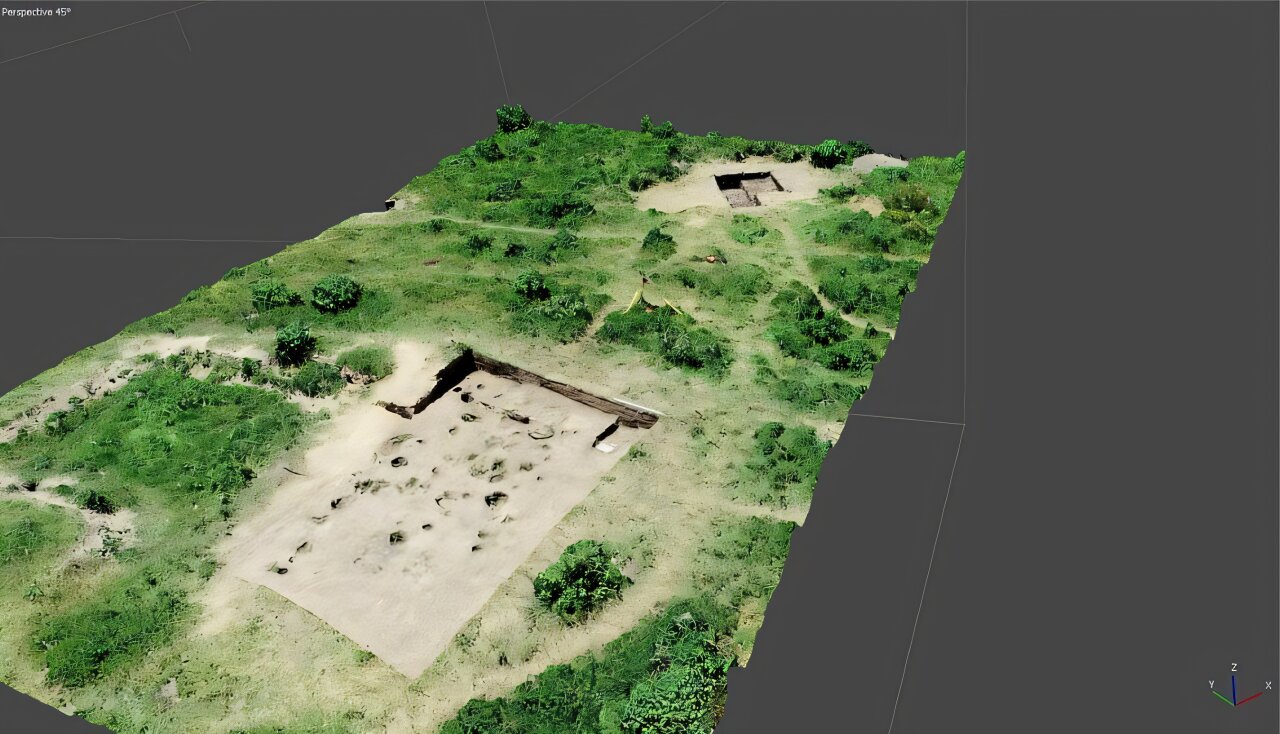
The study, led by the Senckenberg Center for Human Evolution and Paleoenvironment at the University of Tübingen, has successfully reconstructed the genetic history of the Pampas, northwestern Patagonia, the Paraná Delta, and the eastern lowlands of Uruguay. By analyzing the remains of 52 Indigenous individuals from 31 different sites, researchers have filled critical temporal and spatial gaps in our understanding of how the southernmost part of the continent was populated.
Unearthing the Genetic Mosaic of the Pampas
The research focused on individuals who lived between 6,000 and 150 years ago, a span covering the mid- to late Holocene. The data revealed that the Pampas was far from a homogenous landscape. During the mid-Holocene—the period between 8,200 and 4,200 years ago—at least three genetically distinct population groups coexisted in the region simultaneously.
While these groups lived in relatively close proximity, the genetic evidence suggests their interactions with populations further south in Patagonia were surprisingly rare. This period of coexistence highlights a complex social map where different lineages maintained their unique identities even as they shared the same broad geographic region.
Tracking the Expansion of Unknown Lineages
One of the most striking discoveries involves a specific genetic lineage whose geographic origin remains a mystery to science. This unknown group began to spread through the region approximately 5,500 years ago. As time progressed into the late Holocene, the genetic footprint of this lineage grew significantly, eventually becoming a dominant presence in the population.
The reach of this migration was extensive. By roughly 600 years ago, this same lineage had migrated into northwestern Patagonia. Upon arrival, these migrants did not simply replace the existing inhabitants; instead, they lived alongside people characterized by a genetic profile from the southern Andes. This coexistence persisted for centuries, continuing right up until the start of the European colonial period.
Regional Divergence and Coastal Connections
The study further highlights how geography influenced genetic separation along major waterways. By 1,500 years ago, the populations living along the Paraná river delta had become genetically distinct from those situated along the lower reaches of the Uruguay river. Despite the proximity of these river systems, the groups followed different evolutionary paths.
Interestingly, the people inhabiting the eastern lowlands of Uruguay during this time showed unexpected genetic links to the Sambaqui groups. These groups were traditionally associated with the southern Brazilian coast, suggesting that migratory movements and cultural exchanges extended well beyond the modern borders of the Southern Cone, drawing in influences from the Atlantic coastline to the north.
The Impact of European Colonization
While the study focuses primarily on ancient history, it also underscores the devastating impact of European arrival. The colonization of South America led to a massive displacement of Indigenous populations, replacing a rich tapestry of diverse languages, religions, and political structures with European systems.
This cultural replacement was mirrored by a biological one. The researchers noted that the genetic diversity of Indigenous people is still greatly reduced today compared to the variety found in the ancient remains. By studying these ancient genomes, scientists are not just tracing migration; they are recovering a record of a biological heritage that was nearly extinguished by colonial expansion.
Why This Matters
This research fundamentally changes how we view the history of South America. It proves that the Southern Cone was a dynamic crossroads of human movement for over 6,000 years, debunking the idea that ancient cultures were static or isolated. By confirming that cultural changes were driven by the actual migration and intermixing of people, the study provides a more accurate and profound understanding of Indigenous heritage.
Furthermore, by filling in the “genetic gaps” of one of the continent’s least-studied regions, the findings offer a vital scientific foundation for contemporary Indigenous groups seeking to reconnect with a history that was obscured by centuries of colonization. It serves as a reminder that the “deep roots” of the continent are defined by a long and resilient history of movement and adaptation.
Study Details
Kim-Louise Krettek et al, The shared genomic history of Middle- to Late-Holocene populations from the Southern Cone of South America, Current Biology (2026). DOI: 10.1016/j.cub.2026.03.081