For as long as humans have lived, we have left behind stories etched into our very bones. When an ancient skull is unearthed by archaeologists, it is more than just a biological relic; it is a witness to a specific, often final, moment in a person’s life. Yet, for years, the challenge has been reading that witness testimony accurately. Was a fractured temple the result of a tragic trip and fall, or was it the mark of a calculated strike from an enemy? A research team associated with the European project DEATHREVOL has recently stepped into this investigative gap, publishing a study in the journal Scientific Reports that aims to turn the silent cracks in bone into a clear narrative of the past.
By combining the disciplines of bioengineering, forensic medicine, and archaeology, the team has proposed new analytical tools designed to decode the language of cranial fractures. The researchers, hailing from the Centro Nacional de Investigación sobre Evolución Humana (CENIEH), the University of Burgos, and Rey Juan Carlos University, wanted to move beyond guesswork. They sought to establish a scientific framework that could distinguish between the chaos of an accident and the intentionality of interpersonal violence.
The Physics of a Shattered Moment
To understand the end of a life, the researchers had to look closely at the physical forces that govern the breaking point of human bone. Their study reveals that the formation of a fracture is not a random occurrence but a predictable reaction to impact energy and specific bone properties. Every skull is different, and variables such as bone thickness play a critical role in how the skeleton absorbs or succumbs to force.
When an object strikes the head, the bone acts as a canvas that records the intensity of the event. The team found that the fracture morphology—the specific shape and structure of the break—serves as an indirect indicator of how much energy was involved. By studying these patterns, scientists can work backward to estimate the velocity, applied force, and even the mass of the object or surface that caused the injury. It is a process of reverse-engineering a moment of impact, allowing the researchers to see the invisible energy that was present centuries ago.
A Tale of Two Surfaces
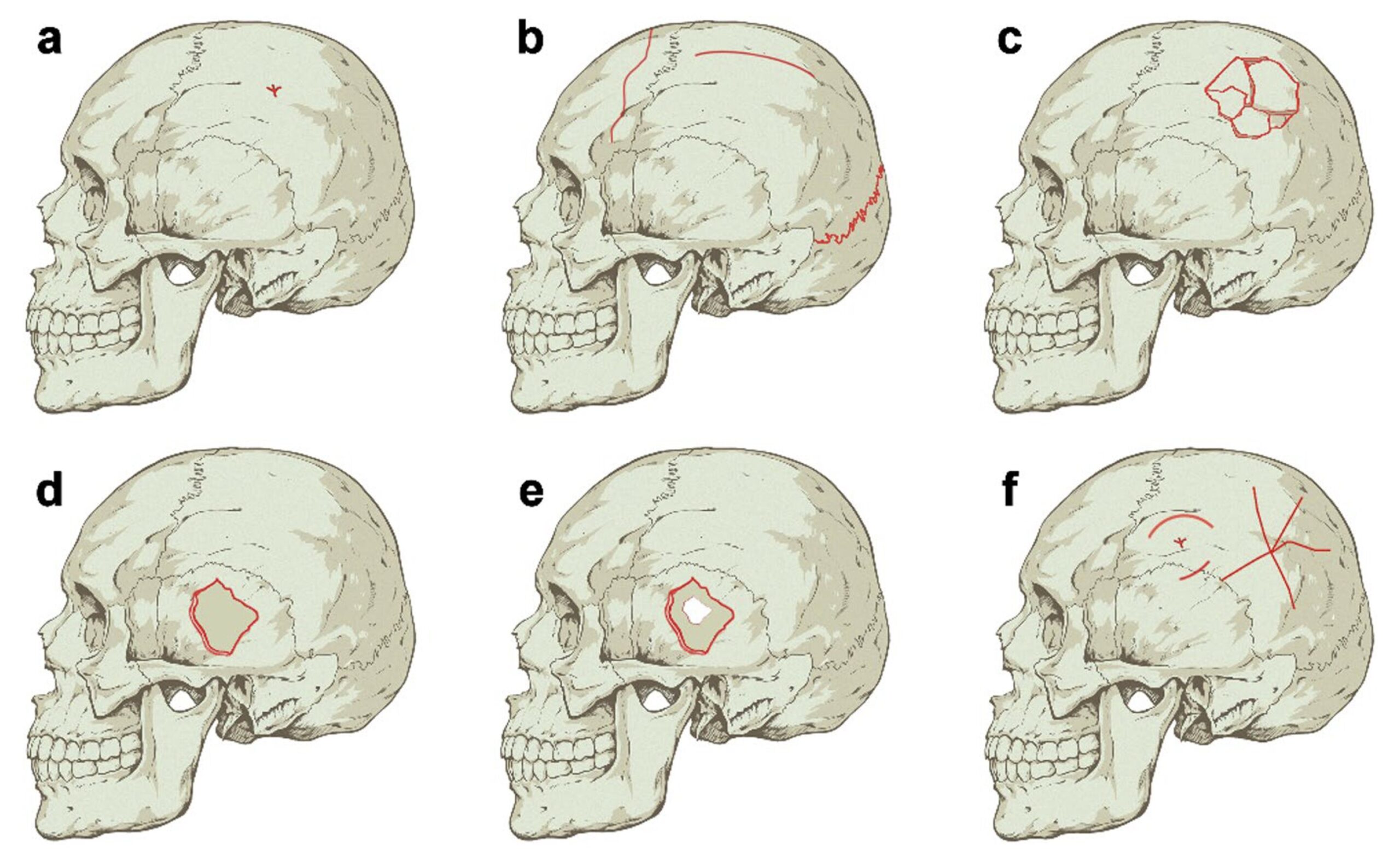
The most striking revelations in the research involve the relationship between the shape of an impacting surface and the resulting damage. Not all blows are created equal, and the skull reacts differently depending on whether it hits a broad, flat floor or a concentrated, heavy tool. The study highlights that concentrated impacts—those where the force is focused on a small area—are much more likely to result in depressed fractures. These are injuries where the bone is displaced inward, creating a physical pit or crater in the skull. In the context of human history, these types of wounds are commonly associated with violent events, such as a strike from a weapon.
On the other hand, when a person suffers an impact from a broader surface, the energy tends to dissipate differently. Instead of a localized cave-in, the bone is more likely to develop linear fractures. These appear as cracks or lines radiating through the bone, similar to the way a windshield might spiderweb. This specific morphology is typically the calling card of accidental trauma, such as a fall onto a flat ground. By identifying these distinct patterns, the researchers can begin to separate the victims of misfortune from the victims of conflict.
Reconstructing the Lost Records of Humanity
To build this analytical toolkit, the team didn’t rely on a handful of samples. They analyzed an extensive experimental dataset pulled from the worlds of bioengineering and forensic medicine. This data included 329 controlled experimental impacts, a massive library of information where every physical variable was meticulously recorded. By looking at the exact velocity and mass required to break bone in a laboratory setting, they created a benchmark that can now be applied to archaeopalaeontological human remains.
This multidisciplinary approach, led by first author Daniel Rodríguez-Iglesias and project leader Nohemí Sala, allows for a much more nuanced interpretation of the past. It bridges the gap between the hard data of modern physics and the soft narratives of human history. The presence of secondary fractures—smaller cracks that branch off from the main point of impact—further helps the team gauge the sheer amount of energy involved in a strike, adding another layer of detail to the forensic reconstruction.
Why the Dead Speak to the Living
This research matters because it changes our fundamental understanding of human behavior throughout history. We often view the ancient past through a lens of either total brutality or peaceful simplicity, but the truth is usually hidden in the nuances of the archaeological record. By refining our ability to identify trauma, we are no longer just looking at broken bones; we are looking at episodes of violence, accidental falls, and even post-mortem processes where the skull was damaged after death.
The work of the DEATHREVOL team provides a more accurate map of how our ancestors lived and interacted. When we can definitively say that a group of remains shows signs of interpersonal violence rather than a series of accidents, we gain a clearer picture of the social pressures, conflicts, and survival strategies of early humans. It allows us to honor the reality of their lives with scientific precision, ensuring that the stories written in their bones are finally told correctly.
Study Details
Rodríguez-Iglesias et al, Bioengineering approaches to dynamic impact analysis for cranial fracture interpretation in archaeology, Scientific Reports (2026). DOI: 10.1038/s41598-026-38313-0