Jupiter rises in the night sky like a quiet monarch, glowing steadily among the restless flicker of stars. To the naked eye, it appears as a brilliant point of light, but behind that calm glow lies a world so vast, so powerful, and so deeply mysterious that it has shaped the architecture of our entire solar system. Jupiter is not merely a planet; it is a cosmic force, a guardian, a sculptor of orbits, and a keeper of ancient secrets that stretch back to the very birth of the Sun.
To understand Jupiter is to understand something fundamental about how worlds form, how systems evolve, and how delicate the balance of existence can be. It is a planet of storms that dwarf Earth, of moons that rival planets, and of energies that defy imagination. It is a world where physics reveals its most dramatic expressions, and where beauty and violence coexist in a delicate dance.
The Discovery and Naming of Jupiter
Long before telescopes were invented, Jupiter was already known to humanity. It shines so brightly that ancient civilizations across the world could not ignore it. To early observers, it was not just a star but a wandering light, a planet moving against the fixed background of the heavens.
The Romans named it after their king of the gods, a fitting title for the largest planet in the solar system. In Greek mythology, it was associated with Zeus, the ruler of Mount Olympus. Across cultures, Jupiter was linked with power, authority, and divine presence.
The true transformation in our understanding of Jupiter began in the early seventeenth century, when Galileo Galilei turned his telescope toward the sky. In 1610, he made a discovery that would forever change astronomy. He observed four small points of light near Jupiter, which shifted position night after night. These were the moons now known as Io, Europa, Ganymede, and Callisto.
This observation was revolutionary. It showed that not everything revolved around Earth, challenging long-held beliefs and supporting the heliocentric model of the solar system. Jupiter became a symbol of a new way of seeing the universe, one grounded in observation and evidence rather than tradition.
Jupiter’s Place in the Solar System
Jupiter orbits the Sun at an average distance of about 778 million kilometers, placing it fifth from the Sun. It takes nearly 12 Earth years to complete one orbit, moving through the constellations of the zodiac in a slow, majestic journey.
But distance alone does not define Jupiter’s significance. Its mass is more than twice that of all the other planets combined. If the solar system were a grand orchestra, Jupiter would be the deep, resonant note that anchors the entire composition.
Its immense gravity influences the motion of other planets, shapes the asteroid belt, and captures or redirects comets that might otherwise travel toward the inner solar system. In many ways, Jupiter acts as both protector and disruptor, shielding Earth from some cosmic threats while also sending others inward.
Jupiter’s presence is a reminder that size matters in cosmic dynamics. It is not simply another planet; it is a dominant force that helps define the structure and stability of our planetary neighborhood.
The Size and Structure of a Giant
Jupiter is often called a gas giant, but this phrase barely captures its true nature. With a diameter of about 143,000 kilometers, it is more than eleven times wider than Earth. Over 1,300 Earths could fit inside it.
Yet despite its size, Jupiter is not solid like Earth. It is composed primarily of hydrogen and helium, the same elements that make up the Sun. In fact, Jupiter can be thought of as a failed star, a world that formed with similar materials but never gained enough mass to ignite nuclear fusion.
Its structure is layered in a fascinating way. The outermost region consists of thick clouds, swirling in bands of color. Beneath these clouds lies a deep atmosphere that gradually transitions into a dense fluid. As one moves deeper, pressure increases to unimaginable levels, compressing hydrogen into a strange metallic state that conducts electricity.
At its core, Jupiter may contain a dense mixture of heavier elements, though the exact nature of this core remains uncertain. Some scientists believe it is solid, while others think it may be partially dissolved into the surrounding layers.
This complex structure makes Jupiter less like a planet and more like a miniature solar system in itself, with layers and processes that challenge our understanding of matter under extreme conditions.
The Atmosphere of Endless Storms
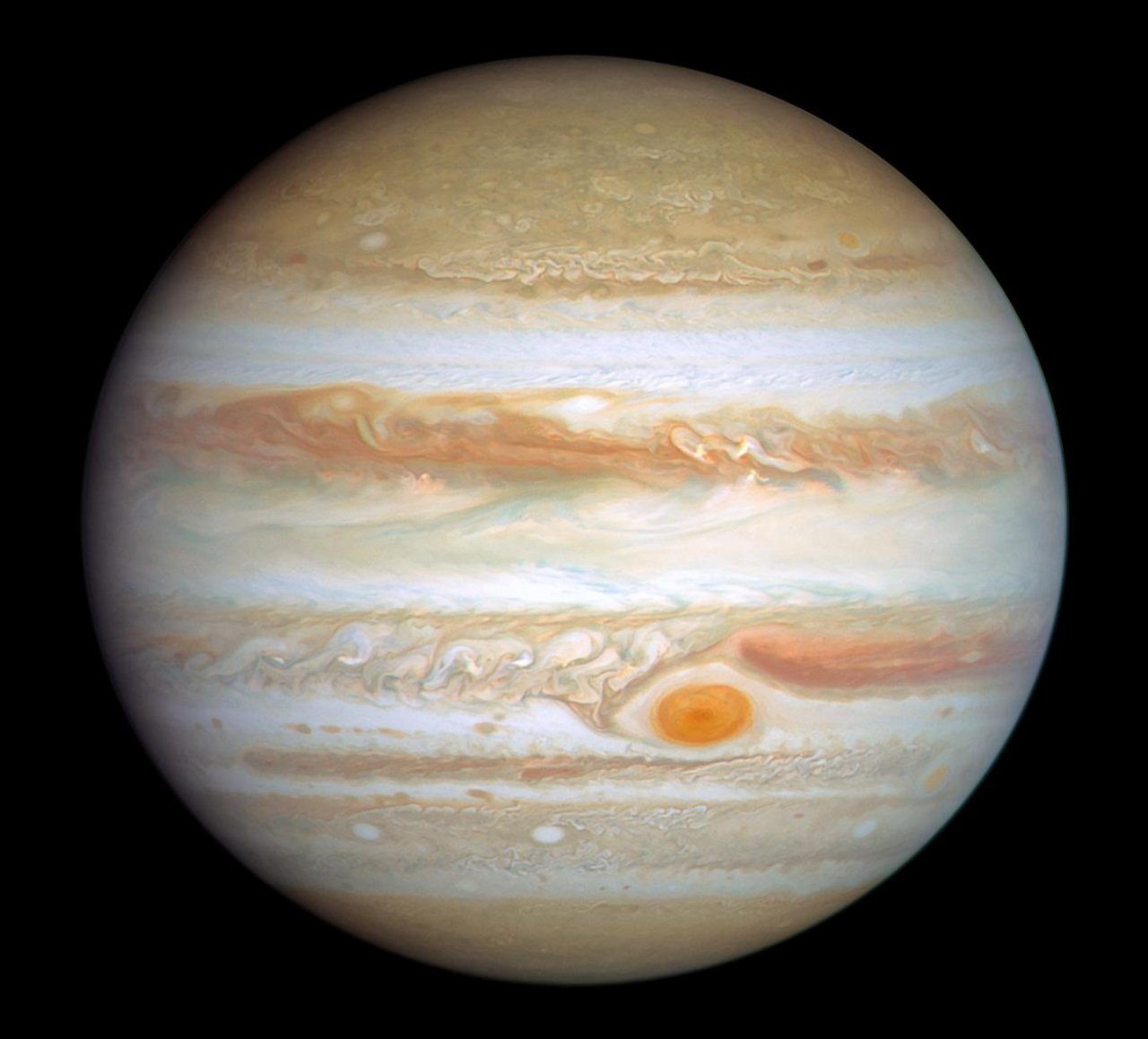
Jupiter’s atmosphere is one of the most visually striking features in the solar system. It is a canvas of swirling clouds, painted in shades of orange, white, brown, and red. These colors arise from complex chemical interactions driven by sunlight and internal heat.
The planet’s atmosphere is divided into bands known as belts and zones, which circle the planet parallel to its equator. These bands move in opposite directions, creating powerful shear forces that drive turbulence and storm formation.
Wind speeds on Jupiter can exceed 600 kilometers per hour, far stronger than any winds on Earth. These winds give rise to massive storms that can persist for years or even centuries.
The most famous of these is the Great Red Spot, a विशाल storm that has been raging for at least 300 years. It is so large that Earth could fit inside it. The storm rotates counterclockwise, with wind speeds reaching incredible levels.
Yet even the Great Red Spot is not permanent. Over time, it has been shrinking, hinting at the dynamic and ever-changing nature of Jupiter’s atmosphere. Other storms appear, evolve, and dissipate, creating a constantly shifting landscape of motion and energy.
Jupiter’s atmosphere is a laboratory for extreme weather, offering insights into fluid dynamics and atmospheric physics on a scale impossible to replicate on Earth.
The Power of Jupiter’s Magnetic Field
Jupiter possesses the strongest magnetic field of any planet in the solar system. This field is generated by the movement of metallic hydrogen deep within the planet, creating a dynamo effect.
The magnetic field is so powerful that it extends millions of kilometers into space, forming a विशाल magnetosphere. This region traps charged particles and interacts with the solar wind, creating intense radiation belts.
These radiation belts are dangerous enough to damage spacecraft and pose a significant challenge for missions exploring the Jovian system. Yet they also produce one of the most beautiful phenomena in the solar system: auroras.
Jupiter’s auroras are far more powerful than those on Earth. They glow brightly at the planet’s poles, driven not only by solar wind but also by the interaction of its moons, particularly Io, which supplies a constant stream of charged particles.
The magnetic field of Jupiter is a reminder of the dynamic processes occurring deep within the planet. It is invisible yet profoundly influential, shaping the environment around Jupiter and affecting everything within its reach.
Jupiter’s Moons: A System of Worlds
Jupiter is surrounded by a vast family of moons, more than ninety in total. These moons vary widely in size, composition, and characteristics, forming a miniature planetary system.
The four largest moons, known as the Galilean moons, are among the most fascinating objects in the solar system.
Io is a world of fire and fury, the most volcanically active body known. Its surface is constantly reshaped by eruptions driven by tidal forces from Jupiter’s gravity.
Europa, in contrast, is a world of ice. Beneath its frozen surface lies a vast ocean of liquid water, making it one of the most promising places in the search for extraterrestrial life.
Ganymede is the largest moon in the solar system, even bigger than the planet Mercury. It has its own magnetic field, a rare feature among moons.
Callisto is a heavily cratered world, preserving a record of ancient impacts. Its surface tells a story of a quieter, less active past.
Beyond these four, dozens of smaller moons orbit Jupiter, each with its own unique characteristics. Together, they form a complex system that offers a rich field of study for planetary science.
Rings of a Giant
While Saturn is famous for its rings, Jupiter also possesses a ring system, though it is far fainter and less dramatic. These rings are composed of tiny particles, likely produced by impacts on small moons.
The rings are difficult to see from Earth but have been observed by spacecraft. They form a thin, dusty structure that encircles the planet.
Although not as visually striking as Saturn’s rings, Jupiter’s rings provide valuable information about the dynamics of small particles and the interactions between moons and their parent planet.
Formation and Origins
Jupiter formed around 4.5 billion years ago, during the early stages of the solar system. It likely began as a solid core of rock and ice, which then rapidly accumulated gas from the surrounding protoplanetary disk.
Its rapid growth allowed it to capture a massive atmosphere before the solar wind cleared away the remaining gas. This early formation gave Jupiter a dominant role in shaping the solar system.
Its gravity influenced the formation of other planets, possibly preventing the formation of a larger planet in the asteroid belt. It also scattered smaller bodies, contributing to the delivery of water and organic materials to the inner planets.
Jupiter’s origin story is deeply connected to the history of the solar system itself. To study Jupiter is to look back in time, to the processes that gave birth to the planets.
Exploration of Jupiter
Humanity’s exploration of Jupiter began with telescopic observations but reached new heights with space missions.
The Pioneer and Voyager missions provided the first close-up images of the planet, revealing its complex atmosphere and diverse moons. Later, the Galileo spacecraft orbited Jupiter, studying its system in detail.
More recently, the Juno mission has been orbiting Jupiter, providing unprecedented insights into its interior structure, magnetic field, and atmospheric dynamics. Juno’s data is helping scientists answer long-standing questions about the planet’s formation and behavior.
Each mission has deepened our understanding, turning Jupiter from a distant point of light into a richly detailed world.
Jupiter’s Role in Protecting Earth
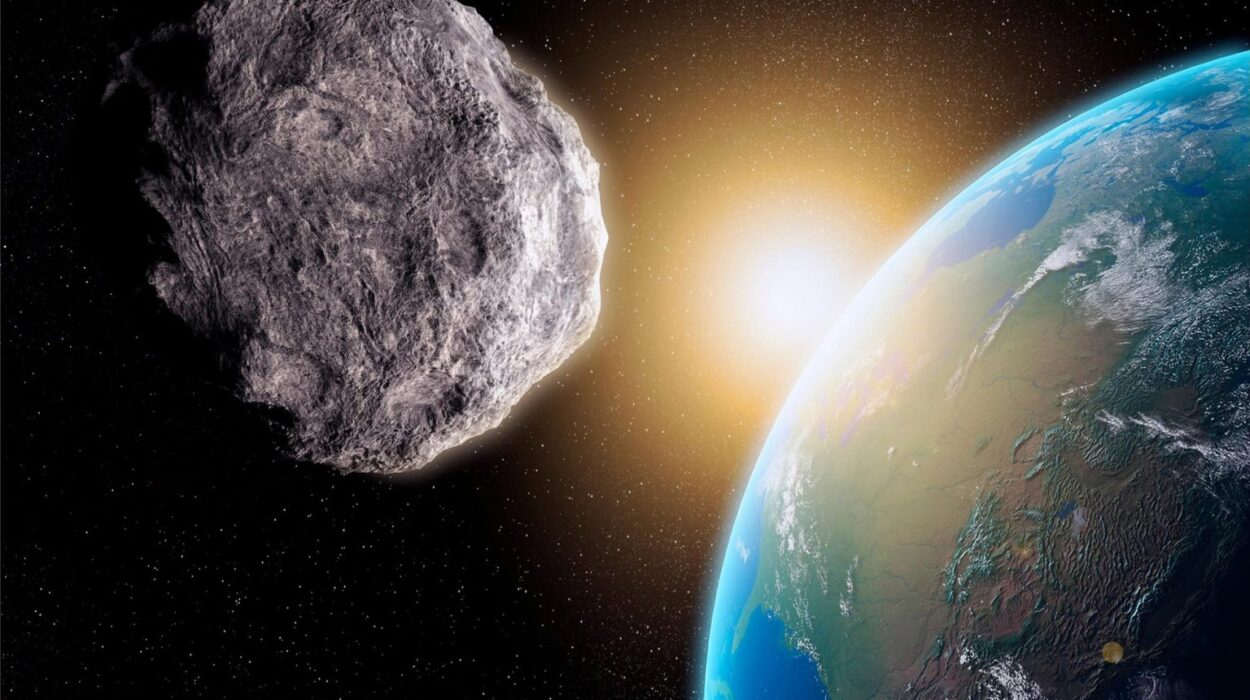
Jupiter is often described as a cosmic shield. Its massive gravity can capture or deflect comets and asteroids, reducing the number of potential impacts on Earth.
However, this role is complex. While Jupiter can protect the inner planets, it can also send objects inward under certain conditions. Its influence is both protective and disruptive, illustrating the delicate balance of gravitational interactions in the solar system.
Without Jupiter, Earth’s history might have been very different. The frequency of impacts, the delivery of water, and even the stability of planetary orbits could have changed dramatically.
The Mystery That Remains
Despite centuries of observation and decades of exploration, Jupiter still holds many secrets. Scientists continue to study its atmosphere, its interior, and its magnetic field, seeking answers to fundamental questions.
How exactly does its core behave? What drives the long-term evolution of its storms? How did its moons form, and could life exist beneath the icy surface of Europa?
These questions remind us that even the most familiar objects in our solar system can remain deeply mysterious.
The Majesty of the King of Planets
Jupiter stands as a symbol of scale, power, and beauty in the cosmos. It is a world where storms rage for centuries, where moons hold oceans beneath ice, and where invisible forces shape the space around it.
To gaze at Jupiter through a telescope is to witness something profound. It is to see not just a planet, but a dynamic, living system, a giant that has shaped the history of our solar system and continues to influence its future.
In the vastness of space, Jupiter reigns as a true king—not by decree, but by presence. It reminds us that the universe is filled with wonders beyond imagination, waiting to be explored, understood, and appreciated.