Astronomy is not just the study of stars and planets. It is the study of everything that has ever existed, everything that exists now, and everything that might one day come into being. It stretches from the smallest measurable flicker of light to the largest structures imaginable, spanning distances so vast that even light—traveling faster than anything else in the universe—takes billions of years to cross them.
What makes astronomy truly astonishing is not just its scale, but its ability to constantly overturn our expectations. Every time we think we understand the universe, it surprises us with something stranger, deeper, and more beautiful than we imagined.
Below are ten mind-blowing facts about astronomy—each one grounded in science, each one revealing a universe far more extraordinary than it first appears.
1. You Are Made of Stardust
Every atom in your body has a history older than Earth itself. The carbon in your cells, the oxygen you breathe, the calcium in your bones—all of these elements were forged in the hearts of stars.
In the early universe, after the Big Bang, only the lightest elements existed: hydrogen, helium, and trace amounts of lithium. Heavier elements did not yet exist. They had to be created.
Inside stars, nuclear fusion transforms lighter elements into heavier ones. Hydrogen fuses into helium, helium into carbon, carbon into oxygen, and so on. In the most massive stars, this process continues until iron is formed.
But the story does not end there. When massive stars reach the end of their lives, they explode in supernovae—catastrophic events that scatter newly formed elements into space. Even heavier elements, such as gold and uranium, are created during these explosive moments or during neutron star collisions.
Over billions of years, these enriched materials drift through space, eventually forming new stars, planets, and, ultimately, living organisms.
When you look at your hands, you are looking at matter that once burned in ancient stars. You are not separate from the universe. You are a continuation of it.
2. The Universe Is Expanding Faster and Faster
For a long time, scientists believed that the expansion of the universe—discovered in the early 20th century—should be slowing down due to gravity. Galaxies attract each other, after all. It seemed reasonable that their outward motion would gradually decelerate.
But in the late 1990s, observations of distant supernovae revealed something astonishing: the expansion of the universe is accelerating.
Galaxies are not just moving apart. They are speeding away from each other at an increasing rate. The farther away a galaxy is, the faster it appears to be receding.
This acceleration is attributed to something called dark energy, a mysterious form of energy that permeates space and drives cosmic expansion. It is thought to make up about 68 percent of the total energy content of the universe.
The implications are profound. In the distant future, galaxies will drift so far apart that they will become invisible to each other. The night sky, once filled with countless galaxies, may eventually grow dark.
The universe is not static. It is dynamic, evolving, and in some sense, tearing itself apart.
3. Black Holes Can Warp Time
Black holes are not just objects of immense gravity. They are distortions of spacetime itself.
According to general relativity, massive objects bend the fabric of spacetime. Black holes represent the most extreme example of this effect. Near a black hole, time behaves in ways that defy everyday experience.
If you were to observe someone falling toward a black hole from a safe distance, you would see them slow down as they approach the event horizon—the point beyond which nothing can escape. Their clock would appear to tick more slowly. Their image would become redder and dimmer, eventually fading from view.
From the perspective of the falling person, however, time would seem to pass normally. They would cross the event horizon without noticing anything unusual at that exact moment.
This difference arises because time itself is stretched by gravity. Near massive objects, time runs more slowly compared to regions farther away.
In a sense, black holes allow us to travel into the future. If you could spend time near one and then return, you would find that more time has passed for others than for you.
Time is not absolute. It is shaped by gravity.
4. There Are More Stars Than Grains of Sand on Earth
It is easy to underestimate the scale of the universe. The night sky, even in the darkest locations, reveals only a few thousand stars to the naked eye.
But this is just a tiny fraction of what exists.
Our galaxy, the Milky Way, contains an estimated 100 to 400 billion stars. And the Milky Way is just one of hundreds of billions of galaxies in the observable universe.
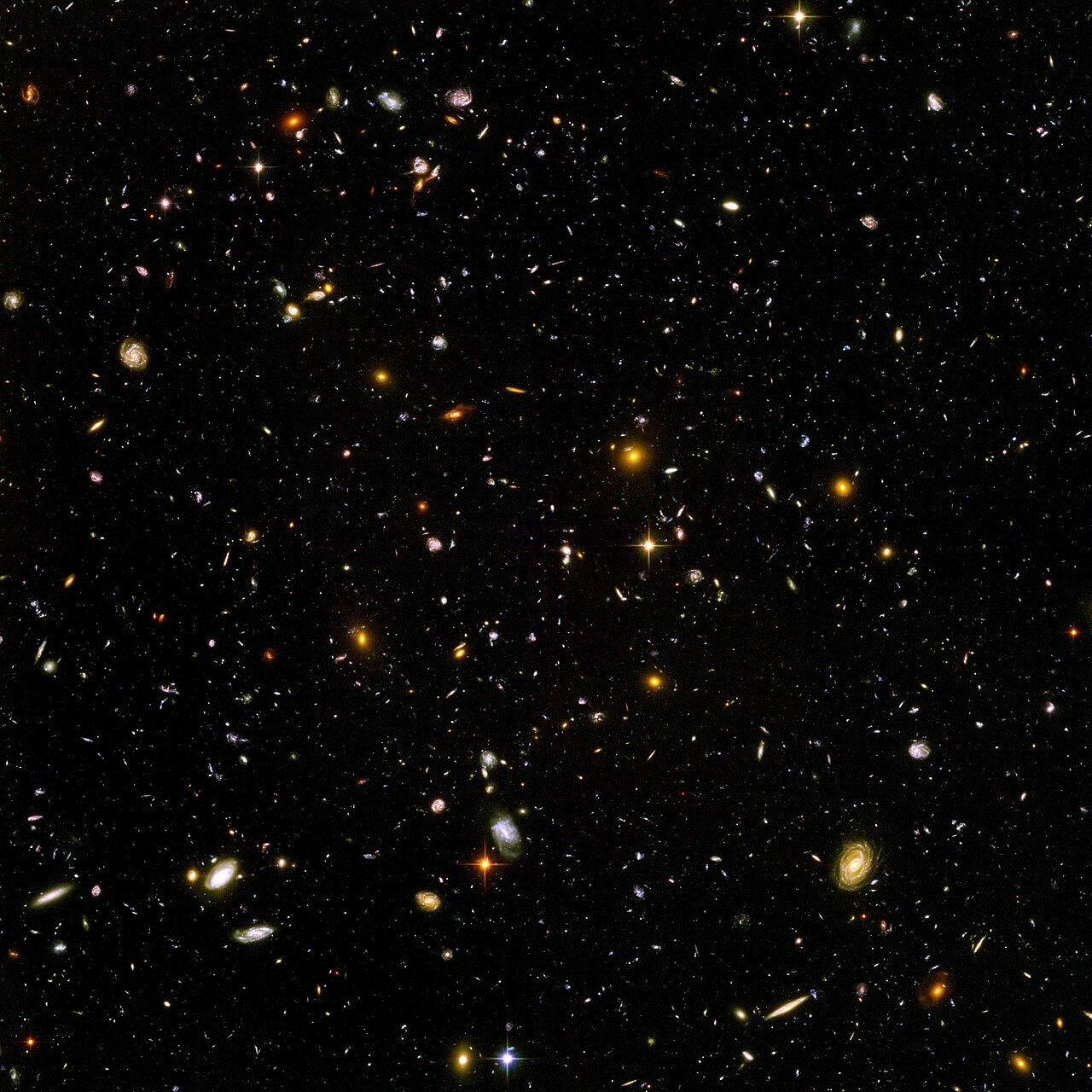
When astronomers observe deep fields—small patches of sky imaged for long periods—they find thousands of galaxies in areas that appear empty to the naked eye.
If you were to count every grain of sand on every beach on Earth, the number would still be smaller than the number of stars in the observable universe.
Each of those stars may host planets. Some of those planets may host life.
The universe is not just vast. It is overwhelmingly abundant.
5. Neutron Stars Are Incredibly Dense
When massive stars explode as supernovae, their cores can collapse into neutron stars—objects so dense that they defy comprehension.
A neutron star packs more mass than the Sun into a sphere roughly the size of a city, about 20 kilometers across. The result is an object of incredible density.
A single teaspoon of neutron star material would weigh billions of tons on Earth.
Inside a neutron star, gravity is so strong that electrons and protons combine to form neutrons. The matter is compressed into a state unlike anything we encounter in everyday life.
Neutron stars can also spin at astonishing speeds. Some rotate hundreds of times per second, emitting beams of radiation that sweep through space like cosmic lighthouses. These are known as pulsars.
They are remnants of stellar death, yet they remain among the most extreme and fascinating objects in the universe.
6. The Night Sky Shows the Past
When you look at the night sky, you are not seeing things as they are now. You are seeing them as they were.
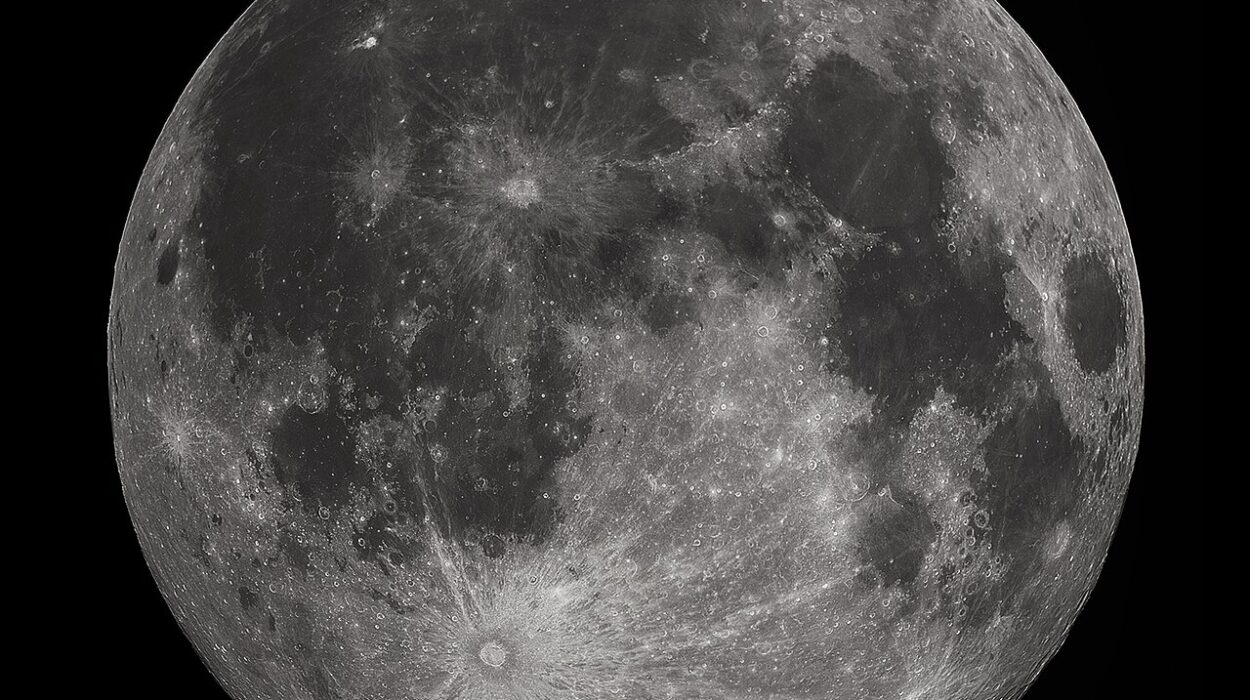
Light takes time to travel. The Moon appears as it was about one second ago. The Sun appears as it was about eight minutes ago. The nearest star system appears as it was more than four years ago.
Distant galaxies appear as they were millions or billions of years in the past. Some of the galaxies we observe today may no longer exist in the same form.
Astronomy is, in a very real sense, a form of time travel. Telescopes allow us to look back into cosmic history.
By studying distant objects, astronomers can observe how galaxies formed and evolved, how stars were born and died, and how the universe itself has changed over time.
The deeper we look into space, the further we look into the past.
7. There May Be Oceans Beneath Ice in Space
Some of the most promising places to find life are not warm, sunlit worlds, but icy moons with hidden oceans.
Moons such as Europa and Enceladus have thick icy crusts covering vast subsurface oceans. These oceans are kept liquid by tidal heating—gravitational interactions with their parent planets.
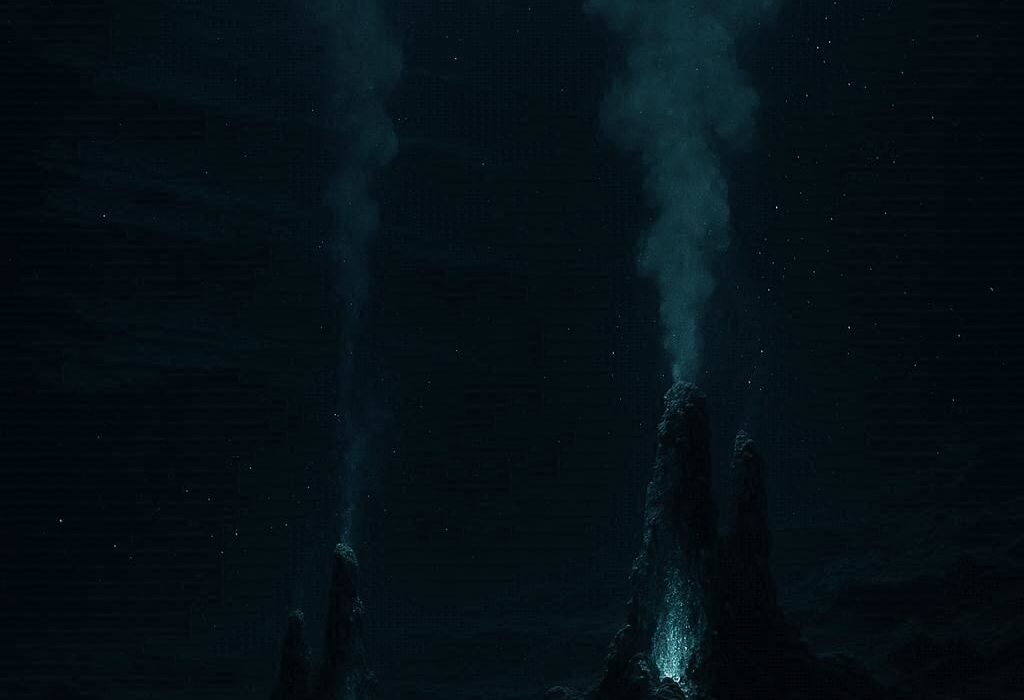
On Earth, life thrives around hydrothermal vents deep in the ocean, where sunlight never reaches. Chemical energy supports entire ecosystems.
If similar environments exist beneath the ice of these moons, life could exist there as well.
Enceladus even ejects plumes of water vapor into space, allowing scientists to study its ocean without drilling through ice.
These discoveries have reshaped our understanding of habitability. Life does not require sunlight. It requires the right conditions.
8. The Universe Is Mostly Invisible
Everything you can see—stars, planets, galaxies—accounts for only about five percent of the universe.
The rest is composed of dark matter and dark energy.
Dark matter does not emit or absorb light, but it exerts gravitational influence. It helps hold galaxies together and shapes the large-scale structure of the universe.
Dark energy, even more mysterious, drives the accelerated expansion of the universe.
Despite decades of research, we do not know what either of these components truly are.
This means that most of reality is hidden from direct observation.
The universe we see is just a small part of what exists.
9. Space Is Not Completely Silent
Space is often described as silent because sound requires a medium, and space is mostly empty.
However, this does not mean that space is devoid of activity.
Plasma waves, electromagnetic radiation, and other phenomena can be converted into sound for analysis. Spacecraft have recorded “sounds” from planets, solar wind interactions, and even the vibrations of Saturn’s rings.
Moreover, the universe is filled with radiation across the electromagnetic spectrum—radio waves, infrared, visible light, ultraviolet, X-rays, and gamma rays.
While we cannot hear space in the traditional sense, it is far from quiet.
The cosmos hums with energy, even in the deepest vacuum.
10. The Universe Might End in Darkness
The universe had a beginning. It will likely have an end—or at least a final state.
Current observations suggest that expansion will continue indefinitely, driven by dark energy. Over time, stars will exhaust their nuclear fuel. Galaxies will grow dim. Black holes will slowly evaporate through Hawking radiation.
Eventually, the universe may reach a state of maximum entropy, where no usable energy remains. This scenario is known as heat death.
In such a universe, there would be no light, no warmth, no structure—only a vast, cold expanse.
It is a distant future, trillions upon trillions of years away. But it is a reminder that even the grandest cosmic structures are temporary.
The universe is dynamic, not eternal in its current form.
A Universe That Invites Wonder
Astronomy reveals a universe that is at once beautiful and unsettling, simple and complex, familiar and utterly alien. It tells us that we are small, but not insignificant. We are part of a vast cosmic story, shaped by forces that began long before our planet formed.
Each of these facts is a doorway into deeper questions. What is dark matter? What drives dark energy? Does life exist beyond Earth? How did the universe begin, and how will it end?
The answers are not yet complete. And perhaps that is what makes astronomy so powerful.
It reminds us that there is still so much to discover.
When you look up at the night sky, you are not just seeing distant lights. You are witnessing a universe filled with mystery, history, and possibility.
And somewhere, in that vastness, new discoveries are waiting.