For as long as humans have existed, the Moon has been our closest celestial companion. It rises without fail, casting silver light across oceans and deserts, inspiring poetry, myth, and wonder. Ancient civilizations worshipped it. Lovers have gazed at it. Scientists have studied it. And astronauts have walked upon it.
Yet despite its familiarity, the Moon is far stranger than it appears.
It is not just a glowing disc in the sky. It is a dynamic, complex world with a history intertwined deeply with Earth itself. Its presence has shaped our planet’s tides, stabilized our climate, and perhaps even made life possible. And still, hidden beneath its calm face, lie secrets that challenge our understanding.
Below are ten astonishing, scientifically grounded facts about the Moon—facts that reveal just how extraordinary our nearest neighbor truly is.
1. The Moon Was Born from a Catastrophic Collision
The Moon did not form gently alongside Earth. It was born in violence.
Around 4.5 billion years ago, when the solar system was still young and chaotic, a Mars-sized object collided with the early Earth. This object, often referred to as Theia, struck with unimaginable force. The impact melted rock, vaporized material, and hurled debris into space.
From this debris, over time, gravity pulled fragments together to form the Moon.
This giant impact hypothesis explains several key observations. The Moon’s composition is strikingly similar to Earth’s outer layers, suggesting a shared origin. It also explains why the Moon has a relatively small iron core compared to Earth.
In a very real sense, the Moon is made of Earth. It is a fragment of our planet’s ancient past, torn away in a moment of cosmic violence.
Every time we look at it, we are seeing a piece of Earth’s history suspended in space.
2. The Moon Is Slowly Drifting Away from Earth
The Moon may seem constant in the sky, but it is not staying put.
Each year, it moves about 3.8 centimeters farther away from Earth. This drift is caused by tidal interactions between Earth and the Moon. The Moon’s gravity pulls on Earth’s oceans, creating tides. As Earth rotates, these tidal bulges are slightly ahead of the Moon, transferring energy and pushing the Moon outward.
Billions of years ago, the Moon was much closer. It would have appeared larger in the sky, and tides on Earth would have been far more extreme.
In the distant future, the Moon will continue to recede. Days on Earth will grow longer as rotational energy is transferred away. Eventually, the Earth-Moon system will reach a state where both bodies are tidally locked to each other, though this lies far beyond human timescales.
The Moon is not just orbiting Earth. It is slowly escaping it.
3. The Moon Controls Earth’s Tides—and Stabilizes Its Climate
The gravitational pull of the Moon creates tides in Earth’s oceans, a phenomenon that has shaped coastlines and ecosystems for billions of years. But tides are only part of the story.
The Moon also stabilizes Earth’s axial tilt. Without it, our planet’s tilt could vary wildly over time due to gravitational influences from other planets. This would cause extreme climate shifts, making conditions less stable for life.
With the Moon’s steady influence, Earth’s tilt remains relatively consistent, allowing for predictable seasons.
In this way, the Moon acts as a cosmic anchor. It helps maintain the environmental stability that has allowed life to flourish.
Without the Moon, Earth might be a far more chaotic and less hospitable world.
4. The Moon Always Shows Us the Same Face
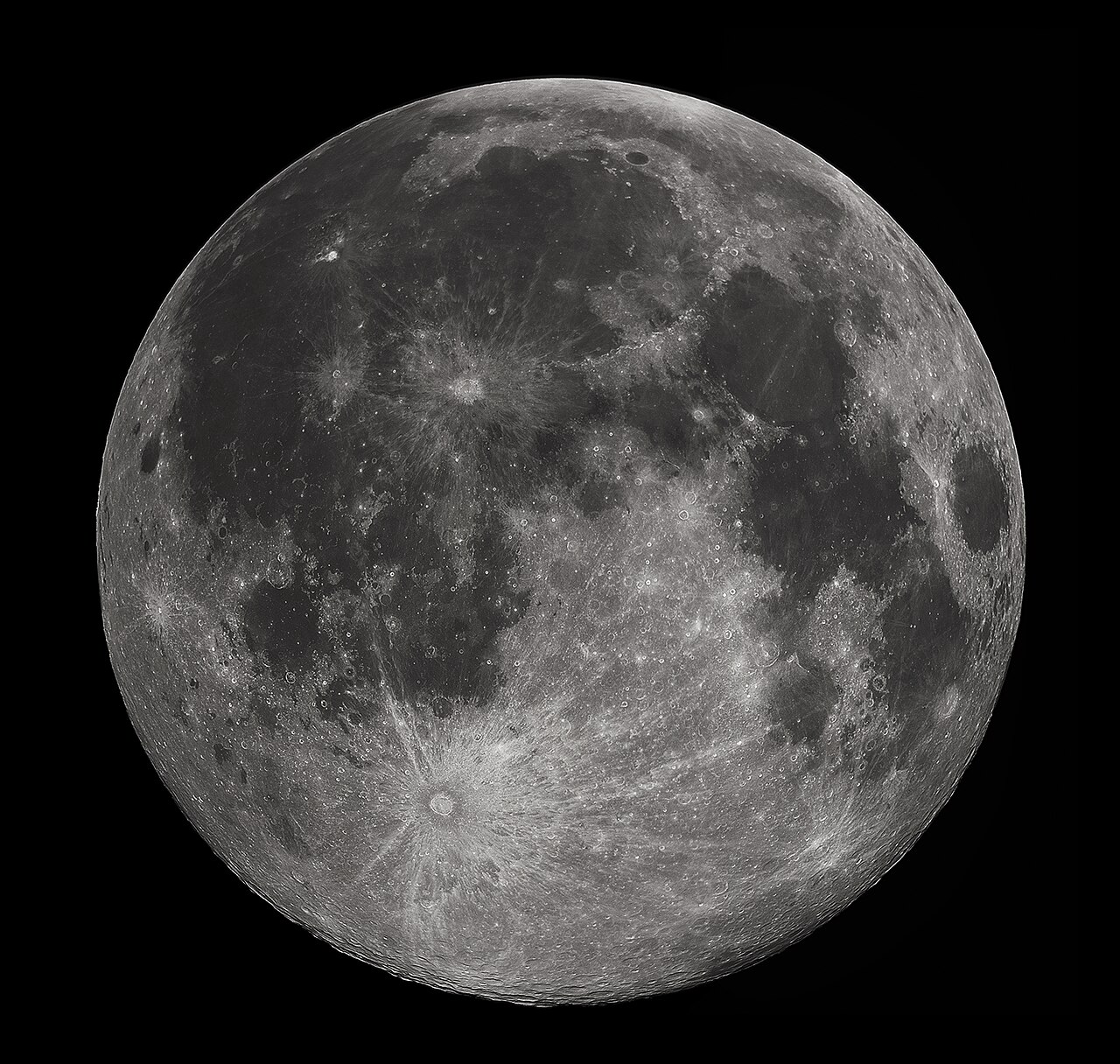
When you look at the Moon, you are always seeing the same side. This is not a coincidence—it is the result of tidal locking.
The Moon rotates on its axis at the same rate that it orbits Earth. This synchronization means one hemisphere always faces us, while the other side—the far side—remains hidden from view.
For centuries, humans imagined what might lie on the Moon’s unseen face. It wasn’t until space missions in the 20th century that we finally saw it.
Interestingly, the far side is very different from the near side. It has fewer large dark plains and more craters. The reasons for this asymmetry are still being studied.
The Moon has a hidden face, and it is not just a mirror of the side we know.
5. The Moon Has Moonquakes
The Moon may appear lifeless and still, but it is not entirely inactive.
Seismometers placed on the lunar surface during human missions detected moonquakes. These can be caused by several factors: tidal forces from Earth, impacts from meteorites, and thermal expansion as the Moon’s surface heats and cools.
Some moonquakes are surprisingly strong and can last much longer than earthquakes on Earth. This is because the Moon lacks water and has a different internal structure, allowing seismic waves to travel more efficiently.
The Moon is not geologically dead. It still trembles, quietly, beneath its surface.
6. The Moon Has Extreme Temperatures
The lunar environment is harsh beyond imagination.
During the lunar day, temperatures can soar to about 127 degrees Celsius. At night, they can plunge to around minus 173 degrees Celsius. These extremes occur because the Moon lacks a significant atmosphere to distribute heat.
A single day on the Moon lasts about 29.5 Earth days. This means two weeks of continuous sunlight followed by two weeks of darkness.
In permanently shadowed craters near the poles, temperatures can drop even lower—cold enough to trap water ice for billions of years.
The Moon is a world of extremes, where survival requires overcoming both intense heat and bitter cold.
7. There Is Water on the Moon
For a long time, scientists believed the Moon was completely dry. But recent discoveries have changed that view dramatically.
Water ice has been found in permanently shadowed craters near the lunar poles. These regions never receive sunlight, allowing ice to remain stable over vast timescales.
In addition, traces of water molecules have been detected in the lunar soil across broader regions.
This discovery is crucial for future exploration. Water can be used for drinking, oxygen production, and even fuel. It transforms the Moon from a barren destination into a potential stepping stone for deeper space exploration.
The Moon is not as dry as it once seemed.
8. The Moon Has a Thin, Temporary Atmosphere
The Moon does not have a thick atmosphere like Earth, but it does possess a very thin exosphere.
This exosphere is composed of sparse particles such as helium, neon, and argon. It is so tenuous that atoms rarely collide. Instead, they move in ballistic trajectories, hopping across the surface.
The exosphere is constantly replenished by processes such as solar wind interactions and micrometeorite impacts.
While it offers no protection from radiation or temperature extremes, it reveals that even a seemingly airless world has subtle layers of complexity.
9. The Moon Influenced the Evolution of Life on Earth
The Moon’s influence extends beyond tides and climate. It may have played a role in the emergence and evolution of life itself.
Tidal pools created by the Moon’s gravitational pull could have provided environments where early chemical reactions concentrated organic molecules. The rhythmic rise and fall of tides may have driven cycles that encouraged the formation of complex compounds.
Additionally, the stabilization of Earth’s tilt created a more consistent climate, allowing life to evolve over long periods without catastrophic disruptions.
The Moon is not just a passive observer. It has been an active participant in Earth’s biological story.
10. The Moon Is a Gateway to the Future of Space Exploration
The Moon is not only a relic of the past—it is a stepping stone to the future.
Because of its proximity, relatively low gravity, and available resources such as water ice, the Moon is an ideal location for establishing a long-term human presence beyond Earth.
Future missions aim to build lunar bases, conduct scientific research, and test technologies for journeys to Mars and beyond.
The Moon could serve as a launch point for deeper exploration, reducing the energy required to escape Earth’s gravity. It may also become a hub for studying space environments and developing sustainable off-world living.
In this sense, the Moon is both a destination and a starting point.
The Moon as a Mirror of Humanity
The Moon is more than a celestial object. It is a mirror reflecting our curiosity, our ambition, and our desire to understand the universe.
It has guided ancient calendars, inspired myths and art, and marked humanity’s first steps beyond Earth. It has shaped our planet in ways both subtle and profound. And it continues to challenge us, revealing new mysteries with each discovery.
When we look at the Moon, we are not just looking outward. We are looking into a shared history that began billions of years ago in fire and collision. We are seeing a world that has influenced our own in ways we are still uncovering.
And perhaps most importantly, we are seeing a reminder that even the most familiar objects can hold astonishing secrets.
The Moon is not just a companion in the night sky.
It is a story still being told.