The Sun feels so constant that it fades into the background of our awareness. It rises each morning, warms our skin, lights our days, and disappears each night with quiet reliability. We plan our lives around it without thinking, trusting that it will always return. But imagine, for a moment, a world without sunlight. No dawn. No shadows. No warmth spilling across the land. No golden glow touching the faces of people or the leaves of trees. The question “Can we survive without sunlight?” is not merely scientific—it is emotional, existential, and deeply human. To ask it is to confront how dependent life on Earth truly is, and how fragile the balance sustaining us can be.
This question pulls us into the very foundations of biology, physics, chemistry, and ecology. It forces us to examine not only how humans live, but how life itself began and continues to persist. Survival without sunlight is not simply about darkness; it is about energy, food, climate, and the invisible connections that bind every living thing on Earth.
The Sun as the Primary Source of Life’s Energy
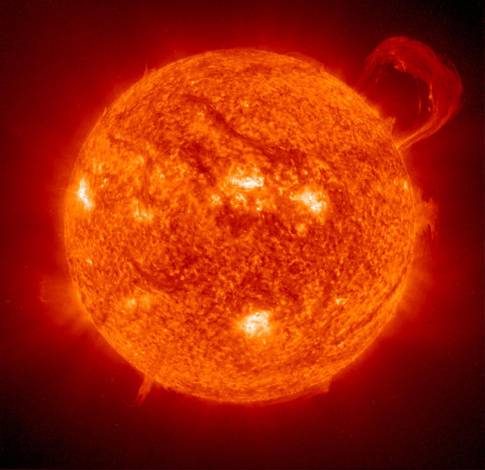
At the most fundamental level, life on Earth runs on energy, and almost all of that energy comes from the Sun. Sunlight is not just illumination; it is power. Every heartbeat, every breath, every movement of muscle ultimately traces back to solar energy. Plants capture sunlight through photosynthesis, transforming light into chemical energy. That energy moves through food webs, feeding herbivores, carnivores, and omnivores alike. Humans, no matter how technologically advanced, are woven into this system.
When we eat a piece of fruit, a grain of rice, or a piece of meat, we are consuming stored sunlight. Even fossil fuels—coal, oil, and natural gas—are ancient sunlight, trapped in chemical bonds over millions of years. The Sun is not merely a star in the sky; it is the engine of Earth’s biosphere.
Without sunlight, this engine shuts down.
What Happens First When Sunlight Disappears
If sunlight were to vanish suddenly, the first change would be immediate and unsettling: darkness. But darkness itself would not be the greatest threat. The more dangerous changes would unfold silently and steadily.
Within hours, the surface of Earth would begin to cool. Sunlight provides the energy that maintains Earth’s relatively stable temperature. Without it, the planet would radiate heat into space, and temperatures would begin to fall. At first, this cooling might seem manageable, but it would accelerate rapidly.
Plants would be the first living organisms to suffer catastrophic consequences. Photosynthesis would stop almost immediately. Without the ability to produce energy from sunlight, plants would begin consuming their stored reserves. Within days to weeks, most plants would die. Forests, grasslands, crops—entire green ecosystems would collapse into lifeless matter.
The death of plants would ripple outward, affecting every form of life that depends on them.
The Collapse of Food Chains
Food chains are delicate structures, built on the foundation of producers—organisms that can create energy-rich molecules from non-living sources. On Earth, those producers are primarily plants and photosynthetic microorganisms. Remove sunlight, and these producers vanish.
Herbivores would face starvation as plants disappear. Some animals might survive briefly by feeding on stored food or decaying plant matter, but this would only delay the inevitable. Carnivores would follow soon after, as their prey dwindled and vanished.
Humans would not be spared. Modern agriculture relies entirely on sunlight. Even indoor farming depends on artificial lighting powered by energy sources that ultimately trace back to the Sun. Food reserves could sustain parts of the population for a short time, but global starvation would follow as production ceased.
Survival without sunlight would not be a slow fade; it would be a cascading collapse.
The Atmospheric Consequences of Eternal Darkness
Sunlight plays a crucial role not only in sustaining life but in maintaining Earth’s atmosphere. The oxygen we breathe exists largely because photosynthetic organisms have been producing it for billions of years. Without sunlight, oxygen production would stop.
While Earth’s atmosphere contains a vast reservoir of oxygen, it would not disappear overnight. However, without ongoing replenishment, oxygen levels would slowly decline as organisms continued to respire and consume it. Over long timescales, the atmosphere would shift, becoming less hospitable to complex life.
At the same time, carbon dioxide levels would rise. Plants normally absorb carbon dioxide, helping regulate Earth’s climate. Without them, carbon dioxide would accumulate, but paradoxically, the planet would still grow colder, because sunlight—not carbon dioxide alone—is the primary driver of surface warmth.
The balance of gases that makes Earth breathable and temperate would unravel.
The Freezing of the Planet
As days turned into weeks and months without sunlight, Earth would plunge into deep cold. Oceans, which store enormous amounts of heat, would slow the cooling process at first. Water has a high heat capacity, acting as a thermal buffer. But even the oceans would eventually surrender their warmth to space.
Sea ice would spread from the poles toward the equator. Glaciers would advance across continents. Rain would cease, replaced by snow and ice. The water cycle would grind to a halt as evaporation stopped without solar energy.
Within a year, much of Earth’s surface would become uninhabitable for humans. Temperatures would fall far below what our bodies can tolerate. Even with technology, surviving such cold would be extraordinarily difficult.
Human Technology and Artificial Light
At this point, the question arises: could human technology save us? Could artificial light replace the Sun?
Artificial light can illuminate, but it cannot easily replicate the sheer scale of energy provided by sunlight. The Sun delivers an immense and continuous flow of energy to Earth. Generating equivalent energy artificially would require resources far beyond current human capability.
Some might imagine underground cities powered by nuclear reactors, illuminated by artificial suns. In theory, nuclear energy could provide heat and light for limited human populations. Controlled environments could support small-scale agriculture using artificial lighting. But this would not be survival for humanity as we know it; it would be survival for a fraction of the population, under extreme conditions.
Even then, challenges would remain. Maintaining complex technological systems indefinitely without sunlight would demand constant energy, materials, and expertise. Over time, systems would degrade, resources would run out, and failures would compound.
The Psychological Cost of a Sunless World
Beyond physical survival lies a quieter, deeper challenge: the human mind. Sunlight profoundly affects human psychology. It regulates circadian rhythms, influences hormone production, and shapes emotional well-being. Prolonged darkness is known to cause depression, anxiety, and cognitive disturbances.
In a world without sunlight, mental health would become a major survival issue. The absence of natural light would disrupt sleep cycles, impair judgment, and erode morale. Hope itself might become scarce in a world frozen in darkness.
Human culture, art, and meaning are deeply tied to the Sun. From ancient myths to modern poetry, sunlight symbolizes life, renewal, and hope. Its absence would be more than a physical loss; it would be a spiritual one.
Life Without Sunlight: Does It Exist Anywhere?
Despite the grim outlook for surface life, sunlight is not the only possible source of energy in the universe. On Earth itself, life exists in places where sunlight never reaches. Deep beneath the ocean, near hydrothermal vents, communities of organisms thrive in complete darkness. These ecosystems rely not on photosynthesis, but on chemosynthesis—using chemical energy from Earth’s interior.
Bacteria at these vents convert chemicals like hydrogen sulfide into energy, forming the base of a food web entirely independent of sunlight. Larger organisms, such as tube worms and clams, depend on these bacteria for survival.
This discovery transformed our understanding of life’s possibilities. It showed that sunlight, while essential for surface life, is not strictly required for life itself.
Could Humans Adapt to a Chemosynthetic World?
The existence of deep-sea ecosystems raises a provocative question: could humans survive in a world without sunlight by relying on alternative energy sources?
In principle, humans could harness chemical or nuclear energy to sustain limited populations. Food production could be based on artificially grown organisms or chemical synthesis. However, humans are biologically adapted to a sunlit world. Our vision, metabolism, and physiology evolved under cycles of day and night.
Adapting fully to a sunless existence would require profound changes—not just technological, but biological and cultural. It would be a different form of life, more akin to an engineered survival strategy than a natural continuation of human civilization.
The Role of the Sun in Evolution
To understand whether survival without sunlight is truly possible, we must look backward. The Sun shaped life from its earliest beginnings. The first photosynthetic organisms changed Earth’s atmosphere, paving the way for complex life. Evolution unfolded under solar rhythms, shaping behavior, reproduction, and ecosystems.
Every adaptation in the human body reflects this history. Our eyes are tuned to visible light from the Sun. Our skin responds to sunlight by producing essential molecules. Our internal clocks align with the solar day.
Removing the Sun would not just remove an energy source; it would sever the deep evolutionary connection between life and light.
Time Scales of Survival
Survival without sunlight depends strongly on time scale. For short periods—days or even weeks—humans could survive in darkness, relying on stored food and energy. For months, survival would become increasingly difficult as food production stopped and temperatures fell. For years, only highly controlled, technologically sustained environments could support life.
Over centuries or millennia, without sunlight, Earth would become a frozen, barren world at the surface. Life might persist in isolated, energy-rich niches deep underground or near geothermal sources, but human civilization as we know it would not survive.
What This Question Reveals About Our Fragility
Asking whether we can survive without sunlight reveals an uncomfortable truth: humanity is far less independent than we often imagine. Despite our technology, we remain deeply dependent on natural systems. The Sun is not a background feature of life; it is the foundation.
This dependence is not a weakness—it is a connection. It reminds us that we are part of a larger system, not separate from it. Our survival is intertwined with forces far beyond our control, and recognizing this can inspire humility and responsibility.
The Emotional Meaning of Sunlight
Sunlight is more than energy. It is memory, warmth, and rhythm. It marks the passage of time and gives shape to our days. Its absence would strip life of color and contrast, leaving a world of uniform shadow.
Thinking about survival without sunlight forces us to appreciate what we often take for granted. Each sunrise is a quiet miracle, a renewal of the conditions that make life possible.
The Final Answer: Can We Survive Without Sunlight?
Scientifically, the answer depends on what we mean by “we” and “survive.” Small pockets of humans might endure for a time using advanced technology and alternative energy sources. Life itself could persist in dark, hidden places powered by chemical energy.
But humanity as a global, surface-dwelling civilization cannot survive indefinitely without sunlight. The Sun is too deeply woven into our biology, our ecosystems, and our planet’s climate.
To survive without sunlight would mean becoming something fundamentally different—biologically, technologically, and culturally.
A World Worth Protecting
The question of survival without sunlight ultimately leads us back to the present moment. We live in a world bathed in light, sustained by a star that has burned steadily for billions of years. This stability has allowed life to flourish and consciousness to emerge.
Understanding our dependence on the Sun is not an exercise in fear; it is an invitation to gratitude. It reminds us that life is precious, delicate, and profoundly interconnected.
We may dream of distant futures and extraordinary adaptations, but for now, our survival is written in light.