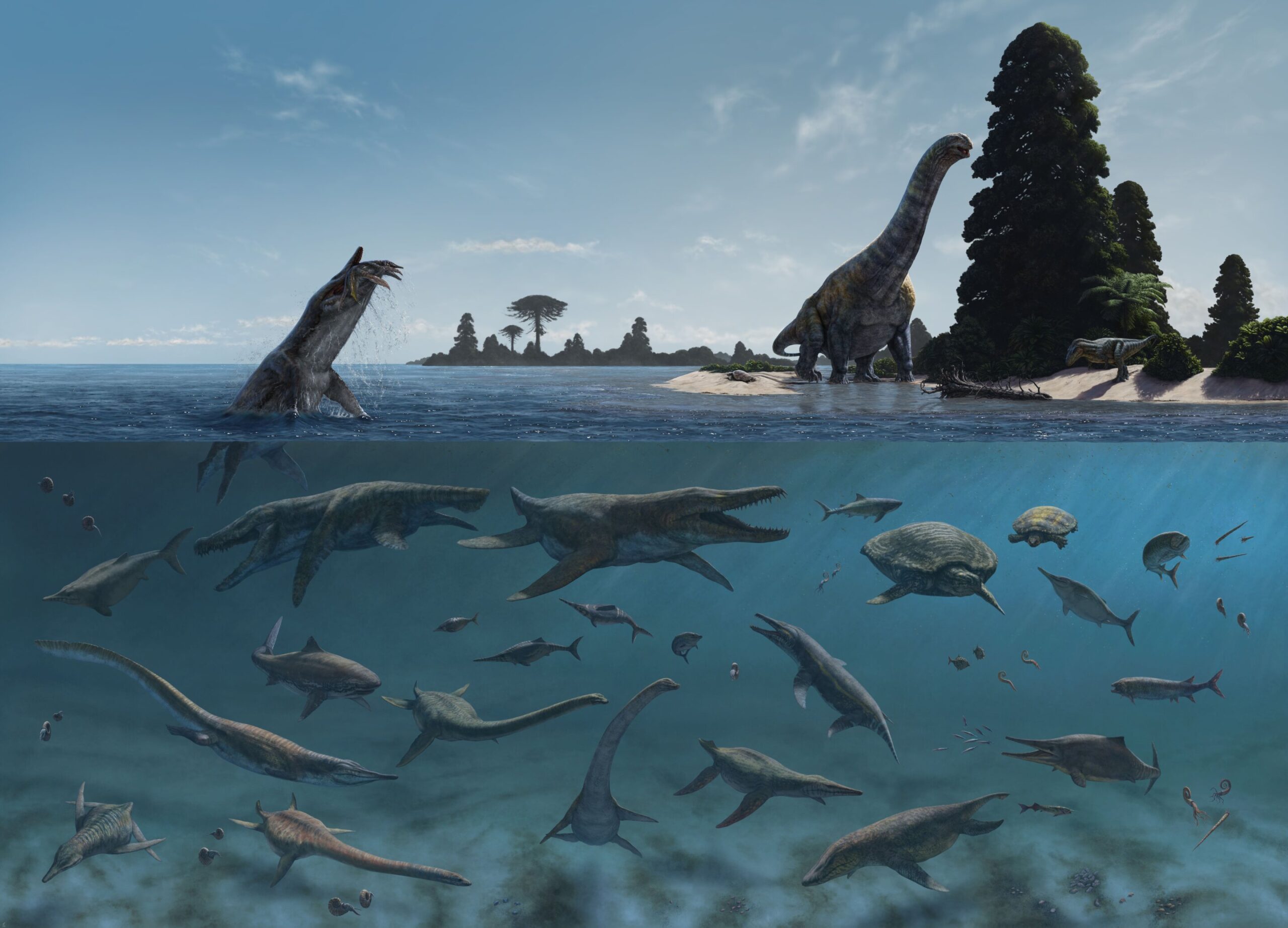
In the ancient seas of what is now central Colombia, animals from fading Jurassic lineages lived alongside members of newer evolutionary groups that would later diversify. This unusual overlap, preserved in the fossil-rich Paja Formation, has led researchers to propose a new model of large-scale evolutionary change called a “biotic inflection.” Unlike mass extinctions, this proposed transition involved older groups nearing extinction and emerging lineages sharing the same ecosystem.
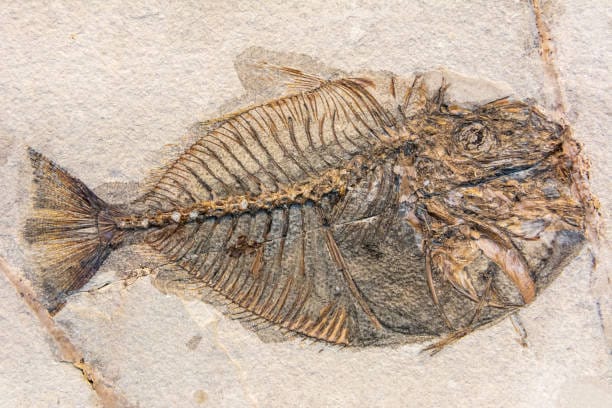
The evidence comes from the Early Cretaceous Paja Formation near Villa de Leyva, Colombia. Its exceptionally rich fossil record preserves a marine ecosystem containing long-necked plesiosaurs, marine crocodile relatives, turtles, sharks, crustaceans and other animals.
Together, these species formed what researchers call the Paja Biota, a remarkably complex marine community.
Dirley Cortés, a Ph.D. graduate, and Hans Larsson, a professor in McGill University’s Department of Biology, examined this fossil ecosystem and identified a pattern they believe may represent a previously unrecognized stage of evolutionary change.
They call it a biotic inflection. The idea describes a period when evolutionary groups approaching extinction continue to coexist with newer groups that are beginning to emerge and eventually diversify.
The distinction is important to their proposal. Rather than involving the sudden disappearance of many species, as happens during a mass extinction, this pattern involves an extended overlap between declining older lineages and developing newer ones.
A rare combination of environmental conditions
The researchers suggest that several environmental factors may have helped create the extraordinary biological diversity preserved in the Paja Formation.
These included greenhouse temperatures, high sea levels, nutrient-rich coastal waters and newly established marine connections between the eastern Pacific and the early Atlantic oceans through the region that is now Colombia.
They believe this unusual combination of conditions probably helped support the coexistence of different evolutionary groups and the development of a highly diverse marine ecosystem.
Larsson described the circumstances as a convergence of environmental factors associated with ecological complexity, occurring at a time when ancient lineages were approaching extinction and newer groups were beginning to flourish.
The researchers also point out that many of these environmental conditions are among the same factors that drive biodiversity today.
A marine food web with extraordinary complexity
The Paja Biota’s diversity extends beyond the number of different animals preserved in its fossils.
In earlier research, the team estimated the structure of its ancient marine food web. Their findings indicated that the ecosystem was among the most complex ever to evolve, with a particularly high diversity of apex predators.
The fossil record therefore provides evidence of a richly structured marine community in which numerous types of animals occupied different positions in the ecosystem.
This earlier work, combined with additional fossil evidence from the formation, helped the researchers recognize the unusual overlap between older and emerging evolutionary groups.
How widespread was this evolutionary pattern?
The proposed biotic inflection model raises questions about whether similar transitions occurred elsewhere during Earth’s history.
For now, the Paja Formation provides the evidence behind the researchers’ proposal, but it is not yet clear how widespread the pattern was or when other examples might have occurred.
Answering those questions will require additional fossil sampling, more precise dating and comparisons with geological deposits from other parts of the world.
The researchers also want to determine how the effects of these transitions could be measured and compared across different periods of Earth’s history.
Cortés and Larsson’s proposal offers a new way to examine major changes in biodiversity, but further research will be needed to establish whether the pattern seen in Colombia represents a broader feature of evolution.
The study was published in Frontiers in Ecology and Evolution.