Snow and ice linger longer on lakes than on surrounding land across much of the Northern Hemisphere, and the difference gives lake surfaces a substantially stronger seasonal cryosphere radiative effect. Over 22 years of satellite observations, lakes produced 32.4% more of this cooling effect per unit area than nearby land, even though lakes covered only 3.7% of the study region.
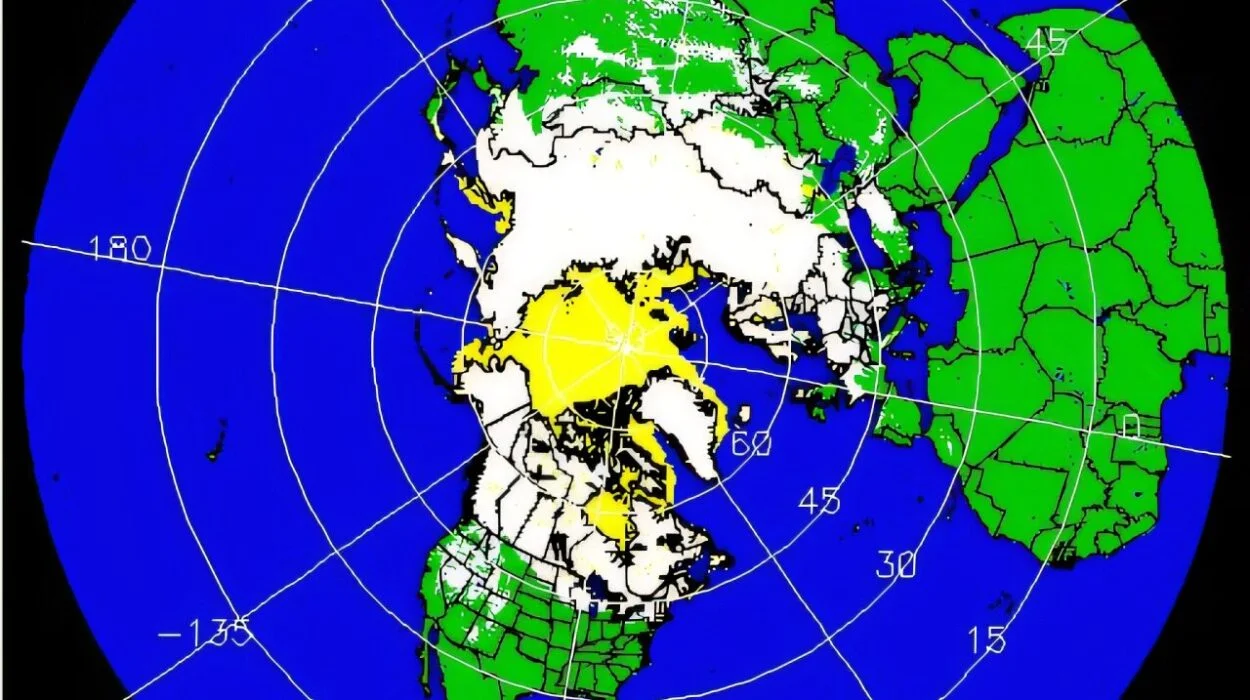
The researchers examined the terrestrial Northern Hemisphere areas where the average monthly temperature fell below 0°C for at least one month between 2001 and 2022. The analysis excluded oceans and permanently ice-covered areas and divided the remaining landscape into 1° × 1° grid cells.
Across 9,022 grid cells, the study covered 50.15 million square kilometers of unglaciated land. About 48.30 million square kilometers, or 96.3%, was classified as land, while 1.86 million square kilometers, or 3.7%, consisted of lakes. The researchers separated lakes from surrounding land using the Surface Water and Ocean Topography Prior Lake Database, which contains nearly 6 million lakes at least 0.01 square kilometers in area.
They then used daily satellite observations from 2001 through 2022 to track snow and ice cover and surface reflectivity, or albedo, over lakes and land. The analysis combined MODIS snow-cover, surface-reflectance and albedo products with an atmospheric radiative kernel derived from ERA5. That kernel estimates how a change in surface albedo alters net shortwave radiation at the top of the atmosphere.
The resulting measure, the terrestrial Cryosphere Radiative Effect, or CrREt, represents the reduction in incoming shortwave energy at the top of the atmosphere associated with snow and ice compared with snow-free conditions. Because snow and ice are generally more reflective than the underlying surface, a stronger CrREt corresponds to a stronger cooling effect from the cryosphere.
For the full study region, the average annual CrREt was −14.4 ± 2.5 watts per square meter over lakes, compared with −8.2 ± 1.7 watts per square meter over land. When lakes were compared directly with land within the same grid cells, their mean annual CrREt was 32.4% higher.
That difference meant lakes contributed 6.3% of the total Northern Hemisphere terrestrial CrREt, despite occupying only 3.7% of the study area. Across the 22 years, the lake contribution had a standard deviation of 0.4 percentage points, with an interquartile range of 6.2% to 6.5%.
The contribution varied considerably by location. Regions with relatively few lakes, such as Central Asia, had little contribution from lakes. In places including the Canadian Shield, Tibetan Plateau and Fennoscandia, lakes accounted for 25% or more of the local CrREt.
The Boreal Forest had the largest overall lake contribution among the biomes examined. Lakes made up 5.4% of the Boreal Forest study area but accounted for 9.7% of its CrREt. Temperate broadleaf forests followed, with lakes covering 4.0% of the area and contributing 6.8% of CrREt.
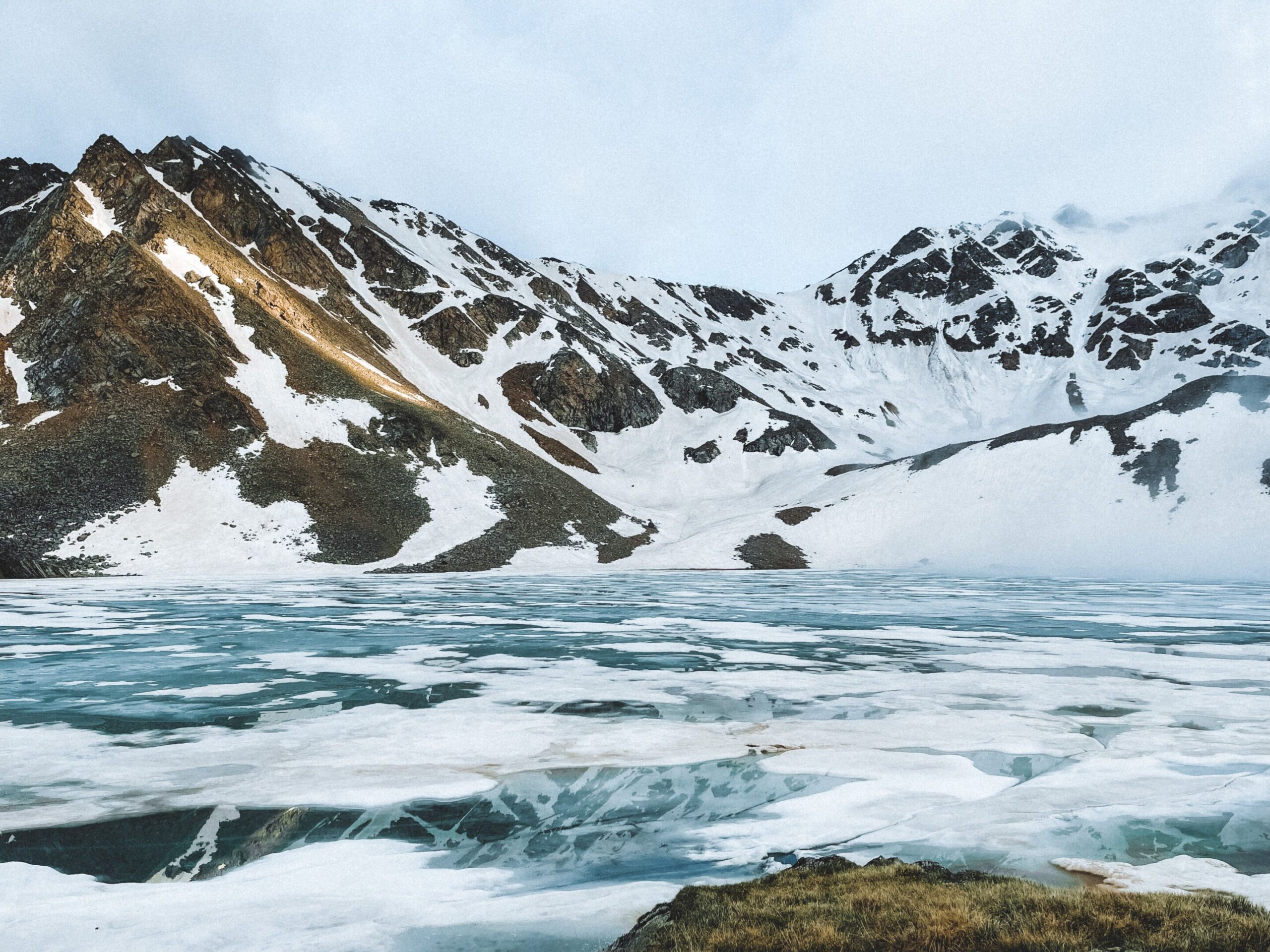
Snow and ice stay longer on lakes
The difference in radiative effect was closely associated with when snow and ice disappeared from the surface.
The researchers defined snow-off timing as the first day after the annual peak in snow fraction when less than 25% of a grid cell remained snow-covered and the median snow fraction stayed below that threshold for at least the following 20 days. For lakes, this measure includes both snow and bare ice because the satellite classification cannot distinguish the two in the lake snow-fraction data.
Across the study domain, snow and ice lasted an average of 9.6 days longer on lakes than on nearby land, with a standard deviation of 7.4 days.
The difference was particularly large in some biomes. Montane grasslands had a 41.0-day difference and deserts a 15.5-day difference, while Boreal Forests had a 9.0-day difference. The researchers attribute these patterns to different environmental conditions.
In the dry Montane Grassland and Desert regions, very cold temperatures can produce extensive lake ice even though relatively little snow accumulates. In the Boreal Forest, meanwhile, snow can disappear earlier from land because forest canopies intercept snowfall and leave smaller snowpacks beneath the trees. The researchers also point to greater longwave radiation from the relatively dark trees as a factor that can accelerate snowmelt on land, while cold winter conditions promote thick and extensive lake ice.
The later disappearance of snow and ice on lakes was widespread across the Northern Hemisphere, although it was weaker and sometimes reversed in some mountainous regions, including the Alps, Northern Rockies and Alaska Range. The researchers note that lakes in those areas tend to occur at lower elevations than the surrounding landscape.
Lakes also change their reflectivity more between seasons
Snow persistence was only part of the difference.
The researchers also compared the change in albedo between snow-covered and snow-free conditions. Across the study region, the seasonal albedo contrast averaged 0.40 for lakes and 0.33 for land.
In other words, the transition between snow-covered and snow-free conditions produced a larger change in reflectivity over lakes. The researchers associate this with two characteristics of lake landscapes: the relatively low albedo of lakes in summer and the tendency for vegetation to obscure some of the snow-covered surface on land during winter.
The contrast was particularly pronounced in densely forested regions, including the Boreal and Temperate Conifer forests. There, dark water can produce a large difference between the low-albedo summer surface and the much brighter snow- and ice-covered surface.
The pattern was not universal. In grasslands and deserts, land has little canopy to obscure snow, while comparatively low-albedo lake ice can reduce the difference between lakes and land. The difference was also weaker in Temperate Broadleaf Forests, where forest density is lower, winter vegetation is less persistent and ice cover is less consistent.
The researchers separated the effects of snow-cover differences and albedo differences to estimate how much each contributed to the higher lake CrREt.
Across the entire study domain, differences in albedo accounted for 38.1% of the lake increase in CrREt. Differences in snow cover accounted for 31.0%, while the interaction between the two accounted for the remaining 30.9%.
The balance differed among biomes. Seasonal albedo contrast was the dominant factor in the Boreal Forest, Tundra and Temperate Conifer Forest, whereas differences in snow cover were the stronger driver in Temperate Broadleaf Forest, Temperate Grassland, Desert and Montane Grassland.
The lake contribution grows into late spring
The timing of the effect also matters.
Across the study region, CrREt was strongest from February through May and peaked in April. In that month, the mean CrREt was −51.8 watts per square meter for lakes and −24.4 watts per square meter for land.
The proportion of the total CrREt attributable to lakes increased through spring. Lakes accounted for 6.7% in March, 7.5% in April and May, and 9.6% in June.
The researchers associate this seasonal pattern with the persistence of lake snow and ice into late spring, together with the greater concentration of lakes at high northern latitudes. Because these lakes lose their snow and ice later, they continue contributing to the cryosphere radiative effect after much of the surrounding land has become snow-free.
The pattern reverses during part of the colder season. Lake contributions were smaller in fall and early winter, ranging from 1.9% to 4.5%, and lakes had a weaker CrREt than nearby land in September and October.
The authors suggest that the difference is related to the thermal inertia of lakes. Lakes retain heat accumulated during summer, so they can freeze later than the surrounding landscape becomes snow-covered. But solar radiation is relatively weak during fall and early winter, especially at high latitudes, so the CrREt during those months accounts for less than 10% of the annual effect.
The Boreal Forest shows the strongest contrast
The particularly large lake contribution in the Boreal Forest results from several features occurring together: a relatively high proportion of the landscape is covered by lakes, the region lies at high northern latitudes, and the differences between lakes and land in both snow-off timing and seasonal albedo contrast are substantial.
The researchers also examined areas where lake extent is changing. On the Tibetan Plateau, for example, they found that lakes had a CrREt 406.6% higher than nearby land. The authors discuss lake expansion in that region and declining lake extent in some parts of Alaska, northern Canada and Siberia as examples of how changes in lake area could alter the future pattern of CrREt. These are implications drawn from the study’s results rather than changes in CrREt directly measured over time as a result of those lake-area changes.
The authors further suggest that the lake contribution may not be fully represented in global climate models. They note that, because of the difficulty of representing large numbers of lakes, all but the largest lakes are typically excluded or substantially simplified in such models. They argue that failing to represent lake snow and ice cover and its albedo could lead to an underestimate of terrestrial CrREt in regions where lakes make a large contribution.
The calculation has important limits
The study does not measure the total net radiative effect of lakes across all seasons.
Its calculation specifically quantifies the increase in CrREt associated with lakes relative to land. During the ice-free summer, lakes generally have lower albedo than land, which means they can absorb more shortwave energy. The researchers therefore do not determine how the stronger seasonal CrREt from snow- and ice-covered lakes balances against their greater shortwave absorption during summer. They identify that balance as a subject for future research.
There are also uncertainties in the satellite-based calculation. The authors identify the relatively coarse spatial resolution of the radiative kernel, uncertainty in MODIS snow-fraction and albedo products caused by sensor errors and cloud cover, and the relatively coarse MODIS resolution compared with the size of many lakes as sources of uncertainty.
Sensitivity tests described in the methods found that lowering the cloud-cover threshold did not change the findings, and reducing the minimum snow-covered or snow-free pixel threshold used for albedo observations also did not influence the results. The authors characterize their analysis as a conservative estimate of the lake contribution to CrREt and report high confidence in the overall finding that lakes increase CrREt relative to land.
The study therefore isolates a specific part of the seasonal energy balance: the radiative effect produced by snow and ice on lakes compared with surrounding land. Within that framework, lakes consistently exerted a stronger cryosphere radiative effect per unit area, retained snow and ice later into spring, and produced a larger seasonal change in albedo than nearby land across much of the Northern Hemisphere.
The study was published in Geophysical Research Letters.