NASA’s Hubble Space Telescope has captured new observations of the densely packed stars surrounding the Milky Way’s center, creating a detailed reference that astronomers can use to interpret future observations from the Nancy Grace Roman Space Telescope. The work will help researchers study stars in this crowded region, search for planets beyond our solar system and investigate how gravitational lensing can reveal otherwise difficult-to-detect objects.
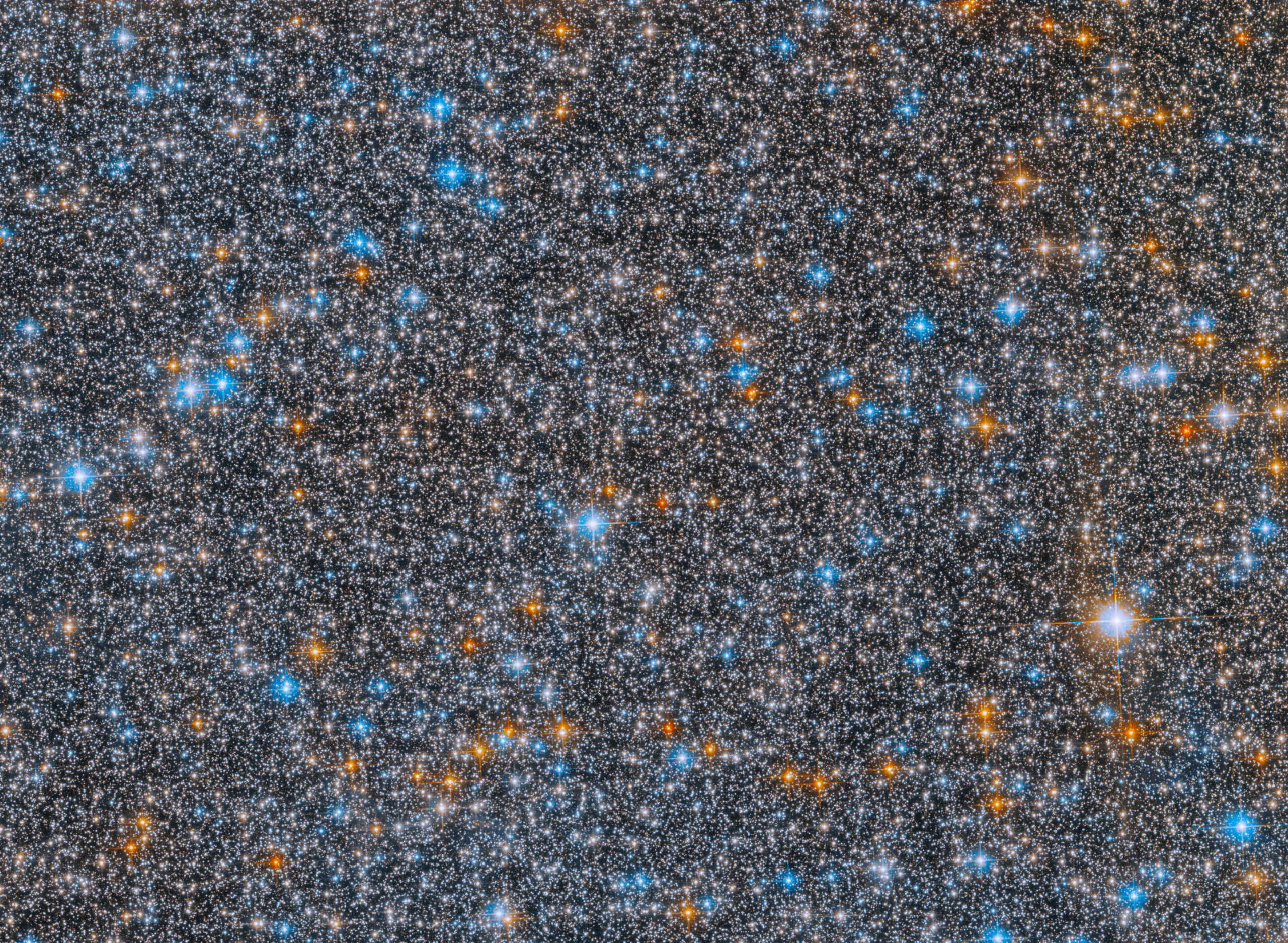
The images show thousands of stars shining in different colors toward the Milky Way’s galactic bulge, a roughly spherical concentration of stars surrounding the center of the galaxy’s disk. This region contains nearly a quarter of the Milky Way’s stellar mass, making it an important target for understanding how our galaxy developed.
Studying the bulge is challenging. Stars are packed so closely together that distinguishing individual objects can be difficult, even with powerful telescopes. Hubble’s sharp imaging capabilities allow astronomers to measure the brightness, positions and movements of stars in this crowded environment.
The new observations are part of a program designed to prepare for the Roman Space Telescope’s upcoming surveys. By establishing detailed information about stars before Roman begins its observations, researchers will have a reference against which to compare future changes in starlight.
Why Hubble and Roman need to work together
Hubble and Roman observe the universe across overlapping but different ranges of light.
Hubble primarily observes ultraviolet, visible and near-infrared wavelengths. Roman will focus on near-infrared light, along with some visible light. To make comparisons between the two telescopes possible, Hubble’s new observations concentrate on the red end of visible light and near-infrared wavelengths, where their capabilities overlap.
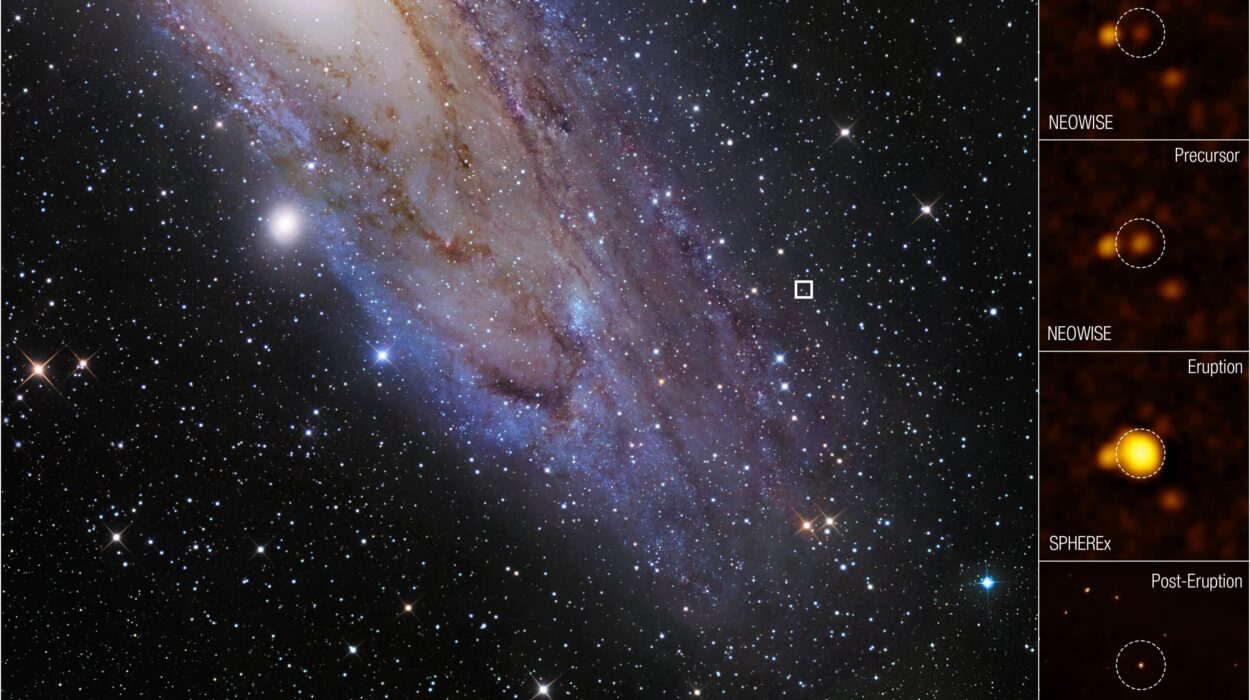
That overlap matters because Roman will survey crowded regions of the galaxy in search of exoplanets, black holes, neutron stars and other objects.
Hubble’s observations can help establish the properties of stars in the galactic bulge before Roman detects changes in their light. Astronomers can then compare the two sets of measurements to better understand what happened and which objects may be responsible.
The approach is particularly useful for one of Roman’s planned research techniques: gravitational microlensing.
How a star can reveal a hidden planet
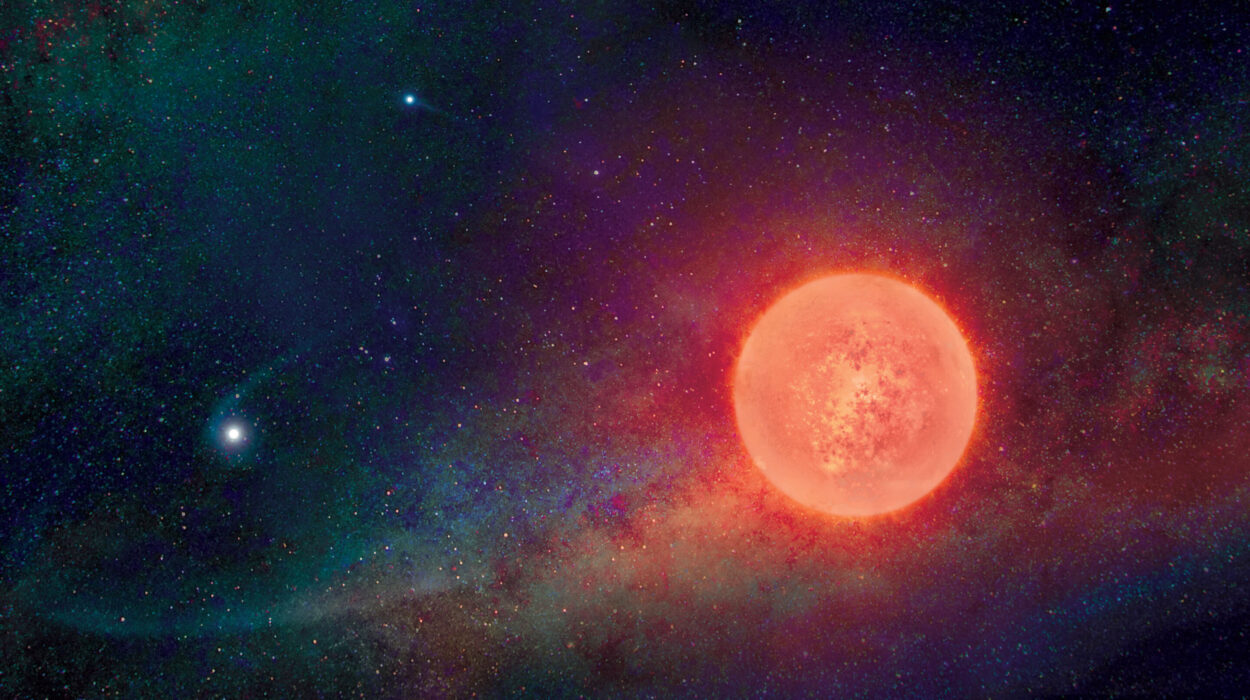
Microlensing occurs when a closer object passes in front of a more distant star from our viewpoint on Earth. The closer object’s gravity bends and magnifies the background star’s light, creating a temporary change in its observed brightness.
If the foreground object has a planet, that planet’s gravity can also influence the lensing signal. By studying how the distant star’s light is magnified and distorted, astronomers can look for clues about the foreground star and any planets orbiting it.
Roman will use these events to search for planets in regions of the Milky Way where conventional detection methods can be challenging.
Hubble’s contribution comes before the lensing event. Its observations can establish the brightness and other properties of stars in the region months or years before Roman detects a microlensing signal.
When Roman eventually records such an event, researchers can compare its measurements with Hubble’s earlier data. Having that reference should make it easier to interpret the changes and identify the objects involved.
Unlike the gravitational lensing produced by entire galaxies or galaxy clusters, microlensing involves individual stars and planets.
Building on decades of observations
The Milky Way’s central bulge has been a target for Hubble throughout the telescope’s operating lifetime. Earlier surveys have already provided extensive information about its crowded stellar population.
The WFC3 Galactic Bulge Treasury Program used Hubble’s Wide Field Camera 3 to measure the brightness, precise positions and motions of stars in the region.
Another effort, the Sagittarius Window Eclipsing Extrasolar Planet Search, or SWEEPS, used Hubble’s Advanced Camera for Surveys to examine 180,000 stars in the galactic bulge.
These earlier observations provide a foundation for the latest work, adding to the detailed record astronomers have built of stars near the galaxy’s center.
The new observations come from Hubble observing program 17776, led by S. Terry. Its purpose is to support Roman’s future searches for exoplanets, black holes, neutron stars and other astronomical objects.
Beyond the search for individual planets and compact objects, studying the galactic bulge could help astronomers understand how galaxies form, change and interact over billions of years. Because the Milky Way is close enough for researchers to examine individual stars in detail, it offers an opportunity to investigate a region that remains difficult to resolve in more distant galaxies.