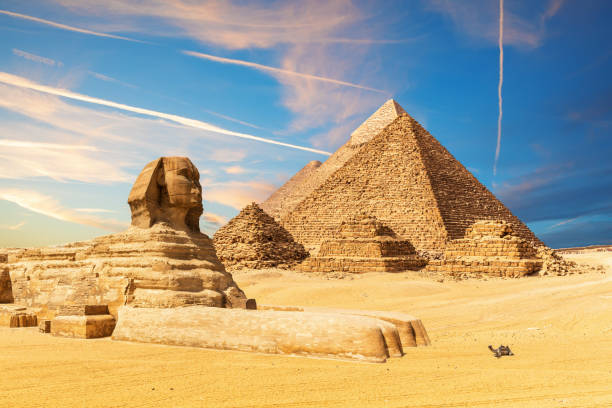
Historians study ancient civilizations by examining written records, physical objects, buildings, and other surviving traces of human activity. They compare these sources with archaeological discoveries and scientific evidence to reconstruct how people lived, governed their communities, traded goods, practiced religions, and responded to changes in their environments. Because ancient societies rarely left complete records of their lives, understanding the past requires more than collecting historical facts. It requires evaluating evidence, identifying patterns, testing explanations, and recognizing what remains uncertain.
The study of ancient civilizations brings together several fields, including history, archaeology, anthropology, linguistics, and the natural sciences. Each contributes a different perspective. Written documents may explain how a ruler understood a war, while archaeological remains can reveal how that conflict affected ordinary people. Scientific analysis can establish when a settlement existed, where its materials originated, or what people ate. When these forms of evidence are examined together, they provide a more complete picture of the past than any single source could offer.
What counts as historical evidence?
Historical evidence includes anything that can provide reliable information about people and events in the past. Some evidence was created deliberately to record information, such as royal inscriptions, administrative documents, and religious texts. Other evidence survives unintentionally, including discarded tools, broken pottery, animal bones, food remains, and traces of ancient buildings.
Historians often distinguish between primary and secondary sources. A primary source is evidence produced during the period being studied or closely connected to the events under investigation. Examples include letters, legal codes, inscriptions, coins, and contemporary records of trade. A secondary source is a later interpretation of the past, such as a modern history book that analyzes those records.
This distinction depends on the research question. A chronicle written centuries after a particular battle is a secondary source for the battle itself, but it is a primary source for understanding how people in the later period remembered that conflict. Historians therefore evaluate sources according to what they can actually reveal, rather than assigning them permanent categories of usefulness.
Physical remains are equally important. A stone wall may reveal how a community organized its defenses, while the distribution of pottery across a settlement may indicate where people cooked, stored food, or exchanged goods. A burial site can provide evidence about funerary practices, diet, disease, and differences in access to resources. These objects do not explain themselves, however. Their meaning depends on their context and on comparisons with other evidence.
The central challenge is to distinguish what the evidence directly demonstrates from what researchers infer from it. An inscription might establish that a ruler claimed to have conquered a neighboring territory. It does not necessarily prove that the conquest occurred exactly as described. A burned building might indicate destruction, but the fire could have resulted from warfare, an accident, or another cause. Historical explanations become stronger when multiple independent lines of evidence support the same interpretation.
How archaeology reveals everyday life
Archaeology is the systematic study of past human activity through material remains. It is especially valuable for ancient civilizations because many people left few written records, and some societies used writing infrequently or not at all. Archaeological evidence can reveal aspects of daily life that official documents rarely discuss.
The process often begins with identifying a site. Researchers may use historical maps, aerial photographs, satellite imagery, landscape surveys, or reports of previously discovered remains. Some settlements are visible above ground, while others are buried beneath soil, vegetation, or modern development. Remote sensing techniques can help identify buried structures and changes in the landscape without immediately disturbing the ground.
Once researchers identify a promising location, they may conduct a surface survey, recording visible objects and features. Excavation follows when a specific question requires closer investigation. Archaeologists remove soil carefully, document the location of finds, map structures, and preserve samples for later analysis. The position of an object matters because it helps establish its relationship to other remains.
Archaeological context is essential. A metal tool discovered inside a sealed storage room may have a different significance from a similar tool found in a later layer of soil disturbed by construction. Researchers record the depth, surrounding materials, and relationships among objects to determine how the remains accumulated and whether they belong to the same period.
Excavation also relies on stratigraphy, the study of layers of soil and deposited material. In an undisturbed site, lower layers generally formed before the layers above them. This principle helps archaeologists establish the relative sequence of occupation, construction, destruction, and abandonment. However, natural processes, digging, flooding, burrowing animals, and later human activity can mix or rearrange layers, so their relationships must be checked rather than assumed.
Archaeologists also study the distribution of artifacts across a site. Concentrations of cooking vessels, hearths, and food remains may indicate domestic activity. Workshops containing unfinished objects, tools, and production waste can reveal specialized manufacturing. Differences between residential areas, public buildings, and burial grounds help researchers understand how ancient communities organized space and social life.
Because excavation permanently changes the deposits being studied, it requires careful documentation. Researchers cannot simply put the soil back and repeat the investigation under identical conditions. Modern archaeological practice therefore emphasizes recording observations, preserving samples, maintaining collections, and making research findings available for future study.
What artifacts reveal about ancient societies
Artifacts are objects made, modified, or used by humans. They range from stone blades and clay vessels to jewelry, coins, weapons, and finely crafted sculptures. Their materials, designs, manufacturing techniques, and locations can provide clues about technology, economic activity, social relationships, and cultural values.
Tools offer evidence of technological knowledge. Changes in stoneworking, metalworking, weaving, or pottery production can show how people developed new skills and adapted their methods. Researchers examine wear patterns, residues, and manufacturing marks to understand how objects were made and used. A tool’s shape alone may suggest its purpose, but physical traces and comparisons with similar objects can provide stronger evidence.
Pottery is particularly useful because it is often abundant and survives for long periods. Differences in clay, decoration, firing methods, and vessel shapes can help researchers distinguish production traditions and establish chronological sequences. When similar pottery appears in distant settlements, it may indicate trade, migration, shared cultural practices, or imitation. Researchers must consider these possibilities separately because similar objects do not automatically prove that people moved from one place to another.
Materials can also reveal economic connections. Stone, metals, shells, and other resources sometimes traveled far beyond their natural sources. By analyzing the composition of an object and comparing it with known geological sources, researchers may identify where its raw materials originated. Such findings can reveal trade routes, exchange networks, access to specialized resources, and relationships between communities.
Coins and weights provide additional evidence about economic organization. Coin designs may identify rulers, political authorities, or religious symbols, while the distribution of coins can help researchers investigate circulation and exchange. Standardized weights and measures may indicate efforts to regulate commerce or collect taxes. Yet the presence of coins does not necessarily mean that an economy depended primarily on money; barter, payments in kind, and other forms of exchange could coexist.
Artifacts also help illuminate social differences. Variations in housing, burial goods, clothing accessories, and access to imported materials may indicate differences in wealth, status, occupation, or social roles. Such interpretations require caution because objects can have several meanings. A richly furnished grave, for example, may reflect the deceased person’s status, the resources of surviving relatives, or the requirements of a particular funerary tradition.
The absence of an artifact can be informative, too, but only under suitable conditions. If a material was widely used and is likely to survive, its absence may suggest a meaningful difference between sites. If it was made from perishable materials or rarely deposited in the archaeological record, its absence tells researchers much less. Preservation strongly influences what archaeologists can observe.
How written records help historians reconstruct the past
Written records offer information that physical remains often cannot provide directly. They may preserve names, dates, laws, diplomatic agreements, religious beliefs, administrative procedures, and descriptions of political events. Ancient writing systems include alphabetic scripts as well as systems that used signs to represent words, syllables, or combinations of sounds and meanings.
Historians study inscriptions on stone monuments, writing on clay tablets, papyrus documents, manuscripts, and other surviving records. The materials used depended on the society and its available resources. Clay tablets were important in parts of the ancient Near East, papyrus was widely used in ancient Egypt and the Mediterranean, and inscriptions on stone could preserve public statements for centuries.
Written sources are not automatically reliable simply because they contain precise details. Rulers often commissioned inscriptions to celebrate victories, demonstrate legitimacy, or portray themselves as favored by the gods. Officials recorded information to administer taxes and labor, while religious writers preserved traditions according to particular beliefs. Each type of document was created for a purpose, and that purpose affects what it includes and omits.
Historians therefore ask who created a document, when it was produced, who its intended audience was, and what the author hoped to accomplish. They also consider whether the writer witnessed the events described, relied on other accounts, or repeated established traditions. A royal inscription claiming a decisive victory may reveal both something about a military campaign and something about how the ruler wanted to be remembered.
Comparing independent accounts is one way to assess reliability. If records from different communities describe the same conflict, their points of agreement and disagreement may help establish what happened. Administrative documents can also be compared with archaeological evidence. A record describing large-scale grain storage, for instance, becomes more informative when researchers identify storage buildings, crop remains, and transport infrastructure associated with the same period.
Written evidence is unevenly distributed across ancient societies. Literate officials, religious specialists, and wealthy elites often produced a disproportionate share of surviving documents. Their records may tell historians much more about taxation, warfare, and royal ceremonies than about the experiences of farmers, laborers, enslaved people, or children. Archaeology helps address this imbalance by revealing evidence of ordinary activities that formal texts rarely describe.
How historians decipher ancient languages and inscriptions
A written record cannot contribute much to historical interpretation if its language or writing system is not understood. Decipherment is the process of identifying how an unfamiliar script works and determining what its signs represent. It can require knowledge of related languages, repeated patterns in inscriptions, historical context, and comparisons among different texts.
Some writing systems have been deciphered because researchers found inscriptions presenting the same message in more than one language or script. The Rosetta Stone, for example, helped scholars decipher Egyptian hieroglyphs because it contains a decree written in hieroglyphic, Demotic, and ancient Greek forms. Knowledge of Greek provided a starting point for investigating the Egyptian texts.
Other scripts have been understood through the discovery of repeated names, predictable grammatical structures, and large collections of related documents. Researchers compare sign sequences, identify recurring formulas, and test whether proposed readings make sense across multiple inscriptions. A successful interpretation must explain more than one convenient example; it should account for a substantial body of evidence.
Even after a script has been deciphered, individual passages may remain uncertain. A damaged inscription can leave words incomplete, and a familiar sign may have different meanings depending on context. Ancient languages also change over time, while some words have no exact modern equivalent. Translators must sometimes choose among several plausible interpretations.
These uncertainties matter because a small difference in translation can alter a historical argument. A term describing a political relationship, religious office, or social group may not correspond neatly to a modern category. Responsible historians distinguish secure readings from disputed interpretations and avoid treating a translation as more precise than the surviving text allows.
How scientific methods help date ancient remains
Establishing when an object or site existed is essential for reconstructing historical sequences. Archaeologists use relative dating to determine whether one event or object is earlier or later than another. Stratigraphy and the ordering of distinctive artifact types can establish such relationships without providing an exact calendar date.
Absolute dating methods estimate an age in calendar years or within a defined range. One important technique is radiocarbon dating, which measures the remaining radioactive carbon-14 in once-living material. While an organism is alive, it exchanges carbon with its environment. After it dies, that exchange stops, and the carbon-14 gradually decays at a known rate.
By measuring the remaining carbon-14 and applying appropriate corrections, researchers can estimate when the organism died. The method can be used on materials such as charcoal, seeds, wood, and bone that retain suitable organic carbon. It cannot directly date every kind of artifact: a stone tool, for example, does not contain the organic material required for conventional radiocarbon dating.
Radiocarbon results are often expressed as calibrated date ranges rather than exact years. The amount of carbon-14 in the atmosphere has varied over time, so researchers compare measurements with calibration records based on materials of known age. Sample contamination, the material’s history, and the possibility that it was reused or redeposited can also affect the interpretation.
Other methods are useful in different circumstances. Dendrochronology, or tree-ring dating, compares patterns of annual growth rings to establish dates for suitable wood. Thermoluminescence can help estimate when certain minerals in heated materials were last exposed to sufficiently high temperatures. Volcanic deposits, historical astronomical events, and securely dated inscriptions may provide additional chronological anchors.
No dating method answers every question. A date for a wooden beam may indicate when the tree grew, not necessarily when the building was completed. A charcoal sample could come from older wood reused in a later fire. Scientists therefore select samples carefully and compare independent dates with the archaeological context.
When multiple methods agree, confidence in a chronology increases. When they disagree, the difference may reveal contamination, reuse, disturbances, or weaknesses in an initial interpretation. Dating is most effective when treated as part of a broader investigation rather than as an isolated measurement.
What bones, plants, and chemical traces can reveal
Ancient human remains, animal bones, seeds, pollen, and microscopic residues provide evidence about health, diet, agriculture, and environmental change. These materials are studied through bioarchaeology, archaeobotany, zooarchaeology, and related fields that connect biological evidence with human history.
Human skeletal remains can preserve signs of injury, some diseases, nutritional stress, and physical activity. Researchers may examine changes in bones and teeth to investigate aspects of childhood development, patterns of movement, and the conditions under which people lived. However, many illnesses leave no identifiable skeletal traces, and a visible abnormality may have more than one possible cause. Skeletons therefore provide an incomplete record of health.
Teeth and bones can also preserve chemical information. Stable isotopes, which are forms of the same element with different numbers of neutrons, vary in predictable ways across environments and food webs. Carbon isotope patterns can help researchers investigate the kinds of plants that contributed to a person’s diet, while nitrogen isotope patterns can provide information about the relative contribution of different protein sources.
Oxygen and strontium isotope measurements can sometimes help investigate where people spent parts of their lives. The relevant chemical signatures vary with local geology, water sources, climate, and other environmental factors. Comparing measurements from human remains with local environmental samples may reveal whether an individual grew up in a different region. Such interpretations are strongest when several lines of evidence agree, because isotope values rarely identify a unique birthplace on their own.
Plant remains reveal how ancient communities cultivated crops, gathered wild foods, and managed landscapes. Carbonized seeds, preserved wood, pollen, and other botanical evidence can show which plants were available and how their use changed. Animal bones can reveal which species people hunted or raised, how animals were processed, and whether herding practices changed over time.
Residues on pottery and tools can sometimes preserve traces of ancient foods, oils, waxes, or other substances. Microscopic examination and chemical analysis help identify these remains. A residue may provide evidence that a vessel held a particular class of substance, although identifying an exact recipe or ingredient can be much more difficult.
Together, these forms of evidence help researchers reconstruct how communities obtained food, responded to droughts, managed livestock, and altered their surroundings. They also help explain why societies developed differently in different environments, without assuming that geography alone determined their histories.
How historians investigate trade, migration, and cultural exchange
Ancient civilizations rarely developed in complete isolation. People moved between settlements, exchanged goods, adopted technologies, and shared religious or artistic ideas. Historians and archaeologists investigate these connections by tracing similarities and differences across regions.
Trade can be inferred when objects or raw materials appear far from their likely sources. The presence of nonlocal materials at several sites may reveal connections among communities, particularly when researchers can establish their origins through geological or chemical analysis. Shipwrecks, harbor structures, caravan routes, and merchant records can add evidence about how goods moved.
However, the movement of objects does not always establish the movement of people. A style of pottery may spread because merchants transported finished vessels, local craftspeople copied a fashionable design, or migrant communities introduced new manufacturing traditions. Researchers examine production methods, settlement patterns, biological evidence, and written records to distinguish among these possibilities.
Migration is especially complex because people can move in different numbers, over different distances, and for different reasons. Some migrations involve entire communities; others involve individuals, families, soldiers, merchants, or specialized workers. Archaeological changes may reflect migration, but they can also result from local innovation, political reorganization, or changes in trade.
Genetic evidence can contribute to the study of ancient population movements when preserved DNA is available and suitable for analysis. Researchers compare genetic patterns among ancient and modern populations to investigate biological relationships and changes in ancestry over time. Yet genetic similarity does not establish that people shared a language, religion, political identity, or sense of belonging. Cultural identities are shaped by social relationships and historical circumstances, not by DNA alone.
Language evidence provides another perspective. Shared vocabulary, grammatical patterns, and systematic sound correspondences can help linguists reconstruct relationships among languages and investigate how they changed. These findings may suggest historical contacts or broader patterns of population movement, but linguistic relationships do not always map directly onto archaeological cultures or genetic ancestry.
The strongest accounts of cultural exchange combine several kinds of evidence. Similarities in architecture may be more convincing as evidence of contact when accompanied by imported materials, shared technical practices, or records describing interactions. Even then, researchers distinguish evidence of contact from assumptions about the direction, scale, and consequences of that contact.
How historians reconstruct political power and social life
Ancient civilizations are often remembered through their rulers, wars, monuments, and major political events. These subjects matter, but historical research also examines the institutions and social relationships that sustained communities over time.
Administrative records can reveal how governments collected taxes, distributed food, organized labor, maintained armies, and managed land. Inscriptions and monuments may explain how rulers presented their authority, while buildings and settlement patterns show how political power shaped the landscape. Fortifications, roads, irrigation systems, and storage facilities can reveal the resources communities devoted to defense, transportation, and economic management.
Researchers also investigate how religious institutions influenced political and social life. Temples, shrines, ritual objects, burial practices, and religious texts provide different kinds of evidence about worship and belief. A building’s function cannot always be determined from its appearance alone, so researchers consider its location, contents, inscriptions, and relationship to other structures.
Understanding social hierarchy requires particular care. Legal texts may describe differences in rights and obligations, while burial evidence and housing patterns can indicate unequal access to resources. Yet legal rules do not necessarily describe how people behaved in every situation, and material wealth does not always translate directly into political authority.
The experiences of people who left few written records are often harder to reconstruct. Women, children, enslaved people, laborers, and marginalized communities may appear in documents mainly when they were subject to taxes, legal disputes, or official control. Researchers use domestic artifacts, skeletal evidence, production areas, and patterns of food distribution to investigate their lives more fully.
This approach also challenges the idea that ancient societies were internally uniform. People within the same civilization could differ in language, occupation, wealth, legal status, religious practice, and access to political power. Historical explanations become more accurate when they account for these differences instead of treating an entire population as though everyone experienced events in the same way.
Why historical evidence can be incomplete or misleading
The surviving record of an ancient civilization is never a complete representation of its original society. Preservation depends on material, climate, soil chemistry, burial conditions, later construction, and countless other factors. Stone buildings may survive for millennia, while wooden houses, textiles, food scraps, and written documents on fragile materials can disappear.
This creates preservation bias. A civilization with abundant stone monuments may appear more visible to modern researchers than a society whose buildings were constructed mainly from wood, earth, or other perishable materials. The difference in surviving evidence does not necessarily indicate a difference in the complexity or importance of the societies.
Discovery is also uneven. Some ancient settlements lie beneath modern cities, while others remain difficult to access. Archaeological investigations are shaped by available funding, local priorities, political conditions, and the history of previous research. Consequently, some regions and communities are much better documented than others.
Objects can also be separated from their original context. Looting, antiquities trafficking, early excavation practices, and accidental disturbance may remove artifacts from the layers and structures that made them historically informative. An object without a reliable archaeological context may still reveal something about craftsmanship or materials, but its age, original use, and relationship to a particular event can be difficult to establish.
Written accounts introduce another kind of bias. Authors may misunderstand events, exaggerate victories, defend particular interests, or repeat inaccurate traditions. Even honest observers see only part of the world around them. Historians therefore do not assume that an account is either completely true or entirely worthless. They assess which claims the source can support and which require independent confirmation.
These limitations do not make historical knowledge impossible. They establish the boundaries within which reliable conclusions can be drawn. Researchers can often identify broad patterns with considerable confidence while remaining uncertain about individual events, motives, or precise dates.
How historians test competing explanations
Historical research is not simply the collection of evidence that supports an appealing story. Researchers develop questions, examine the available record, compare alternative explanations, and revise their interpretations when new findings conflict with earlier conclusions.
Suppose a settlement was suddenly abandoned. One explanation might be warfare, especially if researchers find burned buildings or defensive structures. Another might be environmental stress, economic disruption, political instability, or a combination of factors. To evaluate these possibilities, researchers examine the timing of destruction, evidence of injuries, changes in local agriculture, regional settlement patterns, and contemporary written records.
A burned layer alone cannot establish the cause of abandonment. Evidence of a violent attack may strengthen the warfare explanation, but it still may not explain why residents did not return. Likewise, evidence of drought may establish environmental stress without proving that drought was the decisive cause of collapse. Historical events often result from interacting factors rather than one simple trigger.
Researchers also distinguish correlation from causation. If two changes occur around the same time, one does not necessarily cause the other. A decline in trade and a decrease in population may be related, but the direction of the relationship requires further investigation. Economic disruption might encourage migration, population loss might reduce production, or both might result from a third factor.
Chronology is crucial to these judgments. A proposed cause must occur before or during the process it is supposed to explain. If a supposed trigger happened after a settlement was abandoned, it cannot explain the initial abandonment, although it might influence later developments.
Comparative research helps historians identify which explanations are plausible. If similar societies responded differently to comparable environmental pressures, researchers can investigate differences in political organization, infrastructure, trade connections, and access to resources. Comparisons do not automatically establish causation, but they can reveal mechanisms that a single case might conceal.
New discoveries can change historical interpretations. A newly deciphered inscription, a more precise date, or evidence from a previously unstudied settlement may undermine a widely accepted explanation. This is a normal feature of historical research. Conclusions are strongest when they remain consistent with the available evidence while staying open to revision.
How historians use digital tools and interdisciplinary research
Modern historical research increasingly combines traditional scholarship with digital methods. Geographic information systems, or GIS, allow researchers to map archaeological sites, roads, rivers, agricultural areas, and other features in relation to one another. These maps can help investigate settlement patterns, transportation networks, resource access, and changes in land use.
Three-dimensional recording can preserve detailed representations of buildings, artifacts, and excavation areas. Digital models allow researchers to examine spatial relationships and share records with colleagues who cannot visit a site. They can also support the documentation of fragile structures before conservation work or environmental damage changes them.
Computational methods help researchers analyze large collections of texts, inscriptions, and archaeological records. Pattern recognition can identify recurring words, names, or formulas, while statistical analysis can reveal distributions that are difficult to see in smaller samples. Such methods can guide investigation, but they cannot automatically resolve ambiguous translations or determine the historical meaning of a pattern.
Scientific imaging and laboratory analysis also reveal information invisible to the naked eye. Microscopy can identify manufacturing traces, while specialized imaging may reveal faded writing beneath visible text. Chemical analysis can help identify pigments, metals, residues, and the origins of some materials. The usefulness of each method depends on the research question, the condition of the object, and the limitations of the technique.
Interdisciplinary collaboration is important because historical questions often cross the boundaries of individual fields. Archaeologists may establish the context of a discovery, historians may interpret written records, geologists may investigate the origin of raw materials, and biological scientists may analyze ancient remains. Their conclusions are most useful when each specialist understands both the strengths and the limits of the others’ evidence.
Technology does not eliminate the need for judgment. A sophisticated measurement can be precise without answering the question researchers actually care about. Digital models may also reproduce gaps or biases in the underlying data. Historical interpretation still depends on understanding context, evaluating alternatives, and explaining why the evidence supports one conclusion more strongly than another.
Why preserving ancient evidence matters
The ability to study ancient civilizations depends on protecting the material record. Archaeological sites and historical objects contain information that can be lost when structures are destroyed, artifacts are removed without documentation, or environmental conditions change. Once an object is separated from its context, some of the questions it could have answered may become impossible to investigate.
Preservation includes more than protecting famous monuments. Everyday objects, food remains, settlement deposits, and ordinary buildings can be just as important for understanding how societies functioned. Careful conservation, accurate records, responsible excavation, and secure collections help ensure that evidence remains available for future research.
Ethical considerations are particularly important when human remains, sacred objects, and culturally significant places are involved. Researchers must consider the interests and rights of descendant communities, applicable laws, and the cultural meaning of the materials they study. Scientific questions do not exist separately from the responsibilities associated with handling human history.
Archaeological heritage also belongs to a broader human story, even when particular sites have especially strong significance for specific communities. Collaboration with local researchers and communities can improve historical interpretation, protect sites, and bring neglected perspectives into the study of the past.
Preservation is therefore both a scientific and a cultural responsibility. The evidence available to future historians depends on decisions made today about development, conservation, excavation, and access to collections.
What historians can—and cannot—know about ancient civilizations
Historians can often reconstruct broad features of ancient life with considerable confidence. They may establish when settlements flourished, how agricultural systems operated, which materials moved through trade networks, how governments administered resources, and how communities adapted to environmental changes. The convergence of written records, archaeological discoveries, scientific dating, and biological evidence makes many aspects of the ancient world increasingly understandable.
Other questions remain more difficult. A person’s private thoughts, the precise motives behind a political decision, or the meaning of an isolated ritual may leave little direct evidence. Even when researchers know that an event occurred, they may disagree about its causes or consequences. Some questions cannot be answered confidently because the necessary evidence has been destroyed or was never recorded.
Reliable historical knowledge depends on matching the strength of a claim to the strength of the evidence. A conclusion supported by several independent sources deserves more confidence than one based on a single ambiguous object or disputed text. When evidence is incomplete, historians identify plausible interpretations and explain why some are better supported than others.
Studying ancient civilizations is ultimately a process of reconstructing human experience from surviving traces. Written records preserve what some people chose to record, artifacts reveal what people made and used, and scientific evidence helps establish the conditions under which they lived. By bringing these sources together, historians can move beyond simplified stories about rulers and monuments to understand the complex societies, everyday activities, and changing relationships that shaped the human past.