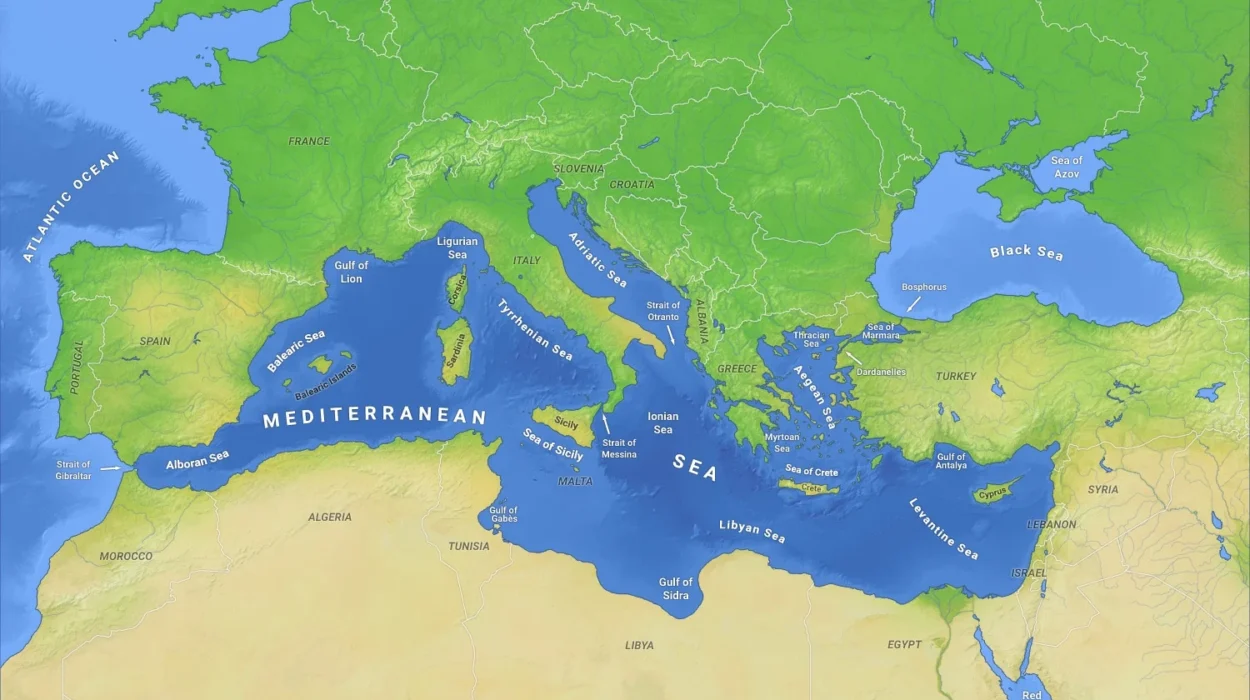
The most important events in ancient history were those that fundamentally changed how humans organized societies, produced food, governed themselves, developed technologies, exchanged ideas, and understood the world. Among the most influential were the development of agriculture, the rise of the first cities and states, the invention of writing, the growth of long-distance trade, the emergence of major philosophical and religious traditions, the expansion of powerful empires, and the development of systems of law and government that influenced later civilizations.
Ancient history is not simply a record of kings, battles, and monuments. It is the story of how human communities grew from relatively small settlements into complex societies capable of coordinating large populations, building infrastructure, preserving knowledge, and maintaining institutions across generations. These changes occurred at different times in different regions, and they were rarely the result of a single discovery or individual. Instead, they emerged through gradual processes involving environmental conditions, technological innovations, migration, competition, and cultural exchange.
Although the term ancient history often refers to the period beginning with the earliest written records and ending with the transformation of the Roman world in late antiquity, many of its most consequential developments began much earlier. Understanding these events requires examining both the prehistoric foundations of civilization and the political and cultural changes that followed.
The agricultural revolution transformed human society
One of the most consequential developments in human history was the transition from hunting and gathering to farming, which began independently in several regions after the last Ice Age. In parts of Southwest Asia, people began cultivating plants and managing animals roughly 12,000 years ago. Agriculture emerged at different times elsewhere, including China, New Guinea, Africa, and the Americas.
Before farming became widespread, most human communities obtained food by hunting animals, fishing, and gathering wild plants. These ways of life required extensive knowledge of local ecosystems and often involved seasonal movement. The development of agriculture allowed some communities to produce food in relatively fixed locations, supporting permanent settlements and, eventually, larger populations.
The process was gradual rather than a single revolution. People experimented with useful plants, selected seeds from productive crops, managed herds, and developed techniques for storing food. Over many generations, these practices changed both human behavior and the organisms people depended on. Domesticated plants and animals increasingly differed from their wild ancestors through selective breeding.
Agricultural production created new possibilities. Communities could accumulate grain, support people who did not directly produce food, and develop specialized occupations such as pottery making, metalworking, administration, and trade. Larger settlements could sustain institutions that would have been difficult to maintain among small, mobile groups.
However, farming did not automatically improve every aspect of life. Early agricultural populations sometimes experienced more infectious disease, nutritional deficiencies, strenuous labor, and social inequality than their foraging predecessors. Stored food and productive land also created incentives for competition and conflict.
The significance of agriculture lies in its transformative effects over time. It helped establish the demographic and economic foundations of cities, states, and civilizations, even though different societies followed different paths and some communities continued to thrive through hunting, gathering, pastoralism, or mixed economies.
The first cities and states created new forms of organization
As agriculture supported larger and more settled populations, some communities developed into cities. One of the earliest major centers of urbanization emerged in Mesopotamia, the region between the Tigris and Euphrates rivers, in what is now largely Iraq. By the fourth millennium BCE, settlements in southern Mesopotamia had grown into urban centers with specialized labor, organized religious institutions, and increasingly complex administration.
Cities required new ways to coordinate activities. Farmers produced food, craftspeople made tools and other goods, merchants transported materials, and authorities organized construction, taxation, storage, and defense. Managing these interconnected activities encouraged the development of administrative systems and more formal political institutions.
The growth of cities also contributed to the emergence of states. A state is a political organization that governs a population within a territory through institutions capable of making and enforcing rules. Early states developed in several regions, including Mesopotamia, Egypt, the Indus Valley, and China, although their structures and timelines differed.
Geography influenced these developments without determining them completely. River valleys often supported agriculture because seasonal flooding or irrigation provided water and replenished soils. At the same time, controlling water, maintaining canals, organizing labor, and protecting settlements could require sustained cooperation. In some societies, political authorities gained power by coordinating these activities.
Urban life brought major opportunities, including greater specialization, expanded exchange, and collective construction projects. It also created challenges. Dense populations required reliable food supplies and sanitation, while concentrated wealth and authority could produce sharp social divisions.
The rise of cities and states marked a fundamental change in human history because it created durable systems of collective organization. These systems made possible large-scale infrastructure, standing armies, formal administration, and political institutions that could persist beyond the lives of individual leaders.
The invention of writing made knowledge easier to preserve
Writing emerged in several ancient societies, with some of the earliest known systems developing in Mesopotamia and Egypt around the late fourth millennium BCE. The earliest Mesopotamian writing included administrative records, while Egyptian writing developed in its own cultural and political context. Writing later appeared independently in other parts of the world, including China and Mesoamerica.
The development of writing addressed a basic limitation of human memory: spoken information can be difficult to preserve accurately across long periods, especially when it involves large quantities of names, goods, obligations, or instructions.
Early writing systems often served practical purposes. Administrators used written records to track agricultural products, labor, trade, and taxes. Over time, writing became a means of preserving laws, religious traditions, literature, diplomatic correspondence, and observations about the natural world.
Writing also changed how governments operated. Officials could communicate instructions over greater distances, maintain records of property and obligations, and standardize administrative procedures. Merchants could document transactions, while rulers could record decrees and commemorate military achievements.
The consequences extended beyond administration. Written texts allowed ideas to be transmitted between generations with greater consistency than oral communication alone could provide. Scholars could compare observations, preserve mathematical procedures, debate philosophical questions, and build on earlier work.
Nevertheless, writing did not immediately make knowledge widely accessible. Literacy was often concentrated among trained scribes, officials, priests, and other specialized groups. Written traditions also coexisted with oral cultures, which remained important for transmitting knowledge, law, history, and literature.
Writing was transformative because it expanded the scale and durability of human communication. It made complex bureaucracies more manageable and created new possibilities for cumulative learning, historical memory, and intellectual exchange.
Mesopotamia and Egypt established influential political traditions
The early civilizations of Mesopotamia and Egypt helped shape the development of government, administration, religion, and monumental architecture. Although they shared some broad characteristics, their political structures and relationships with the environment differed significantly.
Mesopotamia consisted of multiple city-states and kingdoms whose power rose and declined over time. Cities such as Uruk, Ur, and later Babylon became important centers of political authority, commerce, and religious life. Competition among neighboring states encouraged military organization, diplomacy, and the development of systems for managing land, labor, and resources.
One influential development was the production of written legal collections. The laws associated with Hammurabi, a Babylonian king who ruled in the eighteenth century BCE, provide a well-known example. They addressed matters such as property, trade, family relationships, labor, and penalties for offenses. Their provisions distinguished among social groups, demonstrating that ancient legal systems did not necessarily treat all people equally.
These laws are important not because they established modern equality before the law, but because they reveal how rulers attempted to define obligations, resolve disputes, and communicate standards of behavior. Written law also served political purposes by presenting royal authority as a source of order and justice.
Ancient Egypt developed along the Nile River, whose agricultural productivity supported a relatively centralized kingdom for substantial periods. Egyptian rulers, known as pharaohs, combined political and religious authority. State institutions organized taxation, labor, agriculture, and large construction projects, including pyramids and temples.
Egyptian monuments demonstrate sophisticated engineering, mathematical knowledge, and administrative coordination. Their construction required the movement of materials, the organization of workers, and the ability to sustain projects over many years. The evidence also shows that ancient societies could accomplish remarkable technical feats without modern machinery.
Both Mesopotamia and Egypt developed enduring religious traditions and systems of administration. Their histories also illustrate that ancient civilizations were not static. Political fragmentation, foreign conquest, economic change, and shifts in religious practice repeatedly altered their institutions.
The Indus Valley and ancient China developed distinct civilizations
Some of the most important developments in ancient history occurred outside the better-known civilizations of Mesopotamia and Egypt. The Indus Valley civilization and early Chinese states demonstrate that complex societies emerged through different combinations of environmental adaptation, urban planning, technology, and political organization.
The Indus Valley civilization flourished in parts of present-day Pakistan and northwestern India during the third millennium BCE. Major urban centers such as Harappa and Mohenjo-daro featured carefully planned streets, standardized bricks, drainage systems, and sophisticated water management. The civilization participated in long-distance exchange with neighboring regions, including Mesopotamia.
Despite extensive archaeological evidence, many aspects of Indus Valley society remain uncertain. Its writing system has not been conclusively deciphered, making it difficult to determine how its political institutions worked, what languages its people spoke, or how they understood their religious practices. Unlike some other ancient civilizations, the Indus Valley has not yielded an equally clear record of named kings or extensive royal inscriptions.
Early Chinese civilization developed around several river systems, particularly the Yellow River region. Archaeological evidence documents increasingly complex communities before the establishment of the Shang dynasty, which is conventionally dated to the second millennium BCE. Shang rulers presided over a society with bronze metallurgy, organized warfare, elite burial practices, and a writing system preserved in part through inscriptions on oracle bones.
Oracle bones were used in divination rituals. Questions were inscribed on animal bones or turtle shells, which were heated to produce cracks interpreted as answers. The inscriptions provide valuable evidence about royal concerns, warfare, agriculture, ancestors, and religious practice. They also represent an early stage of the Chinese writing tradition.
Later Chinese political thought developed influential ideas about rulership, moral conduct, social relationships, and the responsibilities of government. These traditions became particularly important during the Zhou period and the intellectual ferment of the first millennium BCE.
The histories of the Indus Valley and China broaden our understanding of civilization. They show that complex urban life and sophisticated technologies did not arise from a single cultural center, and that the absence of deciphered texts or familiar monuments does not imply an absence of intellectual or political complexity.
Long-distance trade connected ancient societies
Trade was another major force shaping ancient history. As communities became more specialized, they increasingly exchanged goods that were unavailable locally or difficult to produce. These networks moved raw materials, finished products, technologies, artistic styles, and cultural practices across large distances.
Mesopotamian cities, for example, needed access to resources such as timber, metals, and certain types of stone that were scarce in southern Mesopotamia. Merchants and political authorities therefore developed exchange relationships with distant regions. Maritime routes across the Persian Gulf and overland routes connected settlements that might otherwise have remained economically isolated.
The movement of goods also encouraged the transmission of knowledge. Metallurgical techniques, agricultural practices, artistic designs, and systems of measurement could spread when people traveled, traded, migrated, or settled in new places. Contact between societies did not always result in direct borrowing, but it created opportunities for technologies and ideas to be adapted to local needs.
Trade networks also contributed to the rise of powerful intermediaries. Communities that controlled strategic ports, mountain passes, river crossings, or caravan routes could gain wealth and political influence. At the same time, long-distance commerce depended on trust, agreements, protection, and mechanisms for resolving disputes.
The Silk Roads are a later and particularly famous example of interconnected exchange across Eurasia. Rather than a single road, they consisted of multiple routes linking regions of East Asia, Central Asia, South Asia, the Middle East, and the Mediterranean. Their importance grew during the first millennium BCE and continued through subsequent centuries.
These networks transmitted more than luxury goods. They facilitated the movement of people and religious ideas and, over time, contributed to the spread of scientific knowledge and technologies. They could also transmit infectious diseases, illustrating how increased connectivity brought both benefits and risks.
Ancient trade helped create a more interconnected world. It encouraged specialization, expanded economic opportunities, and made cultural exchange a recurring feature of human history.
The rise of Greece transformed philosophy and political thought
Ancient Greek civilization contributed influential ideas about philosophy, politics, mathematics, medicine, history, and the study of nature. Its development was not isolated from other cultures. Greek communities interacted with Egypt, the Near East, and other Mediterranean societies, adapting and transforming ideas through exchange.
During the first millennium BCE, many Greek communities organized themselves as independent city-states, known as poleis. These states developed different political systems, including oligarchies, tyrannies, and forms of democracy. Their independence encouraged experimentation, competition, and debate, although political participation was generally restricted by gender, citizenship, and social status.
Athens developed a particularly influential form of direct democracy during the fifth century BCE. Eligible male citizens could participate in assemblies and certain public institutions. Women, enslaved people, and resident foreigners were excluded from citizenship, so Athenian democracy was far narrower than modern democratic systems.
Greek philosophy introduced systematic approaches to questions about knowledge, ethics, politics, and the nature of reality. Socrates emphasized critical questioning and the examination of beliefs. Plato explored justice, political organization, and the nature of knowledge. Aristotle investigated subjects ranging from logic and biology to ethics and government.
These thinkers disagreed with one another, and their importance lies partly in their willingness to examine assumptions through argument and structured reasoning. Greek thinkers did not invent rational inquiry, which existed in many ancient cultures, but they developed influential approaches that later scholars preserved, criticized, and expanded.
Greek mathematics and natural philosophy also made lasting contributions. Scholars explored geometry, astronomy, mechanics, and explanations of physical phenomena. Their conclusions were sometimes limited by inadequate instruments or incorrect assumptions, but their work contributed to traditions of formal argument and systematic investigation.
The historical importance of ancient Greece therefore extends beyond individual philosophers. Greek political institutions, literature, art, and intellectual methods became major influences on later Mediterranean and European societies, particularly through their transmission and reinterpretation in Roman, Byzantine, Islamic, and European contexts.
The Persian Empire demonstrated the possibilities of large-scale government
The Achaemenid Persian Empire, founded by Cyrus the Great in the sixth century BCE, became one of the largest political organizations of the ancient world. At its height, it governed territories stretching across parts of three continents and included populations with many languages, religions, and cultural traditions.
Maintaining such an empire required administrative flexibility. Persian rulers divided their territories into provinces governed by officials who were responsible for local administration and the delivery of resources. Royal roads and communication systems helped connect distant regions, while imperial authorities relied on local elites and existing institutions to govern diverse populations.
Persian imperial policy varied across time and place, but the empire often allowed subject communities to retain important aspects of their religious and cultural traditions. This approach could help reduce resistance and make a vast territory more manageable, although imperial rule still involved taxation, military power, and political subordination.
The Persian Empire also shaped the history of Greece. Conflicts between Persian and Greek forces during the early fifth century BCE included the battles of Marathon, Thermopylae, Salamis, and Plataea. These wars affected the political development of the Greek city-states and became prominent in later historical accounts.
The empire’s importance lies in its demonstration that large territories could be governed through layered administration, communication networks, and cooperation with local authorities. Similar challenges would confront later imperial powers, including Alexander’s successors and Rome.
Alexander the Great spread Greek cultural influences across a vast region
Alexander III of Macedon, known as Alexander the Great, began his campaign against the Persian Empire in 334 BCE. Within roughly a decade, he had conquered the Persian royal territories and advanced into parts of Central and South Asia. His campaigns created a vast but short-lived empire that extended from the eastern Mediterranean to regions near the Indus River.
Alexander’s conquests did not introduce Greek culture to places that had previously lacked complex civilizations. Persia, Egypt, Mesopotamia, and the regions farther east already possessed sophisticated political, religious, and intellectual traditions. Instead, the conquests brought different societies into new relationships under Macedonian and Greek-speaking rulers.
After Alexander’s death in 323 BCE, his empire fragmented into competing kingdoms. Several of these states, including the Ptolemaic kingdom in Egypt and the Seleucid Empire across parts of western and central Asia, became important centers of Hellenistic culture. The term Hellenistic refers to the period and cultural world shaped by the spread and adaptation of Greek language and traditions after Alexander’s campaigns.
This era encouraged exchanges among Greek, Egyptian, Persian, Jewish, and other communities. Greek became a widely used language of administration and scholarship in many eastern Mediterranean cities, while local traditions continued to shape religious practice and everyday life.
Alexandria in Egypt became a major center of scholarship, associated with institutions that attracted scholars interested in mathematics, astronomy, geography, medicine, and literature. The broader Hellenistic world also contributed to developments in engineering, mechanics, and philosophical schools.
Alexander’s most enduring impact was not the creation of a lasting unified empire. It was the reorganization of political and cultural connections across a large region, creating conditions in which ideas, languages, and institutions could interact in new ways.
Ancient India developed influential religious and philosophical traditions
Ancient South Asia was home to major developments in religion, philosophy, political organization, and mathematics. Its history cannot be reduced to a single civilization or empire, because the region contained many communities and political systems that changed over time.
During the first millennium BCE, religious and philosophical traditions developed and interacted across the subcontinent. The Vedic tradition, rooted in earlier Indo-Aryan religious practices, evolved into forms that contributed to what later became Hindu traditions. Its texts and ritual practices became part of a broad and diverse religious heritage rather than a single uniform belief system.
Buddhism emerged in northern India during the middle of the first millennium BCE, associated with the teachings of Siddhartha Gautama, known as the Buddha. Buddhist traditions emphasized understanding suffering, ethical conduct, mental discipline, and the possibility of liberation from cycles of rebirth. Buddhism developed multiple schools and practices as it spread across Asia.
Jainism also developed as a major religious tradition, emphasizing nonviolence, self-discipline, and liberation from rebirth. These traditions emerged within a broader environment of philosophical debate about moral responsibility, ritual, the self, and the nature of existence.
The Maurya Empire, founded by Chandragupta Maurya in the late fourth century BCE, unified a substantial portion of the subcontinent. Under Ashoka, who ruled in the third century BCE, the empire became particularly associated with public inscriptions describing ethical principles, welfare measures, and the responsibilities of rulers. Ashoka’s support for Buddhism helped promote its influence, although Buddhist communities had already begun to develop before his reign.
Ancient India also contributed to mathematical traditions that later became globally influential. The development of the place-value decimal numeral system and the use of zero as a number took shape over an extended period, with crucial developments occurring in India during the first millennium CE and beyond. These achievements should not be assigned entirely to the earliest ancient civilizations, but they demonstrate the region’s long-term importance in the history of mathematics.
The enduring significance of ancient South Asia lies in its intellectual diversity and its role in shaping religious, philosophical, and mathematical traditions that spread far beyond the subcontinent.
Rome developed institutions that shaped later political and legal systems
Rome grew from a city in central Italy into a republic and eventually an empire governing much of the Mediterranean world. Its rise involved military expansion, political adaptation, economic integration, and the gradual incorporation of diverse populations into Roman institutions.
According to Roman tradition, the city was founded in 753 BCE, although archaeological evidence indicates a more gradual process of settlement and urban development. Rome’s republican system, conventionally dated from the late sixth century BCE, included elected magistrates, a Senate, and popular assemblies. Political power was distributed unevenly, and struggles between elite families and ordinary citizens influenced the evolution of Roman institutions.
Roman expansion brought the city into conflict with neighboring peoples and eventually with major powers across the Mediterranean. The Punic Wars against Carthage, fought between the third and second centuries BCE, were especially important. Rome’s victories gave it control over extensive territories and helped establish its dominance in the western Mediterranean.
Expansion created wealth and access to resources, but it also intensified political and social tensions. Military commanders gained personal influence through their armies, while disputes over land, citizenship, wealth, and political authority weakened republican institutions.
Julius Caesar’s rise and assassination in 44 BCE were central events in the republic’s collapse, but the transition to imperial rule was not caused by one person alone. Civil wars and long-standing institutional pressures paved the way for Augustus, who became Rome’s first emperor in the late first century BCE.
Under the empire, Roman authorities developed extensive systems of administration, taxation, transportation, and law. Roads facilitated military movement and commerce, aqueducts supplied water to many cities, and ports supported Mediterranean trade. Roman engineering adapted techniques to local conditions and made use of materials such as concrete, enabling the construction of durable buildings and infrastructure.
Roman law evolved over centuries and was never a single unchanging code. Its concepts and legal writings were preserved, reorganized, and studied in later periods, becoming influential in several European legal traditions. Roman political language and institutions also shaped later debates about citizenship, republican government, and imperial authority.
Rome’s importance stems from the scale of its political and economic integration and from the transmission of its institutions to later societies. Its achievements were accompanied by conquest, slavery, inequality, and coercive rule, all of which were integral to the functioning of the ancient Roman world.
The spread of Christianity changed the religious landscape of the Mediterranean
Christianity emerged in the first century CE within the Jewish communities of Roman-ruled Judea. Its followers came to believe that Jesus of Nazareth was the Messiah and that his life, death, and resurrection had unique religious significance. Early Christian communities spread through cities and trade networks across the Roman Empire and beyond.
Christianity developed in a world where religious practices were diverse and frequently connected to local communities, civic institutions, and imperial traditions. Early Christians formed communities centered on worship, teaching, charitable activity, and shared beliefs. Their relationships with Roman authorities varied, and some faced periods of persecution, though the nature and extent of persecution differed across regions and reigns.
A decisive political change occurred in the early fourth century. Emperor Constantine supported Christianity and helped establish conditions in which Christian institutions could operate more openly. The agreement commonly associated with the Edict of Milan in 313 CE provided for religious toleration, including for Christians. Christianity subsequently gained increasing imperial support.
In 380 CE, Emperor Theodosius I and his co-emperors issued an edict identifying Nicene Christianity with the official religious position of the empire. The relationship between imperial authority and Christian institutions continued to develop through political disputes, theological debates, and changes in law and practice.
Christianity transformed the religious and cultural history of Europe and the Mediterranean. It influenced art, education, literature, charitable institutions, political legitimacy, and concepts of moral obligation. Its spread also involved conflict, coercion, and the gradual marginalization of some older religious practices.
The rise of Christianity was a long process rather than a single event. Its historical importance lies in the interaction between religious communities and imperial institutions, which helped establish Christianity as a major force in subsequent world history.
Scientific and technological advances changed what ancient societies could accomplish
Ancient history was shaped not only by political events but also by accumulated advances in agriculture, engineering, mathematics, medicine, and astronomy. These developments increased the ability of societies to produce food, build infrastructure, measure time, navigate, and solve practical problems.
In agriculture, irrigation systems, plows, crop selection, and animal domestication improved the ability of communities to produce and distribute food. The effects depended on local environments and available resources. Irrigation, for example, could expand cultivation in dry regions, but poorly managed systems could also contribute to soil salinization or require extensive maintenance.
Metallurgy changed the production of tools, weapons, and ornaments. The development and spread of bronze, an alloy usually made from copper and tin, enabled the manufacture of tools and weapons with properties different from those of many earlier materials. Ironworking later became increasingly important in several regions, although its adoption occurred at different times and did not instantly eliminate the use of bronze.
Mathematics developed partly through practical needs such as surveying land, calculating quantities, managing trade, and constructing buildings. Over time, some mathematical traditions became more abstract, allowing scholars to investigate numerical relationships and geometrical properties beyond immediate applications.
Astronomy likewise combined practical observation with religious and intellectual interests. Observations of the Sun, Moon, stars, and planets supported calendars, agricultural planning, navigation, and ritual life. Ancient astronomers in different cultures developed methods for tracking celestial cycles, even though their interpretations of the universe varied and many explanations were later revised.
Medicine also advanced through observation, inherited knowledge, and experimentation, although ancient medical systems often included explanations that do not agree with modern biology. Hippocratic traditions in Greece, medical scholarship in other Mediterranean societies, and extensive traditions in South Asia and China all contributed to the long history of healing practices.
These achievements should not be mistaken for a single, uninterrupted march toward modern science. Ancient societies combined careful observation with philosophical speculation, religious interpretations, and mistaken assumptions. Their importance lies in the practical knowledge they accumulated and the intellectual traditions that later generations could preserve, challenge, and improve.
The decline of the Western Roman Empire transformed the ancient world
The political transformation of the Roman Empire is often used to mark the end of ancient history in Europe. The conventional date is 476 CE, when the western emperor Romulus Augustulus was deposed by Odoacer, a military leader who became ruler in Italy. However, this date represents a symbolic milestone rather than a sudden end to Roman civilization.
For centuries, the Roman Empire had faced pressures that included civil wars, political instability, military competition, fiscal challenges, and changing relationships with neighboring peoples. The empire was also administratively divided between eastern and western centers of power. The eastern empire, governed from Constantinople, remained a major political force long after imperial rule ended in the West.
Population movements and the establishment of new kingdoms within former Roman territories changed the political landscape. Groups often described in Roman sources as Goths, Vandals, and other peoples had varied histories and relationships with the empire. Their migrations, military campaigns, and political settlements contributed to the transformation of western Europe, but they were only part of a broader process.
The western empire’s decline did not mean that cities, trade, Christianity, Roman law, or literacy disappeared everywhere. Their continuity varied considerably by region. Some areas experienced severe disruption, while others retained important institutions and cultural practices.
The Eastern Roman Empire, later commonly called the Byzantine Empire, preserved Roman imperial traditions and continued to play a major role in Mediterranean and Eurasian history. Meanwhile, new political systems emerged in western Europe, and religious institutions became increasingly influential in education, administration, and cultural life.
The transition from antiquity to the medieval period was therefore gradual and uneven. It involved the restructuring of political authority, economic networks, military organization, and cultural institutions rather than a universal collapse at a single moment.
Why these events remain important today
The most important events in ancient history are connected by a series of transformations that changed the scale and complexity of human society. Agriculture supported larger populations. Larger populations helped sustain cities and specialized occupations. Cities encouraged administrative systems and states. Writing made it easier to preserve records and transmit knowledge. Trade connected distant communities, while empires brought different populations under shared political institutions.
Religious and philosophical traditions added other dimensions to these changes. They shaped ethical systems, ideas about authority, approaches to knowledge, and the ways communities understood their place in the world. Political experiments in ancient Greece and Rome influenced later discussions of citizenship, law, and government, while traditions from South Asia, China, the Middle East, and other regions continued to shape societies across the globe.
These developments did not follow a single universal sequence. Some civilizations developed writing before creating extensive territorial states; others maintained complex political systems with different forms of recordkeeping. Some societies built monumental cities, while others achieved social and economic stability through different forms of organization. Ancient history is therefore better understood as a collection of interconnected regional histories than as one inevitable progression toward modern civilization.
The evidence also reminds us that progress was uneven. Innovations that increased agricultural production or strengthened governments could also intensify inequality, warfare, forced labor, and environmental pressures. Powerful states often expanded through conquest, and many ancient economies depended heavily on slavery or other forms of coercion. The achievements of ancient societies cannot be separated entirely from the costs borne by the people who lived within them.
Ultimately, ancient history matters because it reveals how humans created institutions and technologies that could outlast individuals and reshape entire regions. The earliest farming communities, the first writing systems, the development of cities, the spread of major religious traditions, and the rise and transformation of empires all helped establish patterns that continue to influence the modern world. Studying these events provides a deeper understanding of both humanity’s extraordinary capacity for cooperation and invention and the recurring challenges of power, inequality, conflict, and change.