Stonehenge was built as a monumental ceremonial site, probably serving several related purposes involving burial, religious practices, seasonal observations, and gatherings of prehistoric communities. Archaeologists have established that it was constructed and modified over many centuries, beginning around 3000 BCE. However, no surviving written records explain exactly what its builders intended, leaving its precise purpose open to debate.
The evidence suggests that Stonehenge was not designed for just one activity. Its changing architecture, human burials, astronomical alignments, and connections to distant regions of Britain point toward a complex place where the living and the dead, the natural world, and shared community beliefs may have intersected.
Understanding Stonehenge requires looking beyond its familiar circle of standing stones. The monument was part of a much larger prehistoric landscape, and its purpose becomes clearer when the stones are considered alongside the people who built them, the structures that preceded them, and the archaeological traces of activities that took place nearby.
What archaeologists know about Stonehenge
Stonehenge stands on Salisbury Plain in southern England, a landscape containing numerous prehistoric earthworks, burial mounds, and other ancient monuments. Its construction began during the late Neolithic period, when farming communities across Britain were developing increasingly elaborate ceremonial traditions.
The monument was not built in a single project. Its earliest major phase dates to approximately 3000 BCE, when people created a circular enclosure defined by a ditch and an internal bank. A series of pits inside the enclosure held cremated human remains, making the site an important place for funerary activity from an early stage.
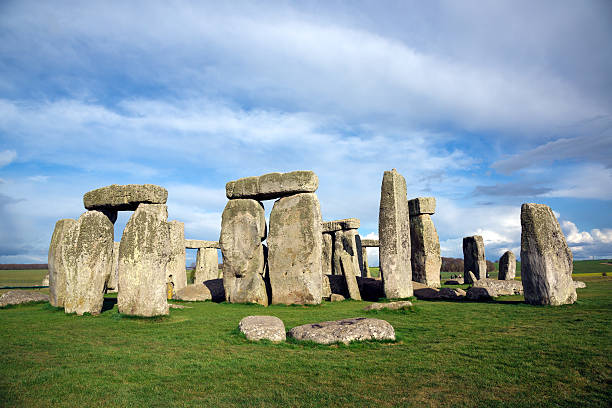
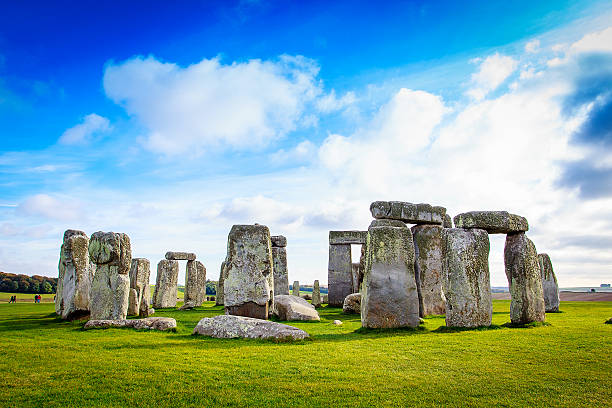
Several centuries later, during the early Bronze Age, builders erected the principal stone structures. The familiar arrangement includes large upright stones, called sarsens, supporting horizontal lintels, as well as smaller stones known as bluestones. The builders shaped and fitted many of these stones with considerable skill, creating a carefully organized architectural composition.
The monument continued to change as stones were moved, rearranged, added, or removed. These modifications indicate that Stonehenge remained significant across generations rather than serving as a short-lived construction project.
Its long history is essential to understanding its purpose. The people who first used the site may not have had exactly the same priorities as those who later transformed it.
The evidence for burial and ancestor worship
One of the strongest clues to Stonehenge’s original significance is its association with human remains. Archaeologists have recovered cremated bones from the monument, particularly from its earliest phases. These remains demonstrate that the site had a funerary role, meaning it was connected with the treatment and commemoration of the dead.
The presence of cremated individuals does not prove that Stonehenge was exclusively a cemetery. Instead, it suggests that burial and remembrance were important components of its use. The monument may have been a place where communities honored deceased members, marked important transitions in life, or maintained relationships with ancestors through ritual.
Ancestor veneration is a plausible interpretation because many prehistoric societies treated the dead as important members of their social and spiritual worlds. Burial monuments could preserve family histories, reinforce claims to land, and connect living communities with earlier generations. Such practices are well documented in prehistoric Britain more broadly, although the exact beliefs associated with Stonehenge remain unknown.
The site’s later development may also reflect a shift in emphasis. As the stone monument took shape, its role could have expanded from a place closely associated with the dead into a larger ceremonial center where funerary traditions were combined with communal gatherings and seasonal rituals.
This interpretation fits the archaeological evidence without requiring the assumption that every part of the monument served the same purpose.
Why Stonehenge aligns with the Sun
Stonehenge’s most striking astronomical feature is its relationship to the changing position of the Sun over the year. The monument’s principal axis is oriented approximately toward the direction of sunrise at the summer solstice and sunset at the winter solstice.
A solstice occurs when the Sun reaches its northernmost or southernmost position in the sky over the course of the year. In the Northern Hemisphere, the summer solstice brings the longest day, while the winter solstice brings the shortest. These events result from Earth’s axial tilt as the planet travels around the Sun.
At Stonehenge, the arrangement of the stones and the monument’s central axis make these seasonal events particularly significant. During the summer solstice, the rising Sun appears in alignment with the monument’s principal approach and central features. The winter solstice is also important, with the setting Sun aligned along the monument’s main axis when viewed from the opposite direction.
These relationships are strong evidence that the builders paid attention to the Sun’s annual movements. They could have used the horizon and the changing position of sunrise and sunset to recognize recurring points in the seasonal cycle.
For farming communities, seasonal timing mattered. Changes in daylight and the progression of the year influenced agricultural work, animal husbandry, and the scheduling of communal activities. A monument that marked significant solar events could therefore have helped organize ceremonies and bring people together at meaningful times.
However, an astronomical alignment does not automatically establish the monument’s full purpose. Stonehenge was not necessarily a sophisticated observatory in the modern scientific sense, and there is no direct evidence that its builders used it to conduct systematic astronomical research. The alignments demonstrate careful attention to the sky, but they cannot reveal exactly what the Sun meant within the builders’ belief system.
Was Stonehenge a temple or religious sanctuary?
The idea that Stonehenge was a temple remains one of the leading interpretations of the monument. Its monumental construction, carefully arranged stones, and astronomical associations are consistent with a place set aside for ceremonies involving supernatural powers or sacred forces.
The term temple, however, can be misleading if it suggests a building devoted to a known deity or a clearly defined religious institution. No written records identify the beliefs practiced at Stonehenge, and archaeologists cannot confidently name the gods, spirits, or religious figures that its builders may have recognized.
A more cautious description is that Stonehenge was a ceremonial monument. This term acknowledges that the site probably hosted meaningful collective activities without assuming that prehistoric religion resembled the organized traditions familiar today.
Ceremonies may have included processions, offerings, feasting, the handling of human remains, or gatherings connected with important moments in the seasonal cycle. Some of these activities are consistent with archaeological evidence from the wider landscape, but not every proposed ritual can be demonstrated to have occurred within the stone circle itself.
The architecture may also have influenced how people experienced the site. The upright stones created defined spaces, controlled sightlines, and framed particular views of the horizon. Such features could have made ceremonies more dramatic, emphasizing the movement of the Sun or distinguishing important areas from the surrounding landscape.
If Stonehenge functioned as a religious sanctuary, its significance probably depended as much on the activities performed there as on the physical structure itself.
Why the winter solstice may have mattered so much
Although Stonehenge is widely associated with the summer solstice, the winter solstice may have held particular importance during some phases of its use.
The monument’s main axis aligns with the setting Sun at the winter solstice. This orientation suggests that the shortest day of the year was a meaningful astronomical event for its builders or later users.
The winter solstice marks the point after which daylight gradually begins to increase again in the Northern Hemisphere. For communities whose lives depended on seasonal changes, this transition could have carried practical and symbolic significance. It might have represented renewal, the return of light, or a turning point in the annual cycle.
Archaeological evidence from the wider Stonehenge landscape also indicates that winter gatherings and feasting were important during the later Neolithic and early Bronze Age. Animal remains, including those of pigs, have contributed to interpretations of seasonal celebrations at nearby settlements and ceremonial sites.
These findings support the possibility that people traveled to the area for communal events at particular times of the year. However, evidence from the wider landscape should not be treated as proof that every gathering took place at Stonehenge itself or that all its visitors followed the same ritual calendar.
The winter solstice hypothesis is compelling because it connects the monument’s astronomical orientation with broader evidence of seasonal activity. It remains difficult to determine whether the solstice was the primary reason for building Stonehenge or one important element of a more complex ceremonial system.
How Stonehenge connected distant communities
Stonehenge was not an isolated monument created by a single, self-contained village. The stones and other archaeological materials associated with it reveal connections across substantial distances, indicating that prehistoric Britain contained networks of movement, exchange, and shared cultural practices.
The large sarsen stones were obtained from sources in the surrounding region, while the smaller bluestones originated in western Britain, particularly in Wales. Their presence at Stonehenge demonstrates that people transported substantial quantities of stone across long distances, although the precise methods and routes used for every movement remain uncertain.
Moving these materials would have required planning, coordination, labor, and knowledge of the landscape. Depending on the routes and methods employed, transport may have involved combinations of human hauling, sledges, water transport, or other techniques. The exact process cannot be reconstructed with complete certainty.
The movement of stones may itself have carried social significance. Materials from distant places could have represented relationships between communities, ancestral connections, or the incorporation of different groups into a shared ceremonial tradition.
Stonehenge may therefore have functioned as a gathering place for people from across a broad region. Large monuments often require cooperation beyond what a small household can provide, and collective building projects can strengthen relationships by bringing people together around a shared goal.
This does not mean that Stonehenge was necessarily the center of a unified political state or a society ruled by a single powerful leader. The archaeological evidence is compatible with several forms of social organization, including cooperation among neighboring communities, leadership by influential individuals, or changing alliances over time.
Its construction demonstrates an impressive capacity for collective action, even though the political arrangements that made that action possible remain uncertain.
What the surrounding landscape reveals
Stonehenge is part of a wider archaeological landscape that includes other ceremonial monuments, burial sites, and ancient earthworks. These surrounding features are important because the stone circle alone cannot explain how people used the area.
Nearby monuments include large circular earthworks and avenues that appear to have organized movement through the landscape. The River Avon also connects parts of the region, and some interpretations suggest that movement between monuments and natural features formed part of ceremonial experiences.
The Avenue, a long processional route associated with Stonehenge, links the monument with the surrounding landscape and the direction of the River Avon. Its alignment and construction suggest that approaching the stones may have been an important part of how people experienced the site.
Processions could have created a structured sequence of experiences, gradually bringing participants from open landscape into a more defined ceremonial space. Changes in visibility, movement, and access may have helped distinguish ordinary surroundings from places reserved for special activities.
Other monuments in the region indicate that Stonehenge belonged to a broader tradition of constructing significant places in the landscape. Some structures were used for burial, others for gatherings, and still others may have served several purposes over time.
The relationships among these sites suggest that prehistoric communities understood the landscape as more than a collection of practical resources. Particular locations could acquire social, ancestral, or spiritual importance through repeated use and collective memory.
How Stonehenge was built
The engineering involved in Stonehenge helps explain why the monument may have held such social significance. Its builders worked without modern machinery, powered transport, or metal construction equipment of the kind used today, yet they moved massive stones and assembled them into a carefully planned structure.
The sarsens are large blocks of sandstone, some weighing many tons. The builders shaped their surfaces and used woodworking-like techniques to join certain stones. Upright stones were fitted with projecting features that engaged with corresponding recesses in the horizontal lintels, helping keep the components aligned.
These methods demonstrate detailed practical knowledge of stoneworking, geometry, leverage, and structural stability. They also suggest that the builders understood how to organize heavy materials into a durable architectural arrangement.
The bluestones presented a different challenge because they originated much farther away than the sarsens. Their transport remains a subject of investigation, and there is no single fully established explanation for every stage of their journey.
The labor required to quarry, move, shape, and erect the stones would have involved substantial coordination. Workers needed food, tools, suitable working conditions, and a way to distribute tasks. The construction may have taken place in stages, with different groups contributing at different times.
It is tempting to view this achievement primarily as evidence of centralized authority, but large projects do not necessarily require a rigid hierarchy. Shared religious commitments, obligations between communities, seasonal gatherings, and the prestige associated with participation could all have contributed to the workforce.
The act of building Stonehenge may therefore have been meaningful in its own right. Even if the monument’s purpose changed over time, the collective effort required to construct it could have reinforced social bonds and established a lasting expression of community identity.
Could Stonehenge have been a place for healing?
Another interpretation proposes that Stonehenge attracted people seeking healing or relief from illness. This theory draws partly on the distinctive appearance and distant origins of the bluestones, which may have been regarded as special materials.
In many societies, particular stones, springs, mountains, or other natural features acquire reputations for healing or spiritual power. It is therefore possible that some prehistoric visitors associated Stonehenge or its stones with protection, recovery, or other personal needs.
However, the evidence for a dedicated healing center is limited. The presence of human remains or the use of unusual materials does not, by itself, establish that people traveled there to receive treatment. Nor can the monument’s architecture identify the specific beliefs that might have surrounded its stones.
Healing may have been one element of the site’s significance, particularly if visitors believed the location or its materials possessed special properties. Yet it is less securely supported than the monument’s funerary associations and solar alignments.
The healing hypothesis illustrates a broader challenge in archaeology: a practice may be culturally plausible without being demonstrable from the surviving evidence. Distinguishing possibility from probability is essential when reconstructing prehistoric beliefs.
Was Stonehenge a calendar or astronomical observatory?
Stonehenge is sometimes described as an ancient calendar, but this label needs qualification. Its alignment with the solstices shows that the builders could identify important points in the Sun’s annual movement. It does not establish that the monument functioned as a complete calendar or that it was designed to calculate dates with a known level of precision.
A calendar is a system for organizing time. It may track days, months, seasons, or years through observations of celestial cycles. Stonehenge’s arrangement could have helped people recognize the changing seasons and coordinate ceremonies, but the monument does not preserve an explicit system of written dates or numerical instructions.
Some researchers have also considered whether the stones could have been used to track lunar cycles. The Moon’s changing phases and its varying positions along the horizon provide observable patterns that prehistoric people could have noticed. Nevertheless, claims that Stonehenge encoded a detailed lunar prediction system remain disputed, and the monument’s layout does not establish a unique, universally accepted lunar calendar.
It is important to distinguish recognizing celestial patterns from practicing astronomy as a formal discipline. People can make accurate observations of the sky and use them for agriculture, navigation, ritual, or timekeeping without maintaining a written scientific system.
Stonehenge’s astronomical features are therefore best understood as evidence that celestial events mattered to its builders. Whether these observations were primarily practical, religious, political, or some combination of the three remains unresolved.
What Stonehenge tells us about prehistoric society
Stonehenge reveals that prehistoric communities in Britain could organize ambitious construction projects, transport heavy materials, develop specialized skills, and maintain important places across many generations.
These achievements challenge outdated assumptions that societies without writing or modern machinery were incapable of complex planning. The builders needed to understand the properties of their materials, organize work, and preserve knowledge about construction methods. They also maintained traditions that gave the monument meaning long after its earliest stages.
The site’s evolution suggests that cultural significance was not fixed. New generations inherited an existing monument and modified it, potentially adapting its role to changing beliefs, social relationships, and ceremonial practices.
The people involved may have included skilled stoneworkers, organizers, ritual specialists, farmers, and visitors from distant communities. The surviving evidence cannot identify all these roles with certainty, but the scale and duration of the project indicate that Stonehenge was embedded in a substantial social world.
Its construction also shows that practical and symbolic motivations need not be separate. A monument could mark seasonal events, honor the dead, express relationships between communities, and demonstrate collective identity at the same time.
Rather than forcing Stonehenge into a single category, archaeologists increasingly consider how these functions may have overlapped and changed throughout its history.
Why the monument’s exact purpose remains uncertain
The main difficulty in explaining Stonehenge is that archaeological evidence preserves objects, structures, and traces of activity more readily than it preserves ideas. Stones can reveal orientation and construction methods. Human remains can establish funerary practices. Animal bones and artifacts can indicate activities that occurred nearby. None of these evidence types can directly record the meanings people attached to their actions.
The builders left no known written explanation of the monument, and later traditions cannot be assumed to preserve their original beliefs. Many familiar stories about Stonehenge emerged long after its construction, when people tried to explain an ancient structure whose creators were no longer known.
Archaeologists must therefore compare different kinds of evidence and ask which explanations account for the greatest number of observations with the fewest unsupported assumptions.
The funerary interpretation is supported by human remains from the monument’s early phases. The astronomical interpretation is supported by the solar alignments. The idea of a regional ceremonial center fits the monument’s scale, its connections to distant sources of stone, and the surrounding landscape. Religious interpretations are plausible, but the specific beliefs and rituals involved cannot be reconstructed in detail.
These explanations are not necessarily mutually exclusive. A place can serve as a burial ground, a ceremonial center, and a setting for seasonal observances without any one function accounting for its entire history.
The most defensible conclusion is that Stonehenge’s purpose evolved. Its builders and later users probably attached several meanings to the monument, with different activities becoming more or less important over time.
What Stonehenge was most likely built for
The strongest explanation is that Stonehenge was a long-lasting ceremonial monument associated with the dead, the changing seasons, and gatherings of prehistoric communities. Its earliest phases had a clear connection to cremated human remains, while its later stone arrangements incorporated deliberate solar alignments. Its place within a larger landscape suggests that its significance extended beyond the stone circle itself.
The evidence does not identify a single original purpose that explains every stage of construction. Instead, it points toward a monument whose functions overlapped and developed across centuries. Burial and ancestor-related practices may have been central early on, while later users may have emphasized seasonal ceremonies, communal identity, or other forms of ritual activity.
Stonehenge’s lasting importance lies partly in this combination of evidence and uncertainty. Archaeology can reveal how the monument was built, how its stones relate to the sky, and how the site connected with the surrounding landscape. It can identify plausible explanations for why people invested so much labor in its construction, while acknowledging the limits of what can be known about their beliefs.
Stonehenge was almost certainly more than a mysterious arrangement of rocks. It was a carefully constructed place that helped prehistoric people express shared values, engage with the natural world, and maintain traditions across generations. Its precise meaning may remain beyond recovery, but the archaeological evidence offers a substantial picture of the society that created it and the enduring role that monumental places played in human life.