Life in the ancient world was shaped by agriculture, family responsibilities, social rank, religion, and the natural environment. For most people, daily existence revolved around producing food, maintaining a household, caring for children, and fulfilling obligations to their community. A smaller portion of the population lived in cities, worked as merchants or craftspeople, served in government, or held positions of wealth and power. Although ancient societies developed impressive cities, complex political systems, and sophisticated technologies, ordinary life was often physically demanding and vulnerable to disease, hunger, warfare, and environmental change.
The ancient world was not a single, uniform civilization. Life in ancient Egypt differed from life in Mesopotamia, Greece, Rome, China, India, and the many societies that developed elsewhere. Geography, climate, political institutions, and cultural traditions influenced how people lived. Yet many ancient communities shared fundamental concerns: obtaining reliable food, organizing labor, raising families, maintaining social order, and making sense of the world around them.
Understanding everyday life in antiquity means looking beyond kings, generals, and monumental buildings. It requires examining the work people performed, the homes they occupied, the foods they ate, the relationships they maintained, and the social systems that shaped their opportunities.
How the ancient world was organized
Many of the societies commonly described as ancient civilizations developed around settled agriculture. As people learned to cultivate crops and domesticate animals, some communities could produce enough food to support individuals who did not farm full time. This surplus helped sustain potters, metalworkers, merchants, administrators, religious specialists, soldiers, and other workers.
Agriculture also encouraged the development of larger settlements. Farmers needed access to water, fertile soil, tools, storage facilities, and reliable ways to exchange goods. In regions where rivers supported irrigation, communities could coordinate the construction and maintenance of canals, embankments, and other infrastructure. Such projects required organization, whether through local cooperation, religious institutions, or centralized governments.
Over time, some settlements became cities with specialized occupations, markets, administrative centers, and public buildings. Cities in Mesopotamia, Egypt, the Indus Valley, and ancient China developed in different ways, but they all demonstrate how food production and organized labor could support increasingly complex societies.
Political systems varied considerably. Some communities were governed by kings who claimed authority through ancestry, military strength, or divine approval. Others developed councils, aristocratic institutions, or forms of citizen government. Ancient Athens, for example, developed a system of direct political participation for eligible male citizens, while excluding women, enslaved people, and resident foreigners from that citizenship. The Roman world shifted from monarchy to republic and eventually imperial rule, while ancient Chinese dynasties built bureaucratic systems that connected local administration to central authority.
These systems influenced ordinary life through taxation, laws, military obligations, public works, and access to land. A ruler’s decisions could affect a farmer’s harvest, a merchant’s trade, or a family’s security. At the same time, much of everyday life continued according to local customs and seasonal routines, even as governments changed.
Daily life revolved around food and the seasons
For the majority of people in ancient agrarian societies, food production was the foundation of daily life. Farmers prepared fields, planted seeds, removed weeds, managed livestock, harvested crops, and stored supplies for later use. The timing of these activities depended on rainfall, temperature, soil conditions, and the characteristics of local crops.
In Egypt, the Nile’s seasonal flooding deposited nutrient-rich sediment on agricultural land, although the extent and timing of floods could vary. In Mesopotamia, farmers relied heavily on irrigation in an environment where rainfall was often insufficient for dependable crop production. In the Mediterranean, people cultivated grains, olives, and grapes, adapting their work to seasonal patterns. Elsewhere, communities developed agricultural systems suited to local conditions, including rice cultivation in parts of Asia and maize-based farming in the Americas.
These differences mattered because a successful harvest could determine whether a household survived comfortably through the next year. Poor harvests might force families to reduce consumption, borrow grain, sell possessions, or seek work elsewhere. Repeated crop failures could contribute to migration, indebtedness, political unrest, and famine.
Most ancient people ate relatively simple diets based on locally available staples. Grains such as wheat, barley, rice, and millet supplied much of the energy in many regions. Legumes, vegetables, fruits, nuts, dairy products, fish, and meat supplemented these foods in varying proportions. The availability of particular ingredients depended on geography, wealth, trade, and cultural preferences.
Meat was not equally accessible to everyone. Wealthier households could often obtain more livestock products and a greater variety of foods, while poorer families relied heavily on grains and other inexpensive staples. Fasting, feasting, religious rules, and seasonal availability also influenced what people ate.
Food preservation was essential because fresh produce was not available year-round in many environments. Drying, salting, fermenting, smoking, and storing grain helped extend supplies. Granaries and household storage containers protected food against some forms of spoilage, although pests, moisture, and contamination remained persistent problems.
Cooking required considerable labor. People had to collect fuel, carry water, prepare ingredients, maintain fires, and clean utensils. These responsibilities frequently fell to women and other household workers, although the precise division of labor differed among cultures and social classes. A meal that appears simple in a modern kitchen could require substantial effort when water and fuel had to be obtained manually.
Homes, clothing, and household responsibilities
Ancient homes reflected local materials, climate, wealth, and family structure. In many regions, ordinary houses were built from mudbrick, timber, stone, reeds, or combinations of these materials. Mudbrick was especially useful where suitable soil was abundant and stone or timber was scarce. Stone construction became prominent in certain regions, particularly for durable buildings and wealthier residences.
Housing conditions varied widely. Some rural families lived in compact dwellings with spaces for cooking, sleeping, storing supplies, and keeping animals nearby. Urban households might occupy narrow houses along crowded streets. In some Roman cities, poorer residents rented rooms or apartments in multistory buildings, while wealthy families could possess spacious houses organized around courtyards.
The quality of housing affected health and comfort. Ventilation, drainage, access to clean water, protection from insects, and the disposal of waste varied considerably. Crowded neighborhoods could make infectious diseases easier to spread, particularly when people relied on contaminated water or lived close to animals and accumulated refuse.
Households were also centers of production. Families prepared food, made and repaired clothing, processed agricultural goods, cared for animals, and produced items for sale or exchange. The household was not simply a private space separated from economic activity; it was often the basic unit through which work, property, and family obligations were organized.
Clothing generally served practical purposes as well as social ones. People wore garments made from locally available fibers, including wool, linen, and, in some regions, cotton or silk. The choice of material depended on climate, trade, wealth, and cultural conventions. Clothing could also communicate occupation, rank, citizenship, or religious affiliation.
Many garments were made by spinning fibers into thread, weaving cloth, cutting or arranging the fabric, and sewing or fastening it into wearable forms. These processes required time and skill. Clothing was therefore valuable, and people commonly repaired, reused, and repurposed textiles rather than discarding them quickly.
Personal cleanliness also depended on local resources and customs. People washed with available water, used oils or other cleaning substances, and followed different bathing traditions. Public baths became important social institutions in parts of the Greek and Roman worlds, while other societies developed their own practices for washing and bodily care. Access to bathing facilities, clean water, and suitable clothing varied by location and social status.
Work and the ancient economy
Work in the ancient world extended far beyond farming. As settlements grew, people developed specialized occupations that supported agriculture, trade, construction, government, and religious life.
Craftspeople produced pottery, textiles, tools, weapons, jewelry, furniture, and building materials. Their work depended on practical knowledge passed between generations, experimentation, and the availability of raw materials. Metalworkers, for example, needed to understand how heating and cooling affected metals, while potters learned how clay composition and firing conditions influenced the strength and appearance of their products.
Many crafts required substantial physical effort. Grinding grain, spinning thread, carrying water, quarrying stone, and transporting goods could be exhausting. Some tasks were performed with simple tools, while others relied on specialized equipment, animals, or organized teams of workers.
Construction supported both public and private life. People built houses, roads, bridges, temples, defensive walls, irrigation systems, and harbors. Large projects required materials, planning, transport, and labor coordination. They might employ skilled specialists alongside less-skilled workers, and their completion could strengthen trade, improve administration, or demonstrate the authority of a ruler.
Trade connected communities to resources they could not easily obtain locally. Merchants transported grain, metals, timber, textiles, pottery, spices, and luxury goods along roads, rivers, and maritime routes. Some exchanges took place in local markets, while others linked distant regions through extensive commercial networks.
The ancient Mediterranean, for example, supported trade among communities in Europe, North Africa, and western Asia. Networks across the Indian Ocean connected East Africa, Arabia, India, and Southeast Asia. Overland routes linked parts of Central Asia with China and other regions. These networks moved not only goods but also technologies, artistic styles, languages, religious beliefs, and knowledge.
Money facilitated many transactions in some ancient economies, but it did not replace other forms of exchange. Barter, payments in kind, credit, taxation in agricultural products, and obligations to landlords or governments all played important roles. The relative importance of these arrangements varied by time and place.
Work was also shaped by inequality. A person who owned land, tools, or a workshop had different opportunities from someone who depended on daily wages. Some workers controlled their schedules and production, while others labored under strict obligations. Access to education, family connections, citizenship, and legal status could determine whether a person entered a skilled occupation or remained in poorly paid work.
Family, childhood, and education
Family relationships shaped nearly every aspect of ancient life. Households often combined economic cooperation with the care of children, older relatives, and other dependents. Marriage could establish alliances between families, transfer property, create obligations, or strengthen social standing. The importance of romantic attachment varied, but marriage was frequently influenced by economic and social considerations.
Family structures differed among societies. Some households included several generations, while others centered on parents and children. Extended relatives might share land, tools, domestic responsibilities, and inheritance claims. The death of a household member could therefore affect not only emotional relationships but also the family’s ability to work and maintain its property.
Childhood involved learning the skills necessary for adult responsibilities. Children often helped with household tasks, cared for younger siblings, tended animals, or assisted with agricultural work. As they grew older, they acquired more specialized responsibilities through observation, practice, and instruction.
Formal education was available in some ancient societies, but it was rarely universal. In places such as Mesopotamia and Egypt, scribal training prepared selected individuals to read, write, calculate, and manage records. In ancient Greece and Rome, educational opportunities varied according to wealth, location, family expectations, and gender. Other societies developed their own traditions of learning, including instruction connected to religious institutions, government service, and specialized occupations.
Literacy was particularly important for administration and commerce. Writing allowed people to record taxes, debts, contracts, inventories, laws, and religious texts. However, the ability to read and write was unevenly distributed. Many people lived their entire lives without formal literacy, relying instead on oral communication, memory, and practical experience.
Children’s lives were also shaped by mortality. Infectious disease, malnutrition, accidents, and other hazards made survival less predictable than it is in many modern societies with effective sanitation and medical care. Families often experienced the loss of children and other relatives, although the risks varied substantially across environments and periods.
The roles of women and men
Gender influenced work, property ownership, family life, and political participation throughout much of the ancient world. However, women’s and men’s experiences cannot be reduced to a single universal pattern. Laws and customs differed between societies, and actual opportunities often depended on wealth, social status, occupation, and family circumstances.
Women frequently performed essential agricultural and domestic work. They prepared food, made textiles, cared for children, processed crops, managed household supplies, and contributed to family businesses. In some communities, women also participated in markets, worked as craft producers, managed estates, or carried out other forms of paid or independent labor.
The responsibilities of wealthy women could differ considerably from those of poorer women. A woman from a prosperous household might oversee servants, household finances, or property, while a woman from a farming family might perform strenuous physical labor alongside other members of the household. Neither experience can represent the lives of all women in a society.
Men also occupied varied positions, ranging from agricultural laborers and artisans to soldiers, merchants, officials, and landowners. Political authority was often concentrated among men, and many societies imposed legal restrictions on women’s participation in public life. Yet women could sometimes exercise influence through property, religious offices, family networks, economic activity, or proximity to political power.
In some ancient societies, women could own or inherit property under particular circumstances; in others, their legal independence was more restricted. Marriage, divorce, inheritance, and guardianship rules differed across time and place. Even within a single society, formal laws did not always reveal how people behaved in everyday life.
Understanding gender in antiquity therefore requires distinguishing between legal ideals and lived experience. Laws might define what people were expected to do, but households also adapted to practical needs, economic pressures, and individual circumstances.
Social class, slavery, and inequality
Ancient societies were rarely equal. Wealth, land ownership, family background, political connections, occupation, and legal status shaped a person’s opportunities and security. In many communities, a relatively small group controlled substantial resources, while farmers, laborers, tenants, and other workers produced much of the wealth on which society depended.
Social hierarchies took different forms. Some societies organized status through hereditary ranks or distinctions between rulers, religious specialists, warriors, merchants, and agricultural workers. Others gave particular importance to citizenship, property, ancestry, or bureaucratic position. These categories were not always fixed, but movement between social levels could be difficult.
Slavery was a major institution in several ancient societies, including Greece and Rome, and forms of coerced labor existed in many other historical settings. Enslaved people could be forced to work in households, fields, mines, workshops, construction projects, or other settings. Their treatment varied, but they generally lacked the freedom to control important aspects of their lives and could be subjected to violence, separation from family, and sale.
People became enslaved through different processes, including capture in warfare, birth to enslaved parents, and other forms of enslavement permitted by local laws or customs. Debt-related dependency also existed in some societies, although its legal form and relationship to slavery differed across places and periods.
Enslaved labor supported parts of the ancient economy, but it did not account for all production. Free farmers, tenants, wage laborers, craftspeople, and other workers also performed essential work. The balance among these groups varied by region and historical period.
Inequality influenced daily experiences in direct ways. Wealthier people could often obtain better housing, more varied food, education, and protection from certain hardships. Poorer people had fewer resources to withstand illness, crop failure, or loss of employment. Legal status could determine whether someone could own property, testify in court, move freely, or make decisions about family life.
Ancient people were not passive within these systems. They negotiated obligations, pursued economic opportunities, formed alliances, resisted exploitation, and sometimes challenged political authority. Nevertheless, individual effort could not easily overcome institutions that restricted access to resources and legal rights.
Religion and the meaning of everyday life
Religion was deeply integrated into many ancient societies. People offered prayers, made sacrifices, observed festivals, visited sacred places, and consulted religious specialists. Religious practices could shape agricultural calendars, public ceremonies, household routines, political legitimacy, and ideas about death.
Many ancient cultures worshiped multiple deities associated with aspects of nature, human activity, or the organization of the cosmos. Other religious traditions developed different understandings of divine power, moral obligation, and spiritual life. Religious beliefs changed over time, and people within the same society could hold different views or emphasize different practices.
In ancient Egypt, religious ideas influenced royal authority, temple institutions, burial customs, and beliefs about life after death. In Mesopotamia, temples played important religious and economic roles. In the Greek and Roman worlds, public festivals and rituals connected communities to their gods and civic identities. Ancient India saw the development and transformation of several religious and philosophical traditions, while Buddhism spread across parts of Asia. Ancient Chinese traditions connected ritual, family obligations, political order, and ideas about harmony.
Religion was not limited to formal ceremonies. Household rituals, offerings, protective objects, and observances associated with births, marriages, harvests, and funerals could be part of ordinary life. Religious beliefs also offered ways to interpret uncertainty, including illness, natural disasters, political upheaval, and death.
Temples and other religious institutions could possess land, employ workers, store goods, and participate in administration. Their influence therefore extended beyond belief. They could provide social organization, preserve specialized knowledge, and help coordinate activities across a community.
Religious practice was also diverse and sometimes contested. Ideas about proper worship, divine authority, and acceptable behavior could change through political conflict, cultural exchange, and the emergence of new movements. Ancient societies were not culturally static, even when their institutions emphasized tradition.
Health, medicine, and life expectancy
Health was one of the greatest challenges of ancient life. People faced infections, parasitic diseases, injuries, childbirth complications, nutritional deficiencies, and illnesses associated with contaminated water or poor sanitation. The risks depended on local ecology, housing conditions, diet, occupation, and access to care.
Ancient communities developed practical knowledge about treating wounds, preparing medicinal substances, assisting childbirth, and recognizing symptoms. Medical traditions emerged in places such as Egypt, Greece, India, and China, combining observation and experience with philosophical, religious, and cultural explanations of disease.
Some treatments could help. Cleaning wounds, setting certain fractures, using particular plant-derived substances, and providing supportive care could improve outcomes. Other treatments were ineffective or harmful because people lacked modern knowledge of microorganisms, human physiology, and the causes of many diseases.
The absence of germ theory did not mean ancient people lacked all understanding of prevention. Communities sometimes recognized that certain conditions were associated with particular environments, foods, or patterns of contact. However, they could not reliably identify or control many infectious agents.
Sanitation varied widely. Some cities developed wells, drains, sewers, public baths, and systems for transporting water. Roman urban centers became particularly known for aqueducts and extensive public infrastructure. Yet such achievements did not guarantee safe drinking water or clean living conditions for everyone. Water could become contaminated during collection, storage, or distribution, and waste disposal remained difficult in densely populated settlements.
Childbirth posed serious risks, and infant and childhood mortality were generally higher than in modern populations with effective medical care and public health systems. Adults also faced hazards from agricultural accidents, warfare, hazardous occupations, and infectious disease.
Historical discussions of life expectancy require care. Life expectancy at birth was often low because many children died at young ages. This does not mean that everyone died at the same young age. People who survived childhood could live into their later adult years, although their chances depended on disease exposure, nutrition, social circumstances, and other factors. Reliable estimates are difficult because records are incomplete and conditions varied widely across regions and periods.
Cities, transportation, and public life
Ancient cities were centers of administration, commerce, craft production, religion, and social interaction. They brought people and goods together, allowing specialized occupations and cultural exchange to flourish. At the same time, dense settlement created problems involving sanitation, housing, fire, traffic, and the supply of food and water.
A city’s layout reflected its history, geography, and political organization. Some settlements grew gradually around markets, temples, or administrative centers. Others were planned according to particular political or ceremonial goals. Streets might be narrow and irregular, while major public spaces provided room for trade, gatherings, religious events, or official business.
Markets brought together producers, merchants, and consumers. People purchased food, tools, clothing, pottery, and other goods, sometimes using coins and sometimes relying on credit or other forms of exchange. Markets were also places to share information, negotiate agreements, and maintain social connections.
Transportation depended heavily on walking, pack animals, carts, boats, and ships. Roads could improve communication and the movement of armies and goods, but travel remained slow by modern standards. Rivers and seas often provided more efficient routes for transporting heavy cargo than overland journeys.
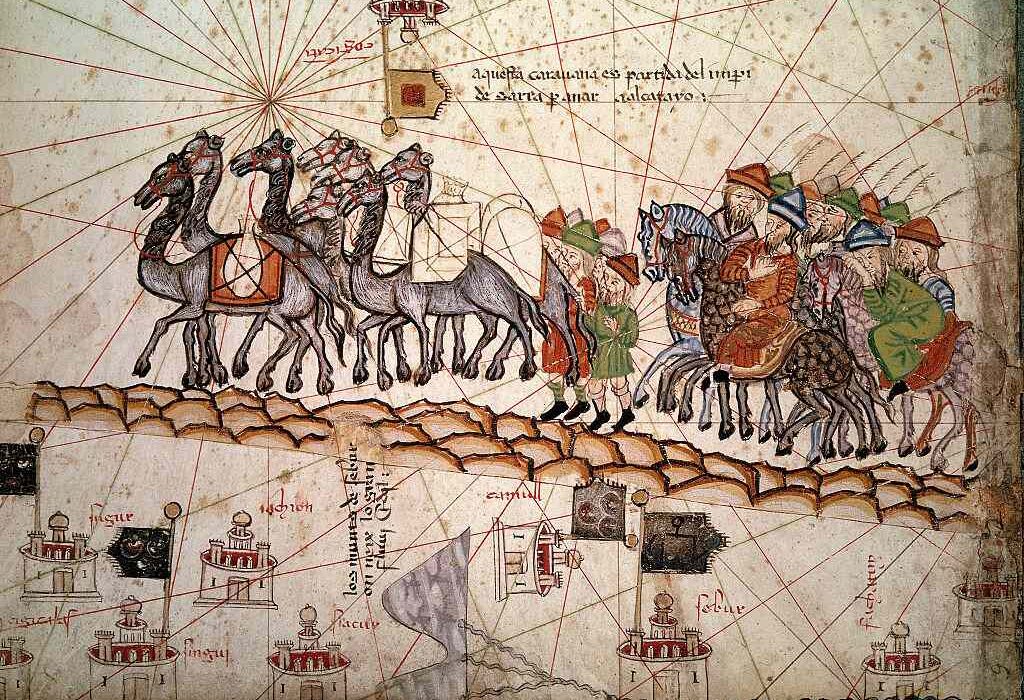
Ships connected distant ports, while caravans carried goods across dry regions and mountain routes. Travel exposed people to unfamiliar languages, customs, and technologies, but it could also involve storms, banditry, political instability, and the risk of losing goods or becoming stranded.
Public spaces had different meanings for different groups. In some Greek cities, eligible male citizens gathered to discuss political matters. Roman forums served administrative, legal, commercial, and ceremonial functions. In other societies, plazas, temple precincts, and marketplaces provided places for public activity. Access to these spaces and the rights associated with them depended on social position and local institutions.
Despite their achievements, ancient cities were not uniformly comfortable places to live. Overcrowding, smoke, noise, fire hazards, and unreliable sanitation could make urban life difficult. People might have more access to trade and specialized services than rural residents, while also facing greater exposure to some infectious diseases.
Leisure, entertainment, and community
Ancient people worked hard, but their lives were not defined by labor alone. They also participated in festivals, games, storytelling, music, religious ceremonies, social visits, and other forms of recreation. The activities available to them depended on time, wealth, local customs, and the demands of work.
Music and storytelling were important ways to entertain audiences and transmit cultural knowledge. Oral traditions preserved histories, myths, practical knowledge, and community values. Skilled performers could recite long narratives, accompany songs with instruments, or entertain audiences at gatherings.
Sports and public spectacles were especially visible in some ancient societies. Greek communities organized athletic competitions that combined physical skill, religious observance, and civic identity. Roman entertainment included theatrical performances, chariot racing, and gladiatorial contests. These events could attract large audiences and sometimes served political purposes by demonstrating a sponsor’s generosity or reinforcing public loyalty.
Board games and other recreational activities also existed in different regions. Archaeological evidence shows that ancient people played games, used musical instruments, decorated personal objects, and pursued activities that went beyond immediate survival.
Festivals provided opportunities to suspend ordinary routines, strengthen communal ties, and honor religious or political traditions. Feasting could reinforce family relationships, mark important transitions, or display social status. Yet participation was not always equal: some celebrations were open to broad sections of the community, while others were restricted by rank, gender, citizenship, or wealth.
Leisure was also shaped by work schedules and the agricultural calendar. Periods of intense planting or harvesting left less time for recreation, while certain festivals and seasonal intervals created opportunities for gatherings. Enslaved people and those facing severe economic hardship had far less control over their free time than wealthy or independent households.
War, political change, and insecurity
War influenced ancient life even for people who never served as soldiers. Conflicts could disrupt farming, damage settlements, interrupt trade, destroy infrastructure, and force families to flee. Armies needed food, animals, weapons, and transportation, placing demands on the communities through which they moved.
Military service took different forms. Some states relied on citizen soldiers, others maintained professional forces, and many used combinations of conscripts, hired troops, allies, and subject populations. The organization of armies depended on political institutions, available resources, military technology, and strategic needs.
Ancient warfare was often dangerous for civilians. Armies might seize supplies, impose taxes or tribute, enslave captives, or destroy property. The consequences could persist after fighting ended, particularly when communities lost workers, livestock, seed grain, or access to water.
Political changes could also bring opportunities. Conquest sometimes connected previously separate regions through roads, administrative systems, and commercial networks. New rulers might introduce different laws, currencies, or administrative practices. Such changes could benefit some groups while imposing new burdens on others.
Empires governed diverse populations with different languages, customs, and religious traditions. Their success depended partly on their ability to collect revenue, maintain military power, negotiate with local elites, and communicate across large territories. The costs of administration and expansion could strain resources, while succession disputes, rebellions, and external attacks could weaken central authority.
Political stability was therefore an important influence on daily life, but stability was never absolute. Even during periods of relative peace, people faced local disputes, taxation, criminal activity, and environmental risks. Their security depended not only on the strength of a state but also on the resilience of households and communities.
Technology and practical knowledge
Ancient societies developed technologies that transformed how people produced food, built structures, traveled, communicated, and organized their lives. These advances did not emerge all at once or follow a single path. They developed through experimentation, observation, exchange, and the accumulation of knowledge across generations.
Agricultural tools, irrigation systems, plows, and methods of animal management helped communities cultivate land and transport goods. Pottery made it easier to store and cook food. Metallurgy enabled the production of tools and weapons from copper, bronze, iron, and other metals, depending on the region and period. Weaving, dyeing, carpentry, and masonry supported household needs and specialized industries.
Writing was among the most consequential developments in several ancient civilizations. It allowed people to preserve information beyond individual memory and communicate across distances and generations. Written records supported taxation, law, administration, literature, scholarship, and commerce. Different writing systems developed independently in some regions and through cultural contact in others.
Mathematical and astronomical knowledge also served practical purposes. People used counting, measurement, and calculation to manage land, construct buildings, organize trade, and track celestial cycles. Observations of the Sun, Moon, planets, and stars helped some societies develop calendars that supported agriculture and religious ceremonies.
Ancient engineering could be remarkably sophisticated. Builders developed methods for moving heavy materials, constructing durable buildings, managing water, and creating roads and bridges. Such achievements relied on skilled labor, practical mathematics, knowledge of materials, and effective organization.
However, technological achievement should not be confused with modern scientific understanding. Ancient people could construct impressive structures or make accurate observations without knowing the underlying mechanisms according to contemporary scientific theories. Their knowledge was often highly effective within particular tasks, even when explanations of nature differed from those accepted today.
Technology also spread unevenly. A technique known in one region might take generations to reach another, and its adoption depended on local materials, economic incentives, political institutions, and cultural preferences. Some communities maintained successful ways of life without adopting every technology available elsewhere.
How historians reconstruct ordinary life
Much of what is known about ancient life comes from combining different kinds of evidence. Written documents can reveal laws, taxes, contracts, letters, literature, and administrative practices. Archaeological remains provide evidence of houses, tools, food preparation, trade, burial customs, and the physical organization of settlements.
Each type of evidence has limitations. Written records often reflect the interests of rulers, officials, wealthy households, or educated individuals. They may describe how society was supposed to function rather than how everyone actually lived. People who lacked literacy or political influence are less visible in many surviving texts.
Archaeology helps fill these gaps. The remains of seeds, animal bones, pottery, cooking areas, tools, and buildings can reveal what people ate, how they worked, and how goods moved between communities. Human skeletal remains can provide evidence of injuries, nutritional stress, disease, physical activity, and patterns of mortality, although such evidence must be interpreted carefully.
Environmental evidence can help reconstruct the conditions in which people lived. Pollen, sediments, tree rings, and other natural records may provide information about vegetation, rainfall, floods, droughts, and land use. These findings help explain why some communities prospered, adapted, migrated, or declined.
No single discovery can represent an entire civilization. A wealthy urban household, a rural farming family, and an enslaved worker might experience the same historical period in very different ways. Differences within societies could be as significant as differences between them.
Historians also distinguish between what the evidence establishes and what remains uncertain. Surviving records rarely describe every aspect of ordinary life, and archaeological remains do not always reveal people’s intentions or beliefs. Reconstructions therefore become more reliable when independent forms of evidence support the same interpretation.
What daily life in the ancient world reveals
The ancient world was both familiar and profoundly different from modern life. People cared for relatives, prepared meals, learned occupations, exchanged goods, celebrated festivals, pursued entertainment, and worried about their futures. They formed communities, developed technologies, and created institutions that shaped the lives of generations.
Yet many faced conditions that modern societies have partly overcome through improved agriculture, transportation, sanitation, medicine, and public infrastructure. Food shortages could be devastating, infections were harder to prevent and treat, and access to education, legal protection, and economic opportunity was often sharply unequal.
There was no single ancient experience. A prosperous merchant, a rural tenant, a government official, a craft worker, and an enslaved person occupied different positions within their societies. Geography and climate influenced their routines, while laws, family structures, and political institutions shaped their choices.
The most important insight is that ancient civilizations were sustained not only by rulers and monumental achievements but also by the ordinary work of countless people. Farmers produced food, craftspeople made essential goods, caregivers maintained households, merchants connected communities, and laborers built the infrastructure on which cities and states depended. Their daily activities formed the foundation of the ancient world, making its political, cultural, and technological achievements possible.