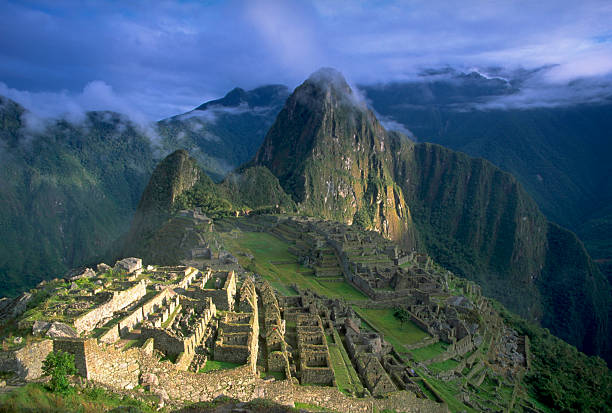
The first civilizations developed when farming communities began producing reliable food surpluses, supporting larger populations, specialized occupations, permanent settlements, and increasingly complex systems of government. Over thousands of years, some villages grew into cities where people organized agriculture, trade, religious activities, construction, and administration on a scale that earlier communities could not sustain.
This transformation did not happen everywhere at once, nor did it follow a single predetermined path. Different societies developed complex forms of social organization independently, shaped by local environments, available resources, technologies, and relationships with neighboring communities. Farming created important opportunities for urban life, but geography, cooperation, political power, and cultural innovation all influenced how the earliest civilizations emerged.
How agriculture changed human society
For most of human history, people lived by hunting animals, fishing, and gathering wild plants. These ways of life required extensive knowledge of local ecosystems and often involved moving between places as food sources changed. Although some hunter-gatherer communities established relatively permanent settlements, most depended on access to diverse resources across substantial areas.
Beginning around 12,000 years ago, near the end of the last Ice Age, several human populations began experimenting with managing plants and animals. Over time, people in different regions domesticated particular species, meaning they selectively cultivated plants or bred animals with useful characteristics. This gradual transition, commonly called the Neolithic Revolution, fundamentally changed how many communities obtained food.
In Southwest Asia, people cultivated early forms of wheat and barley and eventually domesticated sheep, goats, pigs, and cattle. Other populations independently developed agriculture in regions including China, New Guinea, Mesoamerica, and the Andes. Rice cultivation became important in parts of East Asia, while maize, beans, and squash formed the basis of farming systems in the Americas.
Agriculture was not a single invention that spread unchanged around the world. It emerged through different combinations of experimentation, environmental change, and accumulated knowledge. Communities learned which plants produced useful seeds, how to protect crops, when to plant and harvest, and how to manage animals. These practices developed over generations rather than through one sudden discovery.
Farming also involved significant trade-offs. Cultivating crops could provide a more predictable food supply from a limited area, but it required sustained labor, careful planning, and dependence on a narrower range of food sources. Crop failures, droughts, pests, and disease could threaten entire communities. Early farmers sometimes experienced poorer health or more demanding workloads than their hunter-gatherer predecessors.
Nevertheless, productive farming made it possible for some populations to remain in one place for much of the year. Permanent settlements provided opportunities to build durable homes, store harvested food, manage nearby fields, and develop increasingly elaborate social relationships.
Why food surpluses made larger communities possible
One of agriculture’s most important consequences was the possibility of producing more food than a household needed for immediate consumption. This surplus could support people who did not spend all their time growing or gathering food.
A community with sufficient stored grain, dried legumes, or other durable foods could sustain potters, toolmakers, builders, merchants, religious specialists, administrators, and other workers. These occupations helped create economic interdependence: farmers supplied food, craftspeople made useful objects, and traders connected communities with resources unavailable locally.
Food storage also changed how people planned for the future. Grain stored after a successful harvest could help households survive a poor season, while shared reserves could support construction projects or provide supplies for people working away from fields. The effectiveness of storage depended on suitable containers, protected buildings, pest control, and systems for distributing supplies.
Surpluses did not automatically produce cities or governments. Many farming villages remained relatively small for long periods. A surplus also did not necessarily mean that everyone had enough to eat. Its distribution depended on ownership, social customs, access to land, and the authority of individuals or institutions.
As settlements expanded, managing resources became more complicated. People needed ways to coordinate planting and harvesting, maintain irrigation channels where necessary, resolve disputes, organize exchanges, and determine who could use particular land or stored goods. Some communities managed these responsibilities through families, elders, councils, or customary rules. Others gradually developed more centralized forms of authority.
The ability to support people with different occupations was therefore an important step toward civilization, but it was only one part of a much broader transformation.
How villages grew into cities
Early villages often consisted of households connected through kinship, shared labor, exchange, and common traditions. As populations increased and settlements became more established, some communities developed into larger centers that attracted people from surrounding areas.
Cities differed from villages not simply because they contained more people, but because they brought together many kinds of economic and social activity. A city might contain specialized workshops, storage facilities, marketplaces, religious buildings, administrative spaces, and neighborhoods occupied by people with different occupations and social positions.
These activities reinforced one another. Craftspeople benefited from having many potential customers nearby. Traders could exchange goods from several regions in one place. Religious centers attracted participants and offerings, while political authorities could collect resources and coordinate large projects more easily in a concentrated settlement.
Cities also created new challenges. Crowded populations required reliable food supplies, access to water, waste management, and some means of resolving conflicts. Diseases could spread more easily among people living close together, particularly where sanitation was poor. Large settlements also depended on surrounding agricultural areas, so their survival could be threatened by crop failures, warfare, or disrupted trade.
The growth of cities was therefore not simply a matter of people building more houses. It involved the development of networks linking urban residents with farmers, pastoralists, craftspeople, traders, and communities farther away. A city could not function independently of the wider landscape that supplied its food, materials, and labor.
Why rivers helped early civilizations flourish
Several of the earliest well-known urban civilizations developed near major rivers. Rivers could provide water for households, fertile soils for agriculture, transportation routes, and fish and other aquatic resources. In some environments, river water could also be directed onto fields through irrigation, increasing the amount of land that could be cultivated reliably.
Mesopotamia, the region between the Tigris and Euphrates rivers, became home to some of the earliest cities. In southern Mesopotamia, relatively low rainfall made agriculture difficult without careful water management. Irrigation systems helped farmers cultivate productive fields, while the region’s river connections and trade routes supported the movement of food, building materials, and manufactured goods.
Ancient Egypt developed along the Nile, whose seasonal flooding historically deposited nutrient-rich sediments across parts of the valley and floodplain. The surrounding desert limited the extent of naturally productive farmland, concentrating much of the population along the river. These conditions helped support agricultural surpluses and, eventually, a powerful territorial state.
In South Asia, settlements developed along the Indus River system and neighboring regions. The Indus civilization later produced large urban centers, including Harappa and Mohenjo-daro, with planned streets, standardized building practices, and sophisticated drainage systems.
In China, early complex societies emerged in several regions, including areas associated with the Yellow River and Yangtze River systems. Agriculture, population growth, craft production, and political organization developed through long processes that differed across regions.
Rivers were important, but they were not sufficient on their own to create civilizations. Floods could destroy fields and settlements, irrigation systems required maintenance, and water supplies could become unreliable. The benefits of rivers depended on human knowledge, collective labor, political arrangements, and the ability to adapt to changing environmental conditions.
Nor did all early civilizations arise in river valleys. The development of complex societies in the Americas and elsewhere demonstrates that different environments could support urban life through different combinations of farming, water management, trade, and political organization.
How specialization and trade connected communities
As settlements grew, people increasingly depended on goods and skills produced by others. Farmers might exchange grain for pottery, stone tools, textiles, metal objects, or livestock. Communities lacking particular resources could obtain them through trade rather than relying exclusively on what their immediate surroundings provided.
Trade encouraged the development of specialized production. A craftsperson who could depend on other people for food had more opportunity to devote time to making high-quality tools, ornaments, containers, or other goods. Repeated practice improved skills, while demand from larger populations encouraged greater production.
Some materials traveled considerable distances. Obsidian, a volcanic glass useful for making sharp tools, could be exchanged far from its geological sources. Metals, shells, stones, timber, and other commodities also connected communities across regions. Such exchanges moved more than objects: they could spread techniques, artistic styles, religious ideas, and practical knowledge.
Trade also encouraged systems of measurement and recordkeeping. People exchanging large quantities of goods needed ways to track deliveries, obligations, ownership, and payments. These practical requirements helped create demand for increasingly formal methods of accounting.
Economic specialization made societies more productive in some respects, but it also made them more interdependent. A shortage of a crucial raw material or a disruption to trade could affect craftspeople and merchants well beyond the place where the disruption began.
Why governments and social hierarchies emerged
Large settlements required decisions that affected many people. Someone had to coordinate irrigation maintenance, organize communal construction, manage stored resources, settle disputes, or arrange defenses when communities faced threats. These responsibilities could encourage the emergence of leaders and institutions with authority beyond individual households.
In some societies, authority became concentrated in kings, chiefs, or other rulers. Religious institutions also played important roles, often connecting political leadership with beliefs about sacred duties, ancestors, or the relationship between people and the natural world. In other settings, councils, local leaders, and community traditions continued to shape decisions.
As political institutions developed, some societies became more socially stratified. Social stratification means the division of a society into ranked groups with unequal access to wealth, authority, or status. Rulers, priests, military leaders, merchants, and other influential groups could gain control over land, stored food, trade, or labor.
The relationship between agricultural surpluses and inequality was important but not inevitable. Surplus production could support shared activities and communal reserves, but it could also be appropriated by powerful individuals or institutions. The ability to control essential resources gave some groups leverage over others.
Organized warfare may have reinforced these inequalities in certain societies. Leaders who could coordinate fighters and mobilize supplies sometimes expanded their territory or gained control over valuable land and trade routes. Conquest could bring wealth to rulers while imposing taxes, tribute, or forced labor on conquered populations.
Government also created opportunities for cooperation on a scale that small communities might struggle to achieve. Large irrigation networks, defensive structures, roads, and monumental buildings required planning and coordination across households and neighborhoods. The same institutions that could concentrate power could also organize projects that benefited substantial portions of a population.
Civilization therefore brought both new capacities for collective action and new forms of inequality. Its development cannot be understood solely as a story of progress or solely as a story of domination.
How writing and recordkeeping transformed civilization
Writing emerged in some early civilizations as a way to manage information that had become difficult to track through memory alone. In Mesopotamia, early writing developed in connection with administrative activities, including accounting for goods and economic transactions. Over time, writing expanded into many other areas of life.
Written records helped administrators track supplies, labor obligations, land, and exchanges. They also allowed information to be preserved beyond the memory of a particular individual and communicated across greater distances or longer periods. This made it easier for institutions to operate across complex territories.
Different societies developed distinct writing systems. Mesopotamian scribes used cuneiform, a system made with wedge-shaped marks impressed into clay. Ancient Egyptians developed hieroglyphic writing, while other societies created their own systems suited to their languages and purposes.
Writing was not a prerequisite for every form of complex social organization. Societies could sustain sophisticated political institutions, long-distance trade, monumental architecture, and extensive cultural traditions without a widely used writing system. Nor did writing appear everywhere at the same time or for the same reasons.
Once established, however, writing could greatly expand what governments, merchants, religious institutions, and scholars were able to record and transmit. Written laws and administrative documents could formalize obligations, while literary and religious texts helped preserve and reshape cultural traditions.
Writing also influenced how later generations understand the past. Archaeological remains reveal buildings, tools, diets, and patterns of settlement, but written records can provide additional evidence about how people described their institutions and experiences. Because early writing often served administrative or elite purposes, however, it does not represent every person’s perspective equally.
Why civilizations developed independently in different regions
The emergence of early civilizations was a widespread human achievement, not the product of a single population or one universal blueprint. Different societies developed complex settlements and institutions under different environmental and historical conditions.
In Mesopotamia, agriculture, irrigation, trade, and competition among neighboring communities contributed to the rise of early cities. In Egypt, the Nile’s agricultural productivity and the geography of the valley helped support political unification and centralized government. In the Indus region, urban planning and extensive exchange networks became defining features of a major Bronze Age civilization.
In China, complex societies developed through regional processes involving agricultural communities, craft production, political competition, and the consolidation of authority. In Mesoamerica, domesticated crops such as maize, beans, and squash supported increasingly complex communities, eventually contributing to the rise of major urban centers and states. In the Andes, societies developed sophisticated approaches to agriculture and resource management across challenging landscapes that included mountains, valleys, and arid coastal regions.
These cases illustrate that civilizations did not require identical crops, political systems, or technologies. Communities adapted to local conditions and built on knowledge developed by earlier generations. Trade and contact sometimes spread useful ideas, but independent innovation also played a major role.
The timing of urban development varied considerably. Farming began in some regions thousands of years before large cities emerged. This gap shows that agriculture did not automatically produce civilization. Population growth, resource management, economic specialization, social institutions, and historical circumstances all influenced whether settlements developed into urban societies.
The term civilization itself requires care. It is often used to describe societies with cities, specialized occupations, formal institutions, and complex cultural traditions. It should not imply that people living in smaller communities were less intelligent, less capable, or less culturally developed. Hunter-gatherers and village farmers possessed extensive environmental knowledge, sophisticated social practices, and technologies adapted to their ways of life.
How technology supported increasingly complex societies
The development of civilization depended on many technologies that made food production, construction, transportation, and administration more effective. Improvements in tools allowed farmers to clear land, cultivate crops, and process harvests. Pottery provided containers for cooking and storage, while weaving produced textiles that could be used domestically or exchanged.
Metalworking introduced new possibilities for making tools, weapons, ornaments, and other objects. Copper was used in early metalworking, and bronze, an alloy usually made primarily from copper and tin, later became important in many regions. The availability of suitable ores and the knowledge required to process them influenced where metal production developed.
Transportation technologies also mattered. Boats and river vessels could move heavy goods more efficiently than people carrying them over land. Pack animals and wheeled vehicles, where practical, helped connect settlements and transport supplies. These developments supported trade, migration, warfare, and the expansion of political influence.
Construction techniques enabled people to build larger homes, temples, storage facilities, walls, and public structures. Such projects depended not only on materials and tools but also on organized labor, technical knowledge, and the ability to supply workers.
Technology rarely transformed societies in isolation. A new tool was most useful when people had the resources, skills, institutions, and economic incentives needed to adopt it. Its effects also depended on local conditions. A technology that worked well in one environment might provide little advantage in another.
Civilization emerged through the interaction of many innovations rather than from a single decisive invention.
The costs and vulnerabilities of urban life
The growth of cities created new opportunities, but it also exposed people to risks that were less pronounced in some smaller communities. Dense settlements could facilitate the spread of infectious diseases. Concentrated populations needed dependable supplies of clean water and effective ways to manage human waste and other refuse.
Agricultural specialization could also increase vulnerability. A community heavily dependent on one crop might suffer when weather conditions changed or pests damaged its harvest. Soil degradation, deforestation, salinization, and erosion could reduce agricultural productivity under certain conditions, particularly when land and water were poorly managed.
Political centralization created additional risks. Conflicts over territory, resources, and authority could lead to warfare, displacement, or the destruction of settlements. Trade networks could bring prosperity but also transmit shortages and disruptions across connected regions.
Some cities declined or were abandoned as environmental conditions changed, political systems weakened, trade patterns shifted, or populations moved elsewhere. The reasons for such changes often remain debated because archaeological evidence may support several possible explanations. It is important not to reduce the decline of an entire civilization to a single cause when multiple pressures may have interacted.
A civilization’s ability to endure depended partly on how well its institutions and communities responded to these challenges. Flexibility, access to resources, social cooperation, and the ability to adjust farming and settlement practices could influence whether a society adapted or experienced severe disruption.
What the rise of the first civilizations reveals about humanity
The development of the first civilizations was a gradual, uneven process in which changes in food production reshaped nearly every aspect of human society. Farming supported permanent settlements in many regions, while agricultural surpluses allowed some people to specialize in occupations beyond food production. Larger settlements encouraged trade, administrative systems, new technologies, and institutions capable of coordinating thousands of people.
These developments also changed relationships among people. Communities became more economically interdependent, political authority expanded, and inequalities sometimes became more pronounced. Cities connected distant regions while creating new problems involving health, resources, conflict, and governance.
No single factor explains the rise of civilization. Agriculture provided an important foundation, but the emergence of cities depended on the interaction of ecology, technology, population, exchange, cooperation, and political organization. Different societies combined these elements in different ways, producing a wide variety of urban and cultural traditions.
The first civilizations were not inevitable outcomes of farming. They were the result of generations of human decisions, accumulated knowledge, environmental opportunities, and social changes. Their development marked a major transformation in how people organized their lives, created institutions, and shaped the landscapes around them.