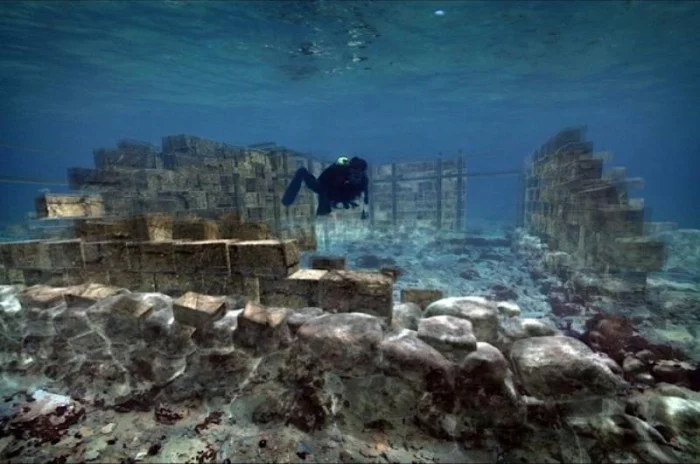
Ancient trade worked through a combination of local markets, traveling merchants, transportation networks, systems of payment, and relationships that helped people exchange goods across great distances. Farmers sold surplus crops, craftspeople traded manufactured objects, merchants transported valuable products between regions, and governments collected taxes or tolls along important routes. Over time, these activities connected communities into extensive commercial networks that helped spread technologies, ideas, languages, and cultural practices.
Trade did not begin with coins, formal marketplaces, or powerful empires. It emerged because no community could easily produce everything its members needed. Some regions had fertile farmland, others had forests, mineral deposits, or access to the sea. People developed ways to exchange what they had for what they lacked, creating increasingly complex systems of commerce long before modern banking, industrial production, or paper currency existed.
Why ancient people traded
The basic reason for trade was specialization. Different communities possessed different natural resources, skills, and environmental advantages. A settlement near a copper deposit could produce metal objects more easily than a farming village without access to ore. Coastal communities could harvest marine resources and travel by boat, while inland communities might specialize in grain, livestock, textiles, or pottery.
Trade allowed people to benefit from these differences. Instead of producing everything locally, a community could concentrate on activities it performed well and obtain other goods through exchange. This process increased the variety of available resources and could improve living standards, although its benefits were not always shared equally.
Geography played a major role in determining what people traded. River valleys supported agriculture and provided transportation corridors. Coastal settlements could connect with distant ports. Mountain communities supplied stone, metals, and other materials that were difficult to obtain elsewhere. Deserts and grasslands sometimes supported long-distance travel through specialized knowledge of water sources, pack animals, and seasonal conditions.
Archaeological evidence shows that exchange networks existed thousands of years before written records became common. Obsidian, a volcanic glass useful for making sharp tools, has been found at archaeological sites far from its geological sources. Its distribution demonstrates that people moved materials across substantial distances, whether through direct journeys, exchanges between neighboring communities, or longer chains of intermediaries.
These early networks were not necessarily organized markets in the modern sense. Exchange could take place between relatives, neighboring settlements, political leaders, or strangers meeting at gathering places. Some transactions involved immediate payment, while others depended on reciprocal obligations that might be fulfilled much later.
How local markets operated
As settlements grew into towns and cities, trade increasingly took place in organized marketplaces. A market brought buyers and sellers together at a particular location and time, making it easier to compare goods, negotiate prices, and conduct multiple transactions.
Markets could be permanent or periodic. In a small agricultural community, people might gather on designated days to sell food, animals, tools, textiles, and household goods. In a large city, specialized districts could support particular trades, while workshops sold products near the places where they were made.
The goods available in a market reflected the surrounding economy. Farmers supplied grain, vegetables, livestock, and other agricultural products. Potters produced storage jars and cooking vessels. Weavers made cloth, while metalworkers manufactured tools, weapons, and ornaments. Merchants brought in goods unavailable locally, including imported spices, fine textiles, gemstones, and metals.
Prices emerged through negotiation and the relationship between supply and demand. Supply refers to how much of a good sellers could offer, while demand describes how much buyers wanted and could afford to purchase. When harvests were abundant, grain might become cheaper. When drought reduced food production, prices could rise sharply.
These relationships were influenced by much more than scarcity alone. Government rules, transportation costs, taxes, social status, seasonal conditions, and the purchasing power of different groups all affected what people paid. Authorities sometimes imposed price controls, distributed food, or intervened in markets during shortages, though the effectiveness of such measures varied.
Markets also reduced the practical difficulties of finding trading partners. Buyers could inspect goods, sellers could reach more customers, and repeated encounters allowed reputations to develop. Weighing equipment, standardized measures, and familiar commercial practices helped people determine whether an exchange was fair.
Yet ancient markets were not necessarily open or equal environments. Women, foreigners, enslaved people, and members of different social classes could face distinct legal rights and restrictions depending on the society. Access to valuable goods and commercial opportunities often depended on wealth, political connections, citizenship, or membership in a recognized community.
What people used before money
Trade did not require coins. Long before coinage appeared, people exchanged goods directly or used systems of credit, accounting, and socially recognized obligations.
Direct exchange, commonly called barter, occurs when one person gives a good or service in return for another. A farmer might exchange grain for pottery, or a herder might provide livestock in return for tools. Such exchanges could work well when both parties wanted what the other offered and agreed on the relative value of their goods.
However, barter had limitations. A potter who needed grain might have to find a farmer who wanted pottery at that moment. Economists describe this problem as the double coincidence of wants: each participant must possess something the other wants. It becomes especially difficult when goods are bulky, perishable, or difficult to divide into convenient quantities.
Ancient societies developed other ways to manage these problems. People could keep track of debts, promise future deliveries, or settle obligations through goods accepted by a community. A household might receive grain now and repay it after the harvest. Merchants could extend credit to trusted customers, allowing transactions to occur without immediate payment.
Some communities used particular commodities as widely recognized measures of value or means of payment. Livestock, grain, metals, shells, and other objects served monetary functions in different places and periods. Their usefulness depended on local customs, availability, durability, and social acceptance.
It is important to distinguish between a commodity used in exchange and a fully developed monetary system. A society might use silver to settle certain debts while relying on grain for wages or taxes. Different forms of payment could coexist, and their values did not always correspond to a single, universally accepted standard.
Ancient accounting systems also helped commerce operate on a larger scale. In Mesopotamia, for example, written records documented quantities of grain, deliveries of goods, debts, and other economic obligations. Such records allowed institutions to manage resources that could not be exchanged or consumed immediately.
These practices reveal that the development of money was not a simple transition from barter to coins. Exchange, credit, accounting, and commodity payments overlapped and evolved together.
How money transformed trade
Coinage made many transactions easier by providing portable objects with standardized monetary values. Coins could be counted rather than individually negotiated as goods, and their consistent form helped merchants conduct repeated exchanges with unfamiliar people.
Some of the earliest widely recognized coinage emerged in Lydia, in western Anatolia, during the seventh century BCE. Early coins were made from electrum, a naturally occurring mixture of gold and silver. Their marked surfaces helped establish their identity and association with an issuing authority.
The spread of coinage did not mean that every society immediately abandoned older methods of payment. Coins circulated unevenly, and their importance depended on political institutions, commercial activity, and local preferences. In some economies, coin use became widespread; in others, accounting, credit, or payments in goods remained important.
Coins also helped governments collect taxes, pay soldiers, and compensate officials. These activities increased the circulation of money because people receiving coins could spend them in markets. Military campaigns, administrative systems, and urban growth therefore contributed to monetary exchange, even when the original purpose of coin production was not simply to facilitate everyday shopping.
Money was useful because it could perform several related functions. It served as a medium of exchange, allowing people to buy and sell without matching their goods directly. It acted as a unit of account, providing a common way to express prices and debts. It could also serve as a store of value, allowing wealth to be held for later use.
However, ancient coins were not automatically trustworthy or stable. Their value could depend on their metal content, weight, reputation, and acceptance by authorities and trading partners. Coins might be clipped, counterfeited, or debased by reducing their precious-metal content. Different cities and kingdoms also issued different currencies, creating a need to weigh, evaluate, or exchange coins.
Money reduced some obstacles to trade, but it did not eliminate uncertainty. Merchants still had to judge the quality of goods, assess the reliability of buyers, and account for changing prices and political conditions.
How long-distance trade connected distant societies
Long-distance commerce developed when merchants recognized that certain goods could command higher prices far from their places of origin. Products that were abundant in one region but scarce in another offered opportunities for profit, especially when their value justified the expense and risk of transportation.
Not every commodity could support long-distance trade. Grain, timber, and ordinary pottery were often expensive to move over land because they were heavy relative to their value. Precious metals, gemstones, fine textiles, spices, and luxury objects were generally more practical to transport across great distances. Bulk goods could still travel long distances when water transport reduced costs or when large markets created sufficient demand.
Trade routes developed around geography and available transportation. Rivers connected inland settlements with larger commercial centers. The Mediterranean Sea supported shipping between ports in Europe, North Africa, and western Asia. Overland routes crossed mountain passes, grasslands, and deserts, linking regions that had few direct alternatives.
The Silk Roads illustrate how extensive these networks could become. Rather than a single road connecting two endpoints, they consisted of interconnected land and maritime routes that linked East Asia, Central Asia, South Asia, the Middle East, and regions farther west. Silk was an important commodity, but merchants also moved horses, metals, glassware, textiles, spices, and other products.
Many goods passed through several hands before reaching their final buyers. A producer might sell a product to a local trader, who transferred it to a regional merchant. Another merchant could carry it to a distant port, where a new buyer arranged its onward journey. This chain of exchanges allowed commerce to cross enormous distances without requiring one trader to travel the entire route.
Intermediaries contributed knowledge of local markets, languages, customs, and political conditions. They also created additional costs and opportunities for profit. The price paid by the final buyer reflected not only the original product but also transportation, storage, taxes, handling, and the risks assumed by everyone involved.
Long-distance trade was not limited to luxury goods. Grain, salt, timber, metals, and other necessities moved between regions when demand, transport infrastructure, and political conditions made the journeys worthwhile. Some commercial networks supplied large cities with food and raw materials, helping sustain populations that could not have been supported by their immediate surroundings alone.
How merchants transported goods
Transportation determined the speed, capacity, cost, and reliability of ancient commerce. Overland travel relied on people, pack animals, carts, and roads. Water transport used rivers, canals, lakes, and seas. Each method had advantages and limitations.
Pack animals could carry valuable goods across difficult terrain, especially where wheeled vehicles were impractical. Donkeys were useful for moving cargo over established routes, while camels could travel across arid regions when supplied with suitable care and access to water. Horses were important for transportation and communication, although their suitability for carrying heavy commercial loads varied.
Wheeled vehicles could move heavier loads, but they depended on suitable terrain and infrastructure. Mud, steep slopes, damaged roads, and narrow mountain paths made cart travel difficult. Roads improved movement in some regions, yet constructing and maintaining them required substantial labor and resources.
Water transport generally offered a major advantage for heavy cargo because boats could move large quantities with less energy per unit of freight than overland carriers. Ancient Egyptian communities used the Nile as a transportation corridor, while Mediterranean sailors connected coastal settlements through shipping. Mesopotamian societies also relied on rivers and canals to move goods and support agriculture.
Maritime travel nevertheless involved considerable risks. Storms, reefs, seasonal winds, and navigational uncertainty could destroy ships or delay deliveries. River travel depended on currents, water levels, and the condition of channels. Merchants had to consider seasonal patterns, and sailing schedules often reflected knowledge of prevailing winds and regional weather.
Transportation costs shaped the geography of trade. A product might be cheap near its source but expensive in a distant city because of the cost of moving it. Improvements in roads, ports, boats, and animal management could make previously impractical exchanges profitable.
The movement of goods also depended on supporting infrastructure. Warehouses protected cargo, ports allowed ships to load and unload, and caravan stops provided water, shelter, and opportunities to exchange information. These facilities were part of the commercial system rather than incidental additions to it.
How merchants managed risk and trust
Trade became more difficult as the distance between buyers and sellers increased. A merchant might spend weeks or months traveling before receiving payment. Goods could be damaged, stolen, delayed, or lost. Buyers might refuse a shipment, sellers might misrepresent its quality, and political unrest could close a route without warning.
Merchants managed these risks through experience, reputation, written agreements, partnerships, and institutional support. Repeat business mattered because a trader who cheated customers could lose future opportunities. Communities of merchants sometimes developed shared rules and expectations that helped members cooperate across geographic boundaries.
Written records were particularly useful when transactions involved large quantities or delayed payment. Contracts could specify prices, delivery obligations, debts, or penalties for failing to meet agreed terms. Their precise forms varied across societies, and enforcement depended on local law, custom, and political authority.
Partnerships allowed several people to share the costs and risks of a commercial venture. One partner might provide capital while another traveled with the goods. Profits and losses could then be divided according to their agreement. Such arrangements allowed people with different resources or expertise to participate in trade.
Credit was equally important. A merchant did not always need to possess all the money required to buy goods before beginning a journey. Loans or deferred payments could finance purchases and allow a business to operate across several transactions. Credit also introduced the risk of default, making reliable records and trustworthy partners valuable.
Governments sometimes made commerce safer by protecting roads, maintaining ports, enforcing contracts, and punishing theft. Political stability could encourage investment because merchants were more willing to transport goods when they expected to reach their destinations and retain their earnings.
But government involvement could also obstruct trade. Rulers imposed tolls, customs duties, monopolies, and restrictions on certain goods. Armed conflict, excessive taxation, and arbitrary seizure could make a route too dangerous or expensive to use. Commercial networks therefore expanded or contracted in response to political change as well as economic opportunity.
The role of states, temples, and large institutions
Ancient commerce did not operate solely through independent merchants and private marketplaces. Temples, palaces, and governments often controlled substantial resources and participated directly in economic activity.
In ancient Mesopotamia, large institutions collected agricultural produce, organized labor, stored goods, and recorded deliveries. Their activities connected farming communities, workshops, and administrative centers. Written accounting helped officials track resources and obligations across complex systems.
Ancient Egypt similarly relied on agricultural production, centralized administration, and the movement of goods along the Nile. The state organized labor and resources for major projects and maintained relationships with neighboring regions. Trade brought in materials that Egypt lacked in sufficient quantities, including certain woods, metals, and luxury goods.
State involvement could take many forms. Authorities might purchase supplies, distribute rations, commission craft production, collect taxes in goods or money, or sponsor expeditions to obtain valuable resources. Such activities could support large populations and specialized occupations, but they also concentrated control over resources in the hands of political and religious elites.
Not all ancient economies were centrally directed. Private merchants, family businesses, independent craftspeople, and local traders could operate alongside institutional systems. The balance between state administration and private commerce differed considerably across time and place.
The distinction matters because ancient trade was not one uniform system. A small agricultural settlement, a port city, and an imperial capital could rely on very different arrangements, even when their economic activities were connected.
How trade spread ideas, technologies, and diseases
Commerce moved more than physical goods. Merchants, sailors, craftspeople, and travelers carried languages, religious beliefs, artistic styles, technical knowledge, and practical skills between communities.
Contact between societies could introduce new materials and manufacturing techniques. Metalworking methods, textile designs, pottery styles, and shipbuilding knowledge sometimes spread through trade networks. The movement of unfamiliar objects also influenced local tastes and encouraged craftspeople to adapt foreign designs to local needs.
Trade could transmit writing systems, mathematical practices, and commercial conventions. Merchants operating across linguistic boundaries needed ways to record quantities, communicate prices, and recognize obligations. Repeated contact encouraged the development and adaptation of shared practices, although these changes did not necessarily originate with merchants alone.
Religious traditions also traveled through commercial networks. Traders and other travelers helped connect distant communities, creating opportunities for beliefs and rituals to spread. The adoption of a religion or cultural practice, however, usually depended on a broader combination of social, political, and historical factors rather than trade alone.
The same networks could carry harmful biological agents. When people, animals, and goods moved between regions, infectious diseases could travel with them. Dense cities and busy ports sometimes created conditions favorable to transmission, while long-distance connections allowed outbreaks to reach places that had previously experienced limited contact.
The consequences of these connections were uneven. Trade could increase access to useful resources and knowledge, but it could also intensify competition, spread disease, and strengthen unequal relationships between communities. Cultural exchange and economic growth did not automatically produce peace or prosperity for everyone involved.
Who benefited from ancient trade, and who paid the costs?
Trade created opportunities for farmers, craftspeople, merchants, transport workers, and rulers. Producers could reach customers beyond their immediate communities, cities could obtain resources they lacked, and merchants could earn profits by connecting different markets.
However, the distribution of these benefits depended on social and political conditions. Merchants with capital and reliable connections could undertake larger ventures than people with limited resources. Rulers who controlled ports, mines, or important routes could collect revenue from commercial activity. Wealthy consumers could purchase imported luxuries that remained inaccessible to most households.
Ancient commerce also operated within societies that practiced slavery, forced labor, and forms of coercive taxation. Enslaved people could be bought and sold as commodities, while workers might be compelled to produce goods or transport supplies for powerful institutions. The scale and organization of these practices varied, but they formed part of the economic history of many ancient civilizations.
Trade could also create dependence on distant supplies. A city that relied heavily on imported grain or essential raw materials became vulnerable to interrupted shipping, political conflict, or changing prices. Commercial connections expanded the range of available resources while exposing communities to disruptions beyond their control.
Competition for valuable goods and access to routes sometimes contributed to political conflict. States sought control over ports, mines, agricultural territories, and strategic passages. Yet trade could also encourage cooperation because communities benefited from predictable exchange and stable commercial relationships.
The consequences of trade therefore cannot be measured only by the volume of goods exchanged or the wealth accumulated by merchants. Its effects depended on who controlled production, who performed the labor, how profits were distributed, and how societies managed the risks created by economic interdependence.
Why ancient trade systems changed over time
Ancient commercial networks were dynamic. New routes emerged when transportation improved, political authorities secured important corridors, or distant markets developed stronger demand. Other routes weakened when warfare, environmental change, declining urban populations, or shifting political boundaries made trade less profitable or more dangerous.
Technological changes could alter the economics of exchange. Better ships expanded the range and capacity of maritime travel. Improved roads and transport equipment made some inland journeys easier. More reliable methods of accounting and payment helped merchants coordinate transactions across greater distances.
Changes in political organization mattered just as much. Large states could sometimes create extensive zones of relative security, standardize measures, and maintain infrastructure. The collapse or fragmentation of a state could disrupt these arrangements, although trade did not necessarily disappear. Merchants might adopt alternative routes, negotiate with new authorities, or continue exchanging goods on a smaller scale.
Environmental conditions also shaped commercial activity. Droughts could reduce agricultural surpluses, floods could damage infrastructure, and changes in coastlines or river channels could affect ports and transportation. Communities responded through adaptation, substitution, migration, and the reorganization of trade, with varying degrees of success.
There was no single path from primitive exchange to modern commerce. Different societies developed different combinations of money, credit, markets, state administration, and long-distance transportation. Some relied heavily on coinage; others conducted extensive exchange through goods, accounting systems, and personal obligations.
Ancient trade worked because people found ways to coordinate production, transportation, payment, and trust across differences in geography and social organization. Markets brought buyers and sellers together. Money made many exchanges easier to measure and complete. Merchants linked distant regions, while roads, rivers, ports, institutions, and commercial agreements helped goods move between them.
Together, these systems transformed isolated communities into interconnected economies. Their legacy is visible in the enduring principles of commerce: people specialize in different activities, exchange creates mutual opportunities, transportation shapes prices, trust makes cooperation possible, and economic connections carry both benefits and risks.