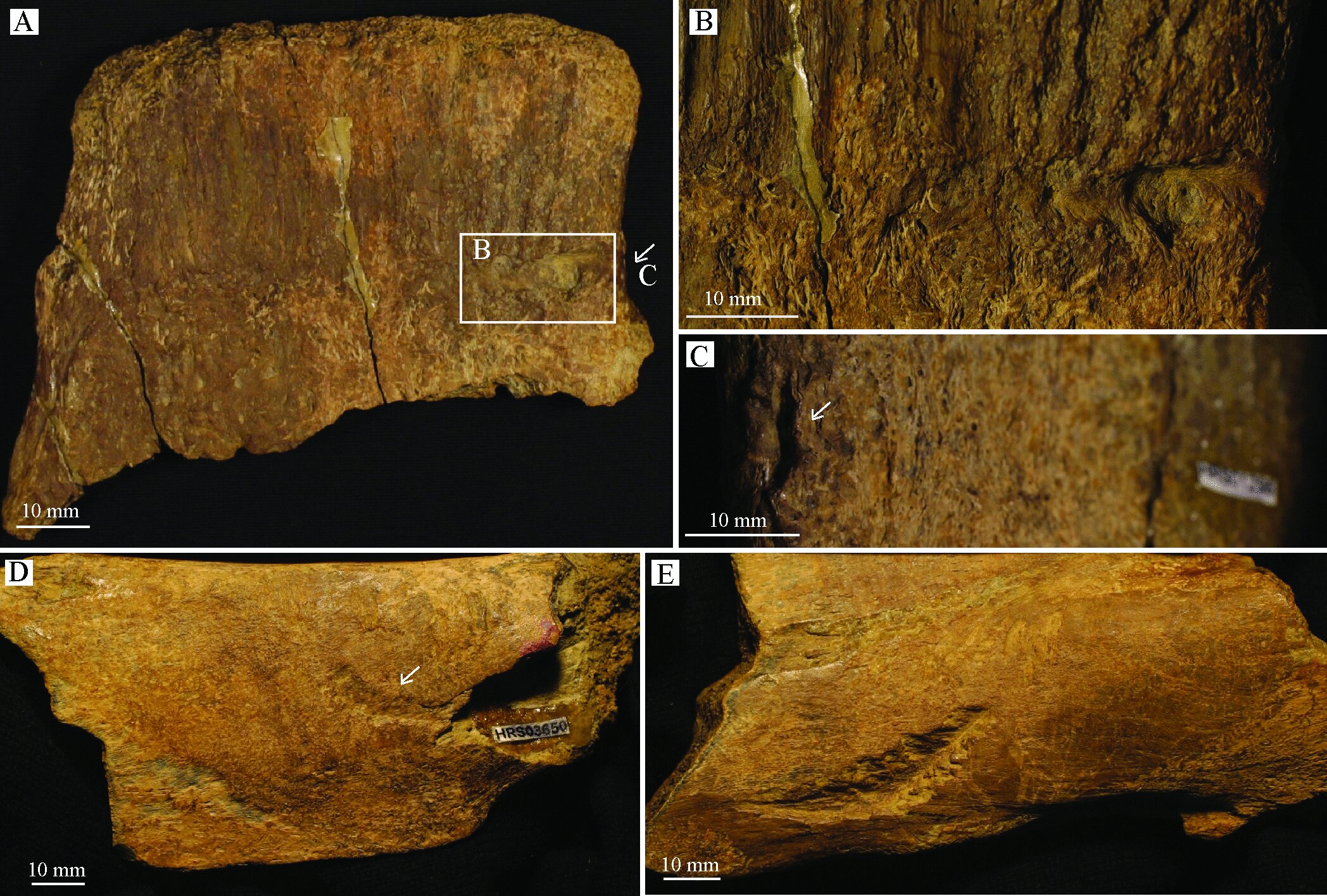
Distinctive bite patterns preserved on fossilized dinosaur bones from Wyoming suggest that some were likely made by Tyrannosaurus rex, offering new evidence of how giant predators interacted with carcasses during the Late Cretaceous. The research also introduces practical guidelines to help scientists distinguish genuine tooth marks from damage caused by disease or natural processes after death.
Millions of years after dinosaurs disappeared, the marks left on their bones continue to reveal details about ancient ecosystems. A new study published July 15, 2026, in PLOS One examines thousands of fossilized bones from northeastern Wyoming and identifies rare tooth traces that researchers say were likely produced by Tyrannosaurus rex.
Beyond documenting these bite marks, the study addresses a longstanding challenge in paleontology: determining whether a depression or hole in fossil bone truly resulted from a bite. The researchers developed a guide that combines previous research with new observations to help scientists identify authentic tooth traces more reliably.
Rare bite marks emerged from thousands of fossil bones
The research team analyzed more than 3,000 fossilized bones dating to the Late Cretaceous, roughly 72–66 million years ago. Most belonged to Edmontosaurus annectens, a large duck-billed herbivorous dinosaur that lived alongside some of North America’s largest predators.
Despite the enormous collection, evidence of biting proved remarkably uncommon. Only 12 bones displayed tooth traces.
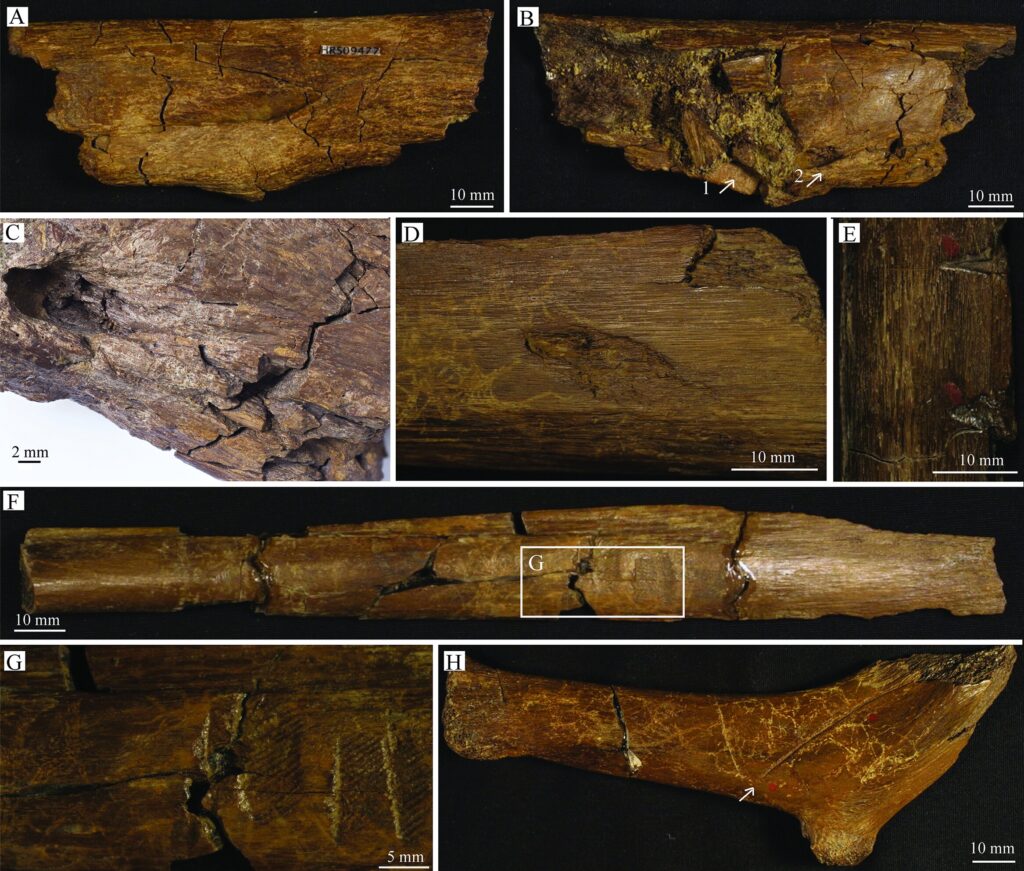
Among those, four bones preserved especially distinctive patterns. Based on the shape of the marks and the spacing between them, the researchers concluded that these traces were most likely left by Tyrannosaurus rex. Other damaged bones may instead have been bitten by different carnivorous dinosaurs or crocodilians that shared the same environment.
The relatively small number of marked bones highlights how rare well-preserved feeding evidence can be, even in large fossil collections.
The bones reveal what happened after death
The condition of the bite-marked bones also helped researchers reconstruct events that occurred after the animals died.
Most showed no signs of healing around the damaged areas. If the animals had survived the bites, their bones would likely have begun repairing themselves. The absence of healing instead indicates that the marks were made around the time of death or afterward.
Combined with previous research from the same fossil site, the findings suggest that at least some animals were preyed upon before their carcasses remained exposed on the landscape. During that period, scavengers likely fed on the remains before the bones were eventually buried and preserved as fossils.
Rather than capturing a single moment, the fossils preserve evidence from multiple stages in the animals’ journey—from death and scavenging to burial over millions of years.
Not every hole in a fossil is a bite mark
One of the study’s central contributions is its effort to improve how scientists recognize genuine tooth marks.
At first glance, punctures, grooves and holes in fossil bones can resemble damage caused by feeding. However, similar features may form for entirely different reasons. Disease affecting joints can alter bone surfaces, while erosion, insect activity and other postmortem processes can also leave depressions that resemble bite marks.
Misidentifying these features could lead researchers to incorrect conclusions about dinosaur behavior or ancient ecosystems.
To address this problem, the researchers created a set of identification criteria based on both earlier studies and the new Wyoming fossils. The goal is to provide a more consistent framework for distinguishing true feeding traces from unrelated damage.
According to the authors, “Correctly identifying bone depressions and perforations is important because not all of these features are tooth marks. Some are caused by diseases, while others result from postmortem processes such as insect activity or other processes due to bone exposure.”
They added that distinguishing among these different types of bone modifications is essential because they can reveal both an animal’s condition before death and the events that affected its remains afterward.
Building a clearer picture of prehistoric ecosystems
Tooth marks represent more than isolated damage to ancient bones. When correctly identified, they serve as direct evidence of interactions between predators, scavengers and their prey.
Because bite traces can preserve details that disappear from the rest of the fossil record, they help researchers investigate feeding behavior and ecological relationships that would otherwise remain hidden.
As the study’s authors noted, “The study of tooth marks on fossil bones is important because it provides valuable insights into animal behavior and interactions between species.”
By pairing evidence for likely Tyrannosaurus rex feeding with a practical method for recognizing authentic bite marks, the Wyoming fossils offer both a glimpse into the final stages of Late Cretaceous animals and a refined tool for interpreting similar discoveries in the future.