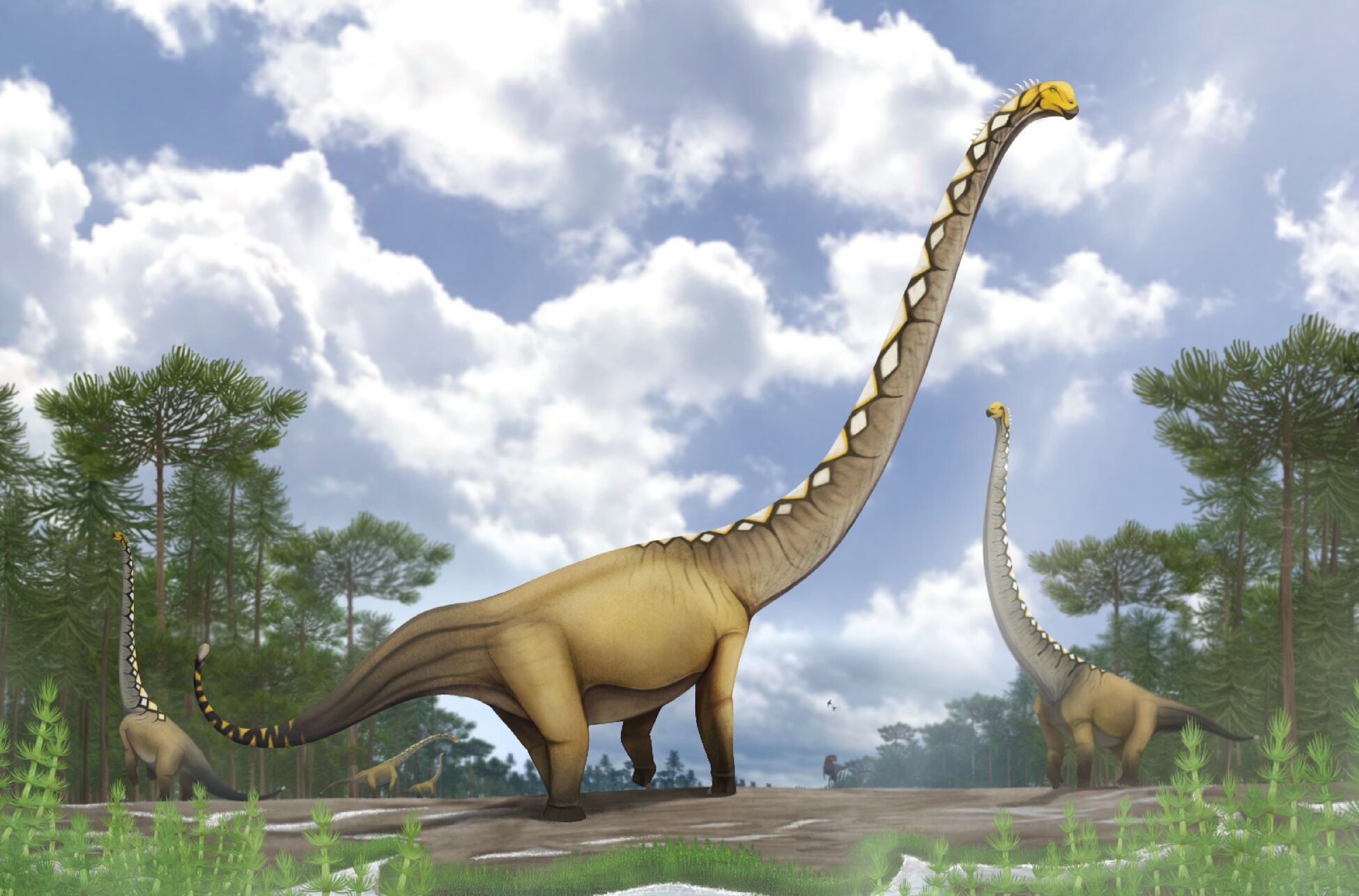
Discovery of a new long-necked dinosaur species in northeastern Thailand is expanding scientists’ understanding of where mamenchisaurid dinosaurs lived during the Late Jurassic. Named Uragasaurus kalasinensis, the fossil represents the first formally described member of this dinosaur group from Thailand and provides new evidence that these giant sauropods were more widespread across mainland Southeast Asia than previously confirmed.
Long-necked dinosaurs known as mamenchisaurids have long been associated primarily with China, where most known species have been discovered. Now, a newly described fossil from Thailand is reshaping that picture by confirming that these enormous sauropods also inhabited mainland Southeast Asia during the Late Jurassic.
The new species, Uragasaurus kalasinensis, is described in the journal Scientific Reports. Although the discovery is based on a single but exceptionally informative spinal bone, researchers say it provides enough distinctive anatomical features to identify a previously unknown species and clarify its place in dinosaur evolution.
A rare fossil with distinctive anatomy
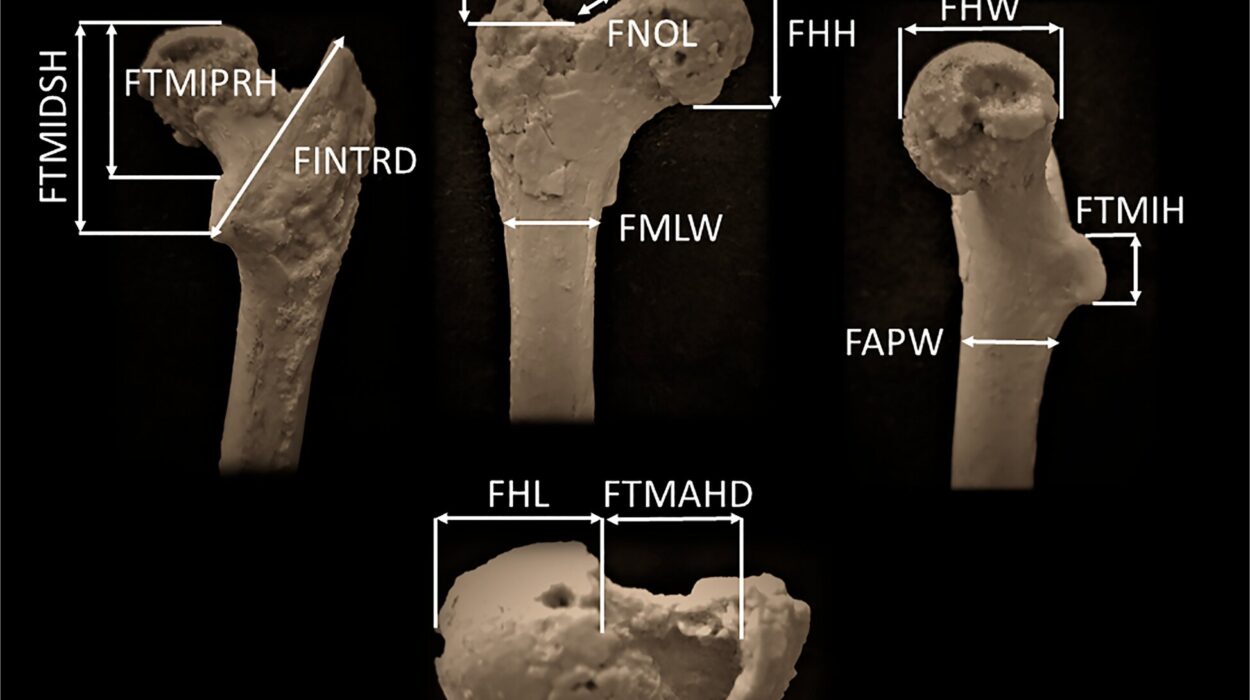
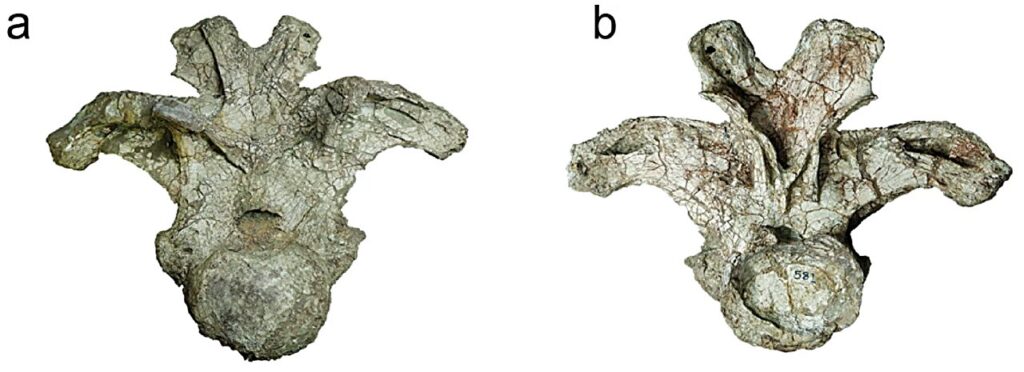
The key fossil is a well-preserved front dorsal vertebra, one of the bones that formed the animal’s backbone behind the neck. While previous discoveries in Thailand hinted that mamenchisaurids may have lived in the region, those remains were too fragmentary to establish a new species.
This vertebra proved different.
Researchers identified a distinctive Y-shaped arrangement of bony supporting ridges, known as laminae, that they say is unique among currently known mamenchisaurids. That unusual combination of features allowed the team to recognize the fossil as belonging to a previously undescribed dinosaur.
The discovery marks the first time a mamenchisaurid from Thailand has been formally named, providing an important new reference point for future fossil discoveries in the region.
CT scans revealed lightweight internal architecture
The fossil also preserved details hidden inside the bone.
Using CT scanning, the researchers found numerous small, irregularly shaped chambers within the vertebra, separated by thin bony partitions. These internal spaces match the air-filled structures seen in other mamenchisaurids.
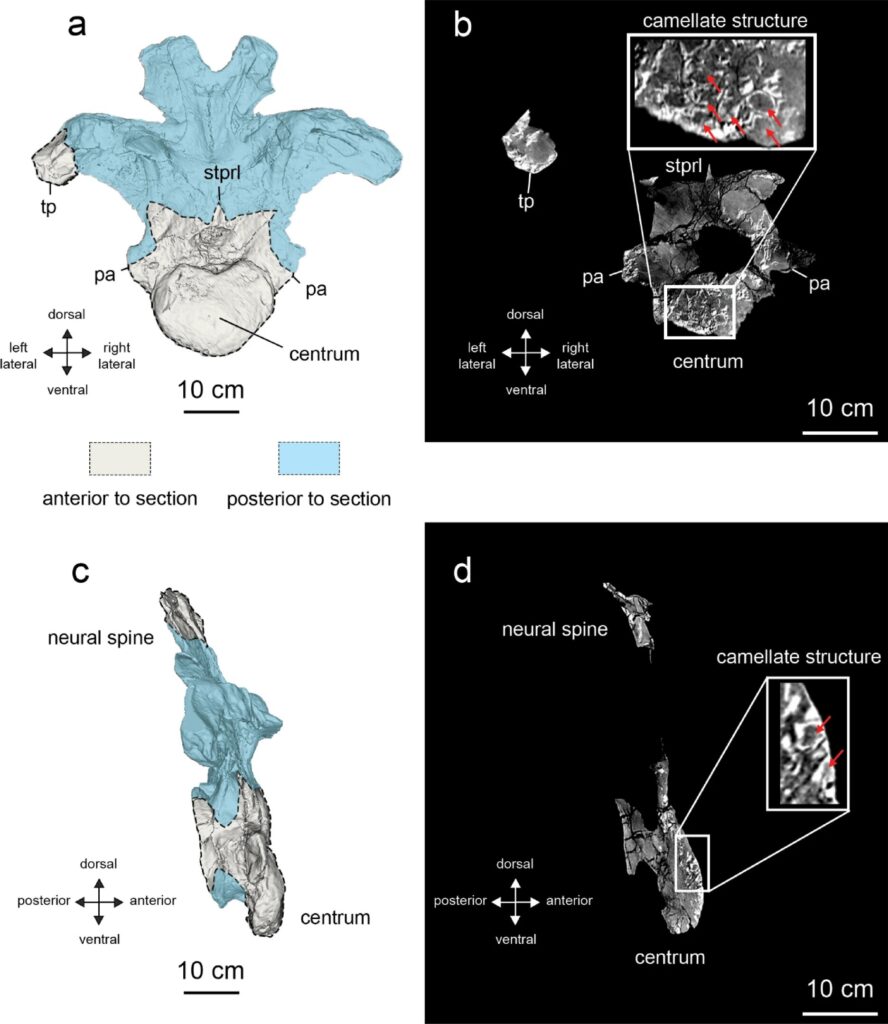
Such lightweight skeletal architecture helped reduce the weight of the animals’ massive skeletons while supporting their famously long necks. The internal chambers therefore provide another line of evidence linking the new species to the mamenchisaurid family.
Solving a long-standing geographic puzzle
For decades, most named mamenchisaurids have come from fossil-rich regions of China, particularly Sichuan and Xinjiang. That concentration of discoveries led to uncertainty over whether the group was largely confined to China or occupied a much broader area.
Recent fossil finds have begun to challenge that view.
The study notes that fragmentary vertebrae previously recovered from Thailand’s Khlong Min Formation represent the earliest evidence of mamenchisaurids in Southeast Asia. Additional fossils from the Phu Kradung Formation had also been suggested as belonging to the group, although they lacked enough diagnostic features for a formal identification.
Beyond Asia, researchers also point to a reassessment of fossils from Tanzania’s Tendaguru Formation. Bones once assigned to Janenschia robusta were reclassified as Wamweracaudia keranjei, demonstrating that mamenchisaurids also occurred in Africa.
Together, these discoveries are gradually revealing a much broader distribution than scientists once recognized.
Associated fossils remain uncertain
The excavation yielded more than just the newly described vertebra.
Researchers recovered additional disarticulated sauropod bones within a few yards of the main fossil. However, they stopped short of assigning those remains to Uragasaurus kalasinensis.
Because the bones were not found connected to one another and some displayed anatomical differences, the team concluded that they could not confidently determine whether they belonged to the same species. Instead, the researchers classified them more cautiously as associated sauropod material.
That conservative approach ensures the new species is defined only by fossils whose identity can be established with confidence.
Finding the dinosaur’s place on the evolutionary tree
To understand where the new dinosaur fits among its relatives, the researchers conducted a phylogenetic analysis using an existing published dataset.
Their analysis placed Uragasaurus kalasinensis as an early-branching member of Mamenchisauridae, indicating it represents one of the earlier-diverging lineages within the group rather than a more specialized later species.
That evolutionary position makes the fossil especially valuable because it helps fill gaps in scientists’ understanding of how mamenchisaurids diversified across eastern Asia.
One vertebra provides clues to ancient ecosystems
Although only a single vertebra formally defines the species, the discovery carries significance beyond naming a new dinosaur.
It offers fresh evidence that mamenchisaurids occupied mainland Southeast Asia during the Late Jurassic and strengthens the idea that dinosaur populations were connected across eastern Asia.
The researchers write, “The discovery of Uragasaurus kalasinensis expands the geographic distribution of Mamenchisauridae into mainland Southeast Asia and provides additional evidence that this clade was widespread across eastern Asia during the Late Jurassic.”
They add that the presence of closely related species in China suggests “possible faunal connections across the East Asian landmass during this time.”
Refining the age of the Phu Kradung Formation
The fossil also contributes to another scientific question: determining the age of Thailand’s Phu Kradung Formation.
The geological formation has been the subject of debate regarding exactly which time intervals it represents. According to the researchers, the discovery helps place the lower portion of the formation more firmly within the Upper Jurassic.
That improved dating gives paleontologists additional context for interpreting other fossils recovered from the same rocks and helps reconstruct the ecosystems that existed there millions of years ago.
While the discovery centers on a single bone, it demonstrates how even an isolated fossil can reshape scientific understanding. In this case, one vertebra has identified a new dinosaur species, confirmed the first named Thai member of an important sauropod family, and added another piece to the puzzle of how giant long-necked dinosaurs spread across ancient Asia during the Late Jurassic.