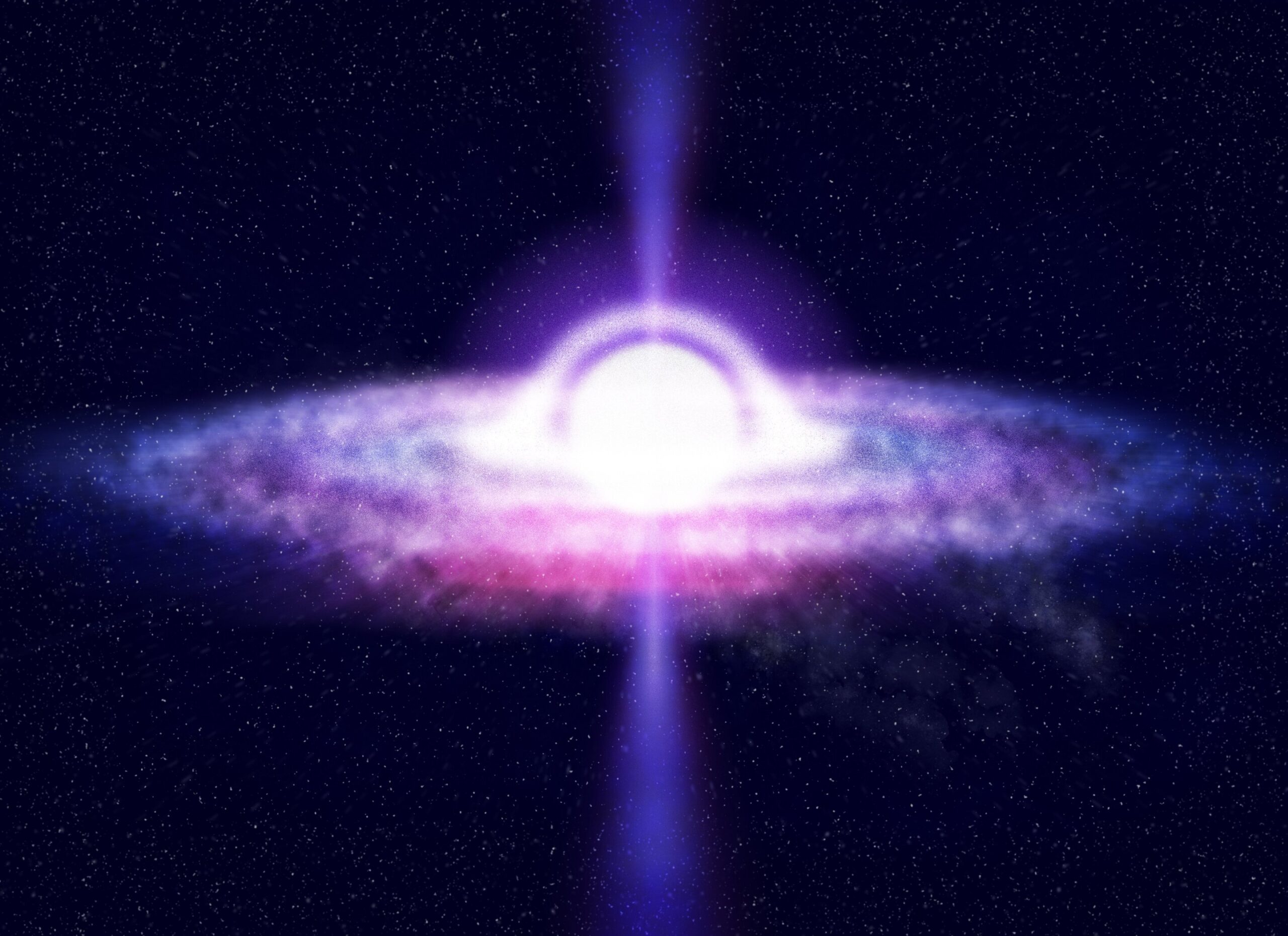
Imagine standing at the edge of the greatest mystery in the cosmos. Before you lies a region of space where gravity is so powerful that not even light—the fastest thing in the universe—can escape. Every beam of light, every atom of gas, every passing star that ventures too close disappears forever, swallowed by an invisible abyss.
For decades, black holes have captured the human imagination. They have inspired science fiction novels, blockbuster movies, and endless speculation. Some stories portray them as cosmic portals that transport travelers across the universe. Others imagine them as doorways to entirely new universes or mysterious white holes that spit matter back into space.
But what does modern science actually say?
Could a black hole really become a white hole? Could the matter that falls into a black hole emerge somewhere else? Might black holes give birth to entirely new universes? Or are these fascinating ideas simply mathematical possibilities with no connection to reality?
The truth is both exciting and humbling. Black holes themselves are very real. Astronomers have observed them indirectly for decades, detected their collisions through gravitational waves, and even captured images of the shadows cast by supermassive black holes. White holes, however, have never been observed. New universes born inside black holes remain speculative ideas that scientists continue to explore through theoretical physics.
This article takes you on a journey from established science to the fascinating frontier of modern cosmology. Along the way, we’ll separate scientific fact from educated speculation while discovering why black holes remain one of the greatest unsolved mysteries in the universe.
What Exactly Is a Black Hole?
A black hole is a region of space where gravity becomes so intense that nothing—not even light—can escape once it crosses a boundary known as the event horizon.
Contrary to popular belief, a black hole is not an enormous hole in space. It is an object created when an enormous amount of mass becomes compressed into an incredibly small volume.
According to Albert Einstein’s theory of general relativity, mass bends the fabric of spacetime. Every object with mass curves spacetime around it. Earth bends spacetime, which is why the Moon orbits our planet. The Sun bends spacetime even more strongly, keeping all the planets in their orbits.
A black hole represents the ultimate example of this phenomenon.
The curvature becomes so extreme that every possible path leads inward. Crossing the event horizon means there is no path back out.
It is not because something physically blocks the escape.
Rather, spacetime itself becomes so warped that escape becomes impossible.
How Do Black Holes Form?
Most known black holes begin their lives as massive stars.
Stars shine because nuclear fusion in their cores produces enormous outward pressure. This pressure balances gravity, preventing the star from collapsing.
Eventually, however, every star runs out of nuclear fuel.
For stars like our Sun, this leads to a relatively gentle ending as a white dwarf.
But stars several times more massive than the Sun experience a much more dramatic fate.
When fusion stops, gravity wins.
The core collapses inward within seconds.
The outer layers explode outward in a spectacular supernova.
If the remaining core is massive enough, nothing can stop the collapse.
Matter compresses beyond the limits supported by neutron pressure.
A black hole is born.
The entire mass of several Suns becomes packed into an extraordinarily tiny region.
Different Types of Black Holes
Black holes come in several sizes.
Stellar-mass black holes typically contain between a few and several dozen times the mass of the Sun. These form from collapsing massive stars.
Intermediate-mass black holes appear to fill the gap between stellar and supermassive black holes. Astronomers have found growing evidence that these objects exist, although they remain relatively rare.
Supermassive black holes are true giants.
They can contain millions or even billions of times the Sun’s mass.
Nearly every large galaxy appears to host one at its center.
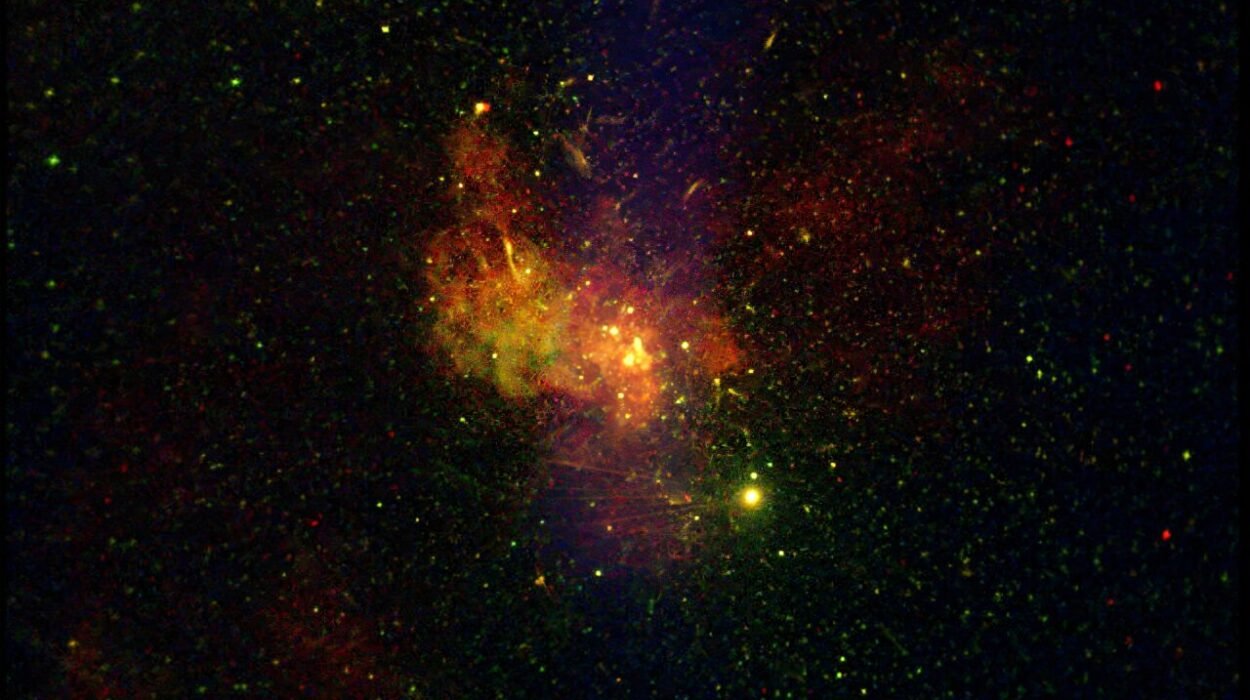
Our own Milky Way contains a supermassive black hole called Sagittarius A*.
How these enormous objects formed remains one of astronomy’s greatest mysteries.
Scientists suspect they grew through mergers, rapid gas accretion, or perhaps even formed from unusually massive clouds in the early universe.
What Happens Near a Black Hole?
Far from a black hole, gravity behaves much like gravity from any other object with the same mass.
If the Sun were magically replaced by a black hole with identical mass, Earth’s orbit would remain nearly unchanged.
The major difference appears only when approaching very close.
Gravity increases dramatically.
Nearby gas heats to millions of degrees while spiraling inward.
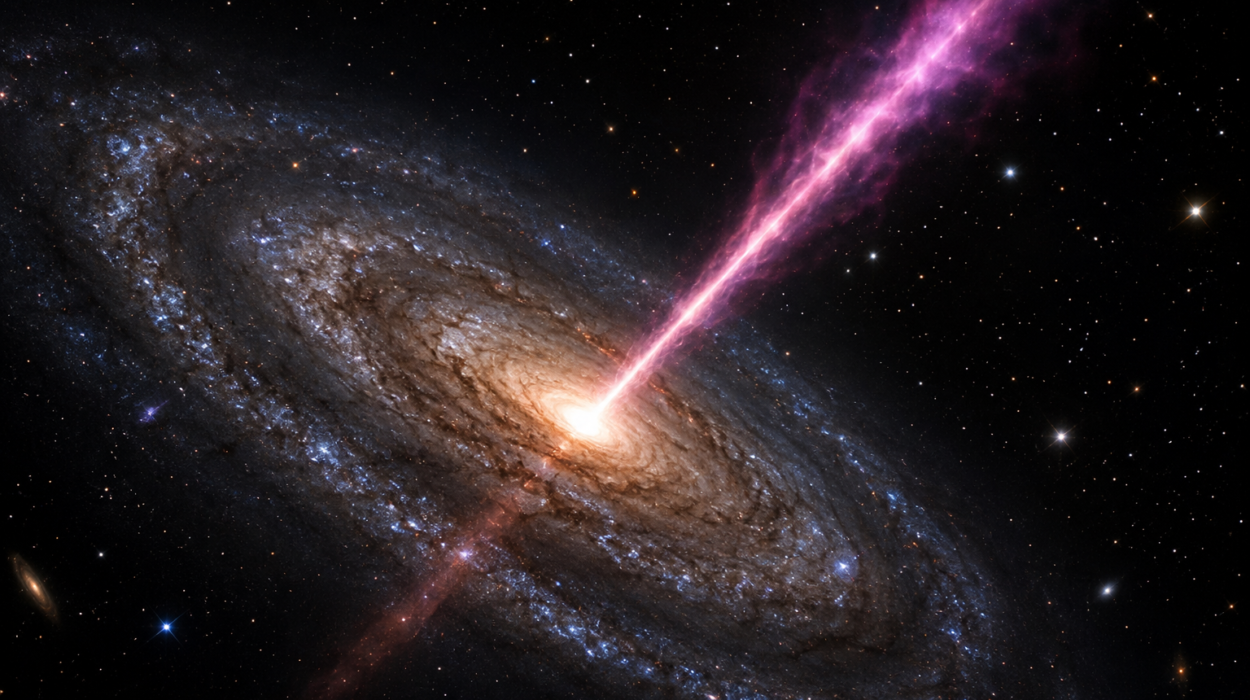
This glowing material forms an accretion disk, often becoming brighter than entire galaxies.
Powerful magnetic fields launch enormous jets extending thousands of light-years into space.
Ironically, black holes themselves emit no light.
Much of the spectacular radiation associated with them actually comes from the extremely hot material falling toward them.
The Event Horizon
The event horizon is often described as the “point of no return.”
Once an object crosses this invisible boundary, escape becomes impossible.
Interestingly, someone falling through the event horizon of a sufficiently large black hole might notice nothing unusual at that exact moment.
There is no solid surface.
No dramatic flash.
No cosmic wall.
The boundary exists because of geometry rather than physical structure.
To distant observers, however, things appear differently.
Because gravity slows time near a black hole, an object approaching the event horizon appears to move increasingly slowly.
Its light becomes stretched into longer wavelengths.
Eventually it fades from view.
From far away, the object seems to freeze near the horizon forever.
This strange effect reflects one of Einstein’s most astonishing predictions about spacetime.
What Lies at the Center?
According to classical general relativity, all matter eventually reaches a singularity.
A singularity is a point where density becomes infinite and known physical laws break down.
Most physicists believe real singularities probably do not exist in nature.
Instead, they likely signal that general relativity becomes incomplete under such extreme conditions.
Quantum effects almost certainly become important.
Unfortunately, scientists do not yet possess a complete theory combining quantum mechanics with gravity.
Until such a theory exists, the true interior of black holes remains unknown.
The Discovery of Black Holes
The concept of objects so massive that even light could not escape dates back to the eighteenth century.
However, these early ideas were based on Newtonian gravity and differed from today’s understanding.
Everything changed in 1915 when Albert Einstein introduced general relativity.
Only months later, Karl Schwarzschild found the first exact solution describing what we now recognize as a non-rotating black hole.
For decades many scientists considered black holes mathematical curiosities rather than real objects.
That changed during the twentieth century as astronomical evidence accumulated.
Today black holes rank among the best-supported predictions of modern physics.
Seeing the Invisible
You cannot photograph a black hole directly because it emits no light.
Instead, astronomers observe its effects.
Stars orbit invisible massive objects.
Gas spirals inward while becoming extremely hot.
Gravitational waves reveal black hole mergers.
In 2019, the Event Horizon Telescope collaboration released humanity’s first image of a black hole’s shadow.
In 2022, another image revealed the shadow surrounding Sagittarius A*, the supermassive black hole at the center of our galaxy.
These remarkable achievements confirmed decades of theoretical predictions.
Enter the White Hole
If black holes swallow matter, could nature contain objects that only expel matter?
This idea leads to one of theoretical physics’ most fascinating concepts: the white hole.
A white hole is essentially the mathematical opposite of a black hole.
Nothing can enter.
Matter and light can only emerge.
If black holes represent one-way entrances, white holes represent one-way exits.
Unlike black holes, however, no confirmed white hole has ever been observed.
Their existence remains purely theoretical.
Where Did the Idea Come From?
White holes emerge naturally from certain mathematical solutions to Einstein’s equations.
When physicists extended the Schwarzschild solution describing black holes, another region appeared.
This region behaved like a time-reversed black hole.
Instead of trapping everything forever, it expelled everything while allowing nothing to enter.
Mathematically, the solution worked.
Physically, whether such objects could actually exist remained another question entirely.
Most physicists suspect that if white holes do exist, they are probably far more complicated than these idealized mathematical models.
Why Haven’t We Found One?
If white holes exist, why haven’t astronomers seen them?
Several possibilities exist.
Perhaps white holes never formed.
Perhaps they formed only during the early universe.
Perhaps they are extremely unstable.
Or perhaps they simply do not exist in reality.
Unlike black holes, whose existence is supported by extensive observations, white holes currently have no direct observational evidence.
That does not prove they are impossible.
Science often investigates possibilities before observations become available.
However, extraordinary claims require extraordinary evidence.
So far, no convincing evidence supports the existence of white holes.
Could Black Holes Turn Into White Holes?
This idea has gained attention in recent years.
Some theoretical physicists have proposed that quantum gravity effects might eventually transform black holes into white holes.
The basic concept goes something like this.
Instead of collapsing forever toward a singularity, matter reaches an extreme density where quantum effects become dominant.
These effects could halt the collapse.
Eventually, the black hole might “bounce.”
Rather than continuing inward, spacetime could reverse direction, creating a white hole.
This remains highly speculative.
Scientists do not yet possess the complete quantum gravity theory needed to verify or reject such models.
Nevertheless, they represent serious scientific research rather than science fiction.
The Role of Quantum Gravity
General relativity describes gravity extremely well.
Quantum mechanics successfully explains microscopic particles.
Unfortunately, these two theories become difficult to reconcile under the extreme conditions inside black holes.
Quantum gravity aims to unite them.
Several candidate theories exist.
Loop quantum gravity proposes that spacetime itself possesses a tiny discrete structure.
String theory suggests fundamental strings replace point-like particles.
Other approaches explore entirely different mathematical frameworks.
Some loop quantum gravity models naturally predict black-hole-to-white-hole transitions.
However, these predictions remain theoretical.
Experimental confirmation remains absent.
Hawking Radiation Changes Everything
In the 1970s, Stephen Hawking made one of the greatest discoveries in theoretical physics.
Black holes are not completely black.
Quantum effects near the event horizon allow black holes to emit tiny amounts of radiation.
This process became known as Hawking radiation.
As radiation escapes, black holes slowly lose mass.
Over incredibly long timescales, they could eventually evaporate entirely.
For stellar-mass black holes, this process takes vastly longer than the current age of the universe.
Hawking radiation raised profound questions.
If black holes eventually disappear, what happens to all the information that fell inside?
This puzzle became known as the black hole information paradox.
It remains one of theoretical physics’ greatest unsolved problems.
Could Information Escape?
Some proposed white-hole models attempt to solve the information paradox.
Instead of information disappearing forever, perhaps it eventually reemerges through a white hole after unimaginably long periods.
This idea remains speculative.
Many other proposed solutions also exist.
Some suggest information remains encoded on the event horizon.
Others argue it escapes gradually through Hawking radiation.
Still others invoke holographic principles relating gravity to quantum information.
Scientists continue debating these possibilities vigorously.
No consensus has yet emerged.
Wormholes Enter the Conversation
Whenever black holes and white holes are discussed, wormholes inevitably appear.
A wormhole is a hypothetical shortcut connecting distant regions of spacetime.
Some mathematical solutions suggest one end could resemble a black hole while the other resembles a white hole.
Science fiction often portrays wormholes as cosmic tunnels for rapid interstellar travel.
Unfortunately, known wormhole solutions appear highly unstable.
They would collapse almost instantly unless supported by forms of matter with unusual properties.
Whether stable traversable wormholes can exist remains unknown.
No observational evidence currently supports their existence.
Could a Black Hole Lead to Another Universe?
Among all black-hole mysteries, perhaps none is more captivating.
Some physicists have wondered whether the interior of a black hole could become the beginning of an entirely new universe.
Imagine matter collapsing toward incredible densities.
Instead of ending in a singularity, perhaps a new expanding spacetime forms.
From inside, observers would perceive a Big Bang.
From outside, observers would simply see a black hole.
In this picture, every black hole could potentially contain its own universe.
This idea remains deeply speculative.
No experiment has confirmed it.
Still, it represents a fascinating possibility explored within theoretical cosmology.
Is Our Universe Inside a Black Hole?
Taking the previous idea one step further leads to an extraordinary question.
Could our own universe exist inside a black hole belonging to another universe?
Some cosmological models suggest similarities between black hole interiors and expanding universes.
Certain mathematical relationships appear intriguing.
However, similarities do not constitute evidence.
Currently, there is no observational proof that our universe exists inside another universe’s black hole.
It remains an interesting hypothesis rather than an accepted scientific theory.
Baby Universes
Some theoretical physicists have proposed that black holes might create “baby universes.”
These hypothetical universes would branch away from the parent universe through quantum gravitational processes.
Each baby universe could possess different physical constants.
Different particle masses.
Different strengths for fundamental forces.
Different cosmic histories.
This concept intersects with broader ideas about the multiverse.
Again, it remains speculative.
Testing such hypotheses presents enormous challenges because these hypothetical universes would likely remain causally disconnected from our own.
What Do Astronomers Think?
Astronomers generally distinguish carefully between observation and speculation.
Black holes unquestionably exist.
Gravitational waves confirm their mergers.
Stars orbit invisible supermassive objects.
Accretion disks emit enormous radiation.
Event Horizon Telescope images reveal their shadows.
White holes remain hypothetical.
Black-hole-to-white-hole transitions remain speculative.
Universes inside black holes remain theoretical possibilities rather than established facts.
Scientists continue investigating these ideas because exploring possibilities often leads to deeper understanding, even when initial ideas eventually prove incorrect.
Why Theoretical Ideas Matter
Some people dismiss speculative physics as meaningless.
History suggests otherwise.
Black holes themselves were once dismissed as unrealistic mathematics.
Gravitational waves remained theoretical for a century before detection.
The Higgs boson existed only in equations until experiments confirmed it.
Carefully developed theoretical ideas often guide future discoveries.
Of course, many theories eventually prove incorrect.
That is part of science.
Ideas survive only when supported by evidence.
The willingness to explore bold possibilities while demanding rigorous proof remains one of science’s greatest strengths.
The Limits of Our Knowledge
Black holes sit at the boundary of human understanding.
General relativity predicts singularities.
Quantum mechanics predicts uncertainty.
Neither theory alone fully explains what happens under the most extreme conditions.
This tells scientists something important.
Our understanding remains incomplete.
Future discoveries may dramatically change our picture of black holes.
They may reveal new physics.
They may confirm entirely unexpected ideas.
Or they may show that today’s speculations were mistaken.
Science welcomes every possibility, provided evidence ultimately decides.
What Future Discoveries May Reveal
The coming decades promise exciting advances.
More powerful gravitational-wave observatories will detect many more black hole mergers.
Improved telescopes will image black holes with greater detail.
Quantum experiments may deepen understanding of spacetime.
Future theories of quantum gravity could finally explain black hole interiors.
Astronomers may even discover entirely new classes of compact objects.
Every new observation brings us closer to answering questions that once seemed forever beyond reach.
Why Black Holes Continue to Inspire Us
Few cosmic objects capture imagination quite like black holes.
They represent both endings and beginnings.
They destroy stars while revealing the deepest laws of nature.
They challenge our understanding of space, time, matter, and reality itself.
Even if white holes never exist, and even if black holes never create new universes, exploring these ideas pushes science forward.
The search itself expands human knowledge.
Every mystery encourages better observations, deeper mathematics, and more creative thinking.
In that sense, black holes are already gateways.
Not necessarily to other universes.
But to new understanding.
Conclusion
Black holes are among the most extraordinary objects ever discovered. Once regarded as little more than strange mathematical predictions, they are now firmly established as real features of the universe. Their immense gravity shapes galaxies, powers brilliant cosmic phenomena, and offers scientists an unparalleled laboratory for testing the laws of physics under the most extreme conditions imaginable.
Beyond these well-established facts lies a realm of exciting scientific speculation. White holes, black-hole-to-white-hole transitions, wormholes, baby universes, and the possibility that black holes might give birth to entirely new universes are all ideas being explored within theoretical physics. Some arise naturally from Einstein’s equations, while others emerge from attempts to combine general relativity with quantum mechanics. Yet none of these possibilities has been confirmed by observations.
This distinction is important. Science advances by asking bold questions, but it accepts answers only when supported by evidence. Today, black holes are real, white holes remain hypothetical, and new universes inside black holes remain fascinating but unproven ideas. Future discoveries may support some of these theories, reject them entirely, or reveal possibilities that no one has yet imagined.
The greatest lesson black holes offer may be one of humility. Every time humanity believes it has nearly understood the universe, nature reveals another layer of astonishing complexity. Black holes remind us that the cosmos still holds profound secrets waiting to be uncovered—and that the journey toward understanding may be every bit as remarkable as the answers themselves.