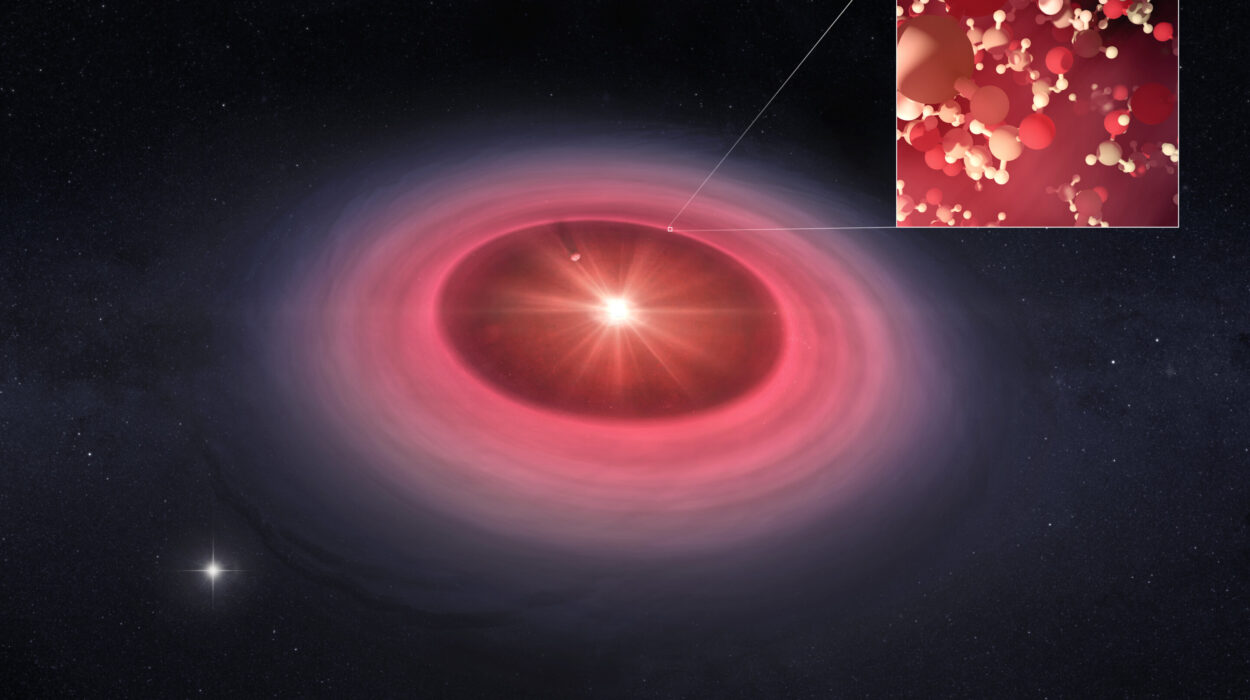
The universe often feels like a vast, empty void, but every so often, astronomers pull back the curtain on a neighbor that has been hiding in plain sight. Just 10.7 light years away—a mere stone’s throw in the cosmic scale—sits a small, crimson sun known as GJ 887. This red dwarf star is not just a lonely point of light; it is the anchor of a bustling planetary system that is suddenly looking much more crowded and much more interesting than we ever dared to imagine.
For years, scientists have kept a close eye on this nearby star. Back in 2020, research confirmed that two worlds were dancing around it, but there were whispers of something more—a faint, rhythmic tugging in the data that suggested a third sibling might be lurking in the shadows. Now, a new study published in Astronomy and Astrophysics has turned those whispers into a chorus of confirmation. By diving deep into the movements of the star, researchers have not only verified the third planet but discovered a fourth, revealing a solar system that rivals our own in its complexity.
A Ghostly Signal Becomes a World
The journey to this discovery began with a mystery. Previous observations had identified two non-transiting exoplanets with brisk orbits of 9 and 21 days. These worlds are fast, hugging their star tightly. However, there was a nagging signal at the 50-day mark. At the time, the data was frustratingly ambiguous. Astronomers couldn’t tell if the signal was a true planet or simply the “noise” of the star’s own magnetic activity. Red dwarfs are notorious for being temperamental, often emitting flares that can mimic the signature of a planet.
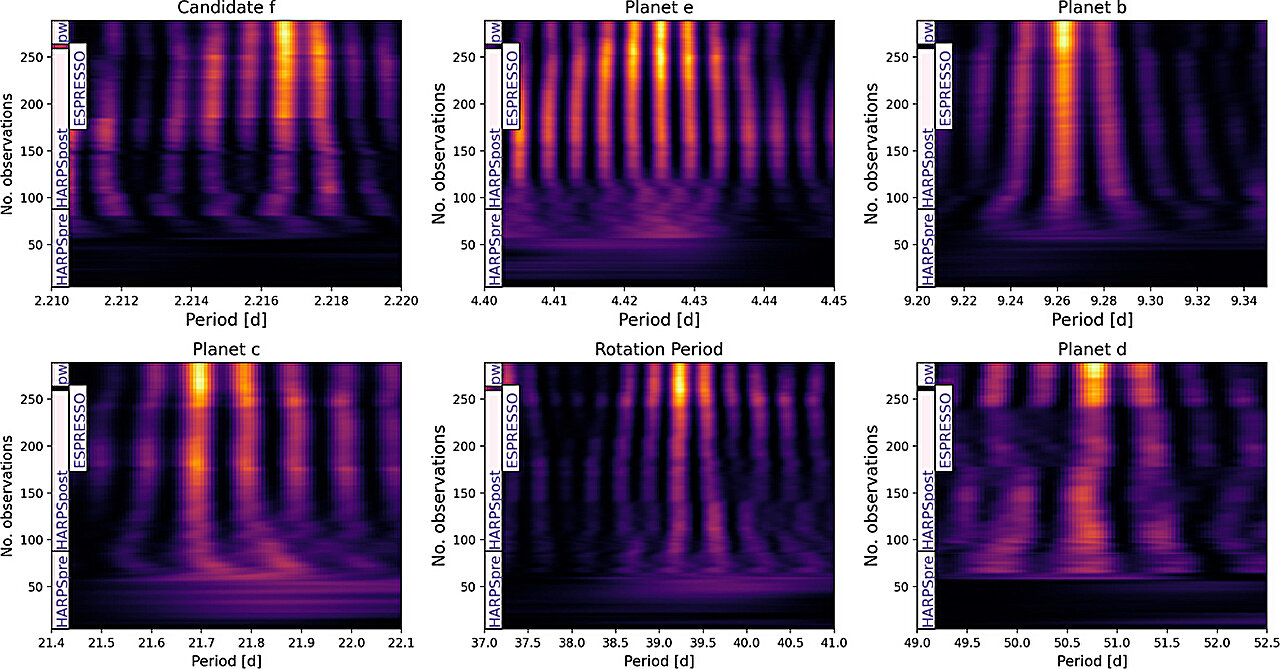
To solve the puzzle, an international team of researchers decided to throw the kitchen sink of astronomical technology at GJ 887. They combined fresh radial velocity measurements from the High Accuracy Radial velocity Planet Searcher (HARPS) and the ESPRESSO spectrograph with massive amounts of archival data. By looking at how the star wobbled in response to the gravity of its satellites, and cross-referencing that with photometric data from the TESS and ASAS surveys, they were able to filter out the star’s natural “jitter.”
The result was a breakthrough. The team confirmed that GJ 887 is home to at least four distinct planets, with orbital periods of 4.4, 9.2, 21.8, and 50.8 days. The once-uncertain 50-day signal was real. Named GJ 887 d, this world has now taken center stage as one of the most provocative targets in modern astronomy.
Life in the Crimson Glow
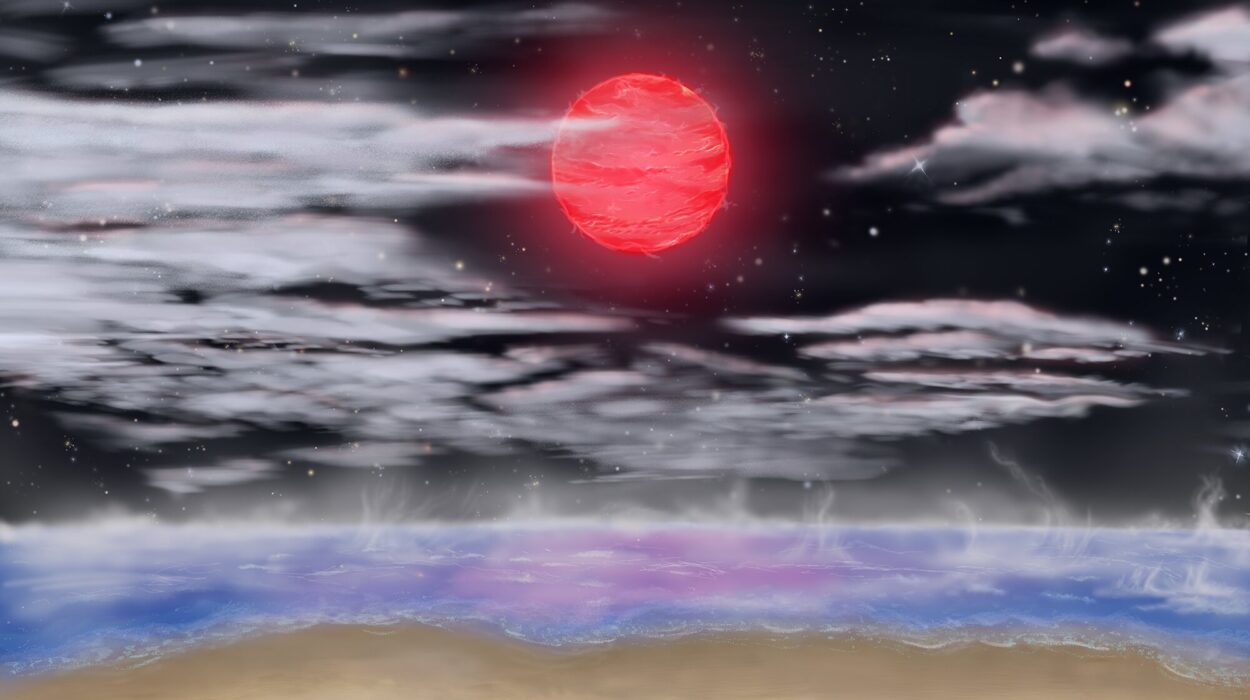
What makes GJ 887 d so special isn’t just that it exists, but where it lives. The study confirms that this planet sits squarely within the habitable zone, the “Goldilocks” region where the temperature is just right for liquid water to pool on a planet’s surface. Because red dwarf stars are cooler and smaller than our sun, their habitable zones are much closer to the stellar surface. At a 50.8-day orbit, GJ 887 d sits in that sweet spot, making it the second closest planet in a habitable zone to our solar system, trailing only the famous Proxima Centauri b.
But what kind of world is it? The data suggests GJ 887 d is a super-Earth, boasting a minimum mass of more than six Earth masses. Because the planet does not pass directly in front of its star from our perspective, researchers don’t have an independent radius estimate yet. This leaves the planet’s true face a bit of a mystery. Scientists speculate it could fall into one of three categories: a dense, rocky world, a lush water-world, or perhaps a puffy sub-Neptune shrouded in a thick, gassy envelope.
The intrigue doesn’t stop at four planets. The researchers also caught a fleeting glimpse of a fifth signal—a tiny pulse occurring every 2.2 days. While they couldn’t confirm it yet, they suspect it might be a sub-Earth-mass planet. If future high-precision data proves its existence, it would complete a diverse family of worlds ranging from tiny rocky fragments to massive super-Earths.
The Next Great Frontier
The discovery of this multi-planet system is a major milestone, but for astronomers, it is only the beginning of the story. GJ 887 is a “quiet” star, meaning it doesn’t suffer from the violent radiation storms that often strip the atmospheres off planets orbiting other red dwarfs. This stability, combined with the star’s brightness and its proximity to our sun, makes the system a perfect laboratory for the next generation of space exploration.
We are entering an era where we no longer just want to find planets; we want to see them. GJ 887 d is now a top-tier candidate for direct imaging missions. Future projects like the Habitable Worlds Observatory (HWO) and the Large Interferometer For Exoplanets (LIFE) are being designed specifically to peer into the atmospheres of worlds like this. Scientists will be looking for biosignatures—chemical fingerprints in the air that could indicate the presence of life.
This research matters because it brings us one step closer to answering the ultimate question of whether we are alone. By identifying a stable, four-planet system right in our galactic backyard, scientists have provided a roadmap for where to point our most powerful future telescopes. GJ 887 d represents a rare opportunity to study a habitable zone world in unprecedented detail, offering a glimpse into a solar system that is both alien and hauntingly familiar.
Study Details
C. Hartogh et al, RedDots: Multiplanet system around M dwarf GJ 887 in the solar neighborhood, Astronomy & Astrophysics (2026). DOI: 10.1051/0004-6361/202554984