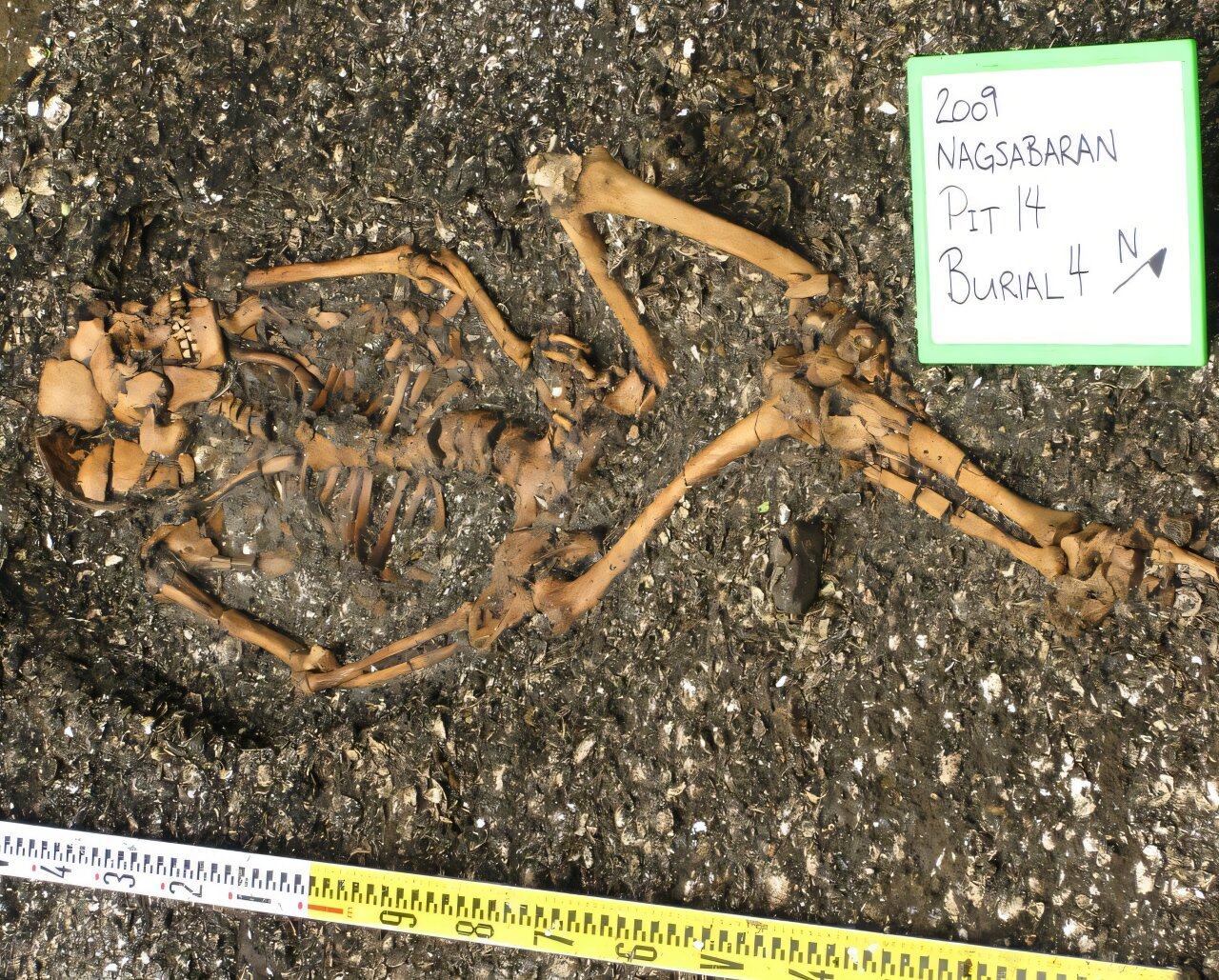
The humid air of the Cagayan Valley in the northern Philippines has long held the secrets of those who navigated the transition from stone to metal. Within the Nagsabaran shell midden site on Luzon Island, the earth recently gave up the story of a young man who lived nearly two thousand years ago, during a time of radical social change known as the Metal Period (approximately 2000–1800 BP). His skeleton, cataloged simply as Burial 4, was initially a medical curiosity because his left hip was frozen—a condition called ankylosis where the femur and hip socket fuse into a single block of bone.
However, a new follow-up study led by Dr. Chloe Boucher and Dr. Melandri Vlok has peeled back another layer of this man’s life. By re-examining his remains, they discovered that his physical struggle was not limited to a fused joint. He was also battling a silent, systemic predator that is often associated with sailors on the high seas, but was actually a recurring shadow in the ancient Asia-Pacific tropics: scurvy.
A World in Motion and a Body at a Standstill
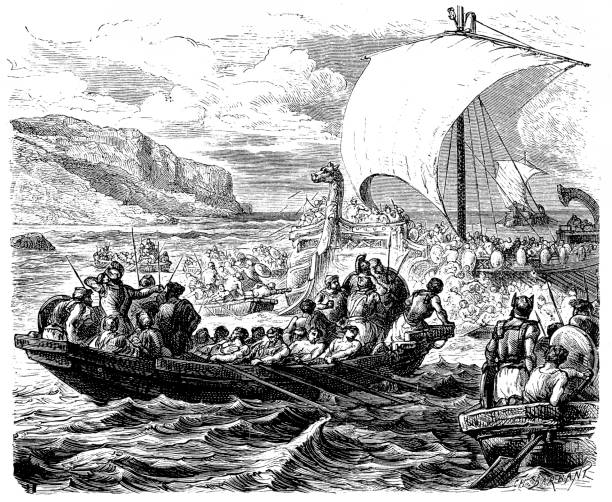
To understand the life of the man in Burial 4, one must understand the shifting world of the Metal Period. Unlike the earlier Neolithic inhabitants—small farming communities with limited trade—the people of the Metal Period were part of a booming maritime network. They traded in bronze, iron, and Indo-Pacific glass beads, reaching across the seas to China, India, and Oceania. This was an era of expanding worldviews and “new knowledge regarding health and disease.”
Yet, while his community looked toward the horizon, the man in Burial 4 was physically tethered to the earth. His hip ankylosis would have rendered him partially immobile, likely during his adult life. In death, he was treated differently than his peers. While other adults at the site were buried with ceramics, metal artifacts, or animal bone food offerings, he was laid to rest with no grave goods at all. Curiously, he was placed just centimeters above the remains of the earliest domesticated dog burial in the Philippines, suggesting a complex, perhaps symbolic, relationship with the animals of his community.
The Chemistry of a Crumbling Skeleton
The mystery that puzzled researchers was why this man’s bones looked the way they did. While his fused left hip explained the lack of bone remodeling in that specific leg, his right leg—the “healthy” one—also showed signs of systemic failure. The answer lay in a molecular crisis: a severe Vitamin C deficiency.
Scurvy is a micronutrient deficiency that strikes at the very foundation of the human frame. Vitamin C is the essential catalyst for collagen production. Without it, procollagen cannot mature into stable collagen, the “glue” required for forming connective tissue and allowing bones to repair and remodel themselves. As Dr. Vlok notes, you don’t have to be starving to suffer this fate. A diet over-reliant on rice—which contains no detectable Vitamin C—can provide enough calories to survive while leaving the body’s internal architecture to collapse. Even the way food was prepared, such as boiling, would have caused the water-soluble vitamin to leach out and vanish.
Traces of Pain in the Silence of Bone
Detecting scurvy in an ancient skeleton requires looking for the evidence of internal trauma. When the body lacks Vitamin C, blood vessels become fragile. The simple act of muscle movement can cause hemorrhaging. When blood clots between the bone and the periosteum (the membrane surrounding the bone), the body attempts to heal by forming new connective tissue, leaving behind telltale scurvy lesions.
In the case of Burial 4, these lesions were localized in a heartbreakingly specific way. Because his ankylosis limited his mobility, he did not have the typical lesions on his limbs that an active person might develop. Instead, the signs were concentrated on his skull and jaw. The constant, necessary motion of chewing and speaking caused repeated bleeding in his facial tissues, marking his bone with the signature of his deficiency. This diagnosis finally explained the “holistic impairment” seen across his entire skeleton; without Vitamin C, his bone cells simply lost the ability to form new tissue and repair daily wear and tear.

A Legacy of Ancient Compassion
This research matters because it transforms our understanding of ancient survival. We often view the ancient world as a place where the “unfit” were left behind, but the skeleton of Burial 4 tells a story of profound bioarchaeological care.
A man with a fused hip and advanced scurvy could not have survived on his own. His condition would have caused swollen gums, anemia, and osteoporosis, making every movement agonizing. To keep him alive, his community would have had to provide immense care: preparing soft foods he could chew with his hemorrhaging jaw and “regularly repositioning his limbs” to prevent the agony of pressure sores.
By identifying scurvy alongside physical disability, researchers are proving that the ancient tropics were not just sites of trade and expansion, but places where complex health challenges were met with human intervention. It reminds us that the history of humanity is not just a story of the healthy and the strong, but a long, documented record of how we have looked after one another in our most fragile moments.
Study Details
Chloe Boucher et al, Nutritional Deficiency Contributing to Physical Impairment of an Individual in the Metal Period Philippines (~2000–1800 BP, International Journal of Osteoarchaeology (2026). DOI: 10.1002/oa.70063