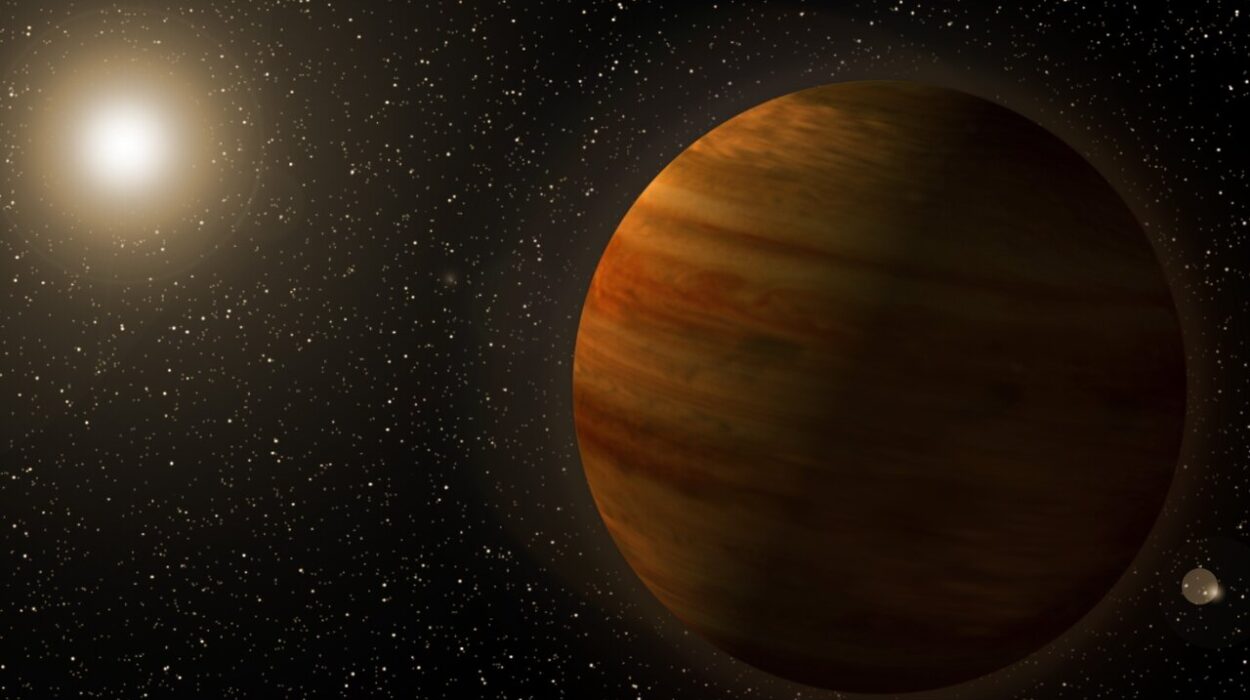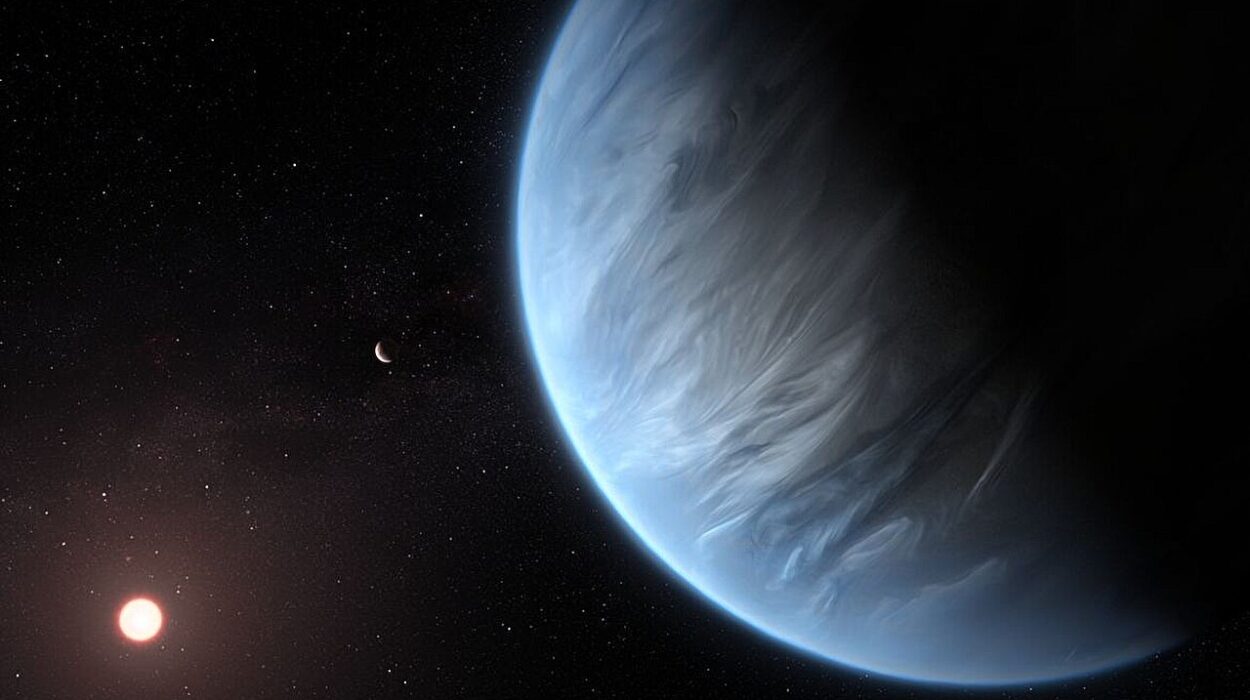
In the silent, freezing reaches of the deep cosmos, a massive star once drifted in a gravitational dance with a companion it could not see. It was a partnership destined for a violent end. Millions of light-years away from Earth, the invisible partner—a black hole of immense power—began to exert a terminal pull on its stellar neighbor. What followed was not a quick collision, but a systematic, agonizing dismantling of a giant. Scientists watching from our small blue planet would later describe the scene in surprisingly domestic terms: the black hole had shredded the massive star as if it were “preparing a snack for lunch.” This was the birth of a cosmic mismatch so powerful it challenged our understanding of how the universe’s most mysterious objects feed and grow.
The Night the Sky Flared Blue
The story of this discovery began at the Palomar Observatory in California, where the Zwicky Transient Facility scanned the heavens for anything that flickered or flared. Anna Ho, an assistant professor of astronomy at Cornell University, was the first to spot the anomaly. Almost immediately after the light from this distant catastrophe reached Earth, she identified a spectacular flash designated AT2024wpp. To the team of astronomers who would spend the coming months obsessed with its every flicker, it earned a more agile nickname: the Whippet.
From the very first moments, the Whippet was different. It wasn’t the slow, red simmer of a typical dying star. Instead, the astronomers realized right away that the event might be a Luminous Fast Blue Optical Transient, or LFBOT. These are the “wild cards” of the visual universe—rare, poorly understood, and incredibly brief events associated with the total destruction of stars. To confirm their suspicions, the team had to move with a speed that rivaled the explosion itself. Within a single day, they scrambled for data from the Liverpool Telescope in the Canary Islands and NASA’s Swift satellite. The results were startling. The object was intensely blue and screaming with X-rays, the calling cards of a truly exotic beast.
A Power Beyond Imagination
As the data poured in, the true scale of the Whippet began to reveal itself. The team needed to know exactly how far away this flash had occurred to calculate its true strength. When co-authors R. Michael Rich at UCLA and Yu-Jing Qin at Caltech provided the distance measurements, the numbers were staggering. This was no ordinary stellar death. The resulting explosion stands as one of the most powerful cosmic events ever recorded in human history. For a brief, brilliant window of time, the energy being released reached 400 billion times that of our sun. It didn’t just outshine its neighbors; it exceeded the brightness of even the most powerful known supernovae.
Associate Professor Daniel Perley of Liverpool John Moores University, who presented the findings at the American Astronomical Society’s annual meeting in Phoenix, summarized the awe of the moment. “We discovered what we think is a black hole merging with a massive companion star, shredding it into a disk that feeds the black hole,” he told the gathered scientists. “It’s a rare and awe-inspiring phenomenon.” While astronomers have seen black holes “snack” on stars before in what are known as Tidal Disruption Events, they had never witnessed one on such a gargantuan scale. The massive star hadn’t just been swallowed; it had been “torn up” and devoured bit by bit by the black hole’s unrelenting gravity.
The Violent Physics of the Feast
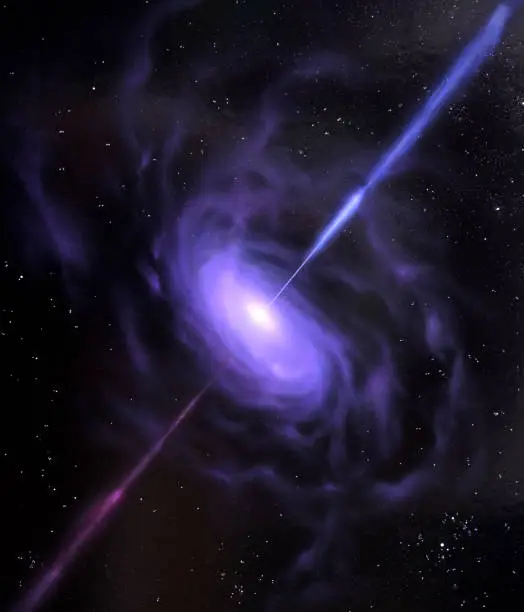
The mechanics of this cosmic meal were as complex as they were violent. As the black hole’s gravity pulled the star apart, the stellar remains didn’t fall straight in. Instead, they formed a swirling disk of doomed material. As this gas spiraled toward the center, friction and gravity heated it to extreme temperatures, releasing a torrent of X-ray radiation. This heat generated a powerful “wind” of gas that acted like a cosmic snowplow. This wind crashed into material that the star had shed in its final years before the ultimate demise, creating the luminous blue and ultraviolet glow that Anna Ho had first detected.
This collision sent a powerful shock-wave racing outward at a staggering one fifth the speed of light. It plowed through a dense bubble of gas surrounding the system, creating radio and millimeter signals that the team tracked with precision. However, just as suddenly as it had begun, the frenzy started to fade. After about half a year, the shock-wave reached the edge of the gas bubble left behind by the star and simply “fizzled out.” The feast was ending, but the mystery was only beginning to deepen.
Shadows in the Fading Light
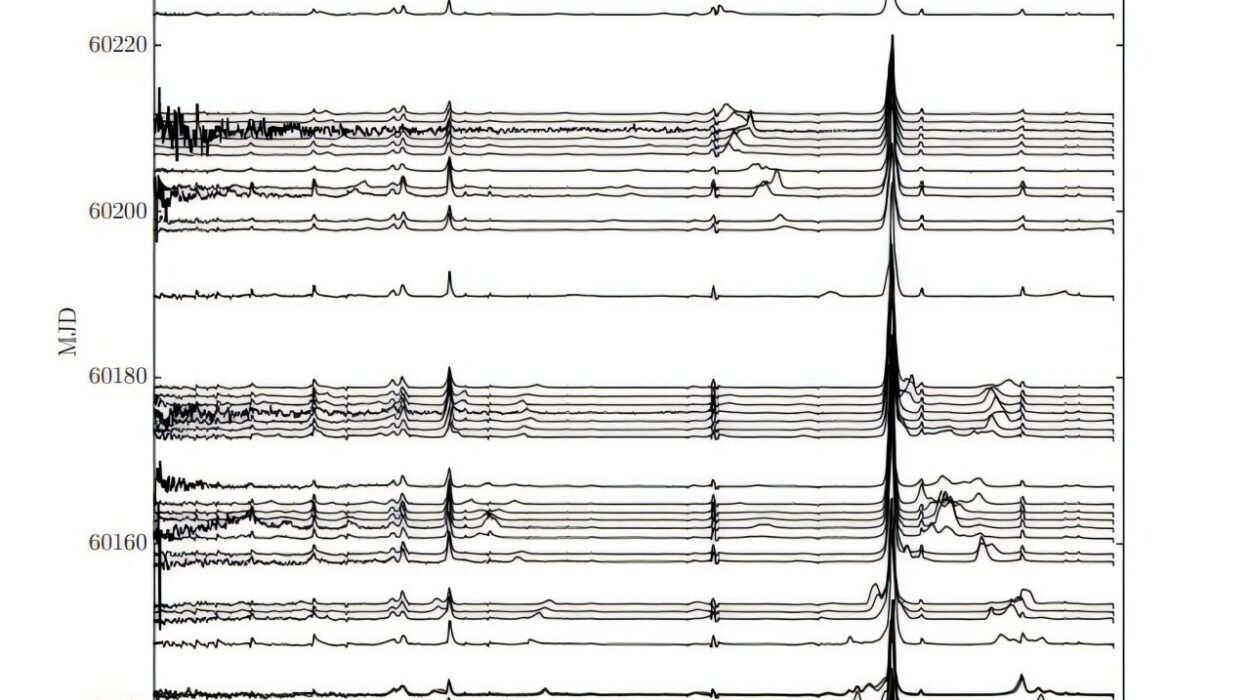
As the initial brilliance of the Whippet began to dim, the team turned the world’s most powerful eyes toward it, including the Keck Observatory, the Magellan Observatory, and the Very Large Telescope. For the first month, the explosion had been so bright and pure that it was devoid of any recognizable chemical signatures—it was just raw, blinding energy. But as the event faded, weak signatures of hydrogen and helium gas began to emerge from the wreckage.
The behavior of this helium was baffling. It was moving along the line of sight toward Earth at more than 6,000 kilometers per second. This suggested that something “solid”—a densely bound structure—had somehow survived the initial blast and was now being hurled toward us at incredible speeds. The team speculated that this could be a “stream” of material released by the very core of the star as it was being ripped into pieces. More provocatively, they considered the possibility of a third participant in this tragedy: perhaps a third member of the star system was being blasted by the black hole’s fierce wind of particles and radiation, sending its own chemical fingerprints out into the void.
Why the Whippet Matters
Despite the many questions that remain, the significance of the Whippet cannot be overstated. “Even though we suspected what it was, it was still extraordinary,” Daniel Perley remarked, noting that the event was many times more energetic than any similar explosion powered by a collapsing star. This research provides a vital new lens through which we can view the universe’s most elusive inhabitants. Because black holes are, by definition, invisible, we can only find them when they interact with the world around them.
The destruction of AT2024wpp serves as a cosmic flare, lighting up a corner of the universe that would otherwise remain dark. These events help scientists identify exactly where black holes occur and provide a rare, real-time look at how they form, grow, and consume matter. By studying the physics of this “shredding” process, researchers are gaining a deeper understanding of the fundamental forces that shape galaxies. The Whippet was more than just a spectacular light show; it was a rare opportunity to witness the raw power of gravity at work, turning a massive star into a meal and leaving behind the secrets of the dark.