New archaeological analysis reveals that the Clovis people successfully engineered functional projectile points from quartz crystal, a material notoriously difficult to knap due to its internal crystalline structure. Despite the labor-intensive nature of working with quartz, these ancient hunters maintained standardized geometric proportions consistent with their high-quality chert and obsidian tools, suggesting they used expert skill to overcome material constraints for potentially symbolic or ritual reasons.
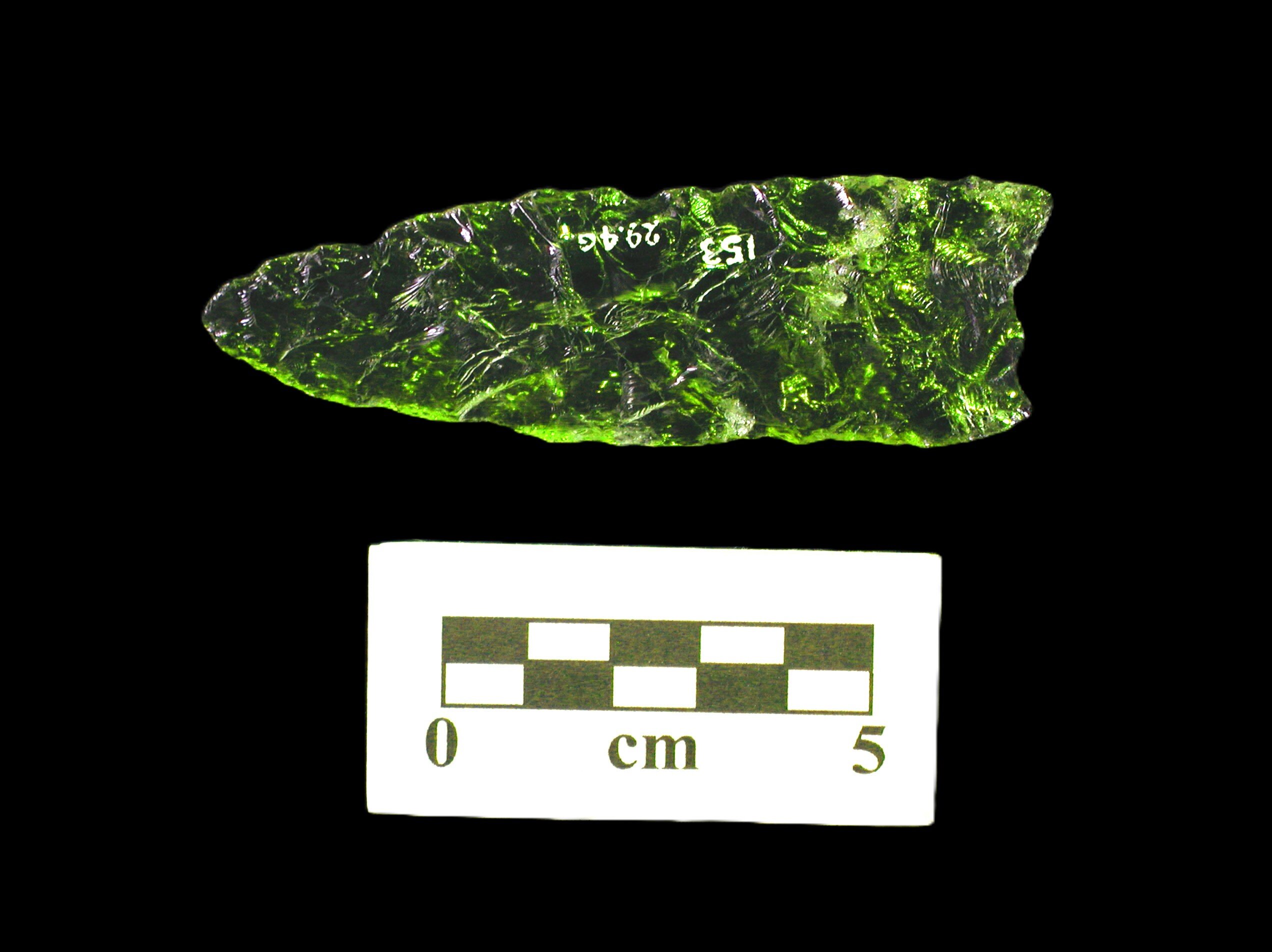
For decades, the Clovis people have been celebrated as the master stone-workers of the late Pleistocene North American landscape. They are famously selective, typically scouring the environment for high-quality, predictable “toolstones” like chert, obsidian, and rhyolite. These materials are prized because they are homogeneous and fracture conchoidally—meaning they break like glass—allowing a skilled hunter to flake off thin, razor-sharp layers with mathematical precision. However, scattered across the American archaeological record is a curious anomaly: Clovis points fashioned from shimmering, translucent quartz crystal.
This choice of material is, at first glance, an engineering nightmare. While quartz crystal is fine-grained, its internal crystalline structure makes it incredibly stubborn and prone to shattering in ways that ruin a tool during production. Furthermore, because quartz crystal sources are geographically limited, it was far more difficult to acquire than more abundant, easier-to-work stones. A new study published in the journal Lithic Technology has now investigated whether these crystal points were merely inferior backups or if they were designed to be as lethal as their more common counterparts.
Probing the Geometry of Ancient Glass
To solve this mystery, Dr. Briggs Buchanan and his research team conducted a rigorous scaling and geometric morphometric analysis on a sample of 58 quartz crystal Clovis points. These artifacts were sourced from various research papers and the Paleoindian Database of the Americas, providing a robust dataset for comparison. The goal was to see if the physical limitations of the quartz forced the Clovis people to change the fundamental design of their weapons.
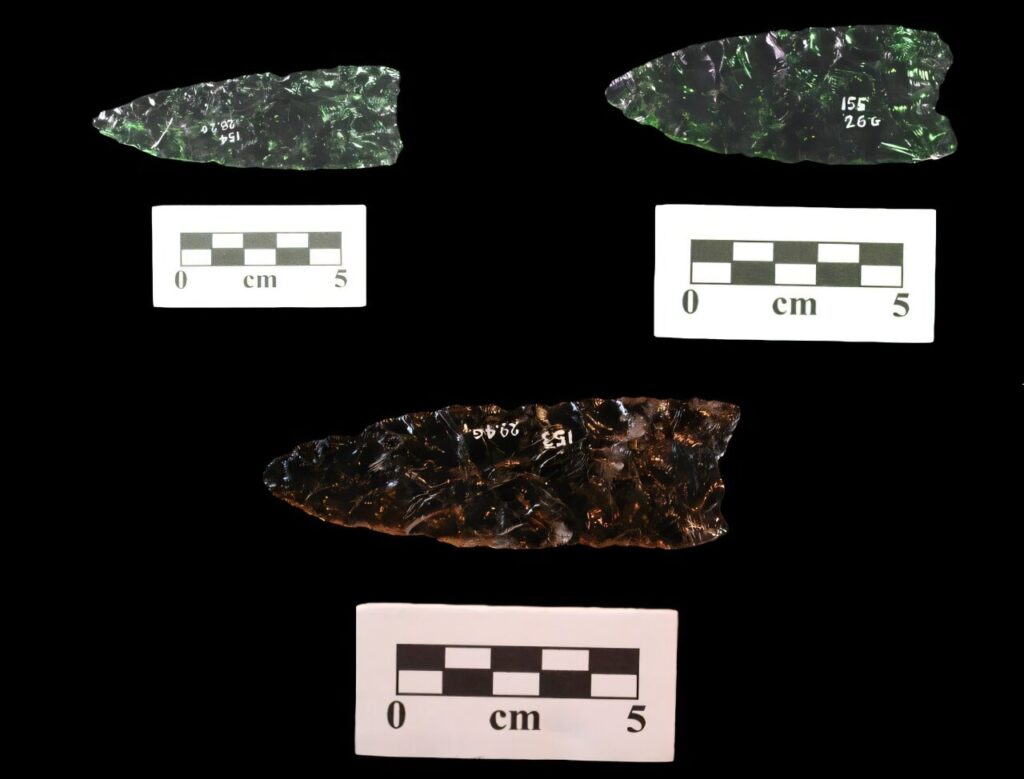
Of the collected artifacts, 33 specimens were intact enough for the team’s geometric analysis, while 56 provided the linear measurements necessary for scaling. The researchers compared these crystal tools against the standard Clovis toolkit made from superior materials. If the quartz was truly “low-quality” in a functional sense, one would expect to see thicker, clunkier, or misshapen points that could not hold the refined aerodynamic form of a classic Clovis projectile.
What the team discovered was a testament to ancient craftsmanship. While the quartz crystal points were, on average, somewhat smaller than those made from chert or obsidian, their proportions remained remarkably consistent with the rest of the Clovis toolkit. The researchers found that despite the intense difficulty of knapping such a temperamental material, the makers were able to replicate the exact geometric signatures required for their hunting technology.
Functionality Versus Folklore
The fact that these points were functionally comparable to high-quality stone tools raises a significant question: why go through the extra effort? If a hunter can make a perfect point out of easily accessible chert, why spend hours struggling with a rare, brittle crystal? Dr. Buchanan’s team initially explored a mechanical hypothesis, noting that quartz crystal sits at a 7 on the Mohs scale of hardness.
This would make it significantly harder than obsidian, which ranks at a 5.5. However, the team eventually discounted this theory. Many of the stones the Clovis used daily, such as chert, also range between 6.5 and 7 in hardness. The marginal gain in durability would likely not have been enough to justify the massive increase in labor and the high risk of the tool breaking during the flaking process.
This led the researchers to a second, more culturally nuanced hypothesis. Quartz crystal possesses several unique physical properties that have nothing to do with its edge-holding ability. It is translucent, grows in naturally striking geometric shapes, and exhibits triboluminescence—a phenomenon where the stone emits a visible flash of light or spark when struck or rubbed. To an ancient observer, these “living” qualities may have suggested the material was imbued with supernatural power.
The Intersection of Ritual and Utility
Dr. Buchanan points to a wealth of ethnographic evidence from later North American societies to support the idea of quartz as a “power object.” Among the Yuman peoples of California, for instance, quartz crystals—known as wii’ipay—were considered among the most potent objects in the universe. These stones were often reserved for shamans, who used them for diverse purposes ranging from healing and mind-reading to gambling luck. In some traditions, the power of the crystal was considered so volatile that it could even harm the person who possessed it.
However, the study emphasizes that a ritual significance does not mean these tools were merely decorative. The archaeological context shows that these crystal points were found at campsites, quarrying locations, and even within caches. This suggests they were carried as part of a functional kit, used in the same environments as any other spear point. In many traditional societies, there is no hard line between the “supernatural” and the “functional”; a tool could be simultaneously a deadly weapon and a sacred object.
By proving that the Clovis could overcome the structural flaws of quartz, the study highlights a level of technological organization and individual skill that had previously been underestimated. It suggests that Clovis experts were not just passive users of their environment, but highly skilled artisans capable of imposing their cultural designs onto even the most difficult raw materials.
Why This Matters
This research fundamentally changes our understanding of how the earliest Americans viewed their technology. It demonstrates that the choice of material for a tool was not always based on “least-effort” logic or simple convenience. Instead, it reveals a culture that valued expert craftsmanship and potentially placed deep symbolic importance on the tools they relied on for survival. By showing that raw material quality did not dictate design, the study suggests that human skill and cultural intent were the primary drivers of technological evolution in the late Pleistocene, proving that even 13,000 years ago, the line between art, religion, and engineering was beautifully blurred.
Study Details
Briggs Buchanan et al, The Functional Use of Quartz Crystal Points in Clovis Technology, Lithic Technology (2025). DOI: 10.1080/01977261.2025.2473130