Hidden beneath a town square in the Netherlands for nearly 2,000 years, an ancient Roman curse tablet has finally revealed its message. Researchers at Heidelberg University deciphered the rare inscription, uncovering an unusual blend of ancient Greek, Egyptian-style magic, and Roman-era beliefs that sheds new light on how supernatural traditions spread across the Roman Empire.
For centuries, ancient curse tablets were created to seek supernatural help against rivals, enemies, or opponents. Now, the successful decoding of a rare lead tablet discovered in the Dutch municipality of Heerlen offers an extraordinary glimpse into those secret practices—and reveals a remarkable cultural mix that researchers did not expect to find so far north in the Roman world.
A Hidden Message Buried Beneath a Roman Settlement
The artifact was uncovered during archaeological excavations beneath Heerlen’s Town Hall square, the site of the former Roman military settlement of Coriovallum in the Roman province of Lower Germania.
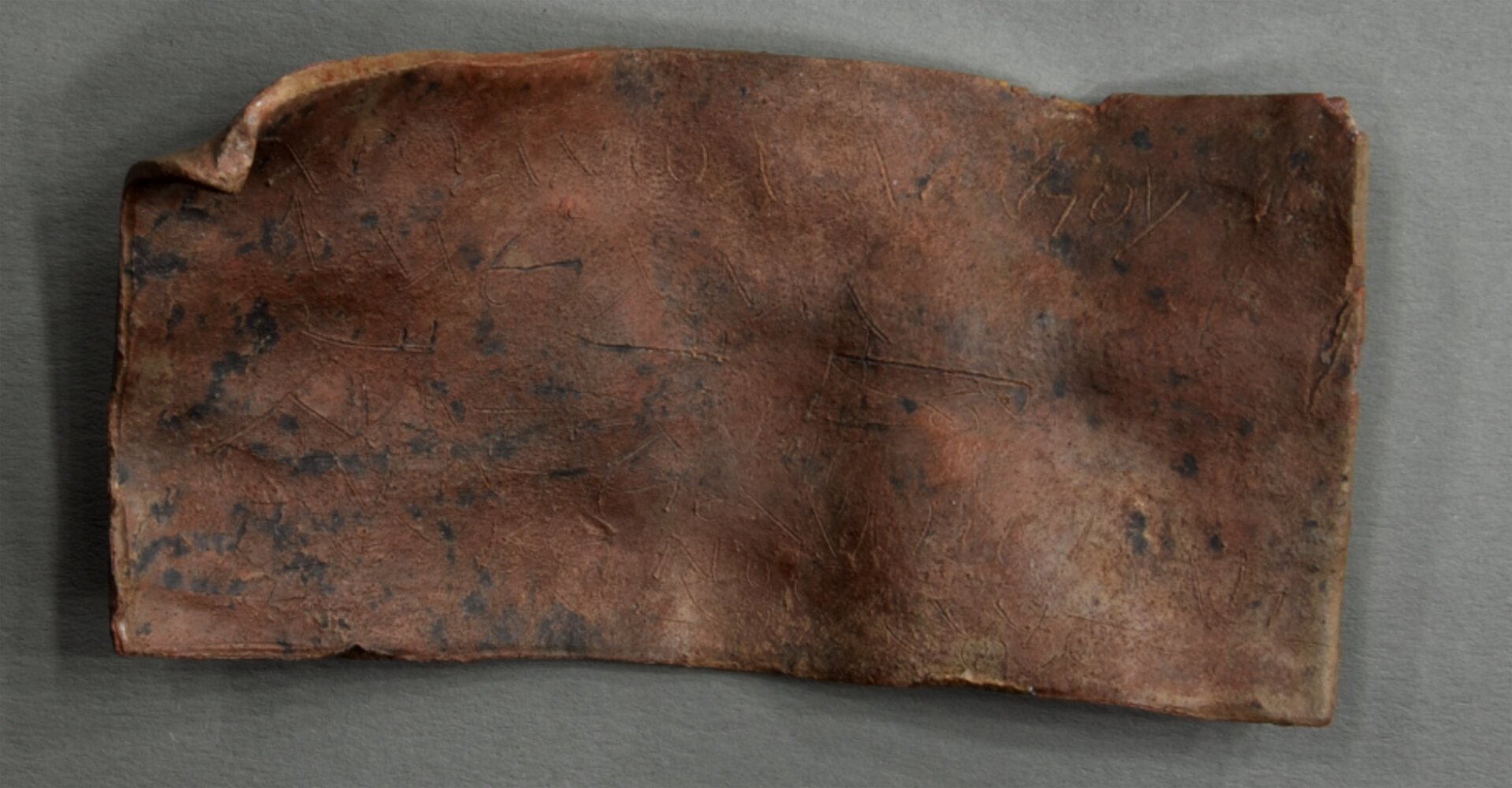
Dating to the 2nd century A.D., the lead tablet measures 9.3 by 4.8 centimeters (3.7 by 1.9 inches). Although small, it preserved an inscription that had remained unreadable until specialists at Heidelberg University’s Institute for Papyrology analyzed it using advanced imaging technology.
The object belongs to a class of ancient curse tablets known as defixiones in Latin and katadesmoi in Greek. These tablets were typically made from lead because the metal was easy to inscribe and was believed to possess symbolic “binding” properties.
People would engrave spells or binding formulas onto the tablets before burying them, hoping to influence disputes, athletic competitions, romantic relationships, or other personal conflicts through supernatural intervention.
Advanced Imaging Revealed Three Distinct Sections
To decipher the inscription, researchers used reflectance transformation imaging (RTI), a computer-assisted photographic technique designed to reveal tiny surface details.
The method captures multiple photographs under different lighting conditions. These images are then digitally combined, allowing researchers to adjust the lighting virtually and make even the faintest engraved marks visible.
The analysis revealed that the inscription consists of three distinct groups of characters, making it possible to interpret a text that had remained hidden for nearly two millennia.
A Rare Greek Curse Tablet in Northern Europe
Perhaps the most surprising discovery was not simply what the tablet said, but the language in which it was written.
According to Dr. Rodney Ast, academic director of Heidelberg University’s Institute for Papyrology, most curse tablets discovered in Northern Europe are written in Latin. This example, however, contains an ancient Greek text composed in the Egyptian magical tradition, making it highly unusual for the region.
The inscription invokes multiple deities and demons following Egyptian magical practices. It also includes three magical symbols, known as Characteres, which researchers believe were intended to communicate the curse’s message directly to supernatural powers.
This combination of Greek language, Egyptian magical traditions, and a discovery site deep within the Roman province of Lower Germania makes the artifact stand out among comparable finds.
Four Enslaved People Named in the Inscription
Following the magical symbols, the inscription names two men and two women, describing them as fellow slaves.
Researchers believe the tablet served one of two possible purposes. It may have been intended as a curse directed against these four individuals, or it may have been written on their behalf to curse an unnamed target.
Although the exact purpose cannot be determined with certainty, the wording clearly places these four enslaved people at the center of the ritual.
Clues Suggest a Possible Connection to Roman Egypt
The group named on the tablet also presents an intriguing combination of identities.
The two men bear Latin names, while the two women have Greek names. According to Dr. Julia Lougovaya of Heidelberg University’s Institute for Papyrology, this unusual mixture raises an interesting possibility.
She suggests that one of the women may even have authored the inscription and brought knowledge of these magical practices from Roman Egypt, where traditions involving communication with divine powers through written curses were well established.
While this remains a possibility rather than a confirmed conclusion, it offers a potential explanation for why an Egyptian-style magical text written in Greek appeared in what is now the Netherlands.
The Discovery Reflects a Changing Roman World
The tablet also illustrates how different religious and magical traditions increasingly interacted during the early centuries of the Roman Empire.
According to Prof. Dr. Joachim Quack, director of Heidelberg University’s Institute for Egyptology, magic occupied an important place in the civilization along the Nile. Certain practices—particularly those involving protection and healing—were officially accepted as part of religious life, while other forms of magic intended to harm others were generally carried out in secret.
Quack notes that during this period, traditions from the Near East, Egypt, Jewish communities, and sometimes even Christian groups increasingly blended and spread throughout the Roman Empire.
The Heerlen tablet provides a striking example of that broader cultural exchange, demonstrating that ideas and ritual practices could travel far beyond their places of origin.
The Inscription Will Become Available for Future Research
Following its successful decipherment at Heidelberg University’s Institute for Papyrology, the inscription will be published in a scholarly edition, making it accessible for researchers to study in greater detail.
The original tablet is also scheduled to be displayed at the Heerlen Museum, where visitors will be able to view one of the Roman Empire’s most unusual surviving examples of ancient magical practice.
Why This Matters
The deciphered Heerlen curse tablet offers far more than the story of an ancient spell. It reveals how languages, beliefs, and ritual traditions crossed cultural boundaries within the Roman Empire, creating unexpected connections between distant regions.
Its rare combination of ancient Greek, Egyptian-style magic, and a discovery site in the Roman province of Lower Germania highlights the movement of ideas alongside people. By making the inscription available for future research, the discovery provides scholars with an important new source for understanding how ancient communities practiced religion, magic, and cultural exchange nearly 2,000 years ago.