For thousands of years, tiny pieces of broken bone lay buried in the darkness of a Romanian cave, easy to overlook and seemingly unimportant. But under a microscope, some of those fragments began to tell a different story: Neanderthals had selected them, shaped their use and put them to work before leaving them behind.
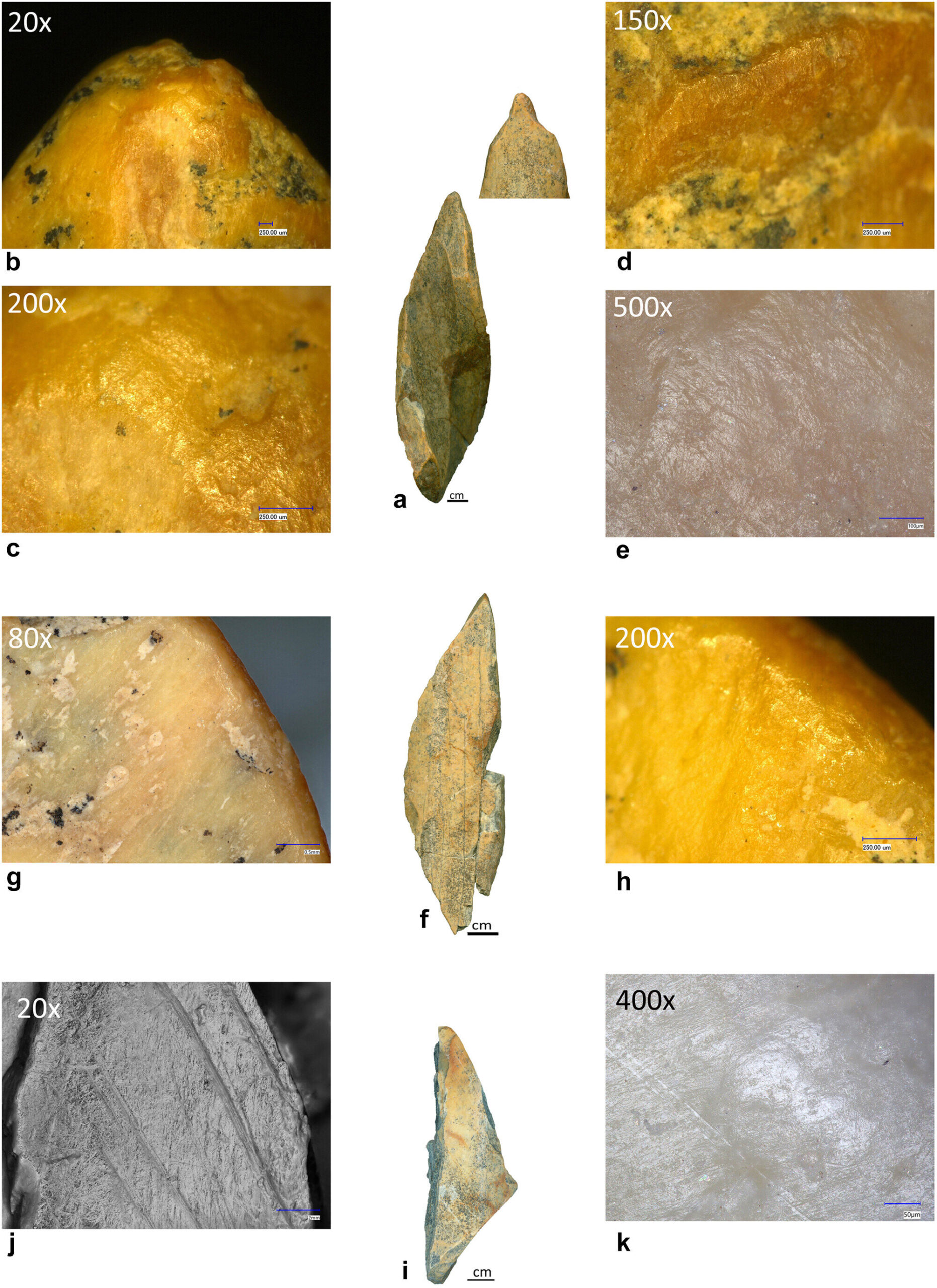
The evidence comes from Abri 122/1200, a Middle Paleolithic cave in Romania’s Vârghiș Gorges that was occupied by people between about 230,000 and 60,000 years ago. A new analysis of its animal bones has identified 83 fragments with unmistakable traces of human handling, including pieces that were used for sharpening, scraping, splitting and hammering.
The finding, published in the Journal of Quaternary Science, provides the first evidence of Neanderthal bone tools in Romania and suggests that some of the smallest pieces in archaeological collections may contain clues that have previously gone unnoticed.
The tools were hiding among thousands of fragments
The mystery began with an absence.
Neanderthals are known to have used bone tools at sites stretching from the Altai Mountains to the Atlantic coast. Yet the Carpathian region had produced no comparable evidence, despite decades of archaeological work.
Abri 122/1200 seemed to fit that pattern. Excavations carried out in 2014 by Marian Cosac and George Murătoreanu of Valahia University of Târgoviște produced evidence of a Middle Paleolithic occupation, including stone tools and remains of animals such as woolly rhinos and bison. But no definitive Neanderthal bone tool had been identified.
That raised an obvious question: if Neanderthals elsewhere were using bone as a raw material, why was there no evidence of the practice at this Romanian site?
Stefan Vasile, a lecturer at the University of Bucharest, suspected the answer might have something to do with what archaeologists were looking for.
“Many times, only the larger or more complete bones were recovered,” Vasile said.
Small fragments, by contrast, were often overlooked. And those fragments could be precisely where the evidence of tool use survived.
So the researchers changed their approach.
A microscopic search for traces of use
The team examined more than 10,000 bones from the cave, looking closely at fragments that might otherwise have seemed insignificant.
Under a microscope, the researchers searched for subtle signs of repeated contact with another material. These included tiny scratches, rounded edges and polished, shiny areas at the ends of the bones.
Those marks alone needed to be interpreted carefully. To test whether similar traces could result from deliberate tool use, the researchers produced their own bone implements and used them to reproduce Neanderthal tasks stroke for stroke.
They then examined the experimental tools under a microscope and compared their wear patterns with those on the ancient fragments.
Out of more than 10,000 bones, 83 displayed unmistakable evidence of human handling.
The fragments did not all serve the same purpose.
Some had been used to sharpen stone tools. Others were employed in working hides and plants. Some functioned as wedges for splitting material, while two were used as hammers. A number of the fragments combined more than one function.
The result is a picture of tools that were small, varied and closely tied to practical tasks.
Discarded bone could become a tool in an instant
According to the study, the implements were expedient tools: objects made or used for an immediate purpose rather than necessarily designed as long-lasting equipment.
That interpretation fits the nature of the fragments themselves. A useful piece of bone could be picked up, put to work and discarded once the task was finished.
Rather than treating bone as a special material requiring elaborate preparation, the pattern described in the study points toward an approach based on immediate usefulness. A fragment that happened to be available could become a scraper, sharpener, wedge or hammer.
The fact that these tools were so small may also help explain why the evidence remained hidden for so long.
Archaeological collections can contain enormous numbers of fragmented bones. If attention is focused primarily on large or complete specimens, subtle traces of use on small pieces can be missed.
Vasile suggested that undiscovered examples could still be sitting in existing collections—or even in sediment discarded during earlier excavations.
“It is possible that some Neanderthal bone tools lie somewhere in some drawers …” he said, “and may even lie in the sediment dump excavated by previous researchers.”
A broader picture of Neanderthal ingenuity
The Romanian fragments add another piece to the picture of how Neanderthals used materials around them.
For Vasile, the importance of the discovery is not simply that Neanderthals used bone. It is that small bone tools could serve a wider range of purposes.
“Neanderthals using bone tools, and small ones … to perform a wider array of actions,” he said, represents evidence supporting “a distinct ingenuity and inventiveness” and a complexity of Neanderthal thought that many people still find difficult to accept.
The researchers’ interpretation remains grounded in the tools themselves. The fragments show different kinds of wear associated with different tasks, while the experimental work provided a way to compare those traces with known tool use.
But one important question remains unanswered.
The Neanderthals themselves are still missing
Despite years of excavation at Abri 122/1200, researchers have not found Neanderthal remains at the site.
That leaves the identity of the toolmakers to be established indirectly by the archaeological evidence rather than by Neanderthal bones from the cave itself.
The team is now testing the soil for Neanderthal DNA and sending bones for further analysis. Finding biological evidence would provide another way to investigate who occupied the cave and used the tools.
For now, the researchers are searching through an enormous quantity of fragmented material.
“With so many fragments, it is like looking for the needle in the haystack,” Vasile said.
Somewhere among those fragments may be more evidence of the people who once lived in the cave—and perhaps the remains that would finally put their own bones alongside the tools they left behind.