Deep within the limestone folds of the Sierra de Atapuerca in northern Spain, a silent story of ancient strategy lay buried for nearly half a million years. At a specific archaeological layer known as TD10.2-BB within the Gran Dolina site, researchers have unearthed more than just stones and bones; they have found the remnants of a prehistoric master plan. This isn’t a story of scavengers picking at the leftovers of apex predators, but rather a narrative of a sophisticated society that moved with purpose, precision, and an extraordinary level of cooperation.
The Echoes of a Great Migration
Imagine the landscape of the Middle Pleistocene, approximately 400,000 years ago. The air is crisp, and the valley floor trembles under the weight of a massive herd. Led by researcher Andion Arteaga Brieba from the Centro Nacional de Investigación sobre la Evolución Humana (CENIEH), a team of scientists has reconstructed a scene of intense activity that once dominated this Spanish hillside. The evidence points to a monumental event: the communal hunting and processing of more than 60 bison.
To bring down dozens of such powerful animals required more than just brute strength; it demanded complex strategies and large-scale group coordination. These ancient humans weren’t acting as individuals. They were operating as a single, cohesive unit, anticipating the movements of the herd and preparing for a slaughter that would provide a massive bounty of meat and hides for the community. The scale of the remains suggests that Gran Dolina was not just a temporary shelter, but a theater for an organized, intensive occupation centered around a singular, high-stakes goal.
A Narrow Path of Selection
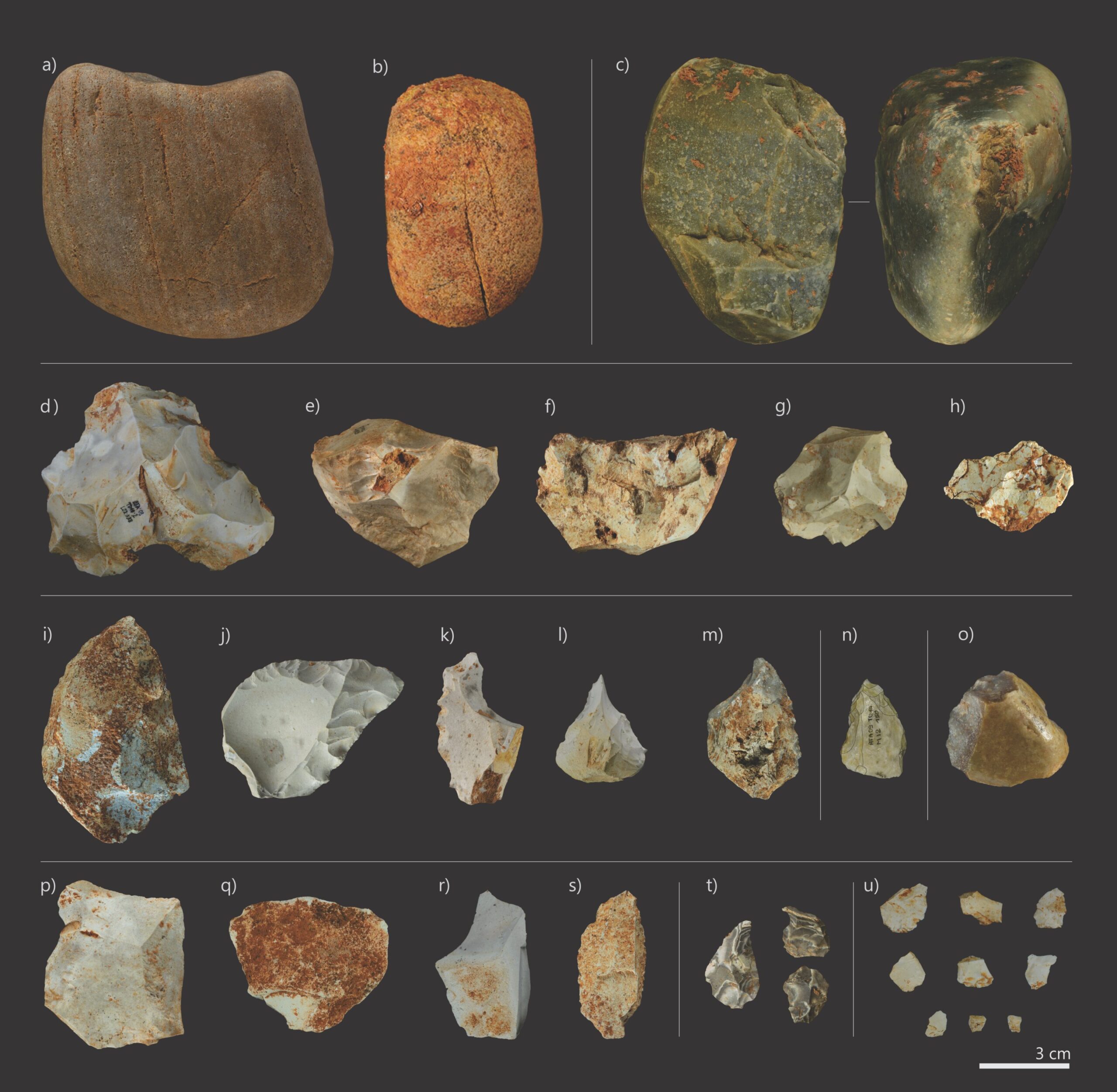
As archaeologists meticulously sifted through the sediment of level TD10.2-BB, they discovered a staggering collection of over 10,000 lithic artifacts. In most prehistoric sites throughout the Sierra de Atapuerca, ancient toolmakers were opportunistic, utilizing a colorful variety of stones like quartzite, sandstone, and quartz, all of which were readily available within a five-kilometer radius. However, at this specific bison-hunting level, the rules of tool-making changed completely.
The researchers found a “distinctive technological behavior” that stands alone in the evolutionary record of the region. Nearly 99% of the assemblage was crafted from a single material: local chert. This near-total reliance on one type of stone is an anomaly. It suggests that the hunters weren’t just picking up whatever rocks they stumbled upon near the riverbanks. Instead, they had a specific preference, a “technological signature” that was tied directly to the task at hand. This almost exclusive use of local chert indicates a high level of intentionality, where the choice of material was as much a part of the hunt as the spear itself.
Strategy Written in Stone
The mystery for the research team, which included collaborators from IPHES and the Universitat Rovira i Virgili, was why these hominins ignored the diverse lithological environment surrounding them. The physical and mechanical properties of the other stones were perfectly functional, yet they were cast aside in favor of the chert found in the higher zones of the Sierra.
The scientists concluded that this shift in raw material procurement—moving away from the usual fluvial terraces to the heights of the hills—was a strategic decision linked to the dynamics of communal hunting. In the high-pressure environment of a large-scale bison cull, the procurement of stone tools became integrated into the hunt itself. They weren’t just making tools; they were strategically transporting and producing them to meet the specific, grueling needs of butchering over 60 bison. This level of planning and anticipation shows that these early humans could visualize the entire process—from the first strike of the hunt to the final cut of the processing—long before the first bison was even spotted.
The Social Fabric of the Hunt
This discovery reshapes our understanding of the Middle Pleistocene mind. The transition to a nearly exclusive use of local chert wasn’t an accident of geology; it was a reflection of complex social organization. By focusing their energy on a specific resource that served their immediate hunting needs, these hominins demonstrated a capacity for cooperation and decision-making that mirrors modern human logistics.
The technology and the food source were no longer separate entities. They were “closely integrated,” forming a system where the social group coordinated their movements across the landscape to ensure that the right tools were in the right place at the right time. This behavior highlights a profound social organization, where individual roles were likely defined and everyone worked toward a common survival goal. The artifacts at Gran Dolina serve as a testament to the fact that 400,000 years ago, our ancestors were already masters of their environment, capable of executing sophisticated plans that required both mental foresight and social trust.
Why the Secrets of Gran Dolina Matter
This research is vital because it provides some of the earliest evidence of communal hunting in the entire human evolutionary record. It bridges the gap between primitive survival and the organized, strategic lifestyles that would eventually define our species. By analyzing the lithic artifacts alongside the faunal remains, the study proves that human intelligence did not evolve in a vacuum. Instead, our cognitive abilities—our planning, anticipation, and social coordination—were forged in the heat of the hunt.
Understanding these decision-making processes allows us to see these ancient hominins not as distant, unrecognizable creatures, but as ancestors who faced immense challenges with ingenuity. The story of level TD10.2-BB reminds us that the foundations of human society—teamwork, specialized technology, and strategic thinking—have been part of our biological and social blueprint for hundreds of thousands of years. It is a powerful reminder that our ability to work together towards a massive goal is one of the oldest and most successful tools in our possession.
Study Details
Andion Arteaga-Brieba et al, A matter of choice: Raw material specialisation at the Middle Pleistocene kill-butchering site of Gran Dolina TD10.2 (Atapuerca, Spain), Quaternary International (2026). DOI: 10.1016/j.quaint.2026.110221