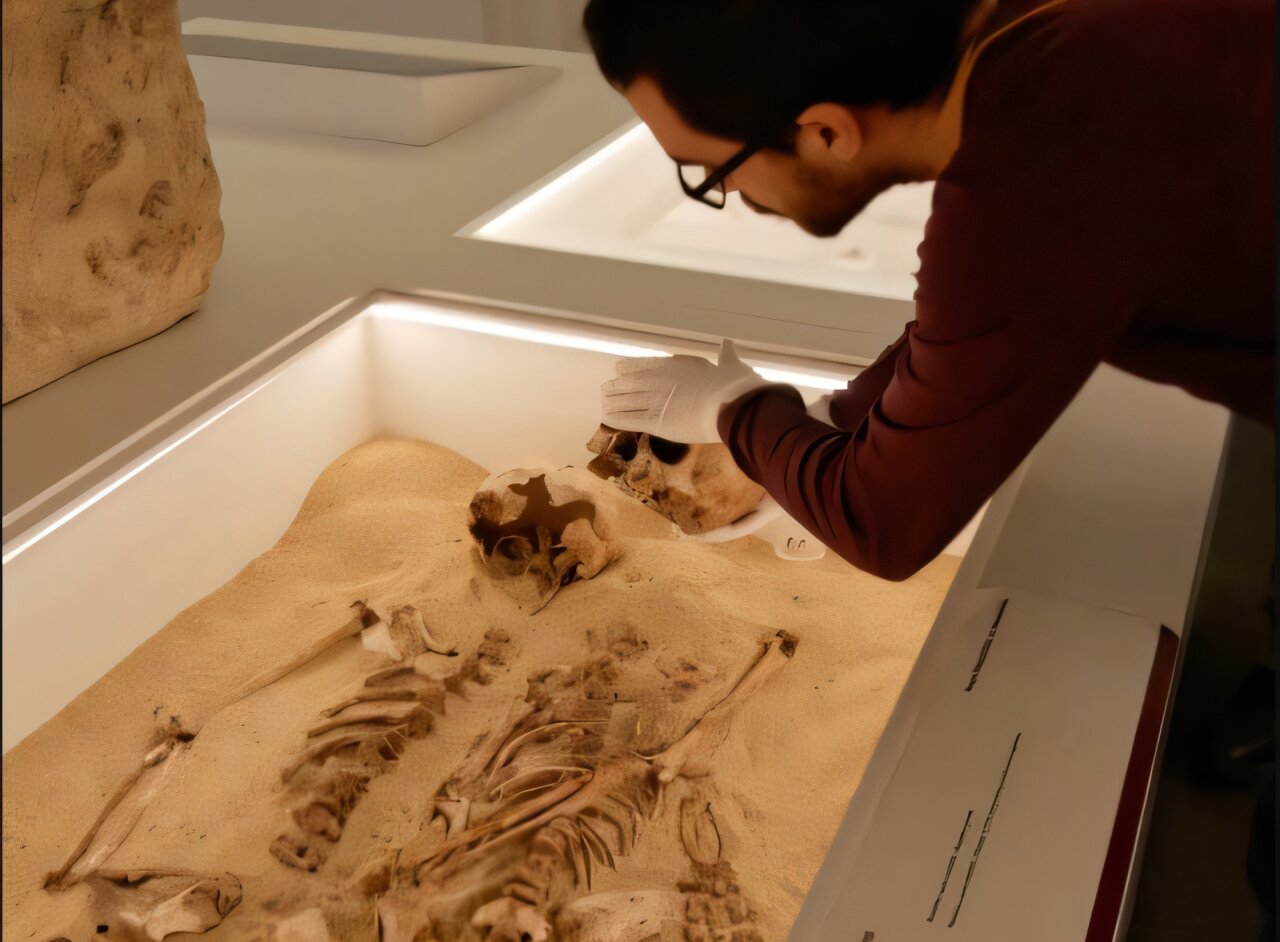
For more than sixty years, two bodies lay quietly at the center of an archaeological mystery. Discovered in 1963 in a cave in southern Italy known as Grotta del Romito, the burial showed an adolescent cradled in the arms of an adult. They were placed face to face, their skeletons intertwined in a way that felt intimate, deliberate, and deeply human. Yet the bones could not explain who they were, how they were related, or why their bodies were so small.
The burial, dating back more than 12,000 years, became famous not just for its tenderness, but for the questions it refused to answer. The younger individual, called Romito 2, had strikingly short limbs. The adult, Romito 1, was also shorter than expected for the time. No injuries told a story of violence. No artifacts offered clues of status or ritual meaning. For decades, researchers debated whether these two were mother and child, siblings, or something else entirely. Even their biological sex remained uncertain.
Now, using the quiet language of ancient DNA, scientists have finally given these individuals their voices back.
Bones Alone Could Not Tell the Whole Story
From the moment of discovery, the burial stood apart. Romito 2’s estimated height of about 110 cm was far below the norm, even for prehistoric populations. The limb bones were shortened in a way that suggested a rare skeletal growth disorder, possibly acromesomelic dysplasia, but skeletal remains alone could not confirm this. Such conditions can resemble each other in bone, leaving room for doubt.
Romito 1, estimated at around 145 cm, was also shorter than average, though not dramatically so. Was this coincidence, shared environment, shared genetics, or something else? For years, scholars proposed theories, but none could be tested with confidence.
The uncertainty extended even further. Romito 2 was long assumed to be male, based on earlier interpretations of the skeleton. The emotional closeness of the burial fueled speculation, but speculation was all it could be. Without genetic evidence, the truth remained buried alongside them.
A New Kind of Listening to the Past
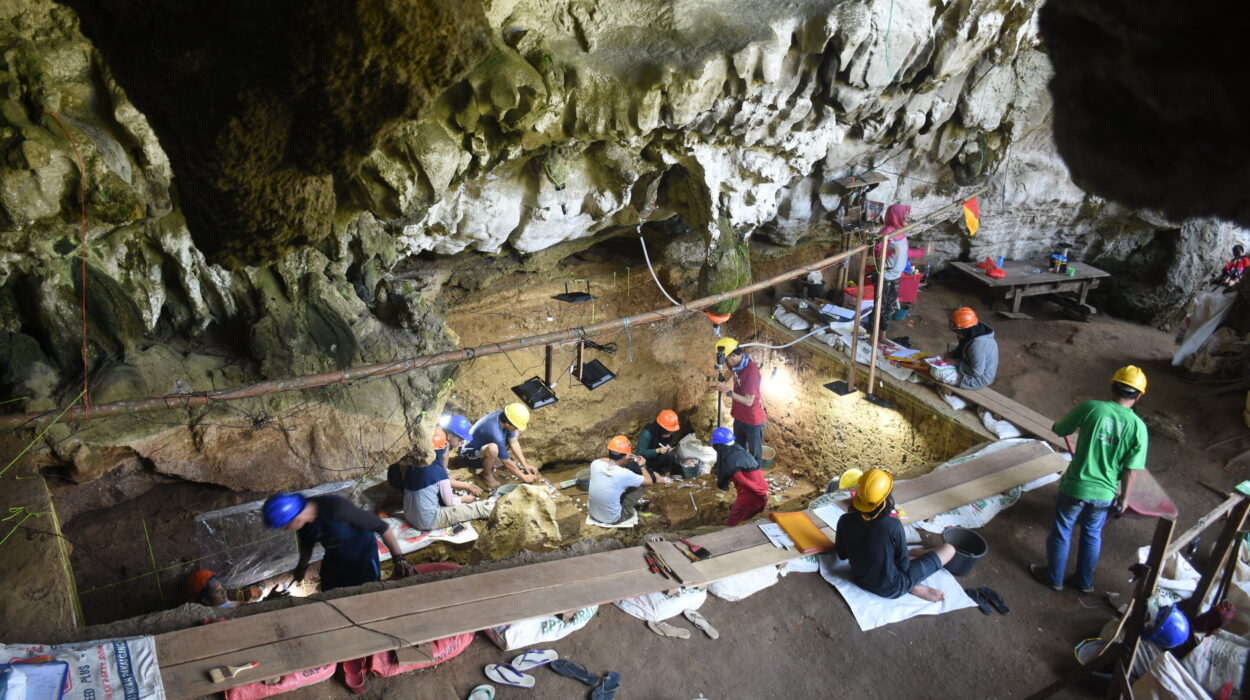
The breakthrough came when an international team led by the University of Vienna and Liège University Hospital Center returned to the site with tools that did not exist when the burial was first studied. Advances in paleogenomics made it possible to extract and analyze ancient DNA, even from individuals who lived thousands of years ago.
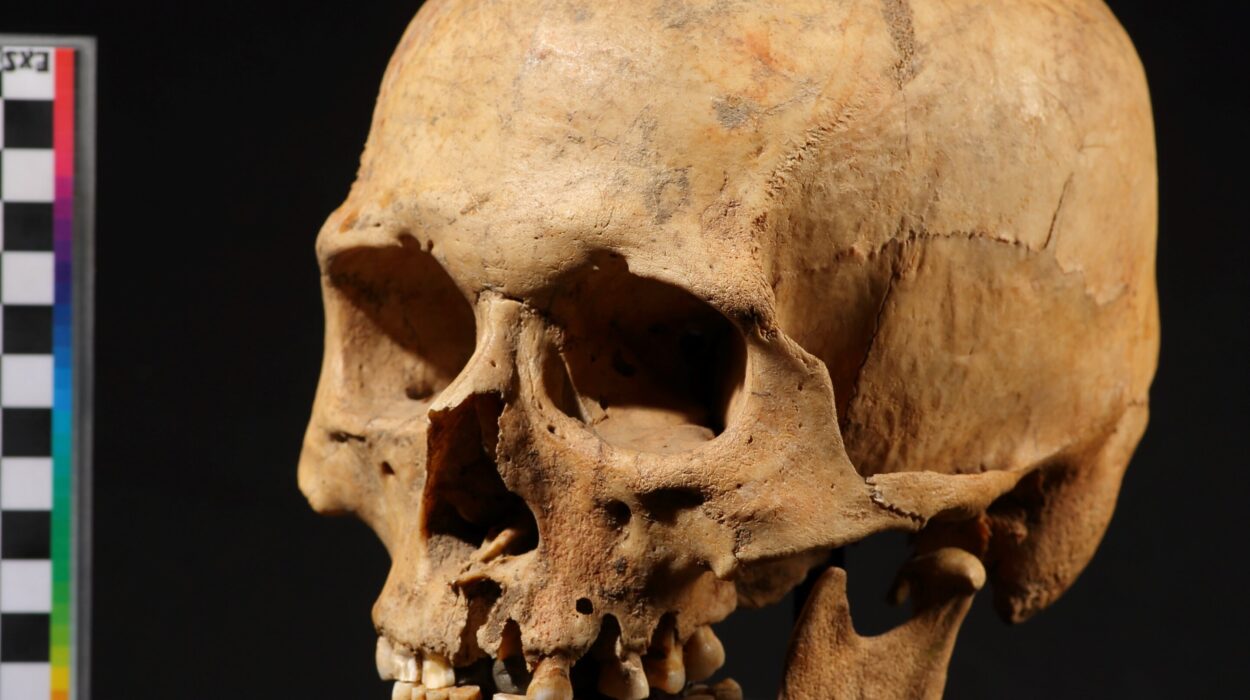
The researchers carefully sampled the petrous part of the temporal bone, a dense region of the skull known to preserve genetic material exceptionally well. From this small fragment, they retrieved enough DNA to do what had once seemed impossible: reconstruct family relationships and diagnose a specific genetic disease.
By comparing the ancient genetic data with modern clinical genetics, the team screened genes involved in skeletal growth. This interdisciplinary effort brought together paleogenomics, physical anthropology, and clinical expertise from researchers in Italy, Portugal, Belgium, and Austria. The results were published in the New England Journal of Medicine, marking a moment when prehistoric archaeology and modern medicine fully met.
The Moment the Family Revealed Itself
The genetic findings transformed the story of the Romito burial. Both individuals were identified as female, overturning decades of assumptions. More strikingly, the DNA showed they were first-degree relatives, most likely a mother and daughter.
For the younger individual, Romito 2, the genetic analysis revealed a homozygous variant in the NPR2 gene, a gene essential for normal bone growth. This finding confirmed a diagnosis of acromesomelic dysplasia, Maroteaux type, an extremely rare inherited disorder characterized by severe short stature and pronounced shortening of the limbs.
In Romito 1, the researchers found a single altered copy of the same gene. This heterozygous mutation is associated with milder short stature, matching what was observed in her skeleton. The same gene had shaped two lives differently, depending on how it was inherited.
In one discovery, decades of uncertainty collapsed into clarity. The burial was no longer a puzzle of bones, but a familial genetic case preserved across millennia.
A Disease Older Than History Books
The identification of this condition carries a remarkable distinction. It represents the earliest genetic diagnosis of a rare inherited disease in humans. Until now, such diagnoses belonged almost exclusively to the modern world, supported by hospitals, sequencing machines, and clinical records.
This study shows that rare genetic diseases are not new arrivals in human history. They existed long before written language, before agriculture, before cities. According to Ron Pinhasi of the University of Vienna, the ability to identify specific mutations in prehistoric individuals allows researchers to trace how far back such conditions go, and even to discover variants that may no longer exist today.
Daniel Fernandes of the University of Coimbra, the study’s first author, emphasizes how powerful the family connection is. Seeing the same gene affect a mother and daughter differently turns an abstract mutation into a lived human story. It shows how inheritance worked in real families, not just in textbooks.
Survival Against the Odds
Perhaps the most moving implication of the findings lies not in the genes themselves, but in what they suggest about daily life. Acromesomelic dysplasia, Maroteaux type severely limits stature and mobility. In a prehistoric environment, survival with such a condition would have been extraordinarily difficult.
Yet Romito 2 lived into adolescence, and possibly adulthood. This alone speaks volumes. According to Alfredo Coppa of Sapienza University of Rome, her survival would have required sustained social care. She would have needed help obtaining food, moving across rugged terrain, and navigating the physical demands of life in a challenging environment.
There is no evidence of trauma or neglect. Instead, the burial itself, with the daughter embraced by her mother, suggests care that extended beyond life. The genetics confirm what the positioning already hinted at: this was a community that supported its vulnerable members.
Why This Discovery Matters Now
This research changes how we see both the past and the present. Scientifically, it demonstrates that ancient DNA analysis can do far more than trace migrations or population history. It can diagnose disease, reveal family relationships, and connect prehistoric individuals to modern clinical knowledge with astonishing precision.
Clinically, the findings remind us that rare diseases have always been part of the human story. As Adrian Daly of Liège University Hospital Center notes, understanding their deep history may help clinicians recognize and contextualize such conditions today. These disorders are not anomalies of modern life, but enduring threads woven into human biology.
On a human level, the study restores individuality to two people who lived more than twelve millennia ago. They were not curiosities defined by unusual bones. They were a mother and a daughter, linked by genetics, care, and love. Through science, their story has crossed an immense stretch of time to remind us that compassion, vulnerability, and family are as ancient as humanity itself.
Study Details
Daniel M. Fernandes et al, A 12,000-Year-Old Case of NPR2-Related Acromesomelic Dysplasia, New England Journal of Medicine (2026). DOI: 10.1056/nejmc2513616