Golden burial ornaments discovered near the ancient harbor city of Hala Sultan Tekke reveal how Cypriot craftspeople blended artistic traditions from across the eastern Mediterranean into distinctive local creations about 3,400 years ago. The finds suggest the city was not simply a trading hub but also a center where ideas, symbols, and craftsmanship from multiple civilizations came together.
Archaeologists excavating tombs near the ancient Cypriot city of Hala Sultan Tekke have uncovered a remarkable collection of gold burial ornaments that offers a vivid glimpse into one of the earliest periods of extensive Mediterranean connectivity. The discoveries include nine gold diadems worn across the forehead and two gold mouthpieces placed on the lips of the deceased, all dating to roughly 3,400 years ago.
Published in the Oxford Journal of Archaeology, the study concludes that the ornaments were likely crafted by local Cypriot goldsmiths who combined artistic traditions from ancient Egypt, the Minoan world, the Near East, and Mycenaean Greece into original designs rather than simply copying imported styles.
The discoveries add new evidence that Hala Sultan Tekke functioned as far more than a commercial port. It was also a place where cultural influences from across the ancient Mediterranean were transformed into something uniquely Cypriot.
A thriving Bronze Age city at the crossroads of trade
Hala Sultan Tekke flourished between approximately 1630 and 1150 B.C., when the nearby Larnaca Salt Lake formed a protected bay with one of Cyprus’ finest natural harbors.
According to study author Peter M. Fischer, professor at the University of Gothenburg and director of the excavations, surveys conducted since 2010 indicate that the settlement covered at least 25 hectares (62 acres). That makes it the largest known Bronze Age urban center on Cyprus and among the largest in the eastern Mediterranean during its time.
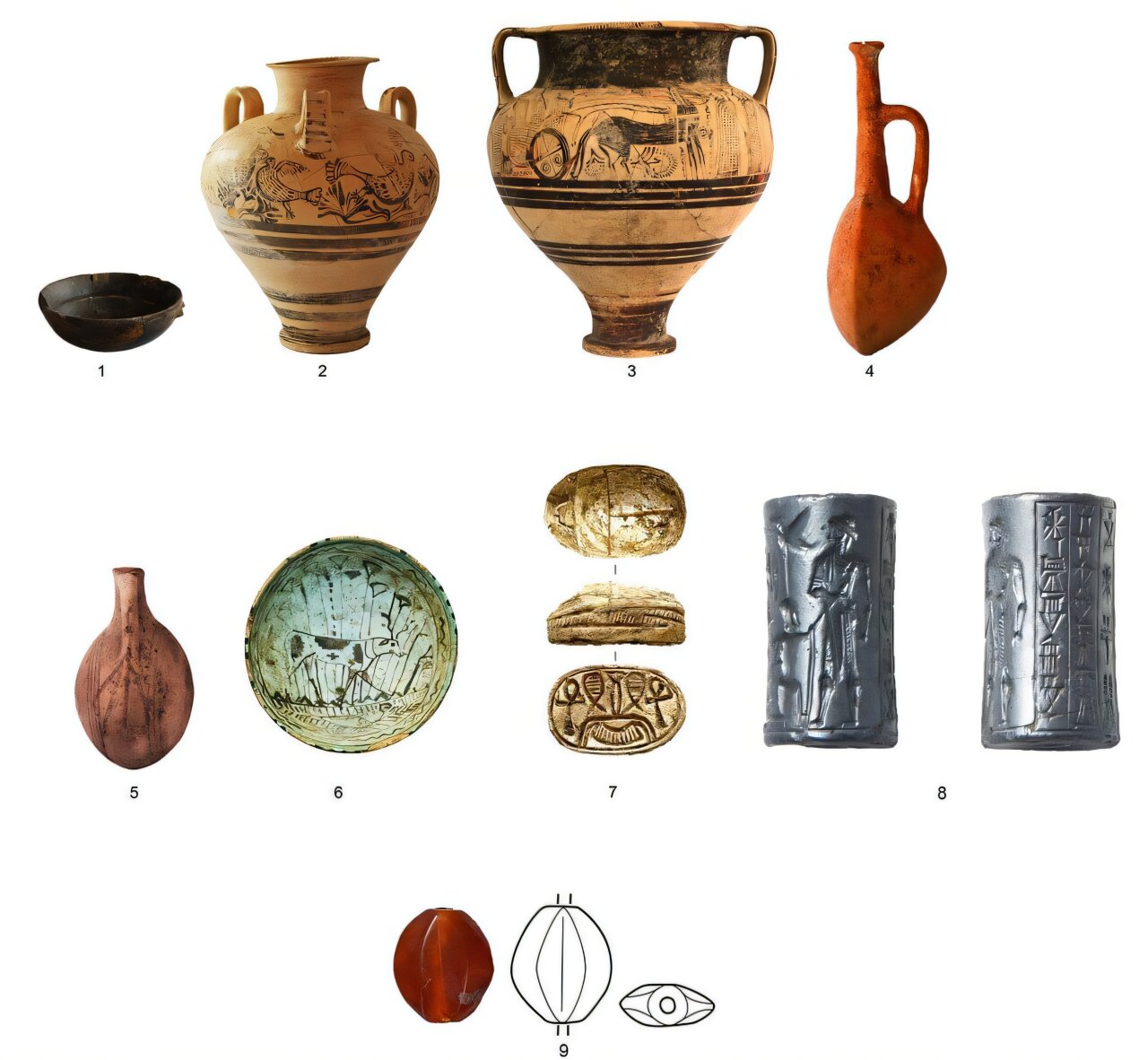
Its strategic location supported industries including copper smelting and pottery production while connecting the city to long-distance trade networks. Luxury materials reached the settlement from remarkably distant regions, including lapis lazuli from Afghanistan, amber from the Baltic, and carnelian from India.
Reflecting on the discoveries, Fischer said, “You are confronted with the remains of people who lived more than 3,000 years ago, together with objects that had traveled from across the eastern Mediterranean—from Greece, Egypt, Anatolia, the Levant, Mesopotamia, India, Afghanistan, the Baltic and beyond. It is a powerful reminder that Hala Sultan Tekke was part of an interconnected world.”
Tomb collapses unexpectedly preserved priceless artifacts
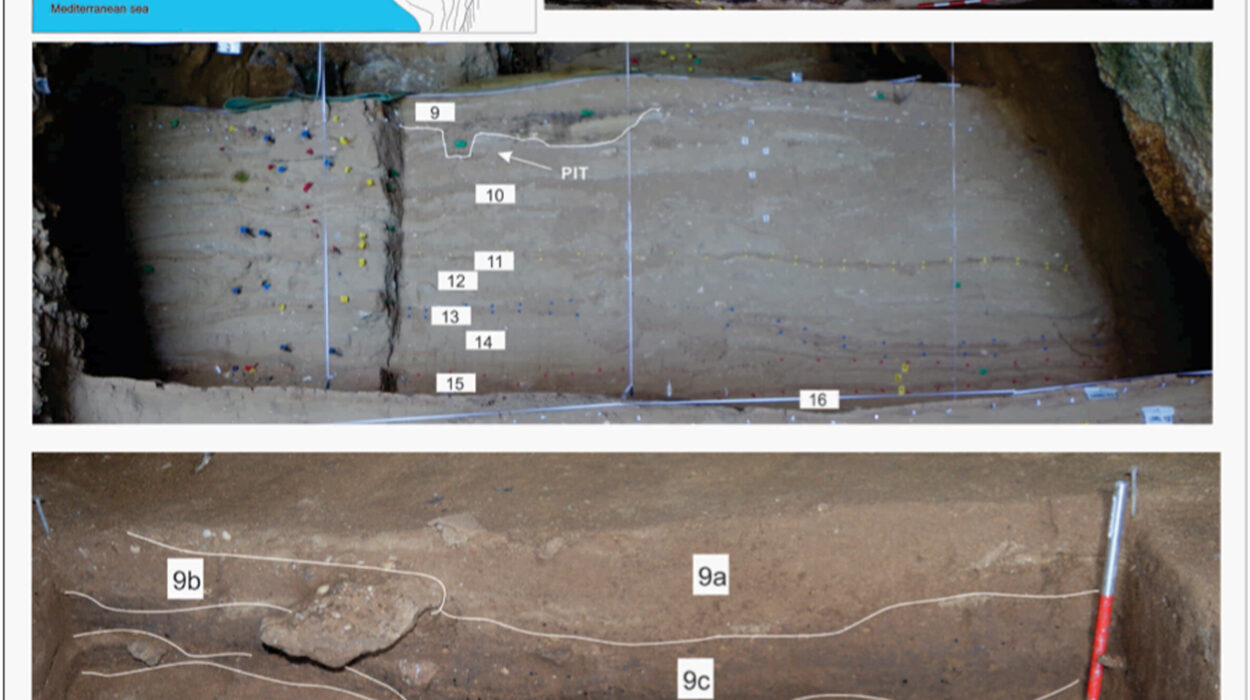
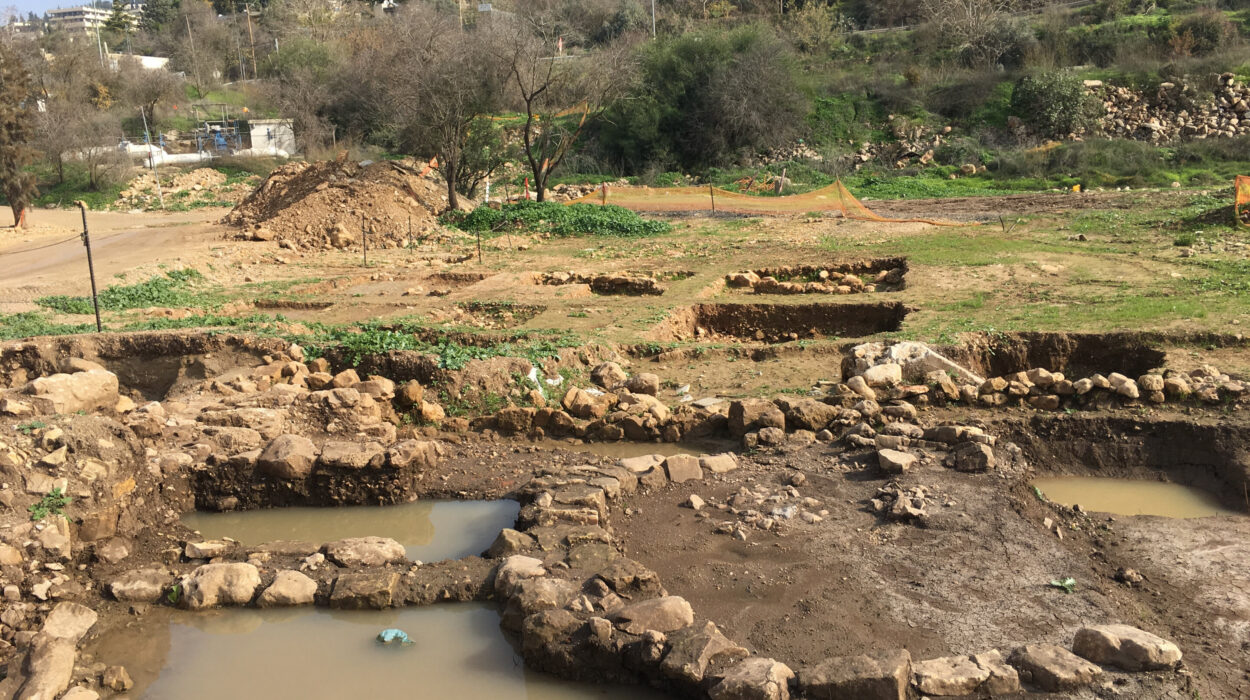
Between 2016 and 2024, archaeologists excavated eight chamber tombs associated with the ancient city. Although the burial chambers had collapsed long ago, the fallen debris ultimately shielded the human remains and grave goods beneath.
What had once been destructive for the burials became an advantage for modern archaeology. Protected beneath layers of rubble for millennia, many artifacts survived in exceptional condition.
Among the most striking objects were elaborate gold diadems decorated with imagery drawn from multiple artistic traditions.
Gold ornaments blended symbols from different civilizations
One especially notable diadem combines imagery commonly associated with ancient Egypt and Mycenaean Greece.
The ornament features the heads of sun-crowned bulls, an Egyptian motif linked to the god Apis, surrounded by palm and rosette decorations. Rather than reproducing a single foreign artistic tradition, the design merges elements from several cultures into a distinctive composition.
The study argues that this artistic fusion demonstrates that Cypriot goldsmiths were active creators who adapted and combined ideas from across the Mediterranean instead of merely distributing imported luxury goods.
These ornaments therefore provide evidence of cultural exchange occurring not only through commerce but also through local craftsmanship.
A surprising burial challenges assumptions about symbolism
One discovery also complicates long-held assumptions about ancient symbolism.
Because bulls were commonly associated with masculinity, archaeologists might have expected such an ornament to accompany a male burial. Instead, the bull-decorated diadem belonged to a woman estimated to have been 35–40 years old.
The finding suggests that this powerful symbol was not exclusively reserved for men, indicating that its meaning within Cypriot society may have been broader than previously assumed.
Some ornaments were worn in life, others created only for burial
The physical condition of the diadems offers clues about how they were used.
Researchers found that the heavier examples display signs of wear, indicating they were likely worn during life, although probably only on special occasions. In contrast, lighter versions appear too delicate for regular use and were likely produced specifically for funerary purposes.
The two gold mouthpieces remain more difficult to interpret.
Although similar objects have been discovered elsewhere around the Mediterranean, their precise purpose remains uncertain.
“We cannot say for certain what the gold mouthpieces were intended to represent, but they most likely formed part of the funerary ritual marking the deceased’s transition into the afterlife,” Fischer said.
Evidence points to local Cypriot craftsmanship
Despite the diverse artistic influences visible in the ornaments, researchers believe the objects themselves were probably manufactured in Cyprus.
The study proposes that workshops at Hala Sultan Tekke may have produced the gold artifacts. The raw gold could have arrived through long-distance trade, possibly originating from Nubian mines in Egypt or from Bulgaria’s Ada Tepe, identified in the study as the oldest known open-pit gold mine in the Balkans.
If correct, the findings reinforce the idea that imported raw materials and foreign artistic ideas were combined locally to create objects with their own distinctive identity.
Simple tombs concealed extraordinary wealth
One of the study’s more unexpected observations concerns the tombs themselves.
Despite containing valuable gold ornaments and other luxury goods, the burial chambers were cut simply into clay soil and marked discreetly rather than with grand monuments.
Fischer believes this may have been intentional.
“I am convinced that the inhabitants were already aware of the risk of tomb robbery in antiquity,” he said, suggesting that modest-looking graves may have reduced the likelihood of attracting thieves.
Most of the ancient city remains unexplored
Even after years of excavation, only a small portion of Hala Sultan Tekke has been uncovered.
Students frequently ask Fischer how long it would take to excavate the entire city. His estimate is striking: at least 630 years using current methods.
Rather than viewing that as a limitation, Fischer sees value in leaving much of the site untouched for future archaeologists, who may possess more advanced excavation techniques.
“Every new excavation area has revealed surprises, so I am convinced that the city still has many stories to tell,” he said.
The newly discovered gold ornaments illustrate how one Bronze Age city stood at the meeting point of extensive trade routes while developing its own artistic identity. Their combination of foreign symbols and local craftsmanship provides a rare window into an ancient world where ideas traveled alongside goods, shaping societies connected across thousands of miles of the eastern Mediterranean.