In the quiet soils of north-central Poland, where time has softened the edges of ancient lives, a team of archaeologists and scientists has uncovered a story that was never written down. It was carried instead in bone, preserved through centuries of wind and rain, waiting to be read.
Published in Royal Society Open Science, the research traces the diets of 60 individuals who lived between 4100 and 1230 BC. That span of nearly three millennia stretches from the Neolithic into the Bronze Age, a period marked by migrations, new technologies, and shifting social worlds. It includes the arrival of people with steppe ancestry from the east and the first widespread appearance of millet in the region.
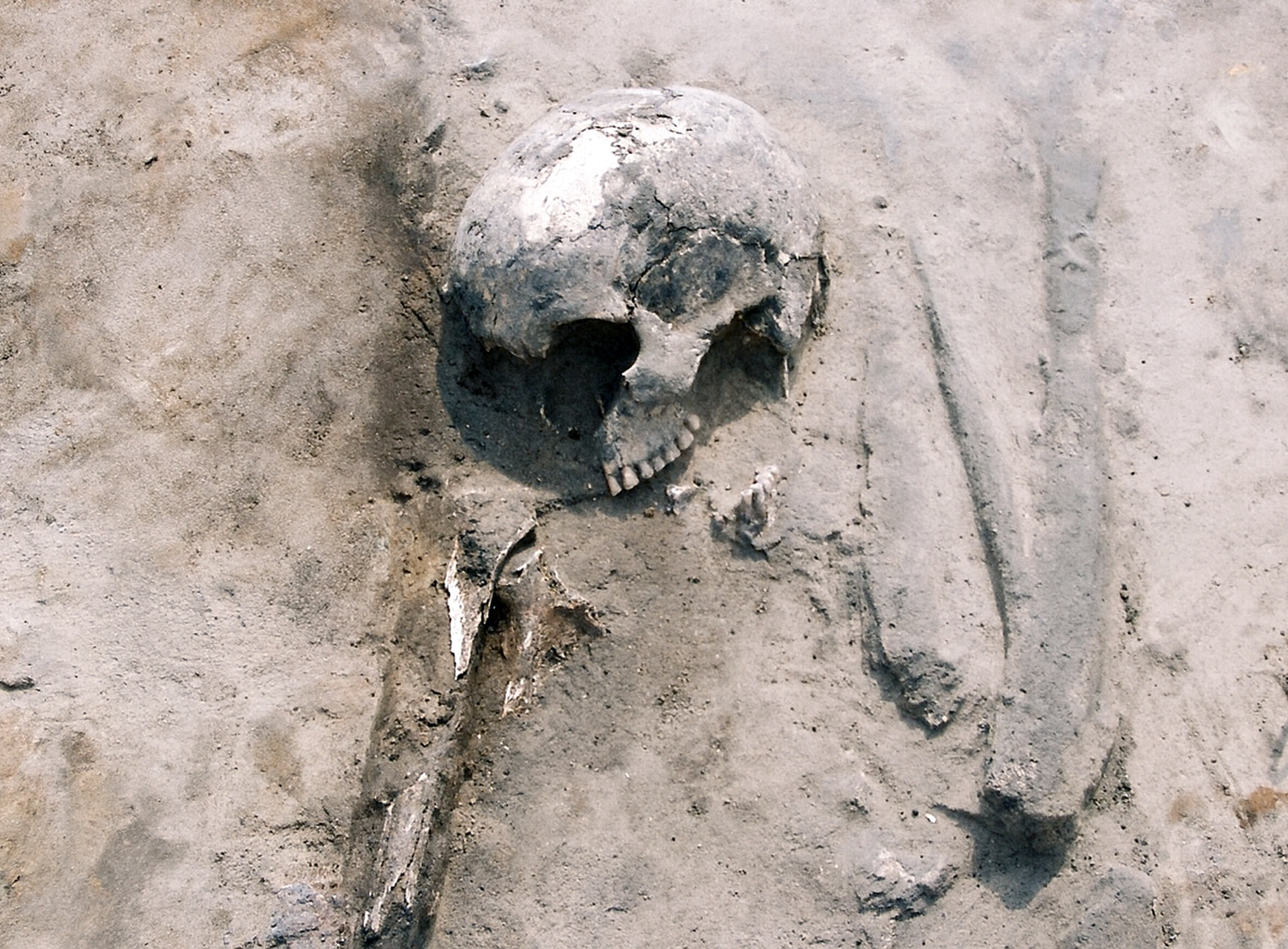
At first glance, there seemed to be little to work with. The houses of these ancient communities were lightly built and long decayed. Their graves were modest, often holding few objects. The soil itself was unkind to organic remains. Traditional archaeology had offered only fragments of their lives.
But fragments, when viewed through new lenses, can become revelations.
The Science of Listening to the Dead
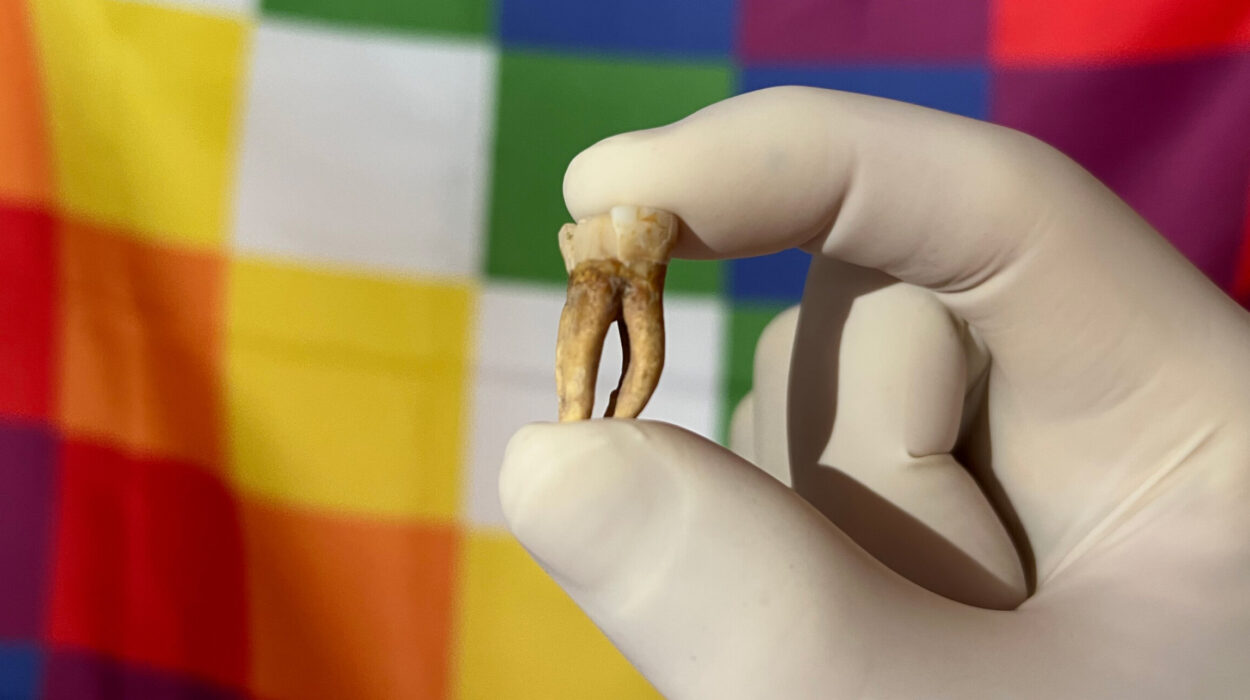
To fill the silences left by fragile houses and sparse graves, the researchers turned to the human remains themselves. They combined archaeological and anthropological expertise with advanced scientific techniques: radiocarbon dating, ancient DNA analysis, and stable isotope measurements of carbon and nitrogen.
Radiocarbon dating anchored each individual in time. Ancient DNA revealed threads of ancestry. Stable isotopes—chemical signatures locked within bone collagen—told a more intimate story. Carbon and nitrogen isotopes reflect the kinds of foods people consumed over many years. They can reveal whether someone relied heavily on plants or animal protein, whether certain crops formed dietary staples, and even hint at how animals were raised.
Through this interdisciplinary approach, the team reconstructed not only diets but also glimpses of farming practices and social organization—elements of life that rarely leave clear archaeological traces.
It was as if the bones had been waiting patiently for the right questions to be asked.
Forest Herders in a Land of Fields
One of the most surprising chapters in this story concerns the Corded Ware communities, who arrived in north-central Poland in the late Neolithic around 2800 BC.
Scholars once assumed that these newcomers, often associated with herding traditions, would have favored open grasslands. Yet the isotopic evidence told a different tale. The earliest Corded Ware individuals appear to have herded their animals not on fertile plains but in forests or wet river valleys—marginal areas set apart from the rich soils long cultivated by local farmers.
The chemical signatures preserved in their bones revealed this unexpected pattern. Instead of competing directly for prime farmland, these early groups seem to have carved out their livelihoods in ecological niches that others had not heavily exploited.
Over time, however, something changed. After several centuries, the diets of Corded Ware communities began to resemble those of their farming neighbors. The isotopic data suggests a gradual shift, perhaps reflecting the borrowing or adaptation of local herding practices already established in the region.
What emerges is not a story of rigid boundaries, but of negotiation. New arrivals found ways to coexist, adapt, and eventually blend aspects of their lifeways with those around them. Change, here, was not sudden conquest but slow transformation.
The Curious Case of Millet
If the Corded Ware findings were unexpected, the story of millet was even more intriguing.
Across Eurasia, broomcorn millet spread rapidly and often became a dietary staple. One might imagine a similar pattern unfolding in north-central Poland. Yet the stable isotope analysis painted a more complex picture.
From around 1200 BC, some communities relied heavily on millet. Others, living in the same broader region and time period, consumed little or none.
This uneven adoption was etched clearly into the isotopic makeup of their bones. The carbon signatures associated with millet consumption stood out, revealing that while some groups embraced this crop, others maintained different dietary traditions.
Even more striking were the burial practices that accompanied these differences. Some communities revived older traditions of communal tombs used over generations. Others practiced unusual paired burials in elongated pits, placing the deceased foot-to-foot.
The alignment between food choices and burial customs suggests that diet was not merely about calories or survival. It was entangled with identity. Choosing to grow and eat millet—or choosing not to—may have marked belonging to a particular group. Burial style, too, reinforced these distinctions.
In this way, daily meals and final resting places were woven into the same fabric of social meaning.
Hints of Inequality in Modest Graves
The graves themselves were not lavish. They contained few objects that might signal wealth or status. At first glance, these communities might appear relatively equal.
But bones can reveal hierarchies that grave goods cannot.
Variations in the nitrogen isotope composition of bone collagen reflect differences in access to animal protein. Individuals with higher nitrogen values likely consumed more meat or other animal-derived foods, placing them higher in the food web.
The study found that some individuals—particularly during the Early Bronze Age—had greater access to animal protein than others. The differences were subtle, yet consistent enough to suggest emerging social inequalities.
These hierarchies left no dramatic monuments, no glittering treasures. Instead, they were recorded quietly in the chemistry of human tissue.
It is a reminder that inequality does not always announce itself loudly. Sometimes it is measured in meals.
A Region That Chose Its Own Path
One of the most powerful implications of this research is that peripheral regions like north-central Poland were not simply copying the cultural centers of Central Europe. They were not passive recipients of change.
Instead, the evidence suggests that these communities developed along their own trajectories. They adopted some innovations, like millet, but not uniformly. They negotiated new identities through burial customs and dietary choices. They adapted herding practices to local landscapes. They responded creatively to environmental and social pressures.
Over three thousand years, they demonstrated resilience and flexibility. They adjusted to migrations, shifting economies, and changing ecological conditions.
Their story is not one of isolation, nor of simple imitation. It is one of agency.
Why This Research Changes the Way We See the Past
This study matters because it reshapes our understanding of prehistoric life in a region where the archaeological record is fragmentary. By combining radiocarbon dating, ancient DNA analysis, and stable isotope measurements, the researchers transformed bones into narratives.
They showed that diet can illuminate migration, adaptation, identity, and inequality. They revealed that food choices were socially meaningful, not just practical. They uncovered emerging hierarchies hidden beneath modest graves. And they demonstrated that so-called peripheral communities could chart their own distinctive courses.
Most importantly, the research reminds us that history is not only written in monuments and artifacts. It is written in bodies—in the chemical traces of meals shared, animals tended, and crops chosen.
Across three millennia, these ancient individuals navigated change with creativity and resilience. Their lightly built houses may have vanished. Their grave goods may be sparse. But through science, their lives regain texture.
The bones speak, and what they tell us is profound: even in distant centuries, people negotiated identity through everyday choices. They adapted to shifting landscapes. They built communities that were complex, dynamic, and deeply human.
In listening carefully to their remains, we do more than reconstruct ancient diets. We recover the rhythms of lives once lived—and discover that the past, though silent for so long, still has much to say.
Study Details
Łukasz Pospieszny et al, Isotopic insights into long-term socio-economic transformations in prehistoric Kuyavia, Poland, Royal Society Open Science (2026). DOI: 10.1098/rsos.250968. royalsocietypublishing.org/rso … -term-socio-economic