Nature does not negotiate.
Beneath our cities, under our oceans, within our skies, immense forces move with patient indifference. Tectonic plates grind. Magma rises. Atmospheric systems intensify. Rivers swell. The Earth is dynamic, shaped by forces that operate on timescales far beyond a human lifetime. Yet sometimes those forces erupt into sudden violence, colliding with civilization in moments that leave permanent scars.
For most of history, people saw disasters as divine anger or supernatural warnings. Today, we understand them through seismology, volcanology, climatology, and epidemiology. We know that earthquakes release built-up tectonic stress, that volcanic eruptions are driven by gas-rich magma, that hurricanes are fueled by warm ocean water, and that droughts arise from complex atmospheric patterns. But understanding does not eliminate impact.
Some natural disasters devastate regions. Others change the world.
The following nine events did more than destroy lives and landscapes—they altered economies, politics, culture, science, and the direction of human history itself.
1. The Eruption of Mount Vesuvius (79 CE)
In August of 79 CE, the Roman Empire stood at the height of its influence. Trade routes spanned continents. Engineering feats like aqueducts and amphitheaters symbolized Rome’s mastery over nature. Along the Bay of Naples, prosperous towns flourished under the looming silhouette of Mount Vesuvius.
Then the mountain exploded.
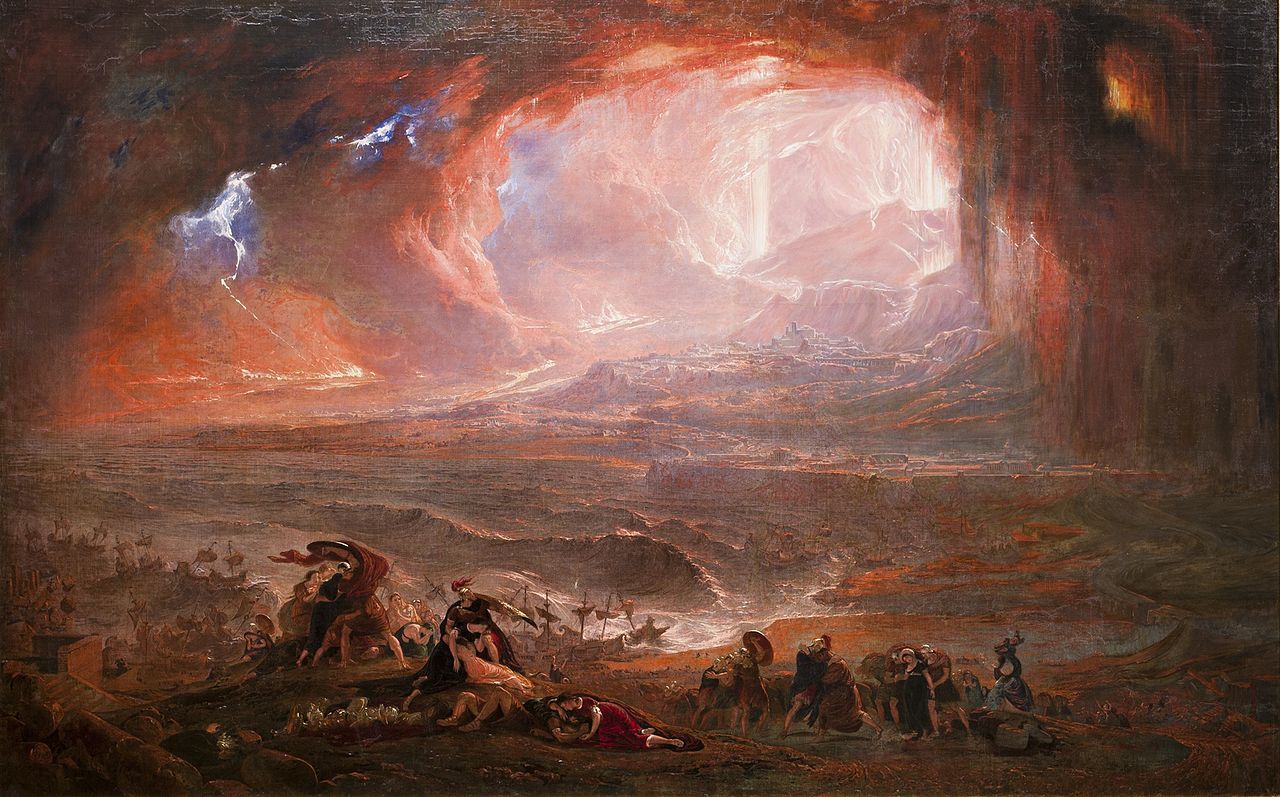
The eruption began with a massive column of ash and pumice rising kilometers into the sky. This type of eruption, now called Plinian—after the Roman writer Pliny the Younger who described it—occurs when gas-rich magma fragments violently, ejecting volcanic material high into the atmosphere.
Ash rained down for hours, collapsing roofs under its weight. Later, pyroclastic flows—superheated clouds of gas, ash, and volcanic debris—raced down the slopes at speeds exceeding 100 kilometers per hour. Temperatures within these flows could exceed 300°C, instantly killing those in their path.
Pompeii and Herculaneum were buried.
Scientifically, the eruption preserved a snapshot of Roman life in extraordinary detail. Buildings, frescoes, tools, food, and even the positions of victims were entombed in ash. Archaeology was transformed centuries later when excavations began, offering unprecedented insight into daily life in antiquity.
Historically, the event deepened Roman awareness of volcanic danger and influenced settlement patterns in the region. But its greatest impact came much later. The rediscovery of Pompeii in the 18th century profoundly shaped European art, architecture, and the Neoclassical movement. It reignited fascination with classical antiquity and influenced thinkers of the Enlightenment.
A volcanic eruption became a time capsule. From destruction emerged knowledge.
2. The 536 CE Volcanic Winter
In the year 536 CE, something dimmed the Sun.
Contemporary records from Europe, the Middle East, and Asia describe a strange atmospheric haze. The Sun appeared weak and bluish. Temperatures dropped. Crops failed. Famine spread.
Modern scientific analysis of ice cores from Greenland and Antarctica reveals a massive volcanic eruption—or possibly multiple eruptions—during that period. Sulfate aerosols injected into the stratosphere reflected sunlight back into space, causing global cooling.
Tree ring data confirm sharply reduced growth in 536 and subsequent years. This event triggered what some historians call the Late Antique Little Ice Age.
The consequences were severe. Agricultural collapse led to widespread famine across Eurasia. Malnutrition weakened populations. Just a few years later, in 541 CE, the Plague of Justinian began, caused by the bacterium Yersinia pestis. Though a biological disaster, its spread was facilitated by weakened societies and disrupted trade networks.
The combined effects destabilized the Byzantine Empire, strained European societies, and reshaped demographic patterns. Some scholars argue that this period accelerated the transition from antiquity to the medieval world.
A distant volcano—its exact location still debated—altered climate, economies, and empires. A veil of ash changed the course of civilizations.
3. The Black Death (1347–1351)
Not all natural disasters roar with thunder or erupt in flame. Some move invisibly.
In the mid-14th century, the Black Death swept across Europe, Asia, and North Africa. Caused by the bacterium Yersinia pestis and transmitted primarily by fleas carried by rats, the pandemic killed an estimated one-third to one-half of Europe’s population.
Trade routes facilitated its spread. Climate fluctuations in Central Asia may have contributed to rodent population shifts, enabling the disease to travel westward.
The social consequences were profound. With labor scarce, surviving workers gained bargaining power. Feudal systems weakened as peasants demanded wages and mobility. Economic structures shifted toward wage labor and urbanization.
Religious and cultural impacts were equally dramatic. Faith in institutions faltered. Art and literature reflected mortality and existential reflection. Public health measures, including early forms of quarantine, began to emerge.
The Black Death reshaped Europe’s economy, culture, and political systems. It helped lay groundwork for the Renaissance and the eventual rise of modern nation-states.
A microscopic organism altered history more dramatically than many armies.
4. The 1556 Shaanxi Earthquake
On January 23, 1556, one of the deadliest earthquakes in recorded history struck Shaanxi province in China.
Modern estimates suggest a magnitude around 8.0. The disaster occurred along faults associated with the complex tectonic interactions between the Eurasian Plate and the Indian Plate.
The death toll may have exceeded 800,000.
Many people in the region lived in yaodongs—cave dwellings carved into loess, a fine, wind-deposited sediment. While thermally efficient, these structures were highly vulnerable to collapse during seismic shaking.
Entire villages were obliterated.
The earthquake prompted shifts in architectural practices and greater awareness of seismic vulnerability in parts of China. Over time, it influenced approaches to urban planning and construction methods in earthquake-prone regions.
The event stands as a stark reminder of tectonic power. Beneath calm landscapes lie fault lines storing centuries of stress.
In a matter of minutes, the Earth reconfigured both land and lives.
5. The 1755 Lisbon Earthquake
On November 1, 1755—All Saints’ Day—a massive earthquake struck Lisbon, Portugal.
Estimated at magnitude 8.5 to 9.0, the quake originated offshore in the Atlantic. Violent shaking lasted several minutes. Buildings collapsed. Fires ignited. Then a tsunami surged into the harbor, drowning those who had fled to the waterfront.
The disaster killed tens of thousands.
Scientifically, it was one of the first natural disasters studied systematically. The Portuguese Prime Minister, the Marquis of Pombal, sent questionnaires across the country asking about shaking intensity, wave arrival times, and structural damage. This effort laid early foundations for modern seismology.
Philosophically, the earthquake shook Europe’s intellectual world. Thinkers of the Enlightenment grappled with its implications. How could a benevolent universe allow such destruction? The disaster influenced debates about religion, natural law, and rationalism.
Lisbon was rebuilt with earthquake-resistant design features, including wooden frameworks intended to absorb seismic energy.
The earthquake did not merely destroy a city—it transformed science, philosophy, and urban planning.
6. The 1815 Eruption of Mount Tambora
In April 1815, Mount Tambora erupted in what remains the most powerful volcanic eruption in recorded history.
The explosion ejected enormous volumes of ash and sulfur dioxide into the stratosphere. The eruption reached a Volcanic Explosivity Index (VEI) of 7.
The following year, 1816, became known as the “Year Without a Summer.”
Global temperatures dropped by approximately 0.4–0.7°C. Frost and snow occurred in June in parts of North America and Europe. Crops failed. Food prices soared. Famine spread.
In Europe, widespread hunger fueled unrest. In the United States, agricultural hardship accelerated westward migration.
The climatic gloom also influenced culture. During that dark summer in Switzerland, Mary Shelley began writing “Frankenstein,” a novel infused with themes of creation and catastrophe.
Tambora demonstrated the global reach of volcanic aerosols. A single eruption in Indonesia altered weather patterns worldwide.
It reminded humanity that the atmosphere connects us all.
7. The 1883 Eruption of Krakatoa
In August 1883, Krakatoa exploded with extraordinary violence.
The eruption generated one of the loudest sounds ever recorded, heard thousands of kilometers away. Pyroclastic flows and tsunamis devastated coastal communities, killing over 36,000 people.
The explosion blasted ash high into the atmosphere, creating spectacular sunsets observed around the globe. Atmospheric pressure waves circled the planet multiple times.
Scientifically, Krakatoa advanced the study of atmospheric circulation and global climate effects. It reinforced understanding of how volcanic aerosols can influence temperature and optical phenomena.
Telegraph technology ensured rapid global reporting of the disaster, marking one of the first times a natural catastrophe became an international news event almost in real time.
Krakatoa signaled the dawn of a globally connected world reacting collectively to a natural event.
8. The 1931 China Floods
Between June and August 1931, catastrophic flooding struck central China along the Yangtze and Huai Rivers.
A combination of heavy snowfall the previous winter, rapid spring melt, and intense monsoon rains led to extreme river swelling. Multiple cyclones compounded the disaster.
Estimates suggest that millions died from drowning, starvation, and disease.
The floods devastated agriculture, displaced vast populations, and intensified political instability in the region. They occurred during a period of already significant turmoil in China.
The disaster highlighted the vulnerability of river basins to hydrological extremes and influenced later flood control projects, including large-scale dam construction.
Water, essential for life, became a force of unimaginable destruction.
9. The 2004 Indian Ocean Tsunami
On December 26, 2004, a magnitude 9.1–9.3 megathrust earthquake struck off the coast of Sumatra. The rupture occurred along the boundary where the Indian Plate subducts beneath the Burma Plate.
The sudden vertical displacement of the seafloor displaced massive volumes of water, generating a tsunami that radiated across the Indian Ocean.
Waves up to 30 meters high struck Indonesia, Thailand, Sri Lanka, India, and even East Africa. More than 230,000 people died.
Scientifically, the event provided unprecedented data on subduction zone earthquakes and tsunami propagation. It exposed the lack of a tsunami warning system in the Indian Ocean, prompting the creation of one.
Politically and socially, it triggered one of the largest international humanitarian responses in history. In some regions, shared recovery efforts contributed to peace processes and diplomatic shifts.
The disaster revealed both vulnerability and global solidarity.
A sudden rupture beneath the ocean floor reshaped coastlines—and human cooperation.
The Fragile Triumph of Civilization
Natural disasters remind us that civilization rests upon dynamic ground.
Volcanoes alter climate. Earthquakes reshape cities. Floods transform economies. Pandemics restructure societies. These events are not random chaos; they are expressions of physical laws—plate tectonics, atmospheric dynamics, microbial evolution.
Science allows us to understand mechanisms. Preparedness reduces risk. Early warning systems save lives. Engineering mitigates destruction.
Yet no technology abolishes natural forces.
History shows that disasters can accelerate change. They expose weaknesses in infrastructure and governance. They inspire innovation in science and engineering. They reshape political power and cultural identity.
Each event on this list did more than devastate—it redirected humanity’s path.
The Earth is not hostile. It is active. It is governed by energy flows and geological cycles billions of years in the making. Humanity emerged within that system, not apart from it.
To study these disasters is not merely to recount tragedy. It is to understand resilience, adaptation, and the profound interconnectedness between natural processes and human destiny.
We build cities. We cultivate land. We imagine permanence.
But the Earth moves.
And when it does, history moves with it.