Gravity is everywhere, yet it is invisible. It holds your feet to the ground, keeps the Moon loyal to Earth, binds planets to stars, and sculpts the grand architecture of galaxies. It is the quiet force that never turns off, never announces itself, never flashes or glows. We know gravity through its effects, not through sight. But imagine, just for a moment, a universe where gravity could be seen. Imagine waking up one morning and discovering that gravity has become visible to the human eye. What would the world look like? How would our understanding of reality, space, time, and ourselves be transformed?
To ask what it would mean to see gravity is to ask deep questions about perception, physics, and the nature of the universe. It is not merely a thought experiment about vision; it is an exploration of how gravity truly works and how limited our senses are compared to the vast complexity of reality.
The Invisible Sculptor of Reality
Gravity is the most familiar force we experience, yet it is also the most mysterious. Unlike light, sound, or electricity, gravity does not announce its presence through direct sensory signals. We do not feel gravity as a pull in the way we feel a push. Instead, we experience weight, motion, and resistance, all consequences of gravity acting silently in the background.
If gravity suddenly became visible, the most shocking realization would be how much of the world is shaped by something we have never directly seen. Mountains would no longer appear as static monuments; they would reveal the immense gravitational influence pulling rock downward and inward. Oceans would no longer seem calm; their surfaces would glow with the constant tension between Earth’s gravity and the Moon’s pull.
Gravity would no longer be an abstract concept taught in textbooks. It would become a visible presence, woven into every moment of existence.
What Gravity Really Is
To imagine seeing gravity accurately, we must first understand what gravity truly is according to modern physics. Gravity is not a force in the traditional sense of something reaching across space and pulling objects together. Instead, gravity arises from the curvature of space and time themselves.
Mass and energy tell spacetime how to curve, and curved spacetime tells objects how to move. This idea, central to modern gravitational theory, means that planets do not orbit stars because they are pulled by an invisible rope, but because they follow the natural paths through a curved cosmic landscape.
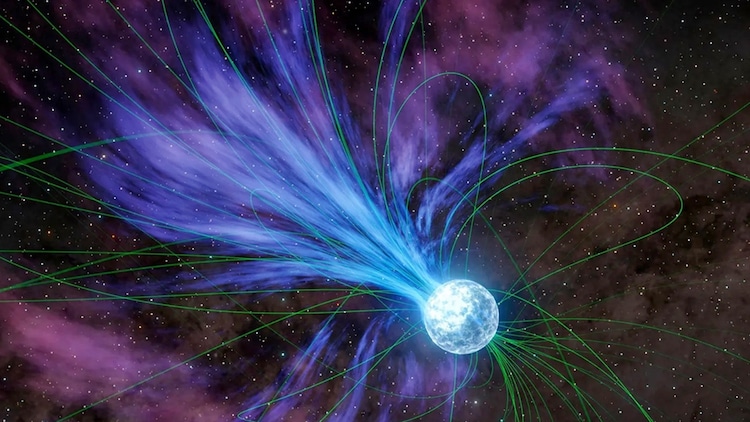
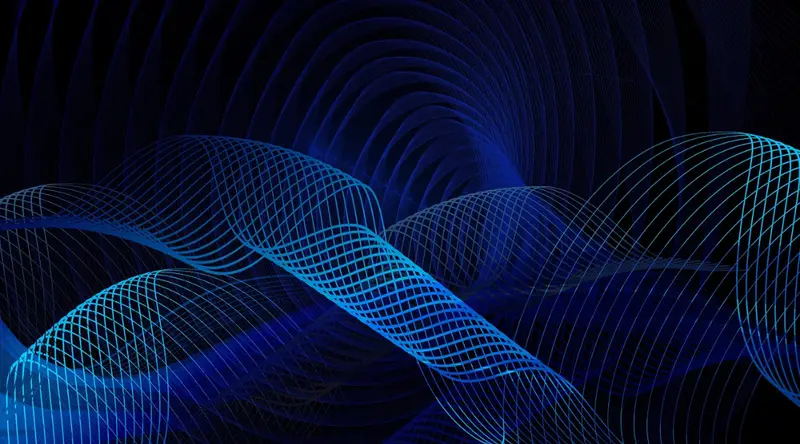
If gravity were visible, we would not see arrows pointing toward massive objects. We would see space itself bending, stretching, and warping. The universe would look less like a collection of objects floating in emptiness and more like a vast, dynamic fabric constantly reshaped by everything within it.
The Visual Language of Curved Space
Human vision is adapted to surfaces, edges, and light. We see boundaries where light changes direction or intensity. But gravity does not exist as a surface or a boundary. It is a geometric property of spacetime itself. To see gravity would require seeing curvature, distortion, and stretching of space.
If this were possible, empty space around massive objects would no longer appear empty. Around Earth, space would dip gently inward, like a shallow bowl. Around the Sun, that dip would be deeper and broader. Near extremely massive objects, space would curve so dramatically that light itself would twist and spiral.
The night sky would become a living map of invisible geometry. Stars near massive bodies would appear bent and displaced, not because light changes its nature, but because the space it travels through is curved.
Seeing Gravity on Earth
On Earth, visible gravity would transform everyday experience. Walking across a room would no longer feel like moving across a flat floor but like walking through a shallow gravitational valley. The ground beneath your feet would appear to sink into spacetime, subtly curving everything toward the planet’s center.
Tall buildings would reveal gravitational gradients, with space curving slightly more at the base than at the top. Water in a glass would shimmer with faint gravitational contours, revealing how Earth’s mass holds it in place.
Even your own body would contribute. Every person, every animal, every object would create its own tiny distortion in spacetime. These distortions would overlap and blend, creating an intricate, ever-changing gravitational landscape shaped by everything around you.
The Emotional Shock of a Visible Force
Seeing gravity would not just change science; it would change emotion. The sense of safety we take for granted would deepen as we watched gravity cradle us, holding us gently to the planet. At the same time, the power of gravity would inspire awe and perhaps fear. You would see how relentlessly it pulls, how inescapable it is.
Standing near a cliff, the gravitational curvature would steepen dramatically. The danger would no longer be abstract. You would see the slope of spacetime dropping away, inviting motion downward. Heights would feel more intense because the geometry of falling would be visually undeniable.
Gravity would no longer be a background assumption. It would be a constant companion, visible and unavoidable.
Gravity and Motion Made Visible
Motion is deeply tied to gravity. When you throw a ball, it follows a curved path not because gravity suddenly appears, but because it is always present. If gravity were visible, trajectories would glow with meaning.
A thrown object would trace a path through curved spacetime, revealing how its motion responds to Earth’s geometry. Falling objects would not simply drop; they would slide along visible slopes in spacetime. Even standing still would take on new meaning, as you would see yourself resisting motion along a gravitational curve.
This visibility would make the laws of motion intuitive in a way they never were before. Physics would no longer feel abstract. It would feel obvious, written into the shape of reality itself.
The Moon, the Tides, and Living Gravity
The Moon’s influence on Earth would become breathtakingly visible. You would see Earth’s spacetime gently stretched toward the Moon, creating elongated gravitational bulges. The oceans would sit within these distortions, their tides rising and falling as Earth rotates through the Moon’s gravitational field.
Tides would no longer seem mysterious or distant. You would see the cosmic connection between Earth and Moon, a gravitational dance played out in visible geometry. The ocean’s motion would feel less like chaos and more like choreography.
Even the Sun’s influence would be visible, subtly reshaping Earth’s spacetime and contributing to long-term changes in motion and orientation.
Gravity in the Sky and Beyond
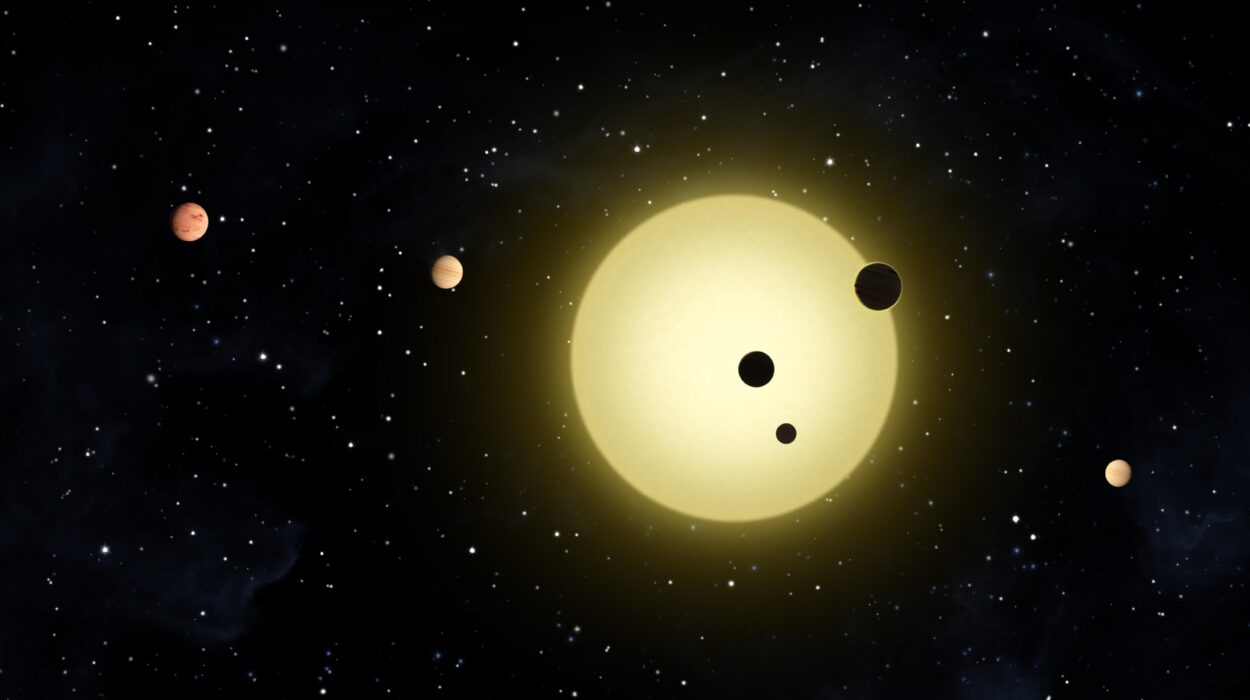
Looking up at the sky with visible gravity would be overwhelming. Planets would sit in deep gravitational wells carved into spacetime by the Sun. Their orbits would appear not as empty paths but as glowing tracks shaped by curvature.
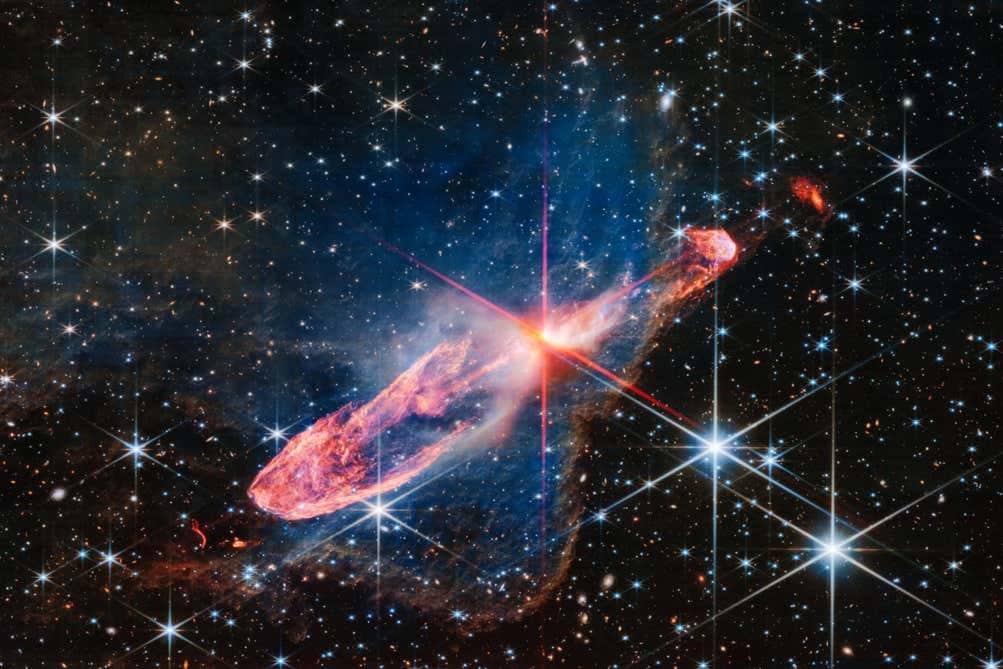
Stars themselves would distort the space around them, and clusters of stars would merge their gravitational effects into vast, complex landscapes. The Milky Way would appear not just as a band of light but as a massive gravitational structure, bending space on a galactic scale.
The universe would feel heavier, more textured, more alive. Space would no longer be emptiness. It would be a visible medium, responsive and dynamic.
Black Holes and the Ultimate Visibility of Gravity
Nowhere would visible gravity be more dramatic than near black holes. These extreme objects warp spacetime so intensely that ordinary descriptions break down. If gravity could be seen, black holes would appear as deep, bottomless funnels in the fabric of reality.
Light itself would curve around them, forming rings and arcs. Time would slow visibly near their edges, though human perception might struggle to interpret such effects. Approaching a black hole would feel like approaching a place where the universe itself collapses inward.
Seeing such gravity would profoundly affect humanity’s emotional relationship with the cosmos. Black holes would no longer be abstract monsters of theory. They would be undeniable scars in spacetime, reminders of gravity’s ultimate power.
How Seeing Gravity Would Change Science
If gravity were visible, science would change fundamentally. Many concepts that require advanced mathematics would become intuitive. Curvature, gradients, and gravitational interaction would be seen rather than inferred.
This visibility would accelerate understanding but might also hide deeper truths. When something is visible, it can feel deceptively simple. Physics has often progressed by questioning what seems obvious. Seeing gravity might make it harder to imagine alternative interpretations or deeper layers of reality.
Still, the ability to directly observe gravitational structures would revolutionize exploration, engineering, and astronomy. Navigation would become more precise. Space travel would feel less like guesswork and more like sailing along visible currents in spacetime.
The Limits of Human Perception
This thought experiment highlights a deeper truth: reality is far richer than what human senses reveal. Gravity is not invisible because it is weak or unimportant. It is invisible because our senses evolved to detect survival-relevant signals, not the true structure of spacetime.
We already live in a world filled with unseen forces and fields. Electromagnetic waves pass through us constantly. Particles stream from space. Quantum processes unfold at scales far beyond perception. Seeing gravity would remind us that what we perceive is only a thin slice of what exists.
This realization can be humbling and liberating at the same time. It suggests that the universe is not limited by our imagination, only by our ability to explore and understand.
Gravity and the Sense of Self
If gravity were visible, our sense of self might change. You would see your body’s mass bending spacetime, however slightly. You would see that you are not just an observer of the universe but an active participant in its geometry.
This would blur the boundary between subject and object. You would not merely exist in space; you would shape it. Even your smallest movements would alter the gravitational landscape around you, creating ripples of influence, however tiny.
Such awareness could deepen feelings of connection and responsibility. You would see, quite literally, that everything affects everything else.
Time, Gravity, and Visualizing the Invisible
Gravity is inseparable from time. Strong gravity slows time relative to weaker gravity. If gravity were visible, time itself might appear distorted. Clocks at different heights might seem subtly out of sync. Near massive objects, the flow of time could appear stretched or compressed.
This would challenge our intuitive sense of simultaneity and duration. Time would no longer feel universal and absolute. It would become local, shaped by gravity just as space is.
Seeing this would force humanity to confront a reality far stranger than everyday experience suggests.
Would Seeing Gravity Make Life Easier or Harder?
At first glance, seeing gravity might seem like an advantage. Dangers would be more obvious. Motion would be easier to predict. Navigation would improve. But there might be psychological costs.
Constant awareness of gravitational slopes and wells could be overwhelming. The world might feel less stable, less flat, less predictable. The comforting illusion of solid ground might give way to the unsettling vision of curved spacetime beneath every step.
Human culture, art, and philosophy would change. Metaphors of falling, rising, and balance would take on literal visual meaning. Gravity would shape not just bodies but imagination.
Gravity as Beauty Made Visible
Despite these challenges, visible gravity would be undeniably beautiful. The universe would appear as a living sculpture, shaped by mass and energy. Space would ripple and curve like a cosmic ocean.
Artists would find endless inspiration in gravitational forms. Music, architecture, and storytelling would draw directly from the visible geometry of reality. Beauty would no longer be limited to surfaces and colors but would include the shape of existence itself.
This beauty would remind humanity that science is not opposed to wonder. It is a deeper path to it.
Why We Don’t Need to See Gravity to Understand It
In the end, the fact that we cannot see gravity does not diminish its reality. Through careful observation, experimentation, and imagination, humanity has learned to understand gravity with extraordinary precision.
The equations and models of physics are, in a sense, a way of seeing beyond our senses. They allow us to visualize gravity in the mind, even if not with the eyes. They reveal patterns and structures that are just as vivid as any image.
This ability to understand the invisible is one of humanity’s greatest achievements.
Gravity as a Reminder of Mystery
Asking what it would mean to see gravity ultimately leads to a deeper appreciation of mystery. Even if gravity were visible, new questions would arise. Why does spacetime curve at all? Why does mass shape geometry? Why does the universe have the structure it does?
Visibility would not end curiosity. It would only shift its focus.
Gravity, seen or unseen, remains a profound reminder that the universe is both knowable and endlessly strange. It holds us, shapes us, and invites us to keep asking questions.
Living in a Universe We Cannot Fully See
We already live surrounded by invisible wonders. Gravity’s invisibility is not a flaw in reality but a challenge to human understanding. It invites us to look beyond appearances, to trust evidence over intuition, and to imagine structures beyond direct perception.
If we could see gravity, the universe would be more dramatic, more textured, more intense. But even without sight, gravity is already present in every breath, every step, every orbiting star.
Perhaps the greatest miracle is not that we cannot see gravity, but that we have learned to understand it at all.