Imagine a world where winter no longer feels like an endurance test, where illness can be paused, long journeys shrink into dreamless nights, and survival itself bends to a deeper biological rhythm. Imagine humans slipping into hibernation the way bears do, hearts slowing, bodies cooling, metabolism sinking into a quiet hum while consciousness drifts away. This idea has haunted science fiction for decades, yet it is rooted in a real biological phenomenon that already exists on Earth. Bears, ground squirrels, bats, and many other animals have mastered a skill that humans lack: the ability to drastically slow life without ending it.
To ask what would happen if humans could hibernate like bears is not merely to imagine a new sleep habit. It is to question the very structure of human biology, society, medicine, psychology, and even identity. Hibernation would not simply add a feature to the human body. It would rewrite what it means to live, to wait, to heal, and to endure time itself.
What Hibernation Really Is, Beyond Sleep
Hibernation is often misunderstood as a long nap. In reality, it is a profound physiological transformation. In true hibernators, body temperature drops dramatically, heart rate slows to a fraction of its normal pace, breathing becomes shallow and infrequent, and metabolism shifts into an ultra-low-energy state. The body survives for weeks or months on stored energy while minimizing damage to tissues that, in humans, would normally fail under such conditions.
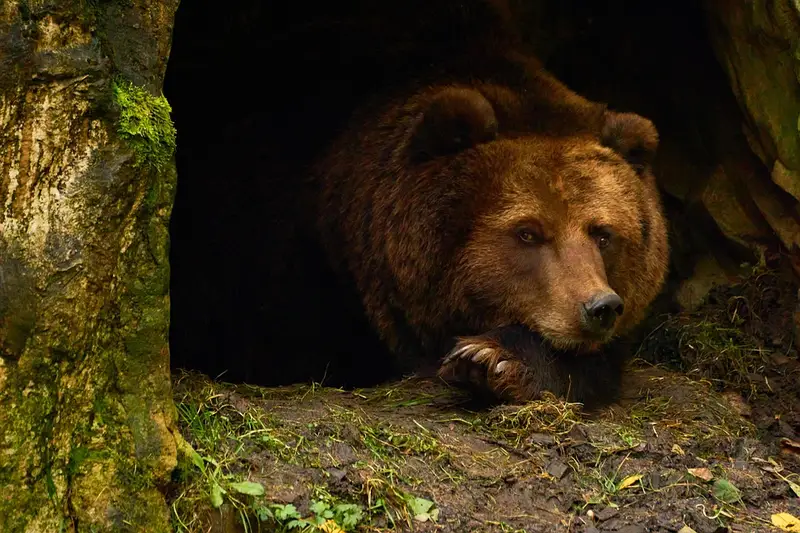
Bears are a special case. They enter a state often called torpor rather than classic deep hibernation. Their body temperature drops only slightly, but their metabolism slows enough that they can go months without eating, drinking, urinating, or defecating. Their muscles do not waste away, their bones do not weaken, and their organs remain functional. This alone challenges what we think we know about inactivity and health.
If humans could do this, it would not mean simply sleeping longer. It would require a complete reprogramming of how our cells use energy, how our brains protect themselves, and how our bodies handle waste, oxygen, and repair.
The Human Body and Its Relentless Pace
Human biology is built for constant activity. Even at rest, our organs demand a steady supply of oxygen and nutrients. Our brains, especially, are energy-hungry, consuming a disproportionate share of our metabolic budget. If blood flow or oxygen drops for too long, brain cells begin to die. Muscles weaken quickly when unused. Bones lose density. Immune systems falter.
Hibernating animals somehow bypass these limitations. They suppress processes that humans cannot easily turn off. Their cells resist damage from low oxygen. Their proteins and membranes remain stable at lower temperatures. Their immune systems enter a controlled pause rather than collapsing.
For humans to hibernate like bears, evolution would have had to take a radically different path, or biotechnology would have to learn how to mimic millions of years of natural adaptation. This is not impossible in theory, but it would represent one of the greatest biological achievements in human history.
The Brain in a Hibernating Human
The brain is the most delicate obstacle to human hibernation. Consciousness, memory, and identity are tied to continuous neural activity. When humans lose consciousness due to trauma or oxygen deprivation, damage often follows. Yet hibernating animals protect their brains during prolonged inactivity.
If humans could hibernate safely, the brain would need a way to enter a protected low-energy mode. Neurons would have to reduce signaling without losing their structural integrity. Synapses would need preservation mechanisms to prevent memory loss. Chemical imbalances that normally cause damage during inactivity would have to be tightly controlled.
Emotionally, this raises haunting questions. Would dreams occur during human hibernation, or would the mind go dark? Would time feel instantaneous, or would fragments of awareness remain? Waking from months of nothingness could feel like teleportation through time, a deeply unsettling or profoundly comforting experience depending on the individual.
Metabolism Slowed to a Whisper
One of the most striking features of bear hibernation is metabolic control. Bears survive on fat reserves without suffering the organ failure humans would experience during prolonged starvation. Their bodies recycle nitrogen from waste to preserve muscle mass. Their cells shift energy usage with extraordinary efficiency.
If humans could do this, obesity, starvation, and metabolic disease would be understood in an entirely new light. Fat would no longer be merely excess energy storage but a carefully regulated survival resource. Metabolism would become flexible rather than fixed, adapting to seasons, circumstances, and needs.
This ability could revolutionize medicine. Patients with severe injuries or illnesses could be placed into hibernation-like states, reducing metabolic demand while healing occurs. Trauma care could buy time. Cancer treatments might be administered while the body rests, minimizing side effects. Organ preservation could extend far beyond current limits.
Aging and the Suspension of Time
Perhaps the most emotionally powerful implication of human hibernation is its relationship with aging. Aging is not simply the passage of time; it is the accumulation of cellular damage driven by metabolism, inflammation, and replication errors. Hibernation slows many of these processes.
In animals that hibernate, aging appears to slow during hibernation periods. Cellular repair mechanisms remain active while damaging processes are reduced. If humans could hibernate, aging might effectively pause during those periods. A person who hibernates for several months each year could extend their functional lifespan significantly.
This would challenge our understanding of age itself. Chronological age would no longer match biological age. Society would have to redefine stages of life. Careers, education, and family planning would shift around periods of suspended existence.
Psychological Consequences of Sleeping Through Life
Hibernation is not only biological; it is psychological. Humans experience time through memory and continuity. Long gaps of unconsciousness could disrupt this continuity in profound ways. Waking after months or years might feel like stepping into a future that moved on without you.
Relationships would be strained and reshaped. Loved ones would age while you slept. Children might grow visibly during a single hibernation. Entire cultural moments would pass unseen. Some people might embrace this detachment, while others would find it deeply alienating.
There is also the question of choice. Would hibernation be voluntary or medically imposed? Would social pressure encourage people to sleep through economic downturns, personal hardship, or unwanted periods of life? The ability to opt out of time raises ethical concerns as deep as the biological ones.
Survival and the Evolutionary Advantage
Hibernation evolved as a survival strategy. It allows animals to endure scarcity and harsh environments. If humans could hibernate, survival in extreme conditions would change dramatically. Cold climates, long winters, and resource shortages would lose much of their threat.
This ability could reshape human migration. Polar regions, deep space, and disaster zones would become more accessible. Soldiers, explorers, and emergency responders could endure conditions that are currently lethal. Entire populations could ride out catastrophes in biological shelters.
Yet this raises uncomfortable questions about inequality. Who would have access to safe hibernation? Would it become a privilege of wealth or power? Evolutionary advantages in nature are neutral, but in human society, they often amplify existing disparities.
Hibernation and Space Travel
One of the most compelling scientific motivations for studying hibernation-like states in humans is space travel. Long-duration missions expose astronauts to radiation, muscle loss, bone density reduction, and psychological stress. Hibernation could mitigate many of these risks.
A hibernating human requires fewer resources. Food, water, and oxygen consumption drop dramatically. Mental health challenges caused by isolation and confinement would be reduced. Missions to distant planets, once limited by human endurance, would become more feasible.
From an emotional perspective, space hibernation would transform the experience of exploration. Astronauts might fall asleep near Earth and wake near another world, bypassing years of loneliness. Space would feel smaller, but also stranger, as time becomes something that can be skipped rather than endured.
Disease, Injury, and the Art of Waiting
Modern medicine fights against time. Many treatments are races against deterioration. Hibernation would change this dynamic. By slowing the body, doctors could gain time to intervene more precisely.
Severe trauma patients could be placed into hibernation to prevent shock and organ failure. Stroke victims might avoid extensive brain damage. Progressive diseases could be slowed dramatically, allowing research and treatments to catch up.
Emotionally, this introduces a new relationship with illness. Instead of constant suffering or rapid decline, patients might sleep through the worst phases. Families would experience illness as absence rather than pain, a different but equally complex emotional burden.
The Ethics of Turning Life On and Off
With the power to induce hibernation comes ethical responsibility. Who decides when someone hibernates and for how long? Could prisoners be hibernated instead of incarcerated? Could the terminally ill choose extended hibernation as an alternative to death?
The line between life and non-life would blur. A hibernating human is alive but absent. Legal systems would struggle to define rights, responsibilities, and personhood during suspended states. Consent would become central, especially when hibernation is used in medical emergencies.
There is also the danger of misuse. Hibernation could be used to control populations, suppress dissent, or exploit labor by cycling people in and out of activity. Any technology that alters time itself carries the potential for profound abuse.
Cultural Shifts in a Hibernating Humanity
Culture is shaped by shared time. Holidays, rituals, and traditions assume continuous participation. If humans could hibernate, culture would fragment into overlapping timelines. Some people might sleep through winters, others through economic downturns, others through personal grief.
Art and storytelling would change. Narratives would include gaps, awakenings, and lost years. Memory would become selective in new ways. The meaning of commitment would evolve when presence itself is negotiable.
There would also be resistance. Many would reject hibernation on philosophical or spiritual grounds, seeing continuous consciousness as essential to being human. Others would embrace it as the next step in human evolution.
Biology Versus Technology
Could humans ever naturally hibernate like bears? Evolution suggests it is unlikely without immense selective pressure. Our ancestors survived through adaptability, social cooperation, and cognitive flexibility rather than metabolic shutdown. Hibernation may have offered too little advantage for primates in fluctuating environments.
Technology, however, offers another path. Scientists already study induced hypothermia and metabolic suppression. Certain drugs can reduce oxygen demand. Research into bear physiology reveals molecular pathways that protect tissues during inactivity.
The future of human hibernation, if it comes, will likely be artificial rather than evolutionary. It will be engineered, controlled, and optimized. This raises questions about how far humans are willing to modify themselves in pursuit of survival and efficiency.
Identity in a World That Sleeps
At its deepest level, the idea of human hibernation forces us to confront what identity truly is. Are we defined by our continuous awareness, or by the sum of our experiences, even if those experiences are interrupted? If you sleep through years, are you the same person who wakes?
Memory continuity may preserve identity, but emotional continuity may not. People may wake changed, disconnected from their past selves in subtle ways. Grief, joy, and growth experienced by others during your absence could reshape relationships irreversibly.
Yet humans already change through sleep, illness, and unconsciousness. Hibernation would magnify these transitions, making identity more fluid, more fragile, and perhaps more precious.
The Fear and the Promise
There is something unsettling about the idea of surrendering consciousness for months or years. It touches ancient fears of death, oblivion, and loss of control. At the same time, it offers relief from suffering, endurance beyond current limits, and a new intimacy with time.
Human history is defined by our attempts to overcome biological constraints. Fire, medicine, and technology have all extended our reach. Hibernation would be a quieter revolution, not about doing more, but about enduring differently.
The promise of hibernation is not immortality, but mercy. Mercy from pain, from hunger, from waiting. Yet mercy always comes with a cost.
A Humanity That Can Wait
If humans could hibernate like bears, we would become a species that can wait. Wait out winters, wars, diseases, and journeys that once defined the limits of survival. Time would no longer be an unstoppable river but something we could step out of, briefly, deliberately.
This power would demand wisdom. Knowing when to sleep would become as important as knowing when to act. A world where humans can hibernate would not automatically be better, but it would be profoundly different.
In the end, the question is not only whether humans could hibernate, but whether we should. The answer lies not just in biology or technology, but in values. Hibernation would offer escape from time, but life’s meaning has always been forged within it.
Perhaps the true lesson of imagining human hibernation is not about sleeping through life, but about understanding how precious waking moments really are.