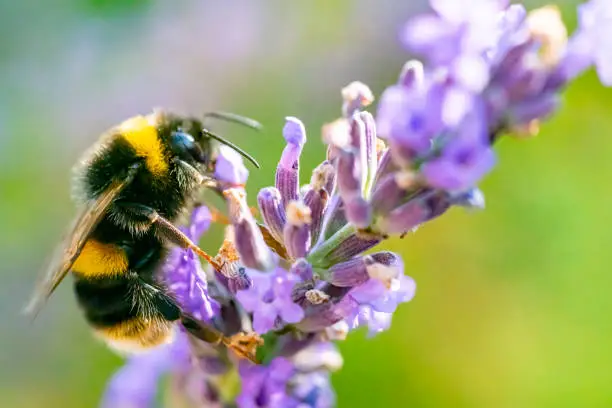
Imagine waking up one morning to a world that feels strangely quieter, though you cannot immediately say why. The air is still, the fields look the same, flowers bloom as they always have, yet something essential is missing. This is not a slow disappearance stretched over decades. This happens suddenly, within a single year. Every bee on Earth is gone. Honeybees, bumblebees, solitary bees, wild native species that most people never notice—all vanish without warning.
At first, the change feels abstract. Bees are small, and most of human life unfolds indoors or behind screens. Yet this silence marks the beginning of one of the most profound ecological and human crises imaginable. Bees are not just insects; they are living connectors, stitching together plants, animals, ecosystems, and civilizations. Their extinction would not simply remove one species from the web of life. It would tear at the structure itself.
Why Bees Matter More Than We Realize
Bees are among the most important pollinators on Earth. Pollination is the process by which pollen moves from the male parts of a flower to the female parts, allowing plants to produce seeds and fruits. Many plants can self-pollinate or rely on wind, but an enormous number depend on animals, and bees are the most efficient and widespread of these pollinators.
Bees evolved alongside flowering plants over millions of years. Their bodies, behavior, and sensory systems are finely tuned to flowers. Hairy bodies trap pollen. Specialized mouthparts collect nectar. Complex communication allows bees to share information about food sources with remarkable precision. This partnership between bees and plants is one of the great success stories of evolution.
When bees disappear, this ancient relationship collapses almost instantly. Flowers still bloom, but many are no longer fertilized. Seeds fail to form. Fruits grow small, misshapen, or not at all. What looks like a minor disruption quickly becomes a cascading failure.
The First Season Without Bees
In the first spring after bees go extinct, the world does not immediately fall apart. Trees still leaf out. Grass grows. Wind-pollinated plants like wheat, rice, and corn proceed mostly unaffected. But subtle signs begin to appear in fields, orchards, and gardens.
Fruit trees blossom in dramatic displays of white and pink, yet the petals fall without producing fruit. Apple orchards set only a fraction of their usual yield. Almond trees, which rely almost entirely on bee pollination, produce almost nothing. Berries struggle. Squash flowers open brightly in the morning and close again, unvisited.
Wildflowers bloom, but many fail to reproduce. Their colors still paint meadows and hillsides, but these displays become biological dead ends. Without seeds, there is no next generation.
Farmers notice poor harvests, but many assume it is weather, disease, or chance. The full reality has not yet sunk in.
The Collapse of Pollination Networks
Bees are not the only pollinators. Butterflies, moths, flies, beetles, birds, and bats also move pollen. However, bees are uniquely effective because of their sheer numbers, their flower fidelity, and their constant activity throughout the growing season.
When bees vanish, other pollinators cannot simply replace them. Their populations are smaller, their ranges limited, and their behaviors different. Some plants are adapted almost exclusively to bees. Their flower shapes, colors, and nectar rewards evolved specifically for bee vision and behavior. These plants are suddenly stranded in an evolutionary partnership that no longer exists.
Pollination networks are complex systems. One bee species may pollinate dozens of plants, and one plant may support multiple animal species. Removing bees destabilizes these networks, causing unpredictable secondary losses. Plants that depend on bees decline. Animals that depend on those plants for food or shelter decline next. Ecological connections unravel in waves.
Agriculture in Crisis
Within a year or two, agriculture enters a crisis unlike anything in human history. A significant portion of global food production relies directly or indirectly on bee pollination. Fruits, nuts, vegetables, and oilseed crops begin to fail at scale.
Food diversity shrinks rapidly. Supermarket shelves still carry calories, but variety disappears. Staples like rice and wheat remain available, but many nutrient-rich foods become scarce. Fruits become luxury items. Vegetables dependent on insect pollination grow expensive and unreliable.
Farmers attempt emergency solutions. Some turn to hand pollination, hiring workers to transfer pollen using brushes or tools. This approach works only on small scales and is incredibly labor-intensive. It cannot sustain modern agriculture across millions of hectares.
Others try to breed or engineer plants that self-pollinate or rely on wind. These efforts take time—years or decades humanity does not have. Meanwhile, yields continue to drop.
Hunger and Malnutrition Spread
As crop failures accumulate, food prices rise sharply. Wealthier regions struggle but adapt by importing what remains. Poorer regions suffer devastating consequences. Hunger spreads, not always as starvation, but as chronic malnutrition.
The loss of fruits, nuts, and vegetables removes critical vitamins and minerals from diets. Deficiencies increase. Immune systems weaken. Children are especially vulnerable. Diseases once easily managed become deadly again.
Food insecurity leads to social unrest. Governments face pressure to subsidize food, control prices, or ration supplies. Political tensions rise as countries compete for limited agricultural output. Bees, once unnoticed, become symbols of a failure to protect the foundations of life.
Livestock and the Indirect Effects
The extinction of bees does not only affect crops eaten directly by humans. It also impacts livestock. Many forage crops, including alfalfa and clover, depend heavily on bee pollination. These plants are essential feed for cattle, sheep, and goats.
As forage yields decline, meat and dairy production falters. Prices rise. Protein becomes harder to access. Livestock farmers are forced to reduce herds or switch to less nutritious feeds. Animal health declines alongside human health.
This indirect effect ripples through food systems. Even people who rarely eat fruits or vegetables feel the consequences as meat, milk, and eggs become more expensive and less available.
Wild Ecosystems Begin to Unravel
Outside farms and cities, wild ecosystems suffer deeply. Many wild plants rely on bees for reproduction. As these plants fail to produce seeds, their populations shrink year after year.
Meadows lose diversity first. Flower-rich landscapes become dominated by grasses and wind-pollinated species. Forest understories thin out as flowering shrubs decline. This loss of plant diversity affects insects, birds, and mammals that rely on those plants for food and shelter.
Herbivores lose critical food sources. Insects that feed on flowering plants disappear. Birds that eat insects decline. Predators that eat birds and small mammals follow. The extinction of bees triggers a chain reaction that moves upward through food webs.
The Disappearance of Color and Sound
One of the most emotionally striking consequences of bee extinction is the loss of sensory richness in the natural world. Meadows that once buzzed with life fall silent. The hum of bees, so familiar it often went unnoticed, disappears completely.
Wildflowers become rarer each year. Landscapes grow duller, more uniform. The seasonal explosions of color that marked spring and summer fade. The natural world becomes quieter, less vibrant, less alive.
This loss affects humans psychologically. Nature feels emptier. Children grow up without experiencing the full richness of flowering landscapes. Cultural connections to flowers, gardens, and seasonal cycles weaken.
The Fate of Honey and Beekeeping Traditions
Honey disappears almost immediately. Bees are the sole producers of true honey, and without them, an ancient food vanishes. Honey has been part of human diets, medicine, and rituals for thousands of years. Its loss is symbolic as well as practical.
Beekeeping, one of humanity’s oldest agricultural practices, becomes a memory. Entire cultures built traditions around bees, from myths and art to farming knowledge passed through generations. These traditions lose their living foundation.
Museums preserve tools and texts, but the relationship itself is gone. Humans are reminded that some losses cannot be recovered through technology or nostalgia.
Attempts at Technological Replacement
Faced with catastrophe, humanity turns to technology. Engineers propose robotic pollinators, tiny drones designed to move pollen between flowers. In laboratories and small test fields, prototypes show limited success.
But scaling this solution proves nearly impossible. Bees are self-replicating, self-repairing, and powered by sunlight through plants. Robotic systems require energy, materials, maintenance, and control. To replace billions of bees across diverse ecosystems would require resources beyond realistic limits.
Artificial pollination may help certain high-value crops in controlled environments, but it cannot replace the ecological role of bees in the wild. Technology can patch holes, but it cannot rebuild a living system evolved over millions of years.
Economic Shockwaves Across the World
The economic impact of bee extinction extends far beyond agriculture. Entire industries collapse or shrink dramatically. Food processing, transportation, restaurants, and retail all feel the strain.
Rural communities dependent on farming suffer severe losses. Urban populations face rising living costs. Insurance markets strain under repeated agricultural failures. Governments redirect budgets toward emergency food programs and research.
Global inequality widens. Countries with diverse agricultural systems and resources adapt more effectively, while others face prolonged crises. International cooperation becomes both more necessary and more fragile.
Cultural and Psychological Consequences
Beyond economics and ecology, bee extinction reshapes human culture. Food traditions change as ingredients disappear. Celebrations tied to harvests lose meaning. Artistic expressions inspired by flowers, gardens, and pastoral landscapes feel increasingly nostalgic.
There is also a psychological toll. Humans struggle with the knowledge that a small creature, once dismissed as insignificant, was essential to their survival. Guilt, grief, and anxiety become common themes in public discourse.
Children ask questions adults struggle to answer. How could this happen? Why wasn’t it prevented? These questions echo through classrooms, media, and families.
Science Reflects on a Preventable Loss
Scientists had warned about bee declines for decades. Habitat destruction, pesticide use, disease, climate change, and industrial agriculture all placed immense pressure on bee populations. The extinction, though sudden in this scenario, feels tragically predictable.
Research intensifies, not to save bees, but to understand the full scope of what has been lost. Ecologists document cascading extinctions. Agronomists redesign food systems around fewer crops. Conservation biology shifts focus to preventing similar losses in other pollinators.
Bee extinction becomes a defining case study in human environmental failure, taught as a lesson in interconnectedness and unintended consequences.
Adaptation and a Changed World
Over time, humanity adapts, but adaptation does not mean recovery. Diets become simpler. Landscapes change permanently. Some ecosystems stabilize in altered forms, dominated by wind-pollinated plants and generalist species.
New cultural norms emerge. Food waste declines out of necessity. Local agriculture gains importance where possible. There is greater awareness of ecological limits, but it comes at a terrible cost.
The world continues, but it is poorer in beauty, resilience, and diversity. The loss of bees reshapes what it means to live on Earth.
A Mirror Held Up to Humanity
The extinction of all bees in a single year would not just be an environmental disaster. It would be a mirror reflecting humanity’s relationship with the natural world. Bees ask for little: flowers to feed on, places to nest, freedom from toxic harm. Their disappearance would reveal how deeply human actions can destabilize systems we barely understand.
This scenario forces a sobering realization. Civilization does not stand apart from nature. It rests upon countless invisible lives performing essential work without recognition or reward.
What This Thought Experiment Teaches Us
Imagining a world without bees is painful, but it is also clarifying. It shows how fragile abundance really is. It reveals that sustainability is not an abstract ideal but a practical necessity for survival.
Bees represent countless other species whose roles are less visible but equally vital. Their extinction would remind us that protecting life is not about sentimentality; it is about preserving the systems that make life possible.
The World That Could Have Been Saved
If all bees went extinct this year, humanity would survive, but changed forever. The planet would endure, but diminished. The silence would linger as a constant reminder of what was lost and why.
This imagined future is not destiny. It is a warning written in pollen and wings, urging attention before silence replaces the hum of life. Bees are small, but their absence would be enormous, reshaping the Earth and the human story in ways no technology could fully undo.