Life on Earth exists within a delicate balance shaped by billions of years of cosmic history. Our planet orbits a stable star, shielded by a magnetic field and wrapped in an atmosphere that filters harmful radiation. This environment has allowed complex life to flourish, giving rise to ecosystems of extraordinary diversity and resilience. Yet beyond this apparent tranquility lies a universe defined by violence on immense scales. Stars are born in turbulent clouds, galaxies collide, and some stars end their lives in cataclysmic explosions known as supernovae.
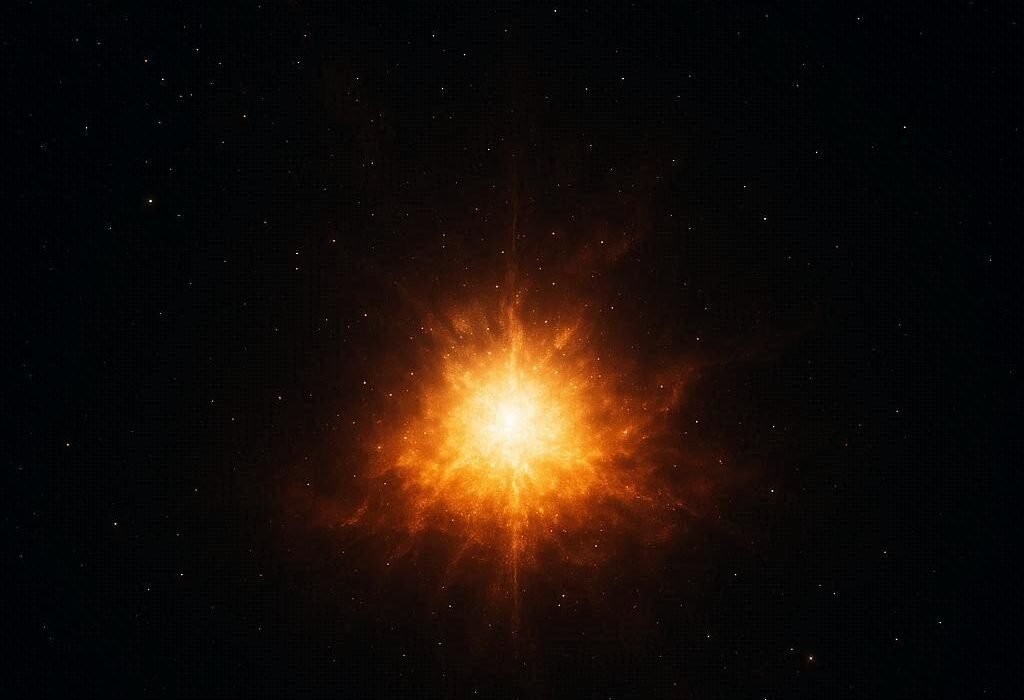
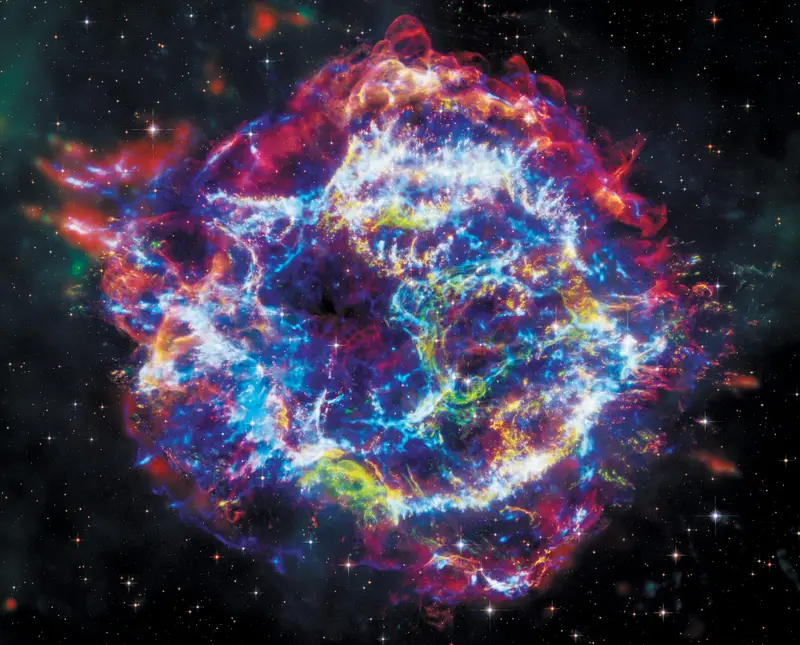
A supernova represents one of the most energetic events in the cosmos. For a brief time, a single dying star can outshine an entire galaxy, releasing vast quantities of energy, radiation, and matter into space. These explosions are not rare on cosmic timescales, and they play an essential role in shaping galaxies, forging heavy elements, and triggering the birth of new stars. At the same time, their power raises a sobering question: could such an event threaten life on Earth?
The idea that a distant stellar explosion might harm or even extinguish life on our planet may sound like science fiction. Yet astrophysics and Earth science together reveal that this possibility is grounded in physical reality. Understanding how a supernova could affect Earth requires exploring stellar death, radiation physics, planetary atmospheres, and the biological vulnerability of life. It is a story that connects the fate of stars to the fragile biosphere of a small, living world.
What Is a Supernova and Why It Matters
A supernova marks the violent death of certain types of stars. These explosions occur when a star undergoes a catastrophic collapse or runaway nuclear reaction, releasing energy equivalent to what the Sun will emit over its entire lifetime. There are several physical pathways to a supernova, but all involve extreme conditions that push matter and energy beyond ordinary limits.
Massive stars, many times heavier than the Sun, exhaust their nuclear fuel after millions of years. When fusion no longer provides outward pressure to counter gravity, the core collapses in a fraction of a second. This collapse rebounds, generating a shock wave that tears the star apart. In another scenario, a dense stellar remnant known as a white dwarf accumulates material from a companion star until nuclear reactions ignite uncontrollably, destroying the star in a thermonuclear explosion.
Supernovae are essential to cosmic evolution. They disperse heavy elements such as iron, oxygen, and calcium into space, enriching future generations of stars and planets. The atoms in human bones and blood were once forged in such stellar explosions. In this sense, supernovae are not merely destructive forces but also creative ones. However, the same processes that seed the universe with life’s building blocks can, under certain circumstances, pose a threat to existing life.
The Scale of Energy Released in a Supernova
To understand the potential danger of a supernova, one must first grasp the sheer magnitude of energy involved. In the core collapse of a massive star, gravitational energy is converted into radiation and kinetic motion on an astonishing scale. Most of this energy is released in the form of neutrinos, nearly massless particles that rarely interact with matter. Yet a significant fraction emerges as electromagnetic radiation and high-energy particles capable of traveling vast distances through space.
The visible light from a supernova can briefly rival or exceed the combined light of billions of stars. Beyond visible wavelengths, supernovae emit intense ultraviolet radiation, X-rays, and gamma rays. They also accelerate charged particles, known as cosmic rays, to near-light speeds. These components of the explosion can propagate through the interstellar medium and, if conditions align, reach planetary systems far from the original blast.
Distance is a critical factor. Space is vast, and energy spreads out as it travels. A supernova occurring thousands of light-years away poses little threat to Earth. However, if such an explosion were to occur within a few dozen light-years, the concentration of radiation reaching our planet could be significant enough to alter atmospheric chemistry and biological processes.
Radiation as the Primary Threat to Life
The most serious danger from a nearby supernova does not come from the expanding shell of stellar debris, which would dissipate long before reaching Earth. Instead, the primary threat lies in radiation. High-energy photons and particles can penetrate Earth’s atmosphere, triggering chemical reactions and damaging biological tissue.
Gamma rays and X-rays are particularly concerning because of their ability to ionize atoms and molecules. When these forms of radiation enter the upper atmosphere, they can break apart nitrogen and oxygen molecules, initiating chains of chemical reactions. These reactions can lead to the destruction of ozone, a molecule that plays a crucial role in shielding life from the Sun’s ultraviolet radiation.
Cosmic rays add another dimension to the threat. These energetic particles can interact with atmospheric atoms to produce cascades of secondary particles, including muons that can penetrate deep into the atmosphere and even into the ground. While Earth’s magnetic field deflects many charged particles, an intense influx from a nearby supernova could overwhelm this natural defense to some extent.
Ozone Depletion and Its Biological Consequences
Earth’s ozone layer acts as a protective filter, absorbing most of the Sun’s harmful ultraviolet radiation. Without this shield, surface life would be exposed to levels of ultraviolet light capable of damaging DNA, impairing photosynthesis, and disrupting ecosystems. The destruction of ozone is therefore a central mechanism by which a supernova could threaten life.
When high-energy radiation from a supernova strikes the upper atmosphere, it can produce nitrogen oxides through reactions involving molecular nitrogen and oxygen. These compounds act as catalysts that break down ozone molecules. Unlike direct radiation exposure, which might last days or weeks, ozone depletion could persist for years, prolonging its biological impact.
Increased ultraviolet radiation reaching Earth’s surface would disproportionately affect organisms at the base of the food web, particularly phytoplankton in the oceans and plants on land. These organisms rely on sunlight for energy but are sensitive to ultraviolet damage. A significant reduction in their productivity could cascade through ecosystems, leading to widespread ecological disruption.
Cosmic Rays and Long-Term Environmental Stress
Cosmic rays from a supernova would not arrive all at once. Instead, they would diffuse through interstellar space over thousands of years, gradually increasing radiation levels in Earth’s environment. This prolonged exposure could impose chronic stress on living organisms, increasing mutation rates and potentially contributing to evolutionary change or population decline.
While low levels of radiation are a natural part of Earth’s environment, elevated levels can overwhelm cellular repair mechanisms. DNA damage that escapes repair can lead to genetic mutations, some of which are harmful. Over long timescales, this increased mutational burden could affect species survival and ecosystem stability.
The geological record may preserve hints of such events. Certain isotopes found in ocean sediments suggest that Earth has been exposed to material from nearby supernovae in the past. These findings indicate that cosmic radiation from stellar explosions has reached our planet before, raising the possibility that such events have influenced biological history.
Could a Supernova Cause a Mass Extinction?
The possibility that a nearby supernova could trigger a mass extinction has been the subject of scientific investigation and debate. Mass extinctions are defined by the rapid loss of a large fraction of species, often associated with environmental upheaval. While asteroid impacts and volcanic eruptions are well-established causes, cosmic events such as supernovae offer an additional, more distant mechanism.
For a supernova to cause a mass extinction, it would need to occur sufficiently close to Earth, likely within about thirty light-years. At this distance, radiation levels could be high enough to cause substantial ozone depletion and long-term ecological stress. The severity of the impact would depend on the type of supernova, the duration of radiation exposure, and Earth’s existing environmental conditions.
Evidence linking specific extinction events to supernovae remains circumstantial. However, some extinction boundaries coincide with isotopic anomalies that could be consistent with nearby stellar explosions. While such correlations do not prove causation, they suggest that astrophysical events may have played a role in shaping the history of life on Earth.
The Role of Earth’s Protective Shields
Earth is not defenseless against cosmic threats. Its atmosphere, magnetic field, and distance from most stars provide robust protection. The atmosphere absorbs high-energy radiation and particles, while the magnetic field deflects charged cosmic rays. These shields have allowed life to persist despite a universe filled with energetic events.
However, these defenses have limits. Extremely intense radiation can overwhelm atmospheric chemistry, and prolonged cosmic ray exposure can penetrate even strong magnetic fields. Moreover, Earth’s protective systems are themselves dynamic and have varied over geological time. Periods of weaker magnetic field strength or thinner atmosphere could increase vulnerability to external radiation.
Understanding these protective mechanisms highlights both the resilience and fragility of life on Earth. It underscores the fact that planetary habitability depends not only on local conditions but also on the broader galactic environment.
Nearby Stars and the Realistic Risk Today
Assessing the real-world risk posed by supernovae requires examining our stellar neighborhood. Fortunately, no stars currently close enough to Earth are expected to go supernova in the near future. Most massive stars capable of core-collapse supernovae are located hundreds or thousands of light-years away.
Astronomers monitor nearby stars and stellar remnants to assess potential hazards. Some stars, such as red supergiants, are known to be nearing the end of their lives, but their distances place them well beyond the range of serious danger. White dwarf systems capable of thermonuclear supernovae are also studied, though none are currently considered imminent threats.
This assessment provides reassurance, but it does not eliminate the underlying principle. On cosmic timescales, stellar explosions are inevitable. Over millions of years, the probability that one occurs close enough to affect Earth is not zero. This perspective reminds us that planetary safety is a temporary condition in a dynamic universe.
Lessons from Astrobiology and Planetary Science
The study of how cosmic events influence habitability extends beyond Earth. Astrobiology examines the conditions required for life and how those conditions can be disrupted. Supernovae are of particular interest because they can affect entire regions of a galaxy, influencing multiple planetary systems at once.
Planets orbiting stars in dense stellar environments, such as globular clusters or near galactic centers, may be exposed to higher supernova rates. This increased exposure could limit the development or persistence of life, even if other conditions are favorable. Conversely, galaxies with lower star formation rates may offer safer long-term environments for complex life.
These insights place Earth in a broader cosmic context. Our planet’s history reflects a fortunate combination of timing, location, and protective mechanisms. Understanding the threats posed by supernovae deepens our appreciation for the rare stability that has allowed life to evolve.
Supernovae, Evolution, and the Paradox of Destruction
While supernovae pose potential dangers, they are also deeply intertwined with the existence of life itself. The heavy elements essential for planets and biology are produced in stellar explosions. Without supernovae, Earth would lack the chemical diversity necessary for life.
This dual role creates a paradox. The same cosmic events that make life possible can also threaten its survival. Evolution unfolds within this tension between creation and destruction. Life on Earth has adapted to a changing environment shaped by both terrestrial and cosmic forces.
From this perspective, a supernova capable of harming life is not an external anomaly but part of the broader cosmic process. Understanding this process allows humanity to see itself not as separate from the universe, but as a product of its most dramatic events.
Scientific Uncertainty and Ongoing Research
Despite advances in astrophysics and Earth science, significant uncertainties remain. The precise biological effects of increased radiation, the resilience of ecosystems, and the interaction between atmospheric chemistry and climate are complex and not fully understood. Models continue to improve as new data become available.
Observations of supernova remnants, measurements of cosmic ray flux, and studies of isotopes in geological records all contribute to refining our understanding. As detection technologies advance, scientists can better assess both the frequency of nearby supernovae and their potential impacts.
This ongoing research reflects the dynamic nature of science. Questions about cosmic threats are not merely academic; they inform our understanding of planetary habitability and the long-term future of life.
Humanity’s Perspective in a Cosmic Context
The idea that a distant star could influence life on Earth invites reflection on humanity’s place in the universe. It highlights our vulnerability, but also our capacity for understanding. Through science, we can identify potential threats, assess their likelihood, and place them within a rational framework.
Unlike many natural hazards, a supernova is not something humanity could prevent. Its relevance lies not in immediate danger but in what it reveals about the interconnectedness of cosmic and biological processes. It reminds us that Earth is part of a larger system governed by physical laws that operate across immense distances and timescales.
This perspective can inspire both humility and wonder. Life persists not because the universe is gentle, but because it has found ways to adapt within a universe that is often violent.
Conclusion: Life Under the Shadow of the Stars
A supernova has the potential, under specific circumstances, to threaten life on Earth through intense radiation and long-term environmental change. Such an event would most likely exert its influence by disrupting the atmosphere, increasing harmful radiation at the surface, and stressing ecosystems over extended periods. While the probability of a nearby supernova in the near future is low, the underlying physics makes the threat real on cosmic timescales.
Understanding this possibility does not diminish the value of life; rather, it enhances it. Life on Earth is the product of a universe capable of both immense destruction and extraordinary creativity. Supernovae embody this duality, forging the elements of life while reminding us of nature’s power.
In studying how a supernova could kill life on Earth, science offers more than a warning. It offers a deeper appreciation of our planet’s fragile sanctuary and of the cosmic history that made it possible. Beneath the distant stars, life continues, shaped by forces that extend far beyond the horizon, yet understood through the human capacity to observe, reason, and wonder.